

Best Time for the Mardi Himal Trek: A Seasonal Guide
The Mardi Himal Trek has quietly become one of the most popular short treks in the Annapurna region, and for good reason. Compared to the more crowded Annapurna Base Camp or Poon Hill routes, Mardi Himal offers close-up views of Machapuchare (Fishtail) and the Annapurna massif with far fewer trekkers on the trail. But like any Himalayan trek, your experience depends heavily on timing. The wrong season can mean zero visibility, dangerous trail conditions, or bone-chilling cold at high camp.
This guide breaks down every season on the Mardi Himal Trek so you can decide exactly when to go, what to expect, and how to pack for it.
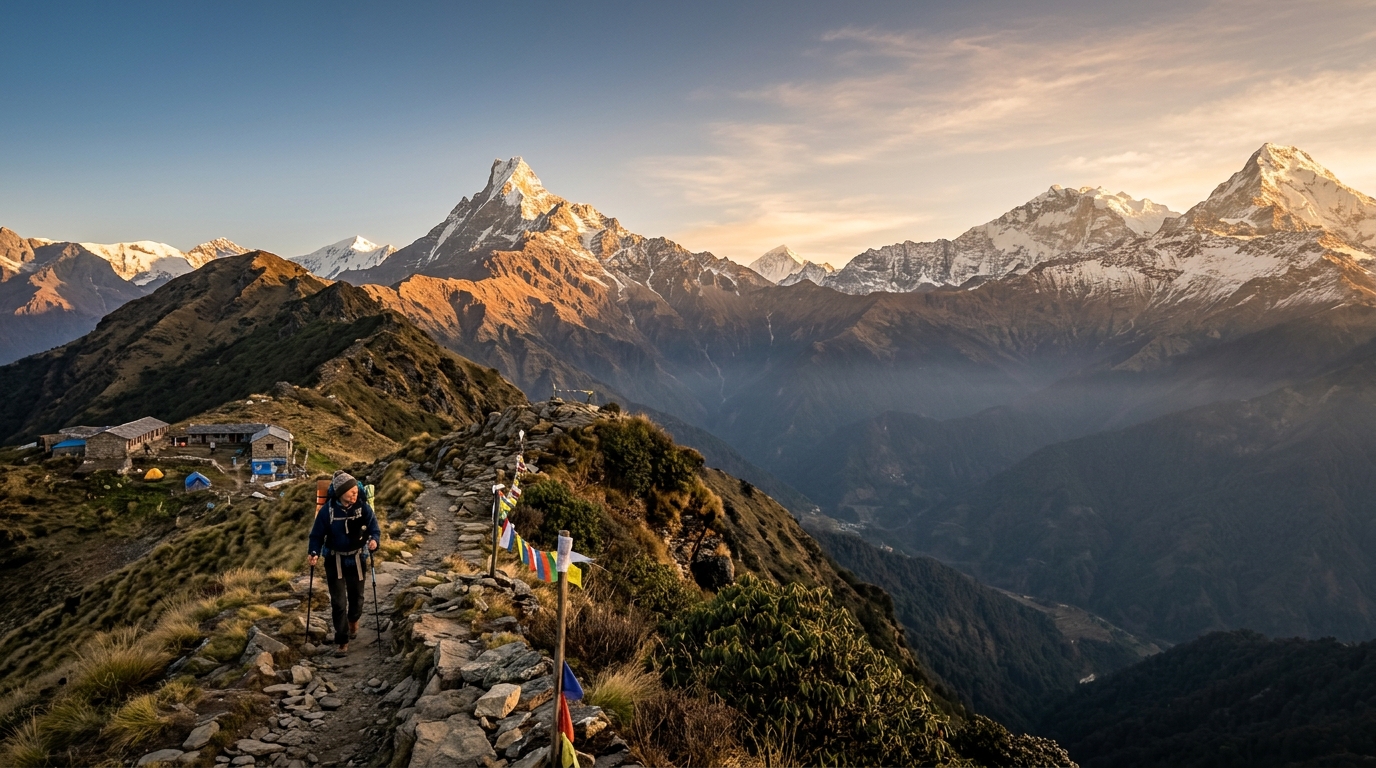
Why Timing Matters on the Mardi Himal Trek
The Mardi Himal route climbs through rhododendron forest, ridge-line trail, and exposed alpine terrain up to around 4,500 meters at High Camp or the viewpoint. Because so much of the trek sits above the treeline, weather and visibility make or break the experience. A clear autumn morning can deliver some of the best mountain views in Nepal, while a foggy monsoon afternoon can leave you staring at a wall of cloud with the peaks completely hidden.
Trail conditions also shift dramatically with the seasons — from dry, dusty paths in spring and autumn to muddy, leech-prone trails in the monsoon, and snow-covered ridgelines in winter. Choosing the right season affects not just your views, but your safety, comfort, and how much gear you need to carry.
Autumn (September to November): The Best Overall Season
Autumn is widely considered the best time for the Mardi Himal Trek, and most trekking agencies will point you here first. After the monsoon clears out, the skies open up and stay reliably clear for weeks at a time.
What to expect:
Crisp, clear mountain views almost every day, with Machapuchare and Annapurna South visible from multiple viewpoints along the ridge
Daytime temperatures around 15–20°C at lower elevations, dropping to near or below freezing at High Camp overnight
Dry, stable trails with minimal mud or slippery sections
The busiest season on the trail, so teahouses can fill up in peak weeks (especially around October, which coincides with the Dashain and Tihar festivals)
Best for: First-time trekkers, photographers, and anyone prioritizing mountain views over solitude.
Packing tip: Layer heavily for the temperature swing between the forest sections and High Camp — a warm down jacket is essential even though daytime lower-trail temperatures feel mild.
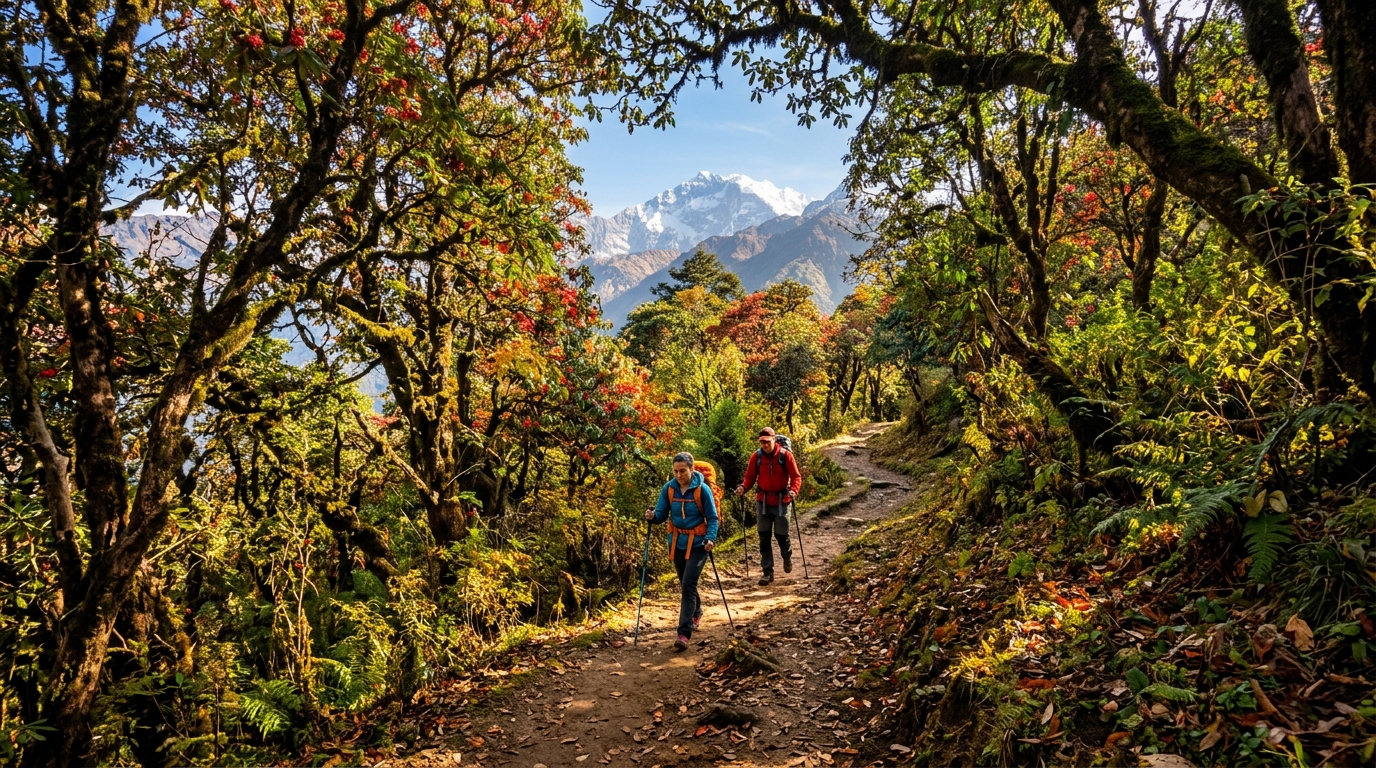
Spring (March to May): Rhododendrons and Warm Days
Spring is the second-best season for Mardi Himal, and for many trekkers, it's actually the more scenic choice thanks to Nepal's famous rhododendron blooms. Nepal's national flower carpets the forest sections of the trail in shades of red, pink, and white from roughly mid-March through April.
What to expect:
Warmer daytime temperatures than autumn, generally comfortable for trekking in light layers
Rhododendron and magnolia blooms along the lower forest trail, especially between Forest Camp and Low Camp
Slightly hazier skies than autumn, particularly by late spring as pre-monsoon haze builds up
Fewer crowds than peak autumn, though popular around Nepali New Year (mid-April)
Best for: Trekkers who want a balance of good weather, fewer crowds than autumn, and spectacular forest scenery.
Note on visibility: Early spring (March) tends to have clearer skies than late spring (May), when haze and occasional pre-monsoon cloud buildup can obscure distant peaks by afternoon. Plan morning viewpoint hikes for the best chance at clear shots of the Annapurna range.
Monsoon / Summer (June to August): Generally Not Recommended
Monsoon season brings heavy, near-daily rainfall to the Annapurna region, and Mardi Himal is not an exception. While technically possible, this is the least recommended season for the trek.
What to expect:
Frequent rain, often daily, with the heaviest downpours typically in the afternoon
Muddy, slippery trails, especially through the forested lower sections
Leeches in the forest zones — a common and persistent nuisance during monsoon
Low visibility, with clouds frequently obscuring the mountain views that are the main draw of this trek
Landslide and trail-erosion risk on some sections after heavy rain
Should you go anyway? If monsoon is your only window, an early morning start gives you the best (though not guaranteed) chance of clear views before afternoon clouds roll in. Waterproof gear, gaiters, and leech socks become essential rather than optional.
Best for: Budget-conscious trekkers comfortable with unpredictable weather, or those who specifically want to see the lush, green monsoon forest.
Winter (December to February): Quiet Trails, Serious Cold
Winter transforms Mardi Himal into a genuinely different trek. Snow covers the upper sections, temperatures drop well below freezing at High Camp, and the crowds disappear almost entirely.
What to expect:
Snow on the trail above Low Camp, sometimes requiring microspikes or crampons in December through February
Extremely cold nights at High Camp, often well below -10°C
Some teahouses in the upper sections may close during the coldest weeks (typically January), so checking ahead is important
Exceptionally clear, crisp daytime skies on clear days, often producing some of the sharpest mountain views of the year
Very few other trekkers on the trail
Best for: Experienced trekkers with proper cold-weather gear who want solitude and don't mind the cold in exchange for dramatic, crowd-free views.
Safety note: Winter trekking on Mardi Himal requires proper preparation — insulated sleeping bags rated for sub-zero temperatures, trekking poles, and ideally a guide familiar with current snow conditions on the upper trail.
Quick Comparison: Mardi Himal Trek by Season
Seasons | Views | Crowds | Trail Conditions | Best For |
|---|---|---|---|---|
Autumn (Sep–Nov) | Excellent | High | Dry, stable | Best overall views |
Spring (Mar–May) | Very Good | Moderate | Dry, some haze | Rhododendrons, fewer crowds |
Monsoon (Jun–Aug) | Poor | Low | Muddy, leeches | Budget/lush greenery only |
Winter (Dec–Feb) | Excellent (on clear days) | Very Low | Snowy, icy above Low Camp | Solitude, experienced trekkers |
Our Recommendation
If mountain views are your priority and this is your first time trekking in the Annapurna region, late September through November is the safest bet — you'll get consistent clear skies and well-maintained trails, even if it means sharing the trail with more trekkers.
If you'd rather avoid crowds and don't mind slightly hazier skies, March to April offers a beautiful middle ground, especially if you time it for the rhododendron bloom.
Avoid monsoon unless you have no other option, and only attempt winter if you're prepared for serious cold and have the right gear.
Browse our Mardi Himal Trek packages
Planning your trek around one of these seasonal windows will make the biggest difference to how much you actually see — and how comfortable you are getting there. For personalized advice based on your travel dates, our trekking specialists are happy to help you plan the right itinerary.