
Nepal Trekking Permits Guide 2026: Everything You Need Before You Fly
Nepal's permit system looks confusing until you actually break it down. Between national park fees, conservation area permits, TIMS cards, and restricted area paperwork, it's easy to either overpay or accidentally show up at a checkpoint without something you needed. This guide walks through exactly what's required in 2026, region by region, so you can budget accurately and sort your paperwork before you land in Kathmandu.
The rules have shifted more in the last two years than in the decade before that. A mandatory licensed guide policy is now actively enforced, TIMS has been dropped in some regions and kept in others, and several parks have moved to digital, QR-code checkpoints. If you're working from an older blog post, don't trust the numbers — verify against this guide or your trekking agency before you pay for anything.
What Exactly Is a Trekking Permit, and Why Does Nepal Require One
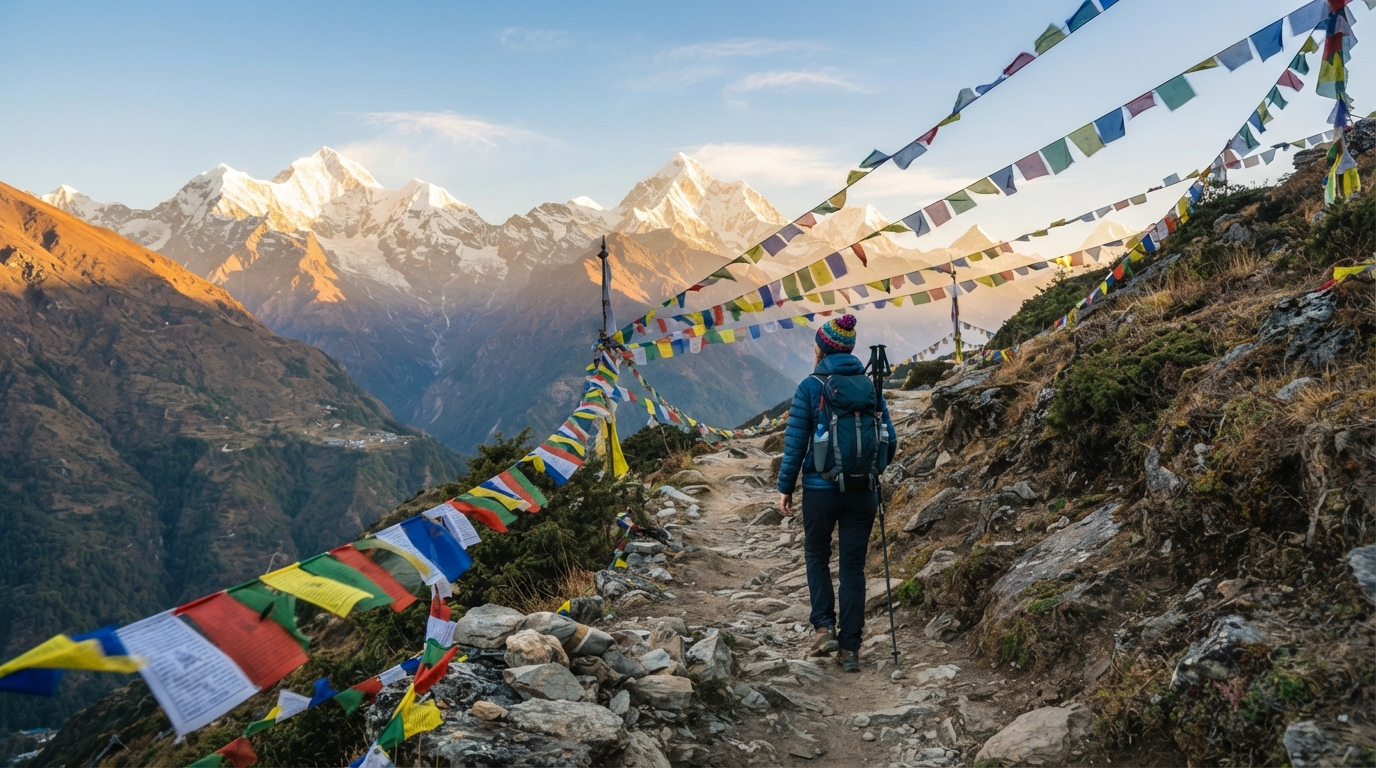
Most of Nepal's major trekking routes pass through national parks or conservation areas, and entering those areas legally requires a paid permit — similar to buying a ticket into any protected natural reserve. On top of that, some regions require a TIMS card (Trekkers' Information Management System), which is meant to track who is on the trail for safety reasons. Restricted border regions like Upper Mustang, Manaslu, and Upper Dolpo require a separate, more expensive special permit issued by the Department of Immigration.
None of this is optional. Checkpoints along Everest, Annapurna, Langtang, and Manaslu routes actively check paperwork, and trekking without the right permit can mean an on-the-spot fine or being turned back on the trail.
The Big Rule Change: Guides Are Now Mandatory
Since 2023, Nepal has required all foreign trekkers to hire a licensed guide — this was introduced after a string of solo trekker deaths on remote routes. As of 2026, this rule is enforced at checkpoints across Everest, Annapurna, Langtang, and Manaslu, and it was always a hard requirement for restricted areas like Upper Mustang, Tsum Valley, Kanchenjunga, and Dolpo.
Practically, this means solo, independent trekking without a guide is no longer a legal option on most popular routes. Budget an extra USD 30–40 per day for a licensed guide if you're not already going through an agency package that includes one.
TIMS Card: Where It's Still Required in 2026
This is the part that trips people up the most, because the rules genuinely differ by region.
Region | TIMS Required in 2026? | Notes |
|---|---|---|
Everest / Khumbu | No | TIMS has been phased out here; checkpoints now verify the Sagarmatha National Park permit and Khumbu municipality fee instead |
Annapurna | Being phased out | Some checkpoints still ask for it — check with your agency before departure |
Langtang | Yes | Still actively enforced |
Manaslu | Yes | Required alongside the restricted area permit |
Far-Western Nepal (incl. Rara Lake) | Yes | Still enforced |
Where it's still required, the TIMS card costs roughly USD 15 for group trekkers booked through a registered agency, and around USD 20–23 for individual applicants (individual TIMS is no longer issued to foreign nationals on most routes, since a guide is now mandatory). SAARC nationals pay a lower rate.
National Park and Conservation Area Permit Costs
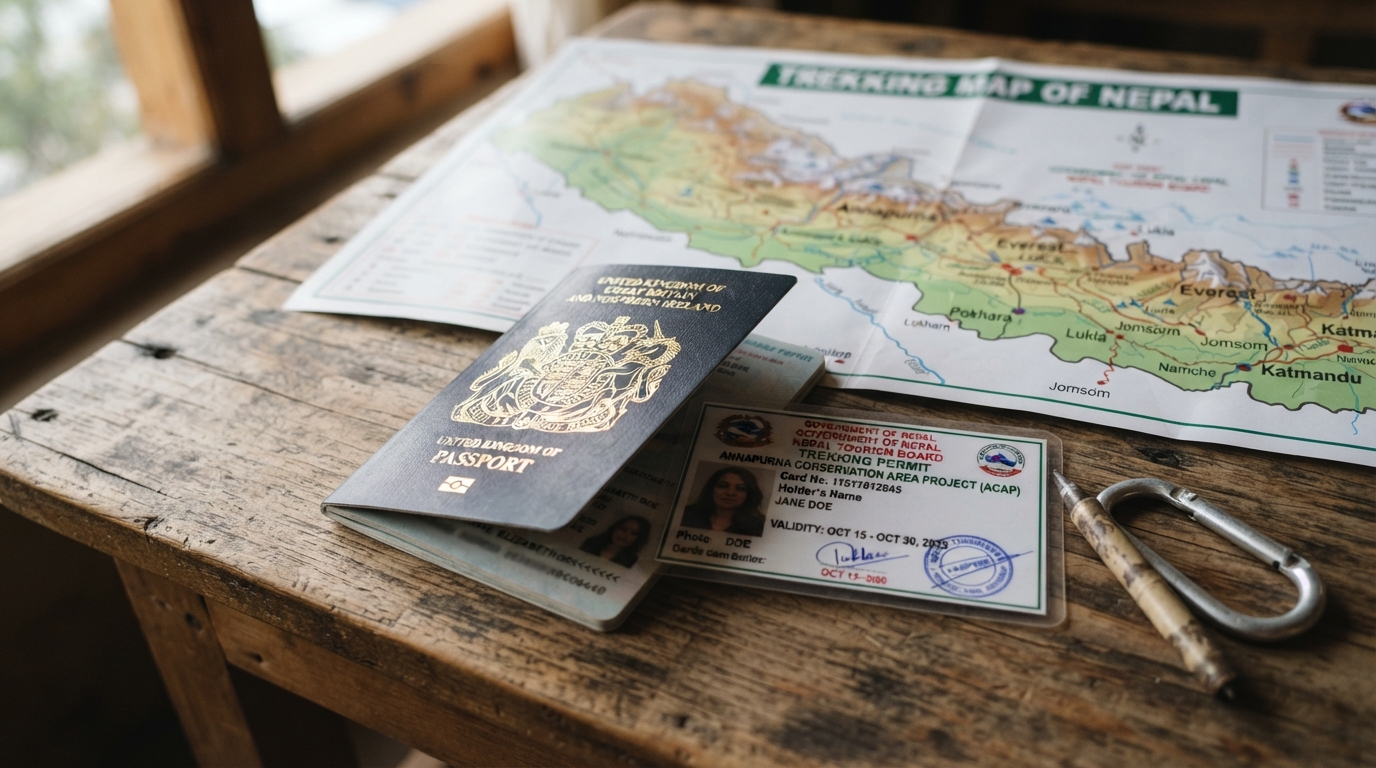
Almost every popular trekking route runs through a national park or conservation area, and each has its own entry fee. For most parks, the standard foreigner rate is around USD 22–30 (NPR 3,000), with a lower SAARC rate.
Park / Conservation Area | Covers Which Trek | Foreigner Fee | SAARC Fee |
|---|---|---|---|
Sagarmatha National Park | Everest Base Camp, Gokyo, Three Passes | ~USD 22 (NPR 3,000) | ~USD 11 (NPR 1,500) |
Annapurna Conservation Area (ACAP) | Mardi Himal Trek, Annapurna Base Camp, Poon Hill. | ~USD 23 (NPR 3,000) | ~USD 11 (NPR 1,500) |
Langtang National Park | Langtang Valley, Gosaikunda | ~USD 22 (NPR 3,000) | ~USD 11 (NPR 1,500) |
Manaslu Conservation Area | Manaslu Circuit | ~USD 23 (NPR 3,000) | ~USD 11 (NPR 1,500) |
On top of the Sagarmatha park fee, Everest-region trekkers also pay a local Khumbu Pasang Lhamu Municipality fee of roughly USD 15–22. All told, budget around USD 37–44 in park and municipality fees alone for Everest Base Camp, before guide costs.
See our full Mardi Himal Trek itinerary and cost breakdown
Restricted Area Permits: Upper Mustang, Manaslu, Dolpo
These are Nepal's most expensive permits, and they exist because the regions sit close to sensitive border areas. All restricted area treks require a minimum of two trekkers and must be booked through a registered agency — independent applications aren't accepted.
Region | Permit Cost | Extra Requirements |
|---|---|---|
Upper Mustang | USD 50 per person, per day | ACAP permit + TIMS also required; minimum 2 trekkers |
Manaslu Circuit | USD 75–100 per week (higher Sept–Nov) | Manaslu Conservation Area permit + TIMS also required |
Upper Dolpo | USD 500 for the first 10 days, then USD 50/day | Minimum 2 trekkers, licensed guide mandatory |
Because these permits are priced per day or per week, the length of your itinerary has a direct and significant effect on your total trip cost — worth confirming with your agency before you commit to a start date.
Peak Climbing Permits
If your trip includes a trekking peak — Island Peak, Mera Peak, or Lobuche Peak are the most popular — you'll need an additional permit from the Nepal Mountaineering Association (NMA), separate from your trekking permits.
Island Peak: roughly USD 250 per person in spring and autumn (peak season), dropping to around USD 125 in winter and monsoon
Mera Peak and Lobuche Peak: priced on a similar seasonal structure — confirm current NMA rates with your agency
Quick Reference: Permits by Popular Trek
Trek | Permits Needed | Approx. Total Permit Cost |
|---|---|---|
Everest Base Camp | Sagarmatha National Park permit + Khumbu municipality fee | ~USD 37–44 |
Annapurna Base Camp | ACAP permit (TIMS if still requested locally) | ~USD 23–43 |
Poon Hill | ACAP permit + TIMS | ~USD 43 |
Langtang Valley | Langtang National Park permit + TIMS | ~USD 37 |
Manaslu Circuit | Manaslu Conservation Area permit + TIMS + restricted area permit | ~USD 100–140+ |
Upper Mustang | ACAP permit + TIMS + restricted area permit (per day) | Varies with trip length |
Where and How to Get Your Permits
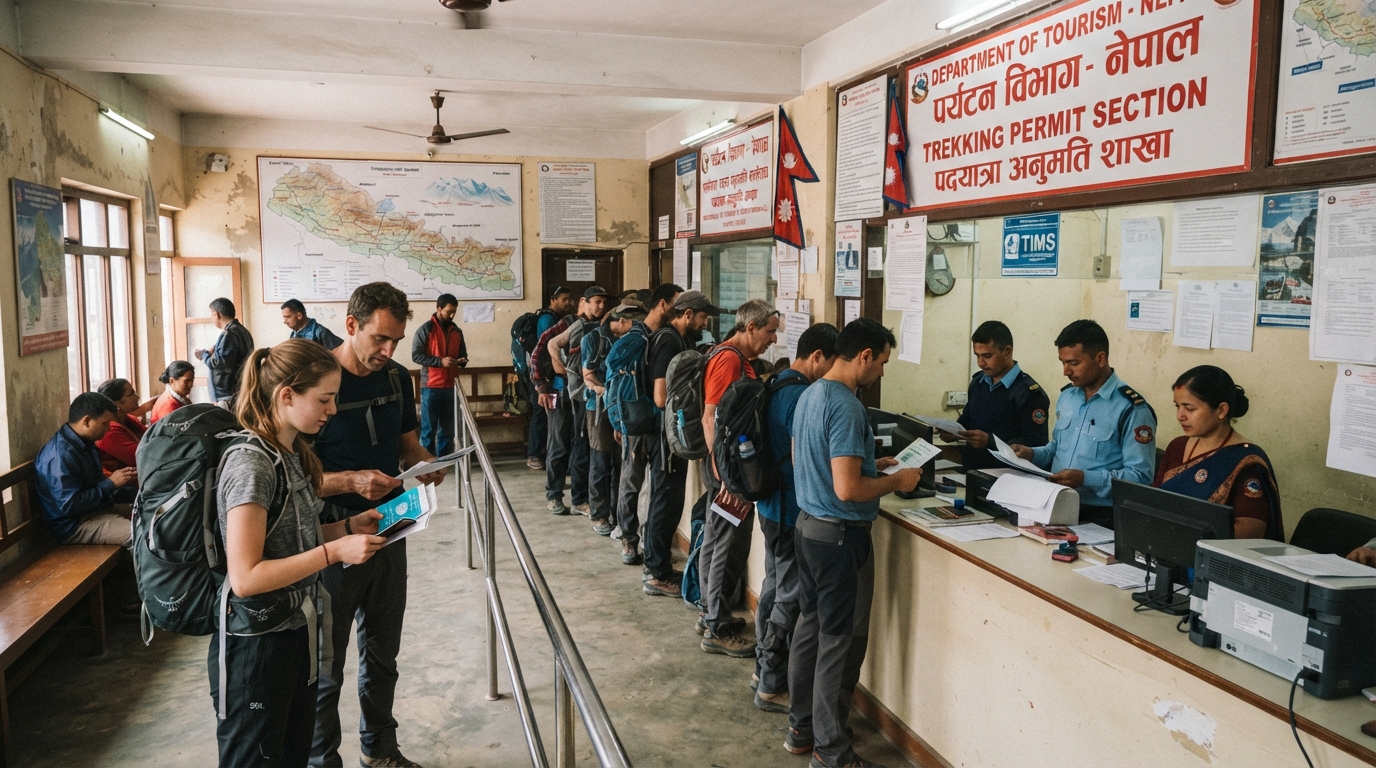
For open (non-restricted) treks, national park and conservation area permits are available at the Nepal Tourism Board office in Kathmandu or the TAAN office in Pokhara. In practice, almost every trekker now goes through a registered agency, which handles the paperwork and queuing on your behalf — you just sign the form.
Restricted area permits work differently: they must be applied for through a registered agency directly at the Department of Immigration in Maitighar, Kathmandu, and cannot be arranged independently.
Don't Forget Travel Insurance
It's not a "permit" in the traditional sense, but insurance is now actively checked by agencies before departure. Your policy needs to cover emergency helicopter evacuation at high altitude and treatment for altitude-related illness — standard travel insurance often doesn't include this, so double-check the policy wording rather than assuming it's covered.
Getting Your Paperwork Right, Before You Fly
The permit system can look like a maze from the outside, but in practice it comes down to three things: a park or conservation area permit for wherever you're headed, a TIMS card if your route still requires one, and a restricted area permit plus a licensed guide if you're going somewhere like Manaslu or Upper Mustang. Sort those three, and you're compliant almost everywhere in Nepal.
If you're booking through a registered agency, most of this is handled for you — you'll just need to have your passport, passport photos, and travel insurance details ready. If you're still deciding on a route, it's worth checking the permit cost alongside your guide and accommodation budget, since restricted areas in particular can shift your total trip cost significantly.
Talk to our team about planning your Nepal trek
Final Verdict
Permits aren't the hard part of planning a Nepal trek — they're just paperwork that needs to be done right. The real decision is choosing your route, since that determines everything else: whether you need TIMS, how much your restricted area permit costs, and how many days of guide fees you're budgeting for. Confirm your itinerary first, then let your trekking agency handle the permit process — for open routes like Everest and Annapurna it's usually sorted within a day, and for restricted areas like Manaslu or Upper Mustang, give it a little extra lead time. Get that sequence right and the paperwork is one less thing to think about once you're actually on the trail.