

The Mardi Himal Trek is not an extreme expedition, but it is not a gentle stroll either. It asks your body to climb steep stone steps for hours, walk a narrow ridge at over 3,500 meters, set off before dawn for a 900-meter climb to Base Camp, and then descend around 1,400 meters in a single day. People of many ages and fitness levels complete it every season. Those who enjoy it most are the ones who prepared.
This guide explains what the trek demands physically, how fit you need to be, the most effective types of training, and a simple plan you can adapt to your starting point. If you want detailed week-by-week programmes, see our 4-week, 8-week and 12-week training plans.
What the Trek Demands
To train effectively, it helps to understand the specific demands of the trail:
- Sustained uphill walking. Days one to three involve long climbs, often on stone staircases, with 500 to 1,000 meters of ascent per day.
- Steep descents. The descent from the ridge to Siding drops around 1,400 meters, which puts heavy load on the thighs and knees.
- Multi-day endurance. You walk five to seven hours a day for several days in a row, with limited recovery.
- Altitude. The thinner air makes every effort feel harder above about 3,000 meters.
- An early, cold start. The Base Camp hike begins in the dark and cold, often after a poor night's sleep at altitude.
- Uneven terrain. Roots, rocks and loose gravel test your balance and ankles.
Our difficulty guide and our breakdown of difficulty section by section explain these challenges in detail.
How Fit Do You Need to Be?
A good benchmark: before the trek, you should be able to complete a five to six-hour hike with around 800 to 1,000 meters of total ascent, carrying a daypack of five kilograms, and feel able to do something similar the next day. If you can do that, you have the base fitness for Mardi Himal. If you cannot yet, that is what your training is for.
Fitness is not about age or body shape. We regularly see trekkers in their sixties who trained well move comfortably, and young people who did no preparation struggle. Consistency in the weeks before the trek matters more than your starting point. Try our fitness self-test to see where you stand.
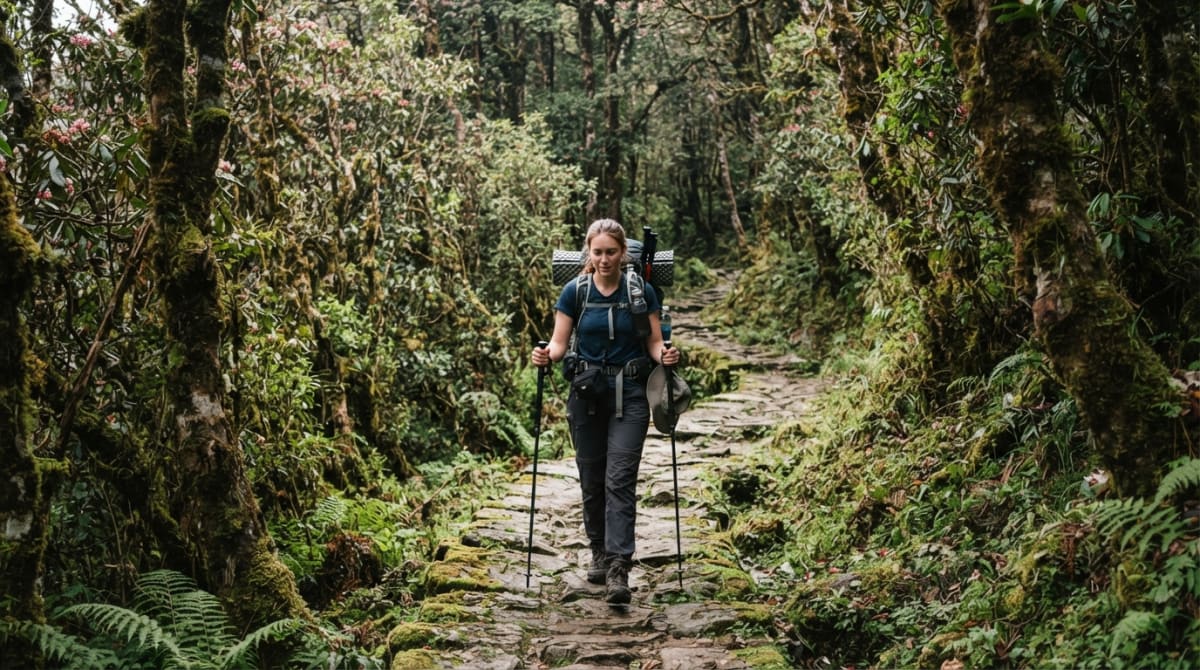
The Four Pillars of Trek Training
1. Cardiovascular Endurance
Your heart and lungs need to support hours of steady effort. Brisk walking, hiking, cycling, swimming, rowing, elliptical training and running all help. Aim for three to five sessions a week of 30 to 60 minutes at a pace where you can talk but not sing. Longer, slower sessions build the kind of endurance you need on the trail. See cardio training for Mardi Himal.
2. Leg Strength
Strong legs make climbing easier and protect your knees on the way down. Focus on squats, lunges, step-ups, deadlifts, calf raises and glute bridges. Two sessions a week are enough to make a real difference. Our guide to strength exercises for Mardi Himal has a full routine.
3. Hill and Stair Training
The most specific training for Mardi Himal is climbing. If you live near hills, hike them. If not, use stairs, a stair machine or a treadmill on incline. Carry a daypack with some weight and gradually increase the duration. See stair training for the Mardi Himal Trek.
4. Descent Training
Most people train for climbing and forget descending, then suffer on the way to Siding. Include downhill walking in your hikes, walk down stairs slowly, and do step-downs and slow squats to strengthen the muscles that control descent. Practise with trekking poles. Our article on trekking with knee problems has more on protecting your knees.
A Simple Weekly Training Structure
| Day | Session |
|---|---|
| Monday | Rest or gentle mobility and stretching |
| Tuesday | Cardio, 40–60 minutes (brisk walking, cycling, swimming) |
| Wednesday | Leg and core strength, 30–45 minutes |
| Thursday | Stair or incline session with a daypack, 30–60 minutes |
| Friday | Rest or easy walk |
| Saturday | Long hike with ascent and descent, 3–6 hours |
| Sunday | Easy recovery walk or second shorter hike |
Start with shorter sessions and increase the length of your weekend hike gradually, by about 30 minutes a week, until you can comfortably complete five to six hours.
Practice Hikes: The Most Important Training
Nothing prepares you for trekking better than trekking. Practice hikes build endurance and leg strength, but they also let you test your boots, socks, pack and clothing, learn how to pace yourself, and practise eating and drinking on the move. Plan at least four or five practice hikes before the trek, ideally including one back-to-back weekend with long hikes on consecutive days. Read practice hikes before Mardi Himal for ideas.
Training If You Live Somewhere Flat
Many trekkers live in cities without hills. You can still prepare well. Use stairwells in tall buildings, stair machines and treadmills on maximum incline. Do step-ups onto a bench with a weighted pack. Walk long distances at the weekend even on flat ground to build time on your feet. Our guide to training in a flat city has specific routines.
Training with a Weighted Pack
If you plan to carry your own bag, train with a pack of similar weight. Even if a porter carries your main bag, train with a daypack of four to six kilograms. Start light and add weight gradually to avoid injury. See training with a weighted pack.
Breathing and Pacing
Learning to control your breathing and pace is as important as raw fitness. Practise walking uphill at a steady, slow pace you could maintain for an hour without stopping. Coordinate your breathing with your steps. On the trek, this "all-day pace" will carry you further than bursts of speed. Read breathing techniques for trekking at altitude and pacing yourself on the trek.
Flexibility and Mobility
Stretching your calves, hamstrings, hip flexors and quadriceps helps prevent stiffness during a multi-day trek. A short daily routine and a longer weekly session of yoga or mobility work keep your body moving well. See our stretching and mobility routine.
Nutrition and Recovery During Training
Eat enough to fuel your training, with plenty of carbohydrates on long hike days and protein to support muscle repair. Sleep well, as recovery is when your body adapts. Stay hydrated, and practise eating snacks during long hikes, since you will do the same on the trek. Read nutrition in the weeks before the trek.
How Much Training for Each Itinerary?
- 9-day or 7-day trek: the gentlest pace. Six to eight weeks of consistent training suits most people.
- 5-day trek from Pokhara: a moderate pace. Six to eight weeks of training, including back-to-back hikes.
- 3-day short trek: long, steep days and a fast altitude gain. Train for longer and harder, and ideally have previous trekking experience. See training for the 3-day short trek.
Training for Older Trekkers
Age is not a barrier to Mardi Himal, but it makes preparation more important. Start earlier, build up more gradually, pay extra attention to strength and balance, and include plenty of descent training. Consult your doctor before starting a new exercise programme, especially if you have heart, lung or joint conditions. Read trekking Mardi Himal in your 50s and Mardi Himal for seniors over 60.
Mental Preparation
Trekking is as much mental as physical. Long climbs, cold mornings, basic facilities and the effects of altitude can test your patience. Practice hikes in poor weather, setting realistic expectations and learning to break long climbs into small goals all help. Read mental preparation for the Mardi Himal Trek.
How Training Changes Over Eight Weeks
If you follow an eight-week plan, your training should build in stages rather than staying the same each week.
Weeks one and two are about building the habit. Walk briskly three or four times a week, add two short strength sessions, and do a two to three-hour weekend hike. The goal is consistency, not exhaustion.
Weeks three and four add specificity. Introduce stair or incline sessions with a light pack, lengthen the weekend hike to three or four hours with real ascent, and increase the strength work slightly.
Weeks five and six are the peak. Your weekend hikes reach five to six hours, ideally on consecutive days at least once. Carry the daypack you will use on the trek, wear your boots and practise eating and drinking on the move.
Weeks seven and eight taper. Keep moving, but shorten sessions so your legs feel fresh when you arrive in Nepal. This structure works whatever your starting point; if you are less fit, simply start with shorter sessions and stretch the plan to twelve weeks.
Measuring Your Progress
It is motivating to see yourself improving, and it helps you judge whether you are ready. Simple markers work well. Time yourself climbing a set flight of stairs or a local hill every two weeks, and note how quickly your breathing settles afterward. Record the length and ascent of your weekend hikes. Notice how your legs feel the day after a long hike: less soreness means your body is adapting. A fitness watch can track heart rate, but how you feel is just as useful. If after several weeks you can climb steadily for an hour without stopping and recover quickly, you are on track.
If You Get Injured While Training
Minor aches are normal when you increase activity, but sharp pain, swelling or pain that worsens during exercise are signs to stop and rest. Common trek-training injuries include knee pain from too much descent too soon, shin splints from a sudden increase in walking, and blisters from new boots. Reduce the load, switch to low-impact training such as cycling or swimming, and see a physiotherapist or doctor if pain persists. It is better to arrive slightly less fit than to arrive injured. This is another reason to start training early, so a week or two of rest does not derail your preparation.
Your First Day on the Trail
All the training in the world does not help if you rush the first day. Excitement, cool morning air and fresh legs tempt many trekkers to race up the stairs from Kande. Resist it. Walk at a pace where you can talk comfortably, take short breaks before you feel exhausted, and drink regularly. The first day sets the tone for the whole trek, and a relaxed start leaves you with energy for the harder days ahead. Your guide will set a sensible pace; trust it.
Common Training Mistakes
- Starting too late and trying to cram training into the final two weeks.
- Only doing cardio and ignoring strength and descent training.
- Training without a pack, then carrying one on the trek.
- Never testing boots and gear on long hikes.
- Increasing training too quickly and getting injured.
- Doing hard training in the last few days instead of tapering.
Staying Fit on the Trek Itself
Once you are walking, the trek becomes your training. Stretch gently each evening, especially calves, hamstrings and quadriceps, and again in the morning before setting off. Keep eating and drinking even when your appetite drops at altitude. Use trekking poles on descents from the first day, not just when your knees start to hurt. And listen to your body: a slower day is far better than an injury that ends the trek early. Your guide can adjust the pace or the day's destination if you need it.
The Final Two Weeks
In the last two weeks, reduce the intensity and volume of your training so your body arrives fresh. Keep active with shorter walks and light strength work, but avoid anything that leaves you sore. Focus on sleep, hydration and preparing your gear. Arrive in Nepal rested, not exhausted.
Trek with Confidence
Training well turns Mardi Himal from a struggle into a pleasure. You will enjoy the views more, recover faster each evening and have energy left for the pre-dawn climb to Base Camp. If you are preparing for your first Himalayan trek, the 9-day Mardi Himal Trek offers the most comfortable pace. If you are fit and already in Pokhara, the 5-day trek from Pokhara is a great challenge. Ask us if you are unsure which suits your fitness.