

Few short treks have as wide a temperature range as Mardi Himal. On the first morning you might walk up from Kande in a T-shirt, sweating in the humid air among terraced fields. Two days later, at High Camp, you will be wearing every warm layer you own as the sun drops behind the ridge, and the pre-dawn hike to Base Camp can be the coldest few hours of your trip. Getting your clothing right is the difference between enjoying these extremes and suffering through them.
This guide explains what to wear on the Mardi Himal Trek at each stage of the route and in each season, how to layer effectively, which fabrics work best, and what to wear on the demanding Base Camp morning. For the full list of everything to bring, see our complete packing list.
The Principle: Layers, Not Bulk
The secret to staying comfortable on a trek is layering: wearing several thinner garments that you can add or remove as conditions change, rather than one heavy coat. On Mardi Himal you will adjust your layers many times a day, taking off a fleece on a sunny climb, adding a shell when wind hits the ridge, and piling on insulation when you stop.
A good layering system has four parts:
- Base layer: sits against your skin and moves sweat away.
- Mid layer: traps warmth, usually a fleece.
- Insulation layer: a down or synthetic jacket for cold rest stops, evenings and the summit hike.
- Shell layer: blocks wind and rain.
Each layer does one job well, and together they cover everything from warm forest to freezing ridge.
Choosing the Right Fabrics
Fabric matters more than brand. For base layers, merino wool is soft, warm when damp and resists odour, which is useful when laundry is not an option; synthetics such as polyester dry faster and cost less. For mid layers, fleece is light, warm and breathable. For insulation, down offers the best warmth for its weight but loses warmth when wet, while synthetic insulation keeps working when damp. For shells, a waterproof, breathable membrane keeps rain out while letting sweat escape.
Avoid cotton for anything you walk in. Cotton absorbs sweat, dries slowly and pulls heat away from your body, which is uncomfortable at best and dangerous in cold, windy conditions. Jeans are the worst offender. Read our comparison of merino vs synthetic base layers.
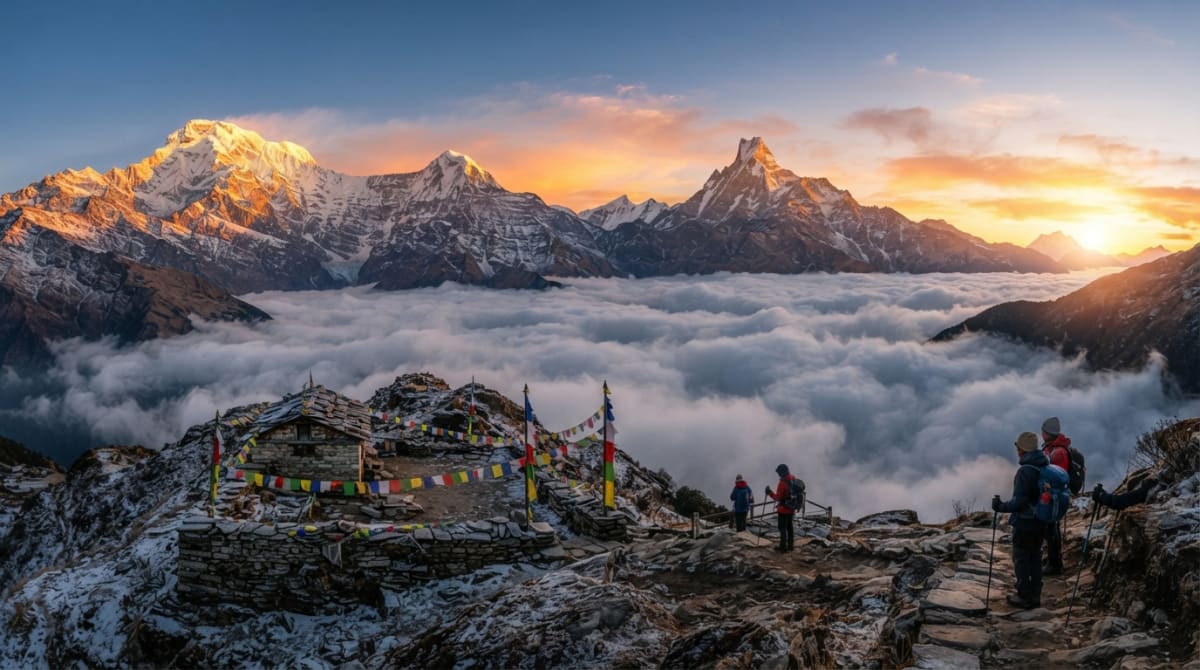
What to Wear, Stage by Stage
Pokhara to Pitam Deurali (820–2,100 m)
The first day is often warm, especially in spring and early autumn. Most people walk in a short-sleeved or light long-sleeved base layer and trekking trousers, with a sun hat and sunglasses. Keep a fleece and rain shell in your daypack; the ridge at Australian Camp can be breezy and afternoon showers are common in spring. In winter, mornings are cool enough for a fleece at the start.
Pitam Deurali to Low Camp (2,100–2,970 m)
The forest is shaded and often misty, so temperatures are cooler, but the steady climb keeps you warm. A long-sleeved base layer and trekking trousers are ideal, with a fleece for breaks. In the monsoon, add a rain jacket and consider rain trousers; leeches make long trousers tucked into socks a good idea. By Low Camp in the late afternoon, you will want your fleece and probably your down jacket.
Low Camp to High Camp (2,970–3,580 m)
On the open ridge, wind becomes the main factor. On a sunny, still day, a base layer and light fleece may be enough while walking. When wind picks up or cloud rolls in, the temperature can drop sharply, so keep your shell handy. Sun protection is important: a hat, sunglasses and sunscreen, or long sleeves and a buff, protect you from strong UV at altitude.
Evenings at High Camp
As soon as you arrive at High Camp, change out of sweaty clothes into dry layers. For most of the year, evenings here are cold, often below freezing. Wear thermal base layers top and bottom, a fleece, a down jacket, a warm hat and warm socks, plus camp shoes or down booties. The dining room is heated, but bedrooms are not. Sleep in a clean base layer inside your sleeping bag. See staying warm at night in tea houses.
The Base Camp Hike (3,580–4,500 m)
This is the coldest part of the trek. You start before dawn, often well below freezing, and the wind on the upper ridge can be bitter. Wear:
- Thermal base layer top and bottom
- Trekking trousers, or insulated trousers in winter
- Fleece mid layer
- Down jacket
- Windproof shell over the top if it is windy
- Warm hat, buff or balaclava
- Liner gloves plus insulated gloves or mittens
- Thick trekking socks
As the sun rises and you warm up from climbing, shed layers gradually to avoid sweating, then put them back on at the top while you rest. Read what to wear on summit day.
The Descent to Siding
By mid-morning on the descent, temperatures climb quickly, and by the time you reach Siding's farmland it can feel hot again. Start in layers and strip down as you go. Sunglasses and a hat remain important. Your legs will do the most work on this day, so comfortable, non-restrictive trousers help.
What to Wear in Each Season
| Season | Daytime walking | Evenings and summit hike | Extras |
|---|---|---|---|
| Autumn (Sep–Nov) | Light base layer, trekking trousers | Full layers, down jacket, warm gloves | Sun protection; warmer gloves in November |
| Winter (Dec–Feb) | Base layer plus fleece, windproof shell | Heavy down jacket, insulated trousers, mittens | Gaiters, microspikes, balaclava |
| Spring (Mar–May) | Light layers, sun hat | Down jacket, especially March and April | Rain shell for afternoon showers |
| Monsoon (Jun–Aug) | Quick-dry layers, rain jacket, rain trousers | Fleece and light insulation | Leech socks, umbrella, dry bags |
For seasonal detail, see our winter packing list and monsoon packing list.
Footwear
For most people, waterproof trekking boots with good ankle support and grippy soles are the best choice. They protect you on the long descent, cope with mud in the forest and handle frost and snow on the upper trail. Make sure they are broken in before the trek. Pair them with merino or synthetic trekking socks, and bring a thicker pair for summit day and sleeping. In camp, lightweight sandals or sneakers let your feet recover. See choosing boots for Mardi Himal and trekking socks for Mardi Himal.
Head, Hands and Neck
Small items make a big difference to comfort. A wide-brimmed sun hat or cap protects you during the day. A warm beanie is essential for evenings and the summit hike. A buff or neck gaiter is one of the most versatile items you can pack: it protects against sun, dust, wind and cold. For hands, carry thin liner gloves for cool mornings and insulated gloves or mittens for the Base Camp hike. See gloves for the Mardi Himal Trek and hats, beanies and buffs.
Dressing Respectfully
Nepal is a relatively conservative country, particularly in rural areas. In villages, dress modestly: cover shoulders and avoid very short shorts or revealing tops. Trekking trousers with a T-shirt or long-sleeved top are perfect. Men should avoid walking shirtless in villages and lodges. Women can wear leggings with a longer top or trekking trousers. Dressing respectfully earns goodwill and avoids unwanted attention. Read cultural dos and don'ts.
What to Wear for Sleeping
Keep a dedicated set of clean, dry sleeping clothes: a thermal top and leggings, warm socks and a beanie. Never sleep in the clothes you walked in, as they hold moisture that makes you cold overnight. On very cold nights at High Camp, sleep with your down jacket over your sleeping bag or inside it for extra warmth.
How Many of Each Item?
- Walking base layers: 2
- Thermal top and leggings for evenings and sleeping: 1 set
- Fleece: 1
- Down or synthetic insulated jacket: 1
- Waterproof shell jacket: 1
- Rain trousers: 1 pair (essential in the monsoon)
- Trekking trousers: 2 pairs
- Trekking socks: 3 to 4 pairs, plus 1 thick pair
- Underwear: 3 to 4 pairs, quick-drying
- Sports bra for women: 2
- Sun hat, warm hat, buff, liner gloves, insulated gloves: 1 each
On a four or five-day trek, this is enough. You can rinse small items and dry them at lower lodges if needed.
Renting and Buying Clothing in Nepal
If you do not own a down jacket or warm gloves, you can rent or buy them cheaply in Pokhara or Kathmandu. Fleeces, hats, gloves and buffs are sold everywhere, often locally made or imported. Down jackets are commonly rented by the day. Quality varies, so check stitching, zips and warmth before paying. See renting trekking gear in Pokhara and buying gear in Pokhara and Kathmandu.
Keeping Clothes Fresh on the Trail
There is no laundry service on the upper trail, so a little planning keeps you comfortable. Merino base layers can be worn for several days before they smell. Rinse socks and underwear in the afternoon at lower lodges, where they have time to dry in the sun; at High Camp, washing is rarely practical. Hang damp items inside your room overnight or in the dining room if the owner allows, and never put damp clothes into your sleeping bag except for small items you want to dry with body heat. Pack dirty clothes in a separate bag to keep your clean set fresh.
Clothing for Children and Older Trekkers
Children lose heat faster than adults and are less likely to say when they are cold, so pack an extra warm layer and check on them at rest stops. Choose clothing with easy zips and simple layers they can manage themselves. Older trekkers may also feel the cold more, particularly in the evenings; a warmer down jacket, insulated trousers for High Camp and good-quality gloves are worthwhile investments. Both groups benefit from well-fitted boots and plenty of socks. See packing for kids.
Dressing on a Budget
You do not need expensive technical clothing to trek Mardi Himal. Synthetic sports tops from a budget store work well as base layers. Fleece is inexpensive. A down jacket can be rented in Pokhara for a modest daily fee. Spend your money where it matters most: boots, a waterproof shell and warm gloves. See our budget gear list.
Common Clothing Mistakes
- Wearing cotton. It stays wet and cold.
- Too few warm layers for High Camp. Evenings and the summit hike are colder than many expect.
- Not changing out of sweaty clothes on arrival. This is how many trekkers get chilled.
- Overheating on climbs. Remove layers before you start sweating heavily.
- Forgetting warm gloves. Thin gloves are not enough for the pre-dawn climb.
- Brand-new boots. Blisters can end a trek early.
- Leaving the shell at the lodge. Weather on the ridge changes quickly; always carry it in your daypack.
- Ignoring sun protection on cold days. UV is strong at altitude even when the air feels chilly.
A Sample Outfit for Each Part of the Day
Morning start at Low Camp in October: merino T-shirt, long-sleeved base layer, fleece, trekking trousers, beanie and liner gloves. After twenty minutes of climbing, you will likely remove the fleece and beanie.
Midday on the ridge: long-sleeved base layer, sun hat, sunglasses and buff, with the shell ready in your pack.
Evening at High Camp: dry thermal base layers, fleece, down jacket, warm hat, thick socks and camp shoes.
Summit morning: everything warm, then peel layers as the sun rises.
Clothing for Travel Days
Travel days between Kathmandu and Pokhara, or on the jeep back from Siding, have their own needs. The buses and jeeps can be warm in the lowlands and dusty on rough roads, so light, breathable clothes and a buff to cover your nose and mouth are useful. Keep a fleece handy for air-conditioned buses or early starts. Wear your trekking boots on travel days if your luggage allowance is tight, since they are the heaviest item you own.
Dress Well, Trek Happy
The right clothing lets you enjoy the full range of the Mardi Himal Trek, from sunny forest walks to icy sunrises at Base Camp. When you trek with us, your guide checks your clothing at the pre-trek briefing and helps you rent anything missing in Pokhara. Explore the 5-day Mardi Himal Trek from Pokhara or the 9-day trek from Kathmandu, and ask us if you are unsure about your kit.