

Standing at Mardi Himal Base Camp, most trekkers find their eyes drawn upward to the peak that gives the trek its name. At 5,587 meters, Mardi Himal rises steeply above the viewpoint, a snow and rock pyramid tucked beneath the far higher Machapuchare. It is natural to wonder what it would take to stand on top.
This guide gives an honest overview of Mardi Himal peak climbing: what the mountain is like, how climbing differs from trekking, what experience and permits are needed, the equipment and skills involved, the risks, and how to decide whether it is for you. It is an introduction for trekkers curious about the next step, not a technical route guide. Any climb must be planned with a qualified climbing operator and experienced mountain guides.
Mardi Himal: The Mountain
Mardi Himal stands on a spur running south from Machapuchare, on the eastern side of the Annapurna Sanctuary. At 5,587 meters, it is a modest height by Himalayan standards, dwarfed by Machapuchare's 6,993 meters and the 7,000-meter-plus summits of Annapurna South and its neighbours. But its position in front of these giants makes it one of the most photographed smaller peaks in the region, and its summit offers an extraordinary close-up view of Machapuchare's face.
The mountain is sometimes described as Machapuchare's "little sister". From the trekking route, you see its southern flanks rising steeply above the Base Camp area. For the view from below, read our Base Camp visitor's guide and the mountains you see from the trek.
Trekking vs Climbing: A Different Undertaking
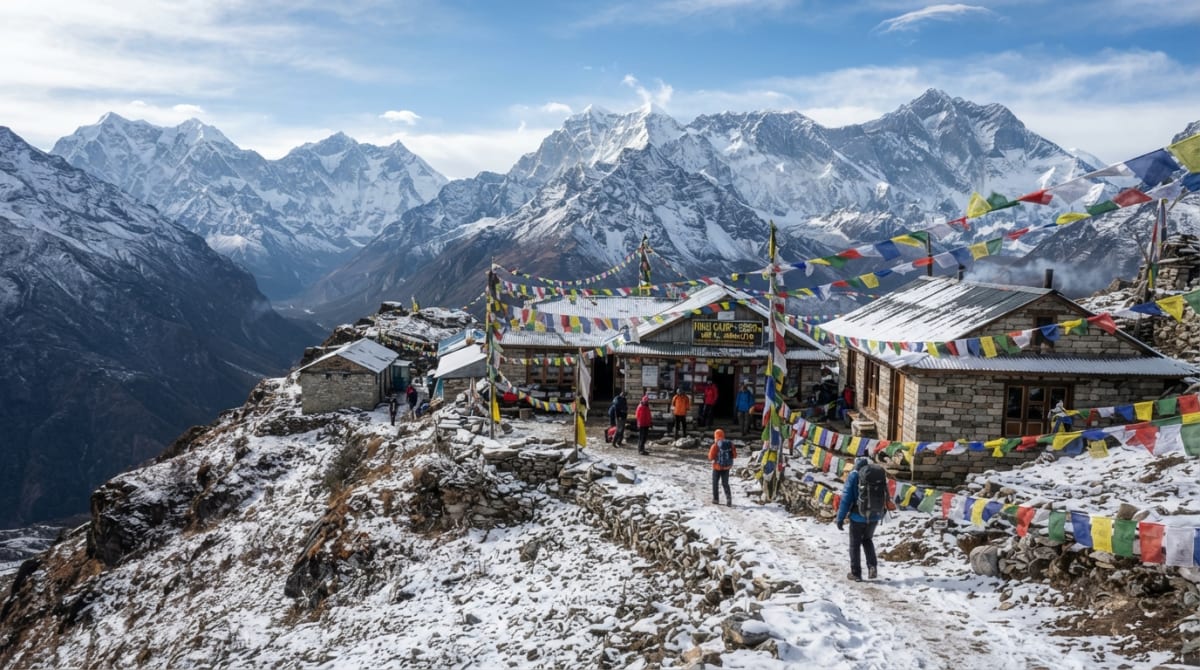
It is important to be clear: the Mardi Himal Trek and climbing Mardi Himal peak are completely different activities. The trek follows a walking path that requires no technical skills in normal conditions and ends at around 4,500 meters. Climbing the peak means leaving the trail and ascending roughly another thousand meters of steep, glaciated or snow-covered mountain terrain, typically with camps above Base Camp, fixed ropes on steeper sections, and exposure to objective hazards such as crevasses, avalanches, rockfall and sudden weather changes.
In practice this means a longer trip, a climbing permit, specialist equipment, experienced climbing guides and support staff, and a level of skill and fitness well beyond what the trek demands. Our comparison of trekking to Base Camp versus climbing the summit sets out the differences in detail.
Permits for Climbing Mardi Himal
Climbing Mardi Himal requires a climbing permit in addition to the ACAP entry permit needed for the trek. Nepal's climbing peaks are divided into categories administered by the government and the Nepal Mountaineering Association, with fees that vary by peak and season. Climbing permits are arranged through registered climbing or trekking agencies, which also handle requirements such as liaison arrangements, insurance for staff and rubbish deposits where they apply. Rules and fees change periodically, so rely on a current, registered operator for the details. See Mardi Himal peak climbing permits and rules.
Who Should Consider Climbing Mardi Himal?
A Mardi Himal climb suits people who:
- Have already trekked at high altitude, ideally above 4,500 meters, and know how their body responds.
- Are competent with crampons and an ice axe on steep snow and ice.
- Understand rope work, including moving on fixed lines with ascenders and descending safely.
- Have strong fitness and endurance for long summit days.
- Are comfortable with camping in cold, exposed conditions.
- Accept that weather and conditions may prevent a summit attempt.
If this does not describe you yet, the trek itself is a superb way to build experience. Many climbers take a basic mountaineering course, climb smaller peaks elsewhere, or complete longer, higher treks before attempting a Himalayan summit. Read Mardi Himal as a warm-up for bigger treks.
What a Climbing Trip Typically Involves
Every operator plans the climb differently depending on conditions, the route chosen and the team's experience, but a Mardi Himal expedition generally includes:
- The approach trek along the Mardi Himal route to High Camp and Base Camp, which also serves as acclimatization.
- Acclimatization and preparation days around Base Camp, including skills practice and equipment checks.
- Establishing one or more higher camps above Base Camp, carrying tents, food and equipment.
- A summit day starting in the early hours, often with fixed ropes on steeper sections, followed by a descent to a lower camp.
- Contingency days for bad weather, which are essential in the mountains.
- The return trek via Siding or the ascent route.
Overall, a climbing trip takes significantly longer than the trek, often around two weeks from Pokhara depending on the plan.
How a Climbing Day Differs from a Trekking Day
On the trek, a typical day means breakfast in a warm dining room, five or six hours on a clear path, and an afternoon of rest in a lodge. On a climb, days above Base Camp look very different. You sleep in tents on snow or rock, melt snow for water, and cook on stoves. Summit day usually starts around midnight or in the very early hours, with a long ascent by headlamp in extreme cold, hours of sustained effort at over 5,000 meters, and a long, careful descent when you are already exhausted. Every movement on steep ground requires attention, and conditions can change quickly. Climbers need not only the skills but the mental resilience to keep making good decisions when tired, cold and short of breath.
Acclimatization for a Summit Attempt
The trek's normal ascent profile, sleeping no higher than 3,580 meters, is not enough preparation for a summit at 5,587 meters. Climbing itineraries therefore build in more acclimatization, typically with nights at Base Camp or higher, rest days, and "climb high, sleep low" rotations before the summit push. Operators may combine the Mardi Himal approach with other high ground or schedule extra days around Base Camp. Rushing acclimatization is one of the most common reasons for failed attempts and altitude illness on smaller Himalayan peaks. Read our guide to altitude sickness for the basics, which apply even more strongly above 5,000 meters.
Physical Training for a Climb
Training for a summit builds on trek training but goes further. You need strong aerobic endurance for long summit days, leg and core strength for steep ground in heavy boots, and the ability to carry heavier loads between camps. Weighted hiking on steep terrain, long back-to-back days, stair or step training with a heavier pack, and strength work for legs, hips and core form the backbone of preparation. Practising in cold, early starts and in mountaineering boots helps too. Allow several months of structured training if you are coming from trekking fitness. Our 12-week training plan is a good foundation, with extra load and intensity added for climbing.
Insurance for Climbing
Standard travel insurance for trekking will not cover a climb. You need a policy that explicitly covers mountaineering to the summit altitude, including the use of ropes, crampons and ice axes, and that includes helicopter rescue from high camps. Read the policy wording carefully and confirm with the insurer if in doubt. Your operator should also insure its climbing guides and support staff.
What If You Do Not Reach the Summit?
Many attempts on Himalayan peaks end below the summit because of weather, snow conditions, altitude or time. Good guides set a turnaround time and stick to it. Accepting this possibility before you go is part of being a responsible climber. Even without the summit, a climbing trip gives you nights at high camp, time on the glaciated upper mountain and views few trekkers ever see.
Technical Skills Required
The upper mountain involves terrain where a slip could have serious consequences. Climbers need to be comfortable with:
- Walking and climbing in crampons on hard snow and ice.
- Using an ice axe for balance and self-arrest.
- Clipping into and moving along fixed ropes, using an ascender (jumar) on steep ground.
- Abseiling or rappelling safely on descent.
- Roped travel and basic crevasse awareness where relevant.
- Coping with altitude above 5,000 meters.
Good climbing guides teach and refresh skills at Base Camp, but this should build on prior experience rather than replace it.
Equipment
A climb requires much more equipment than the trek: mountaineering boots compatible with crampons, crampons, ice axe, climbing harness, helmet, ascender, belay and rappel device, carabiners and slings, expedition-grade down clothing, a warmer sleeping bag, and camping gear for the upper camps. Group equipment such as ropes, tents and cooking gear is usually provided by the operator. Our peak climbing gear list outlines personal equipment in more detail.
Seasons for Climbing
As with trekking, the main climbing seasons are autumn and spring. Autumn usually brings stable weather and clear skies, while spring brings warmer temperatures but more afternoon cloud and occasional storms. Winter is very cold with stronger winds, and the monsoon brings heavy snow at altitude and poor visibility. Conditions on the upper mountain vary from year to year, so operators assess snow, ice and weather close to the time. See the best time for Mardi Himal for general seasonal patterns.
Risks of Climbing Mardi Himal
Climbing any Himalayan peak carries real risks, and Mardi Himal is no exception:
- Altitude. Going above 5,500 meters increases the risk of serious altitude illness, especially with fast ascents.
- Falls. Steep snow and ice terrain means a slip can be serious.
- Avalanches and rockfall. Conditions on the upper mountain change with weather and season.
- Weather. Storms, high winds and whiteouts can develop quickly.
- Cold injuries. Frostbite and hypothermia are risks on summit day.
- Remoteness. Rescue from higher camps depends on weather and helicopter access.
These risks are why climbing operators, guides and insurance matter so much. Insurance must specifically cover mountaineering to the summit altitude and include helicopter rescue.
Choosing a Climbing Operator
If you decide to climb, choose a registered, experienced operator with qualified climbing guides who know the peak. Ask about the guides' qualifications and experience on Mardi Himal, the ratio of guides to climbers, acclimatization plans, how turnaround decisions are made, what rescue arrangements are in place, what equipment is provided, and how staff are insured. Be cautious of very cheap offers. See how to choose a safe agency for questions that apply equally to climbing.
Is the Summit Necessary?
For most visitors, the answer is no. Mardi Himal Base Camp puts you face to face with Mardi Himal, Machapuchare, Annapurna South and Hiunchuli, with no technical climbing. The sunrise from the Upper View Point and Base Camp is one of the finest in the Annapurna region. The summit is a serious mountaineering goal, rewarding for those with the skills and ambition, but the trek delivers the essence of the mountain's beauty to anyone of reasonable fitness.
Building Toward a Climb
If a summit like Mardi Himal inspires you, a sensible progression might be: complete the Mardi Himal Trek to experience altitude and the region; take a mountaineering course covering crampons, ice axe and rope skills; gain experience on non-technical or easier technical summits; and then plan a Himalayan peak with an experienced operator. Each step builds the skills and self-knowledge that make a climb safer and more enjoyable.
Questions to Ask Yourself Before Committing
Before booking a climb, be honest with yourself. Have you slept above 4,500 meters and felt well? Can you move confidently in crampons on a steep, icy slope? Are you comfortable clipped to a rope above a long drop? Could you keep going for fourteen hours on summit day, then descend carefully? Are you prepared to turn around a few hundred meters from the top? If the answer to any of these is no, build more experience first. The mountain will still be there.
Start with the Trek
Whether you dream of the summit or simply want to see the mountain up close, the trek is the place to start. The 9-day Mardi Himal Trek takes you to Base Camp with a gradual ascent, and the 5-day trek from Pokhara covers the same route in less time. If you are an experienced climber interested in the peak, contact us to talk through your experience and goals, and we will advise whether it suits you.