

Every season thousands of people walk the Mardi Himal Trek without incident, and the vast majority come home with nothing worse than tired legs and a camera full of photos. That record is built on preparation. The trek has a few specific hazards that catch out the unprepared: it gains altitude quickly, its best section is an exposed ridge, winter brings ice to the upper trail, and the roads to and from the trailheads are rough. None of these need to worry you if you understand them and trek sensibly.
This guide explains the main risks on the Mardi Himal Trek, how to reduce them, and what happens if something does go wrong. It applies whether you are joining a group or trekking privately as a solo traveler with a guide.
How Safe Is the Mardi Himal Trek Overall?
Mardi Himal is a moderate, non-technical trek on a well-used trail with tea houses at regular intervals. There are no glaciers to cross, no fixed ropes and no river fords. Serious accidents are rare. The risks that do exist are mostly environmental, such as altitude, weather and ice, and they are highest when trekkers ignore conditions or push on against advice. With a good guide, sensible pacing and the right season, the trek is safe for anyone of reasonable fitness. For a short answer, see is the Mardi Himal Trek safe?
Risk 1: Altitude Sickness
The biggest health risk on the trek is altitude sickness. You sleep at 3,580 meters at High Camp and reach around 4,500 meters on the Base Camp hike after a relatively fast ascent. Most people experience mild symptoms at most, but serious forms of altitude illness, though rare, can be life-threatening.
The key safety rules are simple: choose an itinerary that does not rush the ascent, walk slowly, drink plenty of water, avoid alcohol at altitude, tell your guide about any symptoms and never go higher with worsening symptoms. Descent is the most effective treatment, and on Mardi Himal it is quick: from High Camp you can lose 400 to 600 meters in one to two hours. Read our full guide to altitude sickness prevention and safety and how to recognise AMS, HAPE and HACE.
Risk 2: Weather on the Exposed Ridge
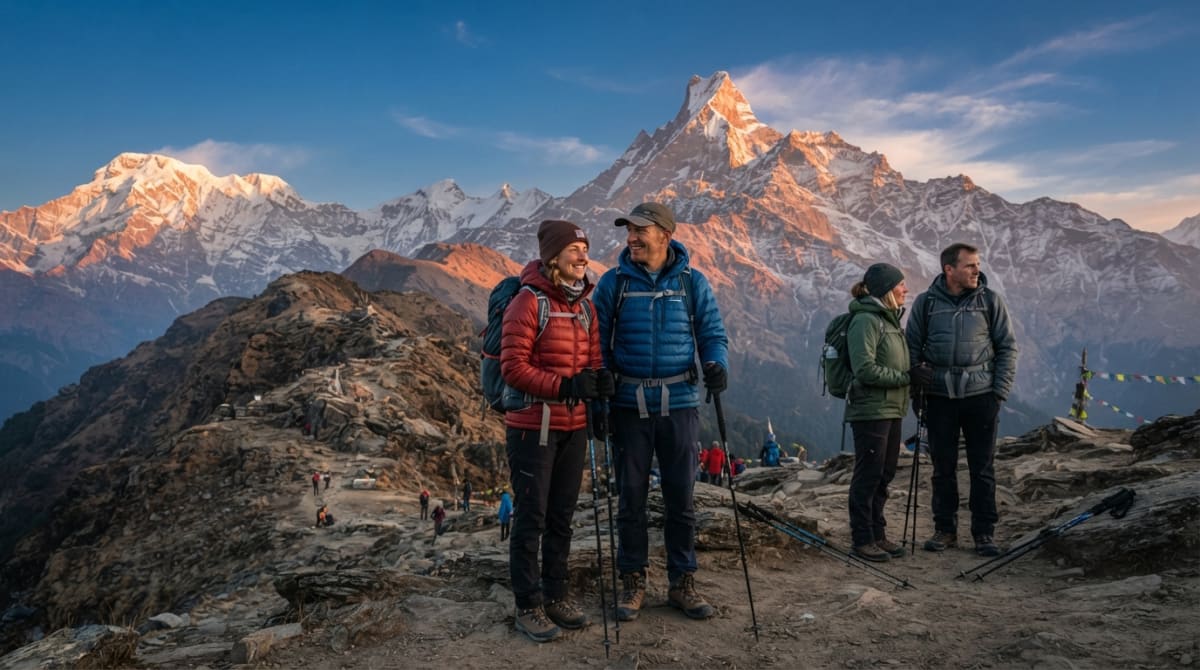
Above Low Camp, the trail follows an open ridge with steep drops on either side. In fine weather it is wide enough to feel secure. In strong wind, heavy rain, fog or snow it becomes more serious. Fog can reduce visibility to a few meters and hide the edge of the path. Wind can knock you off balance on the narrowest sections. Lightning is a risk on exposed ground during pre-monsoon storms in May and early June.
Manage weather risk by starting early, since mornings are usually clearer, checking the forecast, turning back or waiting when conditions deteriorate, and trusting your guide's judgement. Read weather safety on the Mardi Himal ridge and trekking safely in fog.
Risk 3: Snow and Ice in Winter
From December to February, and sometimes after late storms in March, snow and ice can cover the trail above High Camp and occasionally the ridge between Badal Danda and High Camp. The steep grassy slope to the Upper View Point becomes slippery and dangerous when icy. Microspikes are often essential, and in some conditions the safest decision is to turn around at the Upper View Point or not attempt the Base Camp hike at all.
Avalanche risk on the standard trekking route is low compared with routes that pass beneath large snow slopes, such as the upper section of the Annapurna Base Camp trail, but after heavy snowfall, guides assess slopes around Base Camp carefully. Read avalanche risk on the Mardi Himal Trek and when you need microspikes.
Risk 4: Slips, Trips and Falls
The most common injuries on any trek are simple slips and twisted ankles. On Mardi Himal, the steep stone steps near Kande, the muddy forest trail after rain, loose gravel on the ridge and the long descent to Siding are the places to take care. Good boots with grip, trekking poles, a steady pace and attention on descents reduce the risk dramatically. Most falls happen late in the day when trekkers are tired, so do not rush the final hour. See slippery trails after rain and landslides and trail hazards.
Risk 5: The Pre-Dawn Base Camp Hike
The summit day starts in the dark, often around 4 or 5 a.m., on a steep, sometimes frosty path. Walking by headlamp on unfamiliar ground adds risk. Use a bright headlamp with fresh batteries, stay close to your guide, keep your pace slow and steady, and take extra care on the way down when you are tired and the sun has softened frozen ground into mud. Read hiking to Mardi Himal Base Camp in the dark.
Risk 6: Road Travel
Statistically, road travel is one of the biggest risks of any trip to Nepal. The drives to Kande and especially from Siding are on narrow, winding roads, with the Siding road being unpaved and rough. Choose reputable transport with experienced drivers, wear a seatbelt where available, avoid travelling on mountain roads after dark, and be flexible when rain makes roads dangerous. Read jeep and road safety on the way to Kande and Siding.
Risk 7: Illness
Stomach upsets and colds are the most common health problems on treks. Drink treated water, wash your hands, choose hot freshly cooked food and carry a basic medical kit. If you arrive in Nepal with a heavy cold or flu, consider whether to delay your start, as illness makes altitude harder to handle. See avoiding stomach problems and starting with a cold or flu.
Wildlife and Dogs
Dangerous wildlife encounters are extremely rare. Langur monkeys can be bold around food, so keep snacks out of sight. Village dogs and trail dogs are common; most are friendly or indifferent, but give unfamiliar dogs space and avoid provoking them. Leeches in the monsoon are unpleasant but harmless. Read wildlife safety on the trek and dogs on the Mardi Himal trail.
Solo Trekkers
Since April 2023, foreign trekkers in Nepal's protected areas have been required to trek with a licensed guide, so fully independent solo trekking is no longer an option. Many travelers still trek as solo travelers, booking a private trek with just themselves and a guide, or joining a small group. This is actually safer: you have someone to help with navigation, decisions and emergencies, and someone who knows when to call for help. Read Mardi Himal for solo travelers and is a guide mandatory?
Solo Female Trekkers
Nepal is generally regarded as a safe destination for women, and many women trek Mardi Himal each season. Standard precautions apply: book through a reputable, registered agency, check reviews, share your itinerary with someone at home, dress modestly in villages and trust your instincts. Some agencies, including ours, can arrange a female guide on request. Read our guide for solo female trekkers.
Group Trekkers
Trekking in a group brings its own safety dynamics. The biggest risk is peer pressure: nobody wants to be the person who slows everyone down, so people hide headaches or push on when exhausted. A good group sets clear expectations from the start, walks at the pace of the slowest member and treats turnaround decisions as normal. In larger groups, an assistant guide or porter walks at the back so no one is left behind. Agree on meeting points at junctions, never let anyone descend alone if they feel unwell, and look out for each other in the evenings at altitude, since the person with altitude sickness is often the last to notice it.
Personal Security and Valuables
Crime on the Mardi Himal trail is rare, and the tea house community is close-knit. Still, sensible habits apply. Keep your passport, money and phone on you or in your daypack rather than leaving them in an unlocked room. Many lodges have padlocks on doors; some trekkers bring a small lock of their own. In busy places such as bus parks in Kathmandu and Pokhara, be alert to pickpockets and keep bags zipped. Avoid displaying large amounts of cash. Read keeping your valuables safe for more tips.
Families and Children
Families trek Mardi Himal successfully, but children need extra attention. They may not describe altitude symptoms clearly, so watch for changes in mood, appetite and energy. Keep them close on the ridge and on steep sections, and choose a slower itinerary with shorter days. Our guide to Mardi Himal with kids explains how to plan safely.
Choosing a Safe Trekking Agency
Your agency is your biggest safety decision. Choose a company registered with the Nepali government and trekking associations, with licensed, experienced guides trained in first aid. Ask how they handle altitude sickness, what their evacuation procedures are, whether they check the weather, and how they insure their staff. Be wary of very cheap offers, which often cut corners on guide experience and staff welfare. Read how to choose a safe trekking agency.
Travel Insurance
Travel insurance is essential. It must cover trekking up to at least 4,500 meters and include emergency helicopter evacuation and medical treatment. Check the altitude limit carefully, as many policies stop at 3,000 meters or exclude trekking. Carry your policy number and the insurer's emergency phone number with you. Read our travel insurance guide.
Communication and Emergencies
Mobile signal is available at many points on the trail but is patchy on parts of the ridge and around High Camp. Lodges often have Wi-Fi of varying reliability. Your guide will carry a phone and know where signal is available. Save emergency numbers offline, including your agency, your insurer and your embassy. Read emergency contacts and communication.
If someone is injured or seriously ill, the guide gives first aid, stabilises the situation, and organises descent or evacuation. In good weather, helicopters can reach High Camp from Pokhara quickly. At night or in poor weather, flights are not possible, so descent on foot, assisted if necessary, is the first option. See what happens if you get injured and helicopter rescue on Mardi Himal.
Knowing When to Turn Back
Good trekkers turn back more often than you might think. Signs that it is time include worsening altitude symptoms, deteriorating weather, icy ground without the right equipment, exhaustion, or running behind schedule so that you would descend in the dark. Reaching Base Camp is a wonderful goal, but the view from the Upper View Point or High Camp is spectacular too, and no view is worth an accident. Read when to turn back on Mardi Himal.
Safety by Season
| Season | Main safety considerations |
|---|---|
| Autumn (Sep–Nov) | Crowded lodges at High Camp in October; cold mornings; generally the safest season |
| Winter (Dec–Feb) | Ice and snow above High Camp; extreme cold; shorter days |
| Spring (Mar–May) | Afternoon storms and occasional lightning, especially in May; late snow in March |
| Monsoon (Jun–Aug) | Slippery trails, leeches, landslides on roads, poor visibility on the ridge |
See the best time for the Mardi Himal Trek for more on seasonal conditions.
Safety Checklist
- Book with a registered agency and a licensed, first-aid-trained guide
- Buy insurance covering 4,500 m and helicopter evacuation
- Choose an itinerary that suits your experience and the season
- Bring proper boots, warm layers, a headlamp and trekking poles
- Carry microspikes in winter
- Drink treated water and eat well
- Tell your guide about any symptoms immediately
- Respect turnaround decisions
- Avoid night-time road travel
Trek Safely with Us
Safety is built into every Mardi Himal trip we run. Our guides are licensed, trained in first aid and altitude awareness, and experienced on this route in every season. They monitor weather and conditions daily, carry a first aid kit, know the fastest descent routes, and have the authority to change plans when needed. The 9-day Mardi Himal Trek offers the most gradual ascent, while the 5-day trek from Pokhara provides a well-balanced pace for fit trekkers. Contact us with any safety questions before you book.