

Winter is the season most trekkers overlook on Mardi Himal, and that is exactly why some experienced walkers love it. From December to February, the trails empty, the air becomes astonishingly clear, and the peaks wear their heaviest coat of snow. On a still winter morning at the Upper View Point, the silence and clarity can be extraordinary. But winter also brings real challenges: deep cold, icy paths above High Camp, shorter days and the occasional snowstorm.
This guide explains what winter on the Mardi Himal Trek is really like, the challenges to prepare for, the rewards that make it worthwhile, and how to trek safely and comfortably. For a broader seasonal comparison, see the best time for the Mardi Himal Trek.
The Rewards of Winter Trekking
- Clear skies. Winter often has the clearest air of the year, with long spells of cloudless mornings.
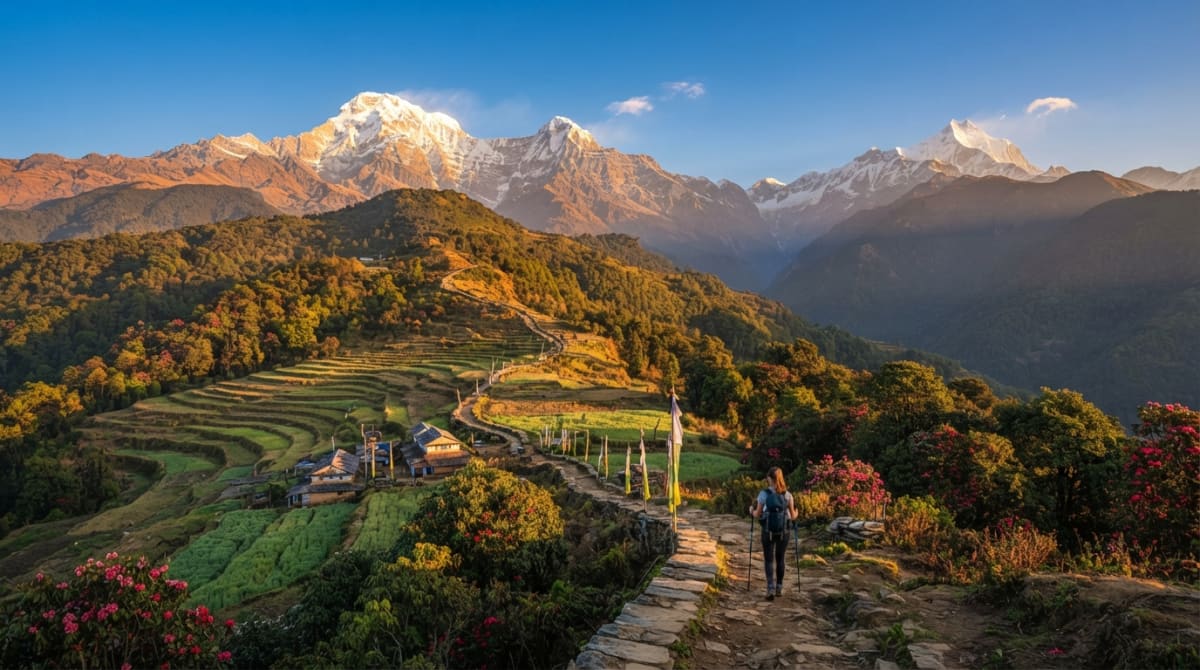
- Snowy peaks. Machapuchare, Mardi Himal and Annapurna South look their most dramatic under fresh snow.
- Solitude. Very few trekkers are on the trail, so you may have lodges and viewpoints almost to yourself.
- Warm hospitality. Lodge owners have more time for guests, and evenings around the stove are cosy.
- Snowy landscapes. A dusting of snow on the rhododendron forest and grassy ridge transforms the scenery.
The Challenges of Winter
- Cold. High Camp nights are well below freezing, and rooms are unheated.
- Ice and snow. The trail above High Camp, and sometimes below it, can be icy and treacherous.
- Short days. Less daylight means less margin for delays.
- Snowstorms. Occasional storms can bring heavy snow and close the upper trail temporarily.
- Limited facilities. Water pipes freeze, showers are impractical and some lodges may close in cold spells.
Winter Month by Month
December
Early winter brings clear, cold weather and quiet trails. Snow is possible above High Camp, but in some years December stays relatively dry. The Christmas and New Year period brings a small increase in trekkers. See Mardi Himal in December.
January
The coldest month, with the most likelihood of ice and snow on the upper trail. Skies are often very clear. Some lodges may close temporarily in severe cold. See Mardi Himal in January.
February
Still cold, with the possibility of significant snowfall, particularly in some years' late-winter storms. Days lengthen and temperatures begin to rise toward the end of the month. See Mardi Himal in February.
Temperatures in Winter
| Location | Daytime in sun | Night |
|---|---|---|
| Pokhara | Mild to warm | Cool |
| Pitam Deurali | Cool to mild | Around freezing |
| Low Camp | Cool | Below freezing |
| High Camp | Cold, pleasant in still sun | Around −5 to −15°C |
| Base Camp at dawn | — | Well below freezing, with wind chill |
These are typical ranges; cold snaps can be colder. See temperature by month.
Snow and Ice on the Trail
Snow conditions on Mardi Himal vary enormously between years and even between weeks. In a dry winter, the trail may be clear all the way to High Camp, with only patches of ice above. After a storm, snow can cover the ridge from Badal Danda upward, and the steep slope from High Camp to the Upper View Point can become icy and dangerous.
The key safety tool is microspikes, small chains with spikes that slip over your boots and grip ice. They are usually sufficient for the trekking route and are essential when the path above High Camp is icy. Full crampons and ice axes are rarely needed on the standard trek. Your guide will judge conditions each day and may decide that the Upper View Point is the safe turnaround, or that the hike should be postponed. Read snow on the Mardi Himal Trek and microspikes and crampons.
Is Winter Trekking Safe?
With the right preparation, yes. The main risks are slips on ice, cold injuries such as frostnip and hypothermia, and getting caught in a storm on the exposed ridge. These are managed by carrying microspikes, dressing properly, starting early, watching the weather and trusting your guide's turnaround decisions. Avalanche risk on the standard trekking route is generally low, but after heavy snowfall guides assess slopes near Base Camp carefully. Read cold injuries on Mardi Himal in winter and avalanche risk.
Tea Houses in Winter
Most lodges stay open through winter, though some owners go down to lower villages during the coldest spells or after heavy snow. Guides phone ahead to confirm which lodges are open. Rooms are cold, so your sleeping bag is essential. The dining room stove becomes the heart of the lodge, and evenings are spent close to it. Water pipes can freeze at High Camp, so toilets may use buckets and showers are rarely possible. See staying warm in tea houses.
A Winter Morning at High Camp
A winter summit morning has a character all its own. Your alarm goes off around 4:30 a.m., and the first challenge is leaving a warm sleeping bag for a room where your water bottle may have a skin of ice. You dress quickly in the layers you laid out the night before, pull on microspikes at the lodge door, and step into air so cold it catches your breath. Above, the stars are extraordinarily bright in the dry winter sky.
You climb slowly by headlamp, crampon points or microspikes crunching on frozen grass and snow. Your guide sets a steady pace to keep you warm without sweating. As the sky lightens behind you, the snowy peaks appear first as pale shapes, then catch the sun one by one: Annapurna South, Hiunchuli, Mardi Himal and finally Machapuchare, blazing orange against a deep blue sky. With no other trekkers around, the silence is total. Then the sun reaches you, and within minutes you feel warmth on your face and the cold becomes bearable again. For many winter trekkers, this moment alone justifies the season.
Keeping Warm at Night
Winter nights at High Camp are the hardest part of the season, but a few tricks make a big difference. Eat a good dinner, since your body generates heat by digesting food. Fill a bottle with boiling water from the kitchen, seal it tightly, and put it in your sleeping bag as a hot water bottle. Sleep in a clean, dry base layer, a warm hat and dry socks. Put tomorrow's clothes inside your sleeping bag so they are warm in the morning. Use the lodge blankets on top of your sleeping bag. And make a last toilet trip before bed so you are not forced out into the cold at 2 a.m. See staying warm at night in tea houses.
Winter Food and Drink
Hot food and drink are your best friends in winter. Soups, dal bhat, porridge and hot lemon or ginger tea keep you warm and hydrated. Many trekkers drink less in the cold because they do not feel thirsty, but dehydration makes you more vulnerable to cold and altitude, so keep sipping throughout the day. Carry snacks that do not freeze hard, such as nuts and dried fruit, and keep chocolate in an inside pocket. See the tea house menu guide.
Christmas and New Year on the Trail
A small number of trekkers spend Christmas or New Year on Mardi Himal. Lodges are quiet, and some owners make an effort to mark the occasion. Watching the first sunrise of the year from the Upper View Point is a memorable way to start a new year. Pokhara hosts a street festival around the new year, and Tamu Lhosar, the Gurung New Year, falls around the end of December. See Mardi Himal over Christmas and New Year.
Winter Photography
Winter is one of the best seasons for photography on Mardi Himal. The air is clear, the peaks are heavily snow-covered, and low-angle sunlight creates long shadows and rich colour. Snow on the ridge and trail adds foreground interest. Cold drains batteries quickly, so carry spares in an inside pocket. Snow can fool your camera's meter, so check exposure and add a little compensation to keep snow white rather than grey. See snow photography on Mardi Himal.
Combining a Winter Trek with Other Experiences
Winter is a pleasant time in lower Nepal. Pokhara is mild and sunny, perfect for lakeside walks and paragliding on clear days. Chitwan National Park is cool and comfortable, with good wildlife viewing. Kathmandu can be chilly in the mornings and evenings but is usually dry and clear. A winter trip that combines Mardi Himal with the lowlands gives you both snowy peaks and warm jungle in a single holiday. See Mardi Himal and Chitwan.
What to Pack for Winter
- Heavy down jacket rated for well below freezing
- Insulated trousers or thermal leggings under trekking trousers
- Warm base layers, top and bottom, plus a spare set
- Insulated gloves or mittens plus liner gloves
- Warm hat, buff and balaclava
- Sleeping bag rated to at least minus 15 degrees Celsius comfort
- Waterproof, insulated boots and warm socks
- Microspikes and gaiters
- Hand warmers
- Insulated water bottle or bottle covers to prevent freezing
- Sunglasses for snow glare
See our full winter packing list.
Winter Trekking Tips
- Build in a buffer day. Snowstorms can delay the Base Camp hike.
- Start early, finish early. Days are short and afternoons turn cold quickly.
- Keep water from freezing. Fill bottles with hot water and store them upside down inside your pack.
- Protect batteries. Keep phones and camera batteries warm inside your clothing and sleeping bag.
- Change into dry layers on arrival. Sweat freezes quickly at High Camp.
- Listen to your guide. Turnaround decisions in winter are about safety.
Winter Trekking Mistakes to Avoid
- Underestimating the cold at High Camp. Pack for well below freezing, even if Pokhara feels warm.
- Leaving microspikes behind. Ice above High Camp can be dangerous without them, and conditions change quickly.
- Starting the summit hike too late. Short days leave little margin for delays.
- Sweating on the climbs. Wet base layers freeze when you stop. Open zips and remove layers before you overheat.
- Letting water freeze. Carry an insulated bottle or keep bottles inside your pack.
- Ignoring early signs of cold injury. Numb, white patches on fingers, toes or face need warming immediately.
- Rigid plans. Winter weather rewards flexibility; a buffer day can save the trek.
How Winter Changes the Difficulty
In good conditions, the Mardi Himal Trek in winter is not much harder physically than in autumn. The difference comes from cold and ice. Walking in microspikes on frozen ground is slower and more tiring, cold mornings sap energy, and short days mean less time to rest. After heavy snow, breaking trail on the ridge can be exhausting. Overall, winter adds a moderate step up in difficulty and requires more care, particularly on the Base Camp day. Read how hard Mardi Himal is in winter.
Who Should Trek in Winter?
Winter suits trekkers who tolerate cold well, have some hiking experience, and value clear views and solitude over comfort. It is less suitable for complete beginners, young children, or anyone who dislikes cold. If you are new to trekking, consider late November or March instead, which offer some of winter's clarity with milder conditions. See how hard Mardi Himal is in winter.
Winter Wildlife
Winter can be a surprisingly good time for wildlife. Some animals move to lower altitudes in the cold, bringing them closer to the trail, and tracks in fresh snow reveal the movements of animals you might never see. Himalayan monals are sometimes spotted feeding on open slopes near the treeline, and birds of prey are visible against the clear winter sky. Walk quietly in the early morning for the best chances. See flora and fauna along the trail.
Plan a Winter Trek
Winter itineraries benefit from a little extra flexibility. Our winter itinerary adds a buffer day for weather. The 5-day trek from Pokhara can be extended by a day, and the 9-day Mardi Himal Trek already includes city days that absorb delays. Our guides carry microspikes and know how conditions change through the season. Contact us to plan a winter departure.