

Nepal is often thought of as a mountain country, but in the south the Himalaya give way to the flat, fertile plains of the Terai, home to jungles, grasslands and some of Asia's most remarkable wildlife. Chitwan National Park, a UNESCO World Heritage Site, is the best known of these lowland parks, and it lies only a few hours from Pokhara. Combining the Mardi Himal Trek with a Chitwan safari gives you two completely different sides of Nepal in one trip: frosty sunrises beneath Machapuchare and humid mornings searching for rhinos in the tall grass.
This guide explains how to combine the two, with a sample itinerary, transport options, what to expect in Chitwan and the best seasons. For the trekking part, see our 9-day Mardi Himal Trek, which we can extend with a Chitwan safari.
Why Combine Mountains and Jungle?
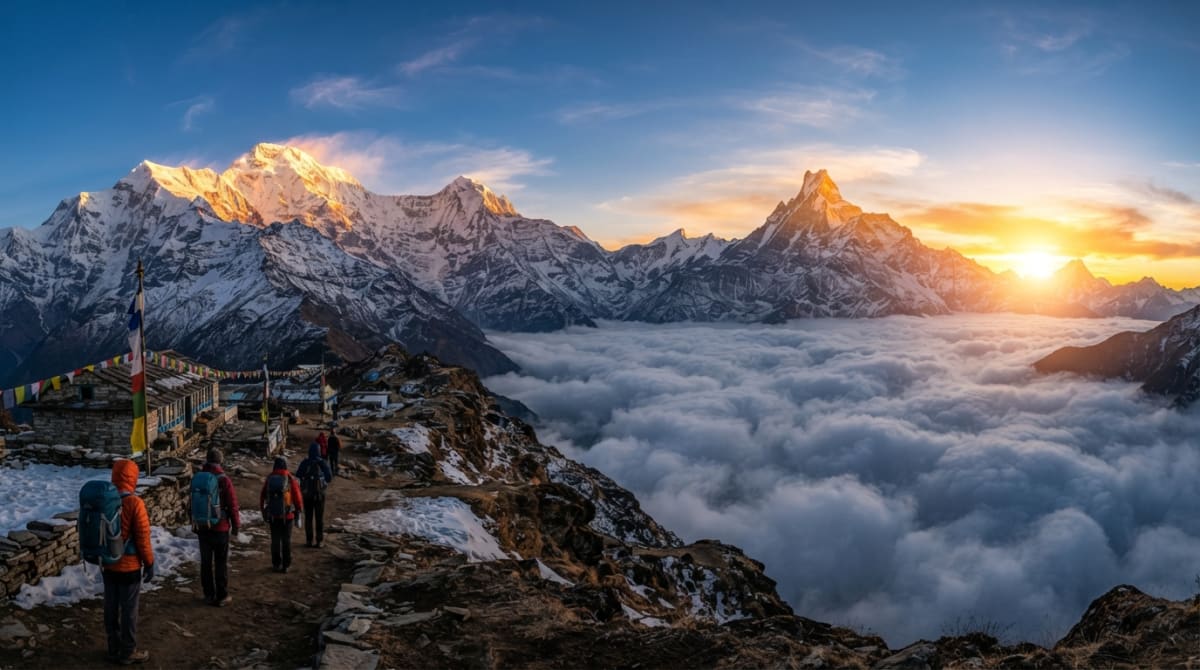
The contrast is the point. Few countries let you move from 4,500 meters to under 200 meters in a single day's travel. After several days of cold nights, thin air and rocky trails, Chitwan's warm, green landscape feels like a different world. Instead of lodges clinging to a ridge, you stay in jungle lodges on the edge of the park. Instead of Himalayan monals and tahr, you look for rhinos, crocodiles and hornbills. The two experiences complement each other beautifully and give you a much fuller picture of Nepal's diversity.
Chitwan is also a relaxing way to end an active trip. Safari activities are gentle, mostly involving jeeps, canoes and short walks, and the lodges often have gardens and pools where you can rest your legs after the descent to Siding.
A Sample 12-Day Itinerary
| Day | Plan |
|---|---|
| 1 | Arrive in Kathmandu |
| 2 | Travel to Pokhara |
| 3–7 | Mardi Himal Trek: Pitam Deurali, Forest Camp, High Camp, Base Camp, Badal Danda, descend to Pokhara |
| 8 | Rest day in Pokhara |
| 9 | Travel Pokhara to Chitwan, afternoon village walk or sunset by the river |
| 10 | Full day of safari activities in Chitwan |
| 11 | Morning activity, travel to Kathmandu |
| 12 | Departure |
This can be shortened by skipping the rest day or extended with an extra night in Chitwan. See the 9-day Mardi Himal itinerary for the trekking days.
Getting from Pokhara to Chitwan
The most common way to reach Chitwan from Pokhara is by tourist bus or private vehicle. The road descends from the hills through river valleys to the plains, typically taking five to six hours depending on traffic and road conditions. Tourist buses are inexpensive and drop you near Sauraha, the main gateway to the park, where lodges often arrange pickups. A private vehicle is faster and more flexible. There are also flights from Pokhara to Bharatpur, the airport near Chitwan, when schedules allow. From Chitwan, you can return to Kathmandu by road, around five to seven hours, or by flight from Bharatpur. See bus travel in Nepal.
What to Do in Chitwan
Safari activities in Chitwan are organised by lodges and licensed guides. The most popular is a jeep safari, which takes you deep into the park's grasslands and forests in search of rhinos, deer, wild boar and, with rare luck, tigers or sloth bears. A canoe trip along the Rapti or Narayani rivers is a peaceful way to see crocodiles, including the endangered gharial, and many water birds. Guided jungle walks, led by experienced naturalists, let you learn about tracks, plants and smaller creatures, but must follow safety rules. Birdwatching is excellent, with hundreds of species recorded. Many visitors also enjoy a Tharu cultural programme or a walk through a Tharu village to learn about the indigenous people of the Terai.
Elephant-back safaris were once common in Chitwan, but many responsible travellers now choose other activities because of animal welfare concerns. Jeep safaris, canoe trips and walks offer excellent wildlife viewing without riding elephants. See responsible wildlife watching.
Wildlife to Look For
Chitwan is famous for the greater one-horned rhinoceros, whose population has recovered thanks to conservation efforts, and sightings are common on jeep safaris. You are also likely to see spotted deer, sambar deer, barking deer, wild boar, monkeys and mugger crocodiles. Gharials, long-snouted fish-eating crocodiles, are critically endangered but can be seen along the rivers. The park is home to Bengal tigers, leopards and sloth bears, though these are elusive. Birdlife is spectacular, including hornbills, kingfishers, peafowl and many migratory species.
A Day on Safari
A typical safari day in Chitwan begins early. You wake to birdsong and mist hanging over the river, drink a cup of tea, and set off at dawn, when animals are most active and the air is cool. A canoe trip in the early morning drifts silently past sandbanks where crocodiles bask and kingfishers dart over the water. After a late breakfast back at the lodge, the midday heat is time for rest, reading by the pool or a visit to a nearby village. In the afternoon, you climb into an open jeep for a drive deep into the park, scanning the tall grass and forest edges for rhinos, deer and birds, with a naturalist guide pointing out tracks and calls. As the sun sets, you return to the river for a drink and watch the sky turn orange over the jungle.
It is a completely different rhythm from the trek: slower, warmer and full of the sounds of the jungle. After days on a cold mountain ridge, many trekkers find it the perfect way to wind down.
Where to Stay in Chitwan
Most visitors stay near Sauraha, a village on the northern edge of the park with a wide range of accommodation, from simple guesthouses to comfortable jungle lodges. Staying here gives easy access to canoe trips, jeep safaris and walks. Some lodges are located in quieter areas further from Sauraha, offering a more secluded experience. Many lodges include activities in their packages, with naturalist guides who know the park well. Choose a lodge that follows responsible wildlife practices and employs local guides.
Tharu Culture
The Tharu people are indigenous to the Terai and have lived in the forests and plains around Chitwan for generations. Traditionally they built houses of mud and thatch, farmed the fertile lowlands and developed deep knowledge of the jungle. Many lodges and villages offer Tharu cultural programmes, featuring traditional dances such as the stick dance, and visits to Tharu villages where you can see how homes are built and decorated. It is a chance to learn about a culture very different from the Gurung communities of the Mardi Himal region, showing another side of Nepal's diversity.
Safety in the Jungle
Chitwan's wildlife is wild, and some animals, including rhinos, elephants, sloth bears and tigers, can be dangerous. Jeep safaris and canoe trips are generally safe when run by licensed operators, but walking safaris require extra caution. Always follow your guide's instructions, stay together, keep quiet and never approach animals. Guides brief visitors on what to do if an animal charges. In the lodges and village, be aware that wild animals sometimes wander near the park boundary, especially at night. Choose reputable operators with experienced, licensed naturalist guides.
Health: Heat and Mosquitoes
After the cold of the trek, Chitwan's heat can come as a shock, especially from March to May, when temperatures can be very high. Drink plenty of water, wear a sun hat and light clothing, and rest during the hottest part of the day. Mosquitoes are common in the lowlands, particularly around dusk. Use insect repellent, wear long sleeves and trousers in the evening, and sleep under a net if provided. Ask your doctor or travel clinic about any additional precautions for the Terai before you travel. See vaccinations and health prep.
Before or After the Trek?
Most travellers trek first and finish in Chitwan, which works well because safari activities are gentle and the lodges are a comfortable place to recover. Others prefer to start with Chitwan, which can help with jet lag and acclimatise you to Nepal before the trek. Doing Chitwan first also means you arrive in Pokhara ready for the mountains. Either order works; the best choice depends on your flight times and how you like to pace your trip. Your guide or agency can help you decide.
Costs
A Chitwan extension adds transport between Pokhara, Chitwan and Kathmandu, two or three nights of accommodation and safari activities, and national park entry fees. Costs vary widely depending on the lodge standard and activities chosen. Budget travellers can stay in simple guesthouses and book activities individually; mid-range and luxury lodges often include activities, meals and transfers in a package. See our Mardi Himal cost guide for the trekking part.
Best Season for the Combination
The ideal seasons for both the trek and the safari overlap in autumn and spring. From October to November, the mountains are clear and Chitwan is pleasant after the monsoon, though the tall grass can make wildlife harder to spot early in the season. From February to April, the weather in Chitwan is warm and dry, grass has been cut, and wildlife viewing is excellent, while the trek offers rhododendron blooms, though mountain views can be hazier. December and January are fine for Chitwan, with cool, sometimes foggy mornings, while the trek is cold and quiet. May and the monsoon months are hot and wet in Chitwan and not ideal for either. See the best time for the trek.
Who This Combination Suits
A trek and safari combination suits travellers who want to see as much of Nepal's variety as possible in about two weeks. It is ideal for couples and families, since the safari is accessible to all ages and fitness levels, and for photographers who want both mountain landscapes and wildlife. It also suits first-time visitors who want a well-rounded introduction to the country. If your main interest is trekking and you have more time, you might prefer to combine Mardi Himal with another trek instead, such as Poon Hill or Annapurna Base Camp.
An Alternative: Bardia National Park
If you want a wilder, less visited jungle experience, Bardia National Park in western Nepal is an alternative to Chitwan. It is larger, more remote and receives far fewer visitors, and it is known for good chances of seeing wildlife in a quieter setting. Reaching Bardia takes longer, usually by a flight to Nepalgunj followed by a drive, or a long road journey, so it suits trips with more time. For most travellers combining a safari with Mardi Himal, Chitwan's closer location makes it the more practical choice.
Tips for Enjoying Chitwan After the Trek
- Rest on arrival. The journey from Pokhara is long; plan a relaxed first afternoon with a river walk or sunset.
- Get up early. Dawn and late afternoon are the best times for wildlife; midday is for rest.
- Wear neutral colours. Khaki, green and brown blend in better than bright clothes.
- Keep quiet on safari. Noise scares animals away and spoils the experience for others.
- Choose responsible operators. Look for licensed naturalist guides and ethical wildlife practices.
- Protect against mosquitoes. Use repellent and cover up in the evenings.
Conservation Success in Chitwan
Chitwan is one of South Asia's conservation success stories. In the mid-twentieth century, rhinos and tigers in the area were under severe pressure from hunting and habitat loss. The creation of the national park and decades of protection, anti-poaching work and community involvement helped populations recover, and the park was recognised as a UNESCO World Heritage Site. Buffer zone programmes share some tourism revenue with surrounding communities, giving local people a stake in protecting wildlife. When you visit with licensed guides and pay park fees, you support this model.
Packing for Both
Packing for mountains and jungle in one trip is easier than it sounds. For the trek, bring your usual layering system, down jacket, boots and sleeping bag. For Chitwan, add light, breathable clothes in neutral colours such as khaki, green or brown, which are better for wildlife viewing than bright colours, a sun hat, insect repellent, sunscreen and sandals. Leave your trekking gear at your Pokhara hotel or in the vehicle while in Chitwan if possible. See our packing list.
Book a Trek and Safari
We can extend the 9-day Mardi Himal Trek or the 5-day trek from Pokhara with a Chitwan safari, including transport, accommodation and activities with licensed naturalist guides. Contact us to plan a mountains-and-jungle trip.