

Winter transforms the Mardi Himal Trek. From December to February, the air is often crystal clear, the peaks are draped in heavy snow, and the trail is quiet, with long stretches where you may not meet another trekker. But winter also brings bitter cold at High Camp, ice on the steep trail above it, occasional snowstorms and short days with early darkness. A winter itinerary needs to account for all of this: it should give you time to wait out bad weather, avoid walking in the dark, and minimise risk on icy ground.
This guide sets out a winter-specific Mardi Himal itinerary and explains the thinking behind each day. For a broader look at winter conditions, see Mardi Himal in winter. This plan adapts our 5-day Mardi Himal Trek from Pokhara by adding a winter buffer day.
A 6-Day Winter Itinerary from Pokhara
| Day | Route | Overnight | Notes |
|---|---|---|---|
| 1 | Pokhara to Kande, trek to Pitam Deurali | Pitam Deurali | Start by 9 a.m. to arrive in daylight |
| 2 | Pitam Deurali to Low Camp | Low Camp | Long forest day; aim to arrive by 3 p.m. |
| 3 | Low Camp to High Camp | High Camp | Short day; check upper trail conditions |
| 4 | Base Camp or Upper View Point if safe, descend to Low Camp | Low Camp | Microspikes; strict turnaround time |
| 5 | Buffer day for snow, ice or cloud | High Camp or Low Camp | Used only if needed |
| 6 | Descend to Siding, drive to Pokhara | Pokhara | Leave early to avoid driving after dark |
If the weather is clear on day four, you may use day five for a relaxed descent or finish a day early.
Day 1 in Winter: Kande to Pitam Deurali
Winter mornings in Pokhara are often misty or foggy, with the fog lifting by mid-morning to reveal clear blue skies and the snow-covered range to the north. You drive to Kande and climb the stone steps to Australian Camp, which on a clear winter day offers one of the sharpest views of the Annapurnas of the whole year. The walk on to Pitam Deurali through the forest is pleasant and sunny in places, with frost lingering in the shade. Nights at Pitam Deurali are around freezing, so change into warm layers on arrival.
Day 2 in Winter: Pitam Deurali to Low Camp
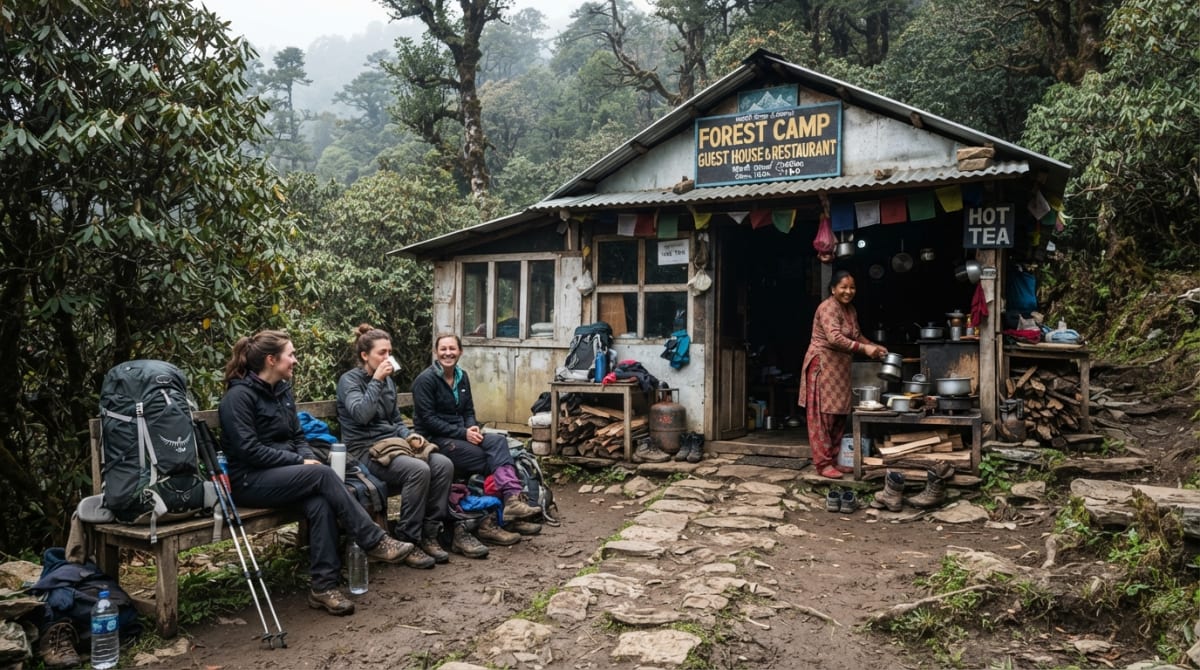
The forest climb is quiet in winter, with bare patches of frost and occasionally snow in shaded sections higher up. The trail is usually dry and firm, which makes walking easier than in other seasons, but icy patches can appear on north-facing sections after cold nights. Keep a steady pace so you reach Low Camp by mid-afternoon, before the temperature drops. The sunset over snow-covered Machapuchare from Low Camp is one of the finest sights of the winter trek.
Day 3 in Winter: Low Camp to High Camp
Above Low Camp, the open ridge can be windy and cold, with snow sometimes lying on the path between Badal Danda and High Camp after storms. Wear a windproof shell, warm hat and gloves, and walk carefully on frozen ground. The climb is relatively short, so you arrive at High Camp around midday with the afternoon to rest. Before evening, your guide will check the condition of the trail above High Camp and ask lodge owners about recent conditions, which helps decide whether to attempt the summit hike the next morning.
Day 4 in Winter: The Summit Attempt
If conditions are good, you leave High Camp around 5 a.m. with headlamps and microspikes, climbing slowly to the Upper View Point for sunrise, and continuing to Base Camp if the trail is safe. You then return to High Camp for breakfast and descend to Low Camp for a warmer night. If conditions are poor, you stay at High Camp or descend to Low Camp and wait for the buffer day. See the High Camp to Base Camp guide.
Days 5 and 6: Buffer and Descent
If you used the buffer day for a second summit attempt, day five follows the same pattern as day four. If you completed the hike on day four, day five can be a relaxed descent or an extra night at Low Camp enjoying the views. On the final day, you descend through the forest and farmland to Siding, where winter fields are brown and golden, and drive back to Pokhara before dark.
Why a Buffer Day Matters in Winter
Winter storms can bring snow to the upper ridge, sometimes enough to close the path above High Camp for a day or two until it consolidates or is trodden in. Fresh snow on the steep slope to the Upper View Point can be hazardous, and strong winds can make the exposed ridge dangerous. A buffer day lets you wait at High Camp or Low Camp without pressure, rather than pushing on in unsafe conditions or giving up on the high point entirely. It also gives your body an extra night to adjust to the altitude and cold.
Planning Around Short Days
In mid-winter, daylight lasts roughly eleven hours, and it gets dark around 5:30 p.m. Temperatures fall sharply as soon as the sun drops behind the ridge. Plan to start walking soon after breakfast and reach each lodge by mid-afternoon. On the forest day to Low Camp, keep a steady pace and do not linger too long at lunch. On the descent to Siding, leave early enough to finish walking and drive back to Pokhara before dark, as mountain roads are more dangerous at night. Always carry a headlamp in your daypack.
The Summit Morning in Winter
The Base Camp hike in winter begins later than in autumn, since sunrise is around 6:30 to 7 a.m., but it is the coldest part of the trek. Temperatures at dawn can be well below minus 10 degrees Celsius with wind chill. The steep slope above High Camp is often frozen or icy, so microspikes are usually essential. Your guide will assess conditions the night before and at dawn, and may decide to stop at the Upper View Point, delay the hike, or skip it if the risk is too high. Set a firm turnaround time and stick to it. See microspikes and crampons on Mardi Himal and cold injuries in winter.
Sleeping Low When Possible
High Camp in winter is bitterly cold, and water pipes often freeze. This winter itinerary returns to Low Camp after the summit hike rather than staying at High Camp, giving you a warmer, more comfortable night. If you use the buffer day, your guide may suggest waiting at Low Camp and climbing to High Camp later, depending on the forecast, rather than spending extra nights at the coldest camp.
Winter Gear Checklist
Winter demands more from your gear than any other season. Bring a heavy down jacket rated well below freezing, thermal base layers for top and bottom, insulated trousers or a warm second layer for the summit morning, and a windproof shell. Pack insulated gloves or mittens plus liner gloves, a warm hat, a buff and a balaclava for the pre-dawn climb. Your sleeping bag should be rated to at least minus 15 degrees Celsius comfort. Waterproof, insulated boots with warm socks, gaiters for snow and microspikes for ice complete the essentials. Hand warmers and an insulated water bottle are small luxuries that make a big difference. See our full winter packing list.
Staying Warm in Winter Lodges
Tea house rooms are unheated, and in winter they can be as cold as the air outside. The dining room stove is the warm heart of every lodge, and evenings are spent close to it. To stay warm at night, change into dry clothes as soon as you arrive, eat a hot dinner, and fill a bottle with boiling water to use as a hot water bottle in your sleeping bag. Sleep in a clean base layer, warm hat and socks, and use the lodge blankets on top of your sleeping bag. Put the next day's clothes inside your bag so they are warm in the morning. See staying warm at night in tea houses.
Food and Water in Winter
Hot food and drinks help keep you warm and energised. Soups, dal bhat, porridge, noodles and hot lemon or ginger tea are winter favourites. Water pipes often freeze at High Camp, so lodges may melt snow or carry water, and hot drinks may take longer. Fill your bottles with hot water each morning and keep them inside your pack or in insulated covers to stop them freezing. Many trekkers drink less in the cold because they do not feel thirsty, but staying hydrated is just as important in winter, especially at altitude.
Alternative Plans When Conditions Are Poor
Sometimes winter conditions make the full trek unwise. After heavy snowfall, the trail above High Camp may be impassable or unsafe for several days. In these cases, your guide might suggest alternatives: reaching High Camp and enjoying the views from there, walking only to the Upper View Point if safe, or spending extra time at Low Camp and Badal Danda, where the views are still spectacular. In severe conditions, the trek may be shortened. Flexibility and good judgement are essential; the mountains will still be there on your next visit. See when to turn back.
Who Should Trek in Winter?
A winter trek suits people who handle cold well, have some hiking experience and value clear skies and solitude. It is less suitable for complete beginners, young children and anyone who dislikes cold. If you are new to trekking but want clear views and fewer crowds, consider late November or early March, which offer some winter clarity with milder conditions. See how hard Mardi Himal is in winter.
Winter Photography on the Itinerary
Winter is one of the best seasons for photography on Mardi Himal, and this itinerary gives you several good opportunities. The clear air of December and January produces sharp, detailed views of the snow-covered peaks, particularly at sunrise from the Upper View Point and at sunset from Low Camp. Frost on the grass, icicles on lodge roofs and snow on the ridge add texture to foregrounds. The low winter sun casts long shadows and warm light for much of the day. Keep spare camera batteries in an inside pocket, as the cold drains them quickly, and let your camera warm slowly in a sealed bag before bringing it into a warm dining room. See snow photography on Mardi Himal.
Costs of a Winter Trek
A winter trek costs roughly the same per day as in other seasons, though the extra buffer day adds one more day of guide and porter wages, accommodation and meals. You may spend a little more on hot drinks and on renting a warmer sleeping bag or down jacket in Pokhara if you do not own winter-grade gear. On the other hand, lodges and hotels are quieter in winter, and some Pokhara hotels offer lower rates. Microspikes can be bought or rented in Pokhara and Kathmandu. See our cost guide.
Extending the Winter Trip
Winter is a good time to combine the trek with the lowlands. After the cold of High Camp, a few days in Chitwan National Park, where winter days are mild and wildlife viewing is good, make a welcome contrast. Pokhara itself is pleasant in winter, with sunny days by the lake and clear mountain views in the mornings. See Mardi Himal and Chitwan.
Christmas and New Year on the Trail
A small number of trekkers spend the holiday season on Mardi Himal. The trail is quiet, lodges are cosy, and watching the first sunrise of the new year from the Upper View Point is unforgettable. If you trek over the holidays, book transport and hotels in Pokhara early, as domestic tourism increases at this time. See Mardi Himal over Christmas and New Year.
Book a Winter Trek
We run winter Mardi Himal treks with experienced guides who carry microspikes and know how conditions change through the season. Start with the 5-day trek from Pokhara, extended with a buffer day, or the 9-day trek from Kathmandu. Contact us to plan a winter departure.