

If autumn is the season for crystal-clear views on the Mardi Himal Trek, spring is the season for colour. From March to May, the forest between Pitam Deurali and Low Camp comes alive with rhododendron blooms in shades of crimson, pink and white, birds sing through the canopy, and the whole trail feels warmer and softer than in the crisp autumn months. For many trekkers, spring is the most beautiful time to be on the trail, even if the mountains hide behind cloud a little more often.
This guide explains what to expect on the Mardi Himal Trek in spring, month by month, including weather, temperatures, views, trail conditions, crowds and what to pack. For a comparison of all seasons, see the best time for the Mardi Himal Trek.
Why Trek Mardi Himal in Spring?
The biggest draw is the rhododendron forest. Nepal's national flower grows as tall trees along much of the Mardi Himal ridge, and in a good year the forest becomes a tunnel of blossom, with fallen petals carpeting the trail. The lower hills are green, the air is warm, and wildflowers appear on the open slopes above the treeline. It is also a lively time for birdlife, as many species breed and sing in spring.
Spring weather is generally dry and stable, making walking comfortable, and days are longer than in autumn and winter. Temperatures at High Camp are milder than in the depths of winter, so nights are more bearable. And while April is popular, spring overall sees fewer trekkers than October, giving the trail a relaxed atmosphere.
Spring Weather at a Glance
| Month | Conditions | High Camp nights | Views |
|---|---|---|---|
| March | Cool, mostly dry, late snow possible above High Camp | Below freezing | Often clear mornings |
| April | Warm days, rhododendrons at peak, occasional showers | Around freezing | Clear mornings, afternoon cloud and haze |
| May | Warmest, hazy, building storms late in month | Mild | Hazier, clouds build early |
See our month-by-month weather guide for more detail.
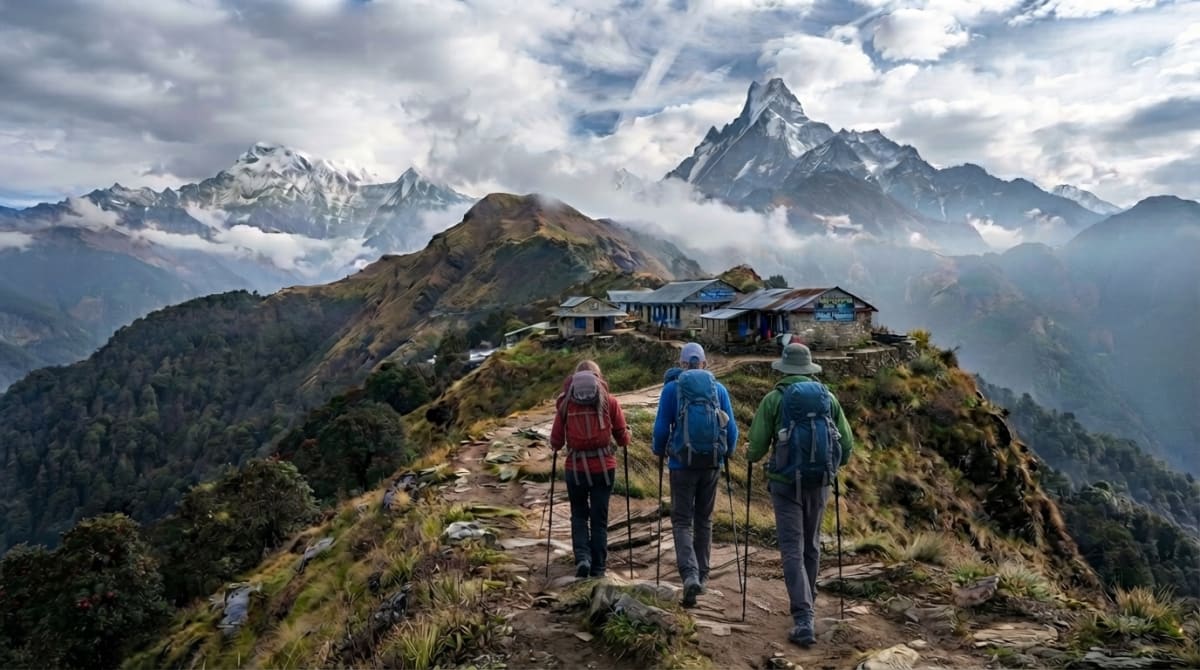
March: Spring Awakens
March marks the end of winter on the ridge. Early in the month, the upper trail can still hold snow and ice, especially above High Camp, and nights are cold. As the month progresses, temperatures rise and the first rhododendrons open at lower altitudes, starting around Australian Camp and Pitam Deurali. Mornings are often clear and crisp, giving excellent mountain views before cloud builds in the afternoon.
March is quieter than April, making it a good choice if you want spring colour without the busiest weeks. Pack for winter-like conditions at High Camp and on the Base Camp hike, and ask your guide about microspikes if there has been recent snow. Read Mardi Himal in March.
April: Peak Bloom
April is the heart of rhododendron season. The forest sections come alive, with blossom moving uphill as the month goes on. Days are warm, often T-shirt weather in the lower sections, and nights at High Camp hover around freezing. Mornings usually offer clear views of Machapuchare and the Annapurnas, but haze from the lowlands and afternoon cloud are common, and short showers or thunderstorms occasionally roll in later in the day.
April is the busiest spring month, with trekkers from around the world and Nepali visitors enjoying the season. Nepali New Year, usually in mid-April, can bring more domestic trekkers. Book lodges ahead if you are travelling in the middle of the month. Read Mardi Himal in April and trekking around Holi and Nepali New Year.
May: Warm and Hazy
May is the warmest month before the monsoon. Rhododendrons fade in the lower forest but may still bloom higher up. The air becomes hazier, and clouds build earlier in the day, so mountain views are shorter-lived. By late May, pre-monsoon thunderstorms become more frequent, often in the afternoon, bringing lightning risk on the exposed ridge. Leeches may start to appear in damp patches toward the end of the month.
May is quieter than April, and it suits trekkers who enjoy warm conditions and are flexible about views. Start very early each day and plan to be off the ridge by early afternoon on stormy days. Read Mardi Himal in May.
The Rhododendron Forest
The Mardi Himal ridge has one of the finest stretches of rhododendron forest in the Annapurna region. The tree rhododendron grows large here, sometimes many meters tall, with gnarled, moss-covered trunks. At lower altitudes the flowers are typically deep red; higher up they grade into pink and white. On the open ridge above Low Camp, shrub rhododendrons flower later in the season.
The exact timing of the bloom depends on the winter's temperatures and rainfall, and it varies from year to year. As a rough guide, late March to mid-April is often best for the forest between Pitam Deurali and Forest Camp, while the higher sections peak a little later. Read rhododendron season on Mardi Himal and the rhododendron forest section.
Views in Spring
Spring views are different from autumn views. The peaks are usually visible in the early morning, glowing at sunrise from High Camp and the Upper View Point, but haze and cloud often build by mid-morning. The sky can look softer and whiter than the deep blue of autumn, and the far horizon is less sharp. On the other hand, spring clouds create dramatic effects, with peaks appearing and disappearing above a sea of cloud in the evenings.
To make the most of spring views, plan your key viewpoints for early morning. The sunrise hike to Base Camp is the highlight in any season, and in spring it is often your clearest window of the day. Read when the mountains are clear.
Temperatures and What They Feel Like
In the lower sections, spring days are warm and sometimes humid. Walking uphill from Kande in April or May, you will likely sweat in a T-shirt. In the forest, shade keeps things comfortable. On the ridge, sun and wind combine: calm, sunny spells feel warm, while cloud and breeze bring a chill. Evenings at Low Camp and High Camp are cool to cold, especially in March and early April, when a down jacket is essential.
The Base Camp hike still starts in cold conditions, particularly in March. Wear warm layers and gloves at the start and shed them as the sun rises. See temperature by month and camp.
Trail Conditions
Spring trails are usually dry and firm. The lower sections can be dusty, especially in May before the rains. Early in March, snow or ice may remain above High Camp and occasionally on the ridge below it. After rare spring storms, the forest trail can be muddy for a day or two. Generally, spring offers some of the easiest walking conditions of the year. See trail conditions on Mardi Himal.
Crowds and Lodges
April is the busiest spring month, and High Camp can be full on some nights, so guides reserve rooms ahead. March and May are quieter. Overall, spring crowds are lighter than in October. Lodges have more time to chat, and you often share the dining room with a small, friendly group. See is Mardi Himal crowded?
Wildlife in Spring
Spring is breeding season for many birds, so the forest is noisy with song. Look for laughingthrushes, tits, sunbirds and pheasants in the forest, and the colourful Himalayan monal on the slopes near the treeline. Birds of prey soar over the ridge on warm afternoons. Read birdwatching on Mardi Himal and flora and fauna along the trail.
A Day in the Forest in April
A spring day on the section from Pitam Deurali to Low Camp shows the season at its best. The morning starts clear and cool, with Machapuchare visible through gaps in the trees. As you climb, the forest closes in and the colour begins: first a few red blossoms above the trail, then whole trees of flowers, and in places a carpet of fallen petals underfoot. Birdsong fills the canopy, and the air smells of damp earth and flowers.
By late morning, mist often drifts through the forest, softening the light and making the colours glow. You stop for lunch at Forest Camp, where the lodge garden may be bright with flowers, then continue through moss-draped trees toward Low Camp. In the afternoon, a brief shower might roll through, but by evening the clouds often settle into the valleys, and you watch the sunset on Machapuchare from the lodge terrace. It is a gentler, more colourful experience than autumn, and many trekkers remember it just as fondly.
Spring Photography Tips
Spring rewards photographers who look closely. Use the soft, diffused light of misty forest mornings for rhododendron close-ups and moody woodland scenes. On the ridge, frame mountains with blossoms in the foreground. Haze can reduce contrast on distant peaks, so shoot the big views at sunrise, when the air is clearest, and consider a polarising filter to deepen blue skies. Evening clouds below the ridge often create dramatic scenes at Low Camp and High Camp. Read our photography guide.
Combining a Spring Trek with Other Activities
Spring is a good season to pair Mardi Himal with other experiences. Chitwan National Park is at its best for wildlife viewing in spring, when grasses are cut and animals come to water sources in the heat. Pokhara is warm and green, perfect for boating on Phewa Lake or a sunrise at Sarangkot. In Kathmandu, spring festivals such as Holi, usually in March, add colour to a city visit. See two weeks in Nepal built around Mardi Himal.
Health Tips for Spring
Spring's warmth brings its own health considerations. You will sweat more on the lower climbs, so drink more water than you might expect and add electrolytes on warm days. The sun is strong at altitude, so use high-SPF sunscreen and lip balm and wear a hat. Dust on roads and dry trails can irritate your throat and eyes, so a buff and sunglasses help. If you suffer from pollen allergies, bring your usual medication, as the forests are in full flower. See sun protection at altitude.
What to Pack for Spring
- Light, breathable base layers for warm lower sections
- A fleece and a down jacket for evenings and the Base Camp hike, especially in March and April
- A waterproof shell for afternoon showers
- Sun hat, sunglasses and high-SPF sunscreen
- Warm gloves and a hat for the pre-dawn start
- Microspikes in early March if there has been recent snow
- A buff for dust on the lower trail and roads
See our complete packing list and what to wear.
Spring Trekking Tips
- Start early. Mornings are clearest; aim to reach viewpoints before 9 or 10 a.m.
- Watch for storms in May. Be off the exposed ridge by early afternoon when storms threaten.
- Book ahead in April. Especially around Nepali New Year and Easter.
- Take your time in the forest. The rhododendron section deserves slow walking and plenty of photos.
- Stay hydrated. Warm days mean more sweating on the climbs.
- Carry a rain layer. Showers can appear quickly in the afternoon.
Is Spring Good for Beginners?
Spring is an excellent season for first-time trekkers, particularly April. Warm days make walking comfortable, trails are dry, and nights at High Camp are milder than in autumn's colder weeks or winter. The main trade-off is that views can be hazier, but most beginners are delighted by the flowers and birdlife. Early March requires more winter-style preparation, while May suits those comfortable with heat and afternoon storms. See Mardi Himal for beginners.
Spring vs Autumn
Autumn offers clearer, more reliable views and very stable weather, but it is busier. Spring offers flowers, warmer days and fewer crowds, with more haze and cloud. If mountain photography is your top priority, autumn has the edge. If you want colour, warmth and a quieter trail, spring is hard to beat. Read Mardi Himal in autumn to compare.
Which Itinerary Suits Spring?
Any of our itineraries work well in spring. If you want time to enjoy the rhododendron forest, the 9-day Mardi Himal Trek includes a night at Forest Camp in the heart of the blooms. The 5-day trek from Pokhara covers the whole forest at a moderate pace. In May, consider adding a buffer day for stormy weather. Contact us to check spring departure dates.