

Many visitors to Nepal face a difficult choice: the Annapurna region or the Everest region? Mardi Himal offers close-up views of Machapuchare and the Annapurnas in a short trek from Pokhara; the Everest region offers the chance to see the world's highest mountain. With around two to two and a half weeks, you do not have to choose. Combining the Mardi Himal Trek with the short Everest View Trek from Lukla lets you see both regions in one trip.
This guide explains how the combination works, offers a sample itinerary and highlights the practical considerations, especially flights to Lukla. For the Mardi Himal part, see our 9-day Mardi Himal Trek.
What the Everest View Trek Offers
The Everest View Trek is a short introduction to the Khumbu region. You fly from Kathmandu to the mountain airstrip at Lukla, walk up the Dudh Koshi valley through Sherpa villages and pine forest to Namche Bazaar, the region's bustling trading town, and climb to viewpoints above Namche, such as the area around Syangboche, where on clear days Everest, Lhotse, Ama Dablam and other peaks appear on the skyline. The trek typically takes five to seven days and reaches around 3,800 to 3,900 meters at its highest viewpoints, with nights around 3,440 meters at Namche. See Mardi Himal vs the Everest View Trek.
A Sample 17-Day Itinerary
| Days | Plan |
|---|---|
| 1–2 | Arrive in Kathmandu, travel to Pokhara |
| 3–7 | Mardi Himal Trek to High Camp and Base Camp, descend to Pokhara |
| 8 | Return to Kathmandu |
| 9 | Fly to Lukla, trek to Phakding |
| 10 | Trek to Namche Bazaar |
| 11 | Acclimatization day and Everest viewpoint hike |
| 12–13 | Descend to Lukla |
| 14 | Fly to Kathmandu |
| 15–16 | Buffer days for Lukla flight delays, Kathmandu sightseeing |
| 17 | Departure |
The Lukla Flight Factor
The single most important consideration is the Lukla flight. Lukla's short, sloping airstrip is famous, and flights are entirely dependent on weather at both ends. Delays of a day or more are common, especially in spring haze and during the monsoon. In some seasons, flights may operate from Ramechhap (Manthali) rather than Kathmandu, adding a long drive. Always build at least two buffer days into any itinerary with Lukla flights, and avoid scheduling your international departure immediately after your return.
Why Combine the Two Regions?
The Annapurna and Everest regions are Nepal's two most famous trekking areas, and they feel quite different. The Annapurna foothills around Mardi Himal are greener and more forested, with Gurung villages, terraced fields and dramatic, steep peaks such as Machapuchare rising close to Pokhara. The Everest region is higher and more austere, with Sherpa culture, Buddhist monasteries, suspension bridges over deep gorges, and the world's highest mountains on the horizon. Seeing both in one trip gives a much richer sense of Nepal's mountains and cultures than either alone.
For many travellers, seeing Everest itself is a lifelong dream, while Mardi Himal offers one of the most beautiful short treks in the country. Combining a short Everest trek with Mardi Himal is a practical way to fulfil both ambitions without committing to the full Everest Base Camp trek.
Two Treks Compared
Mardi Himal takes three to five trekking days from Pokhara, reaches about 4,500 meters at Base Camp with a highest night at 3,580 meters, and offers close-up views of Machapuchare, Mardi Himal and Annapurna South. The Everest View Trek takes five to seven days from Lukla, has nights around 3,440 meters at Namche Bazaar, reaches viewpoints around 3,800 to 3,900 meters, and offers views of Everest, Lhotse and Ama Dablam at a greater distance. Mardi Himal is quieter and more intimate; the Everest View Trek is busier and more culturally Sherpa, with the iconic experience of Namche Bazaar. See Mardi Himal vs Everest Base Camp.
Altitude Across Both Treks
Doing Mardi Himal first provides useful acclimatization for the Everest region. Having slept at 3,580 meters and visited around 4,500 meters, your body will have some adaptation when you fly to Lukla at around 2,800 meters and climb to Namche Bazaar at around 3,440 meters. However, some acclimatization is lost during the days back in Kathmandu, so still follow the standard pattern of an acclimatization day at Namche. Walk slowly, drink plenty and watch for symptoms. See our altitude sickness guide.
Permits for Both Regions
The two treks require different permits. Mardi Himal needs an Annapurna Conservation Area Permit (ACAP) and a TIMS card. The Everest region requires a Sagarmatha National Park entry permit and a local fee collected by the Khumbu Pasang Lhamu Rural Municipality, which has replaced the TIMS requirement in the Khumbu. A licensed guide is required for foreign trekkers in both regions. Your agency will arrange all permits. See Mardi Himal permits and our Nepal trekking permits guide.
If Lukla Flights Are Delayed
If bad weather grounds Lukla flights for several days, you have a few options. Helicopter flights to or from Lukla are sometimes possible when planes cannot fly, at significant extra cost. Alternatively, you can switch to another trek reachable by road, such as a trek in the Langtang region, or spend more time in the Annapurna area. Building buffer days into your plan gives you the flexibility to wait or switch without missing your international flight. Travel insurance with delay cover helps with extra costs.
Best Season for Both Treks
October to November is the best season for both treks, with clear skies and stable weather, though the Everest region is very busy in October. March to May is also good, with rhododendrons in both regions, though haze can reduce distant views of Everest and delay Lukla flights. Winter is cold but clear, with quieter trails. The monsoon brings rain, cloud and frequent flight disruptions, making the combination difficult. See the best time for the trek.
Packing for Both Treks
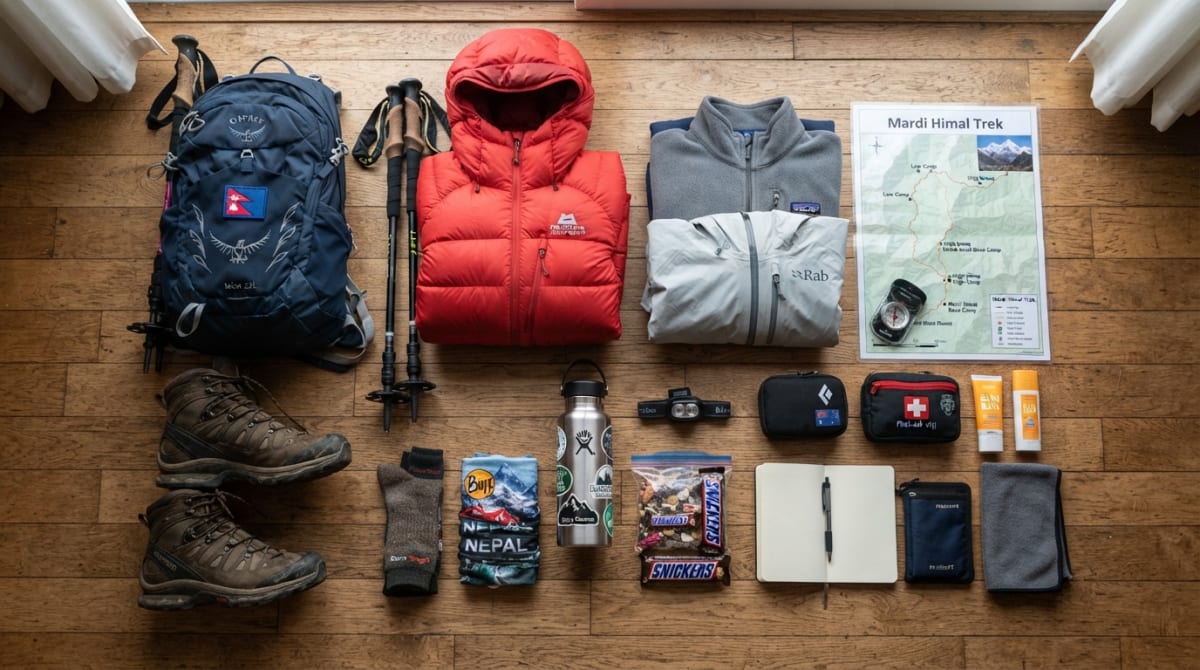
The same gear works for both treks: a layering system, warm down jacket, waterproof shell, broken-in boots, a sleeping bag rated for well below freezing, trekking poles and a headlamp. Note that Lukla flights have strict baggage limits, often around 10 kilograms for checked luggage plus a small hand bag, so pack light for the Everest leg and leave extras in Kathmandu. See our packing list.
Budget
A combined trip costs more than a single trek, mainly because of the return flight to Lukla, the additional trekking days, the separate Everest region permits and the buffer days. Lodge prices in the Everest region are generally higher than on Mardi Himal. Budget for the extras too: hot showers, charging, snacks and tips in both regions. See our cost guide.
Who This Combination Suits
This combination suits travellers with around two and a half weeks who want to see both Everest and the Annapurnas, and who have the flexibility to cope with possible Lukla delays. It suits reasonably fit trekkers who do not want the length and altitude of the full Everest Base Camp trek. It is less suitable for travellers on a tight schedule, since flight delays can disrupt plans.
Namche Bazaar and Sherpa Culture
A highlight of the Everest View Trek is Namche Bazaar, the main town of the Khumbu region, built in a horseshoe-shaped bowl on a steep hillside. Its lodges, bakeries, gear shops and markets have served trekkers and mountaineers for decades, and it is also the cultural heart of the Sherpa community, with monasteries, prayer wheels and chortens throughout the area. The Sherpa Culture Museum and nearby villages such as Khumjung offer insights into Sherpa life and history. The contrast with the Gurung villages of the Annapurna foothills is fascinating, and experiencing both gives you a deeper appreciation of Nepal's cultural diversity. See Gurung culture on the Mardi Himal Trek.
Which Order Is Best?
Most travellers do Mardi Himal first. It is reachable by road from Pokhara, so it is less affected by flight delays, and it provides some acclimatization before the Everest region. After returning to Kathmandu, you fly to Lukla with a few buffer days remaining before your international flight. Doing the Everest View Trek first also works, especially if you want the most weather-sensitive part of the trip early, when you have the most flexibility to wait out delays. In either case, keep buffer days around the Lukla flights.
A Day at Namche and the Viewpoints
A typical acclimatization day at Namche involves a morning hike up the hillside above the town to viewpoints in the Syangboche area, where on clear mornings Everest's summit appears above the Lhotse–Nuptse ridge, with Ama Dablam's elegant spire nearby. The climb is steep and the air thin, so walk slowly. After enjoying the views, you return to Namche for lunch and an afternoon exploring the town, visiting the museum or resting in a bakery. This "climb high, sleep low" day helps your body adapt to the altitude and offers the trip's defining view of Everest.
Travel Between the Treks
After Mardi Himal, you return from Pokhara to Kathmandu by road or flight, then fly to Lukla, usually early in the morning when the weather is most reliable. In some seasons, Lukla flights operate from Ramechhap, a few hours' drive from Kathmandu, which means an early start or an overnight near the airport. Allow at least one night in Kathmandu between the treks to repack, rest and prepare for the flight. See domestic flights in Nepal.
Scenic Flights as an Alternative
If time or fitness does not allow a trek in the Everest region, a scenic mountain flight from Kathmandu is another way to see Everest. These early-morning flights fly along the Himalaya, offering views of Everest and neighbouring peaks through the aircraft windows, and return to Kathmandu within about an hour. They are weather-dependent but far less disruptive to an itinerary than Lukla flights. Combining Mardi Himal with a mountain flight gives you close-up views of the Annapurnas on foot and a glimpse of Everest from the air, in a much shorter trip.
What You Will Remember
Travellers who combine both treks often describe two very different highlights: the intimate, glowing sunrise over Machapuchare from the Mardi Himal ridge, and the moment Everest first appears above the ridges near Namche Bazaar. Between them lie very different landscapes and cultures, from the forests and Gurung villages of the Annapurna foothills to the Sherpa monasteries and suspension bridges of the Khumbu. Together, they give a remarkable overview of the Nepal Himalaya in little more than two weeks.
Lodges in the Everest Region
Lodges in the Everest region differ from those on Mardi Himal. Namche Bazaar and Lukla have a wide range of accommodation, from simple tea houses to comfortable lodges with attached bathrooms, bakeries and even espresso machines. Prices are generally higher than on Mardi Himal because supplies are flown to Lukla and carried up the valley by porters and yaks. Facilities such as hot showers, charging and Wi-Fi are widely available but cost extra. In peak season, Namche lodges are busy, so booking ahead is sensible. The contrast with the simple, quiet lodges of the Mardi Himal ridge is part of the appeal of doing both. See our Mardi Himal tea house guide.
Extending to Everest Base Camp
If the Everest View Trek leaves you wanting more, and you have the time and fitness, you could extend it toward Everest Base Camp itself. That adds around a week of trekking and takes you above 5,000 meters, so it needs careful acclimatization and more buffer days. For most travellers combining it with Mardi Himal, the short Everest View Trek is the more realistic choice; the full base camp trek is better as a trip of its own.
Tips for the Combined Trip
- Keep buffer days. At least two for Lukla flights.
- Pack light for Lukla. Strict baggage limits apply.
- Take the acclimatization day at Namche. Even after Mardi Himal.
- Carry cash for both treks. ATMs exist in Namche but can be unreliable; none exist on Mardi Himal.
- Insure for both regions and helicopter evacuation.
- Stay flexible. Weather rules in the mountains.
Book a Combined Trip
We can arrange the 9-day Mardi Himal Trek and add the Everest View Trek with flights and buffer days. Contact us to plan.