

Most trekkers choose between our 3-day Short Mardi Himal Trek and the 5-day trek from Pokhara, but there is a sensible middle ground. A 4-day itinerary keeps the fast start of the short trek, climbing straight to Low Camp or Forest Camp on the first day, but adds a night on the descent so that the Base Camp hike and the long drop to Siding are not crammed into a single punishing day. For fit trekkers with limited time, it can be the best of both worlds.
This guide sets out a sample 4-day Mardi Himal itinerary, explains how it handles altitude and effort, and helps you decide whether it suits you. Four-day trips are arranged on request by adapting our 5-day Mardi Himal Trek from Pokhara or the 3-day Short Mardi Himal Trek.
A Sample 4-Day Itinerary
| Day | Route | Overnight | Walking time |
|---|---|---|---|
| 1 | Drive Pokhara to Kande, trek to Low Camp | Low Camp (2,970 m) | 6–8 hours |
| 2 | Low Camp to High Camp | High Camp (3,580 m) | 3–4 hours |
| 3 | Base Camp at sunrise, descend to Low Camp | Low Camp (2,970 m) | 7–9 hours |
| 4 | Low Camp to Siding, drive to Pokhara | Pokhara | 4–5 hours plus drive |
An alternative first day stops at Forest Camp, around 2,600 meters, then continues to High Camp on day two. That makes day one shorter and day two longer, with slightly better acclimatization on the first night.
Day 1: Pokhara to Low Camp
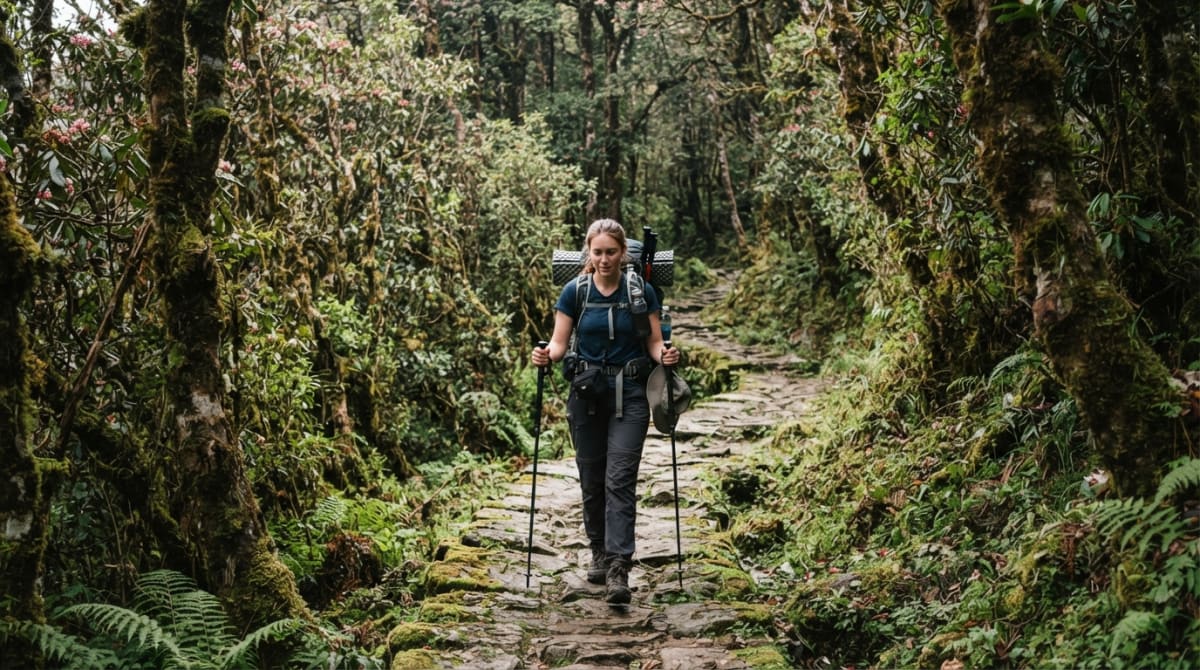
After an early pickup in Pokhara and an hour's drive to Kande, you climb the stone staircase to Australian Camp for your first wide view of the Annapurnas, pass the permit checkpoint at Pothana and continue through forest to Pitam Deurali. Instead of stopping, you push on through the rhododendron and oak forest, past Forest Camp and Rest Camp, until the trees thin at Low Camp. It is a long day with more than 1,200 meters of ascent, so steady pacing is essential.
The reward is Low Camp's famous sunset over Machapuchare. Eat a big dinner, drink plenty of water and go to bed early. If you are feeling the effort or the altitude, tell your guide; stopping at Forest Camp instead is always an option. See Pitam Deurali to Forest Camp and Forest Camp to Low Camp.
Day 2: Low Camp to High Camp
The second day is short but beautiful. The trail climbs out of the forest onto the open ridge, passing Badal Danda and following the narrowing crest to High Camp at 3,580 meters. You arrive around midday, with the afternoon free to rest, acclimatize with a short walk above the lodges, and enjoy the mountain views. This shorter day is important after the long first day, giving your body time to recover and adjust before the summit hike.
Use the afternoon well. Organise your clothes for the morning, fill water bottles, and charge your headlamp and phone if power is available. See Low Camp to High Camp and the night before summit day.
Day 3: Base Camp and Back to Low Camp
You leave High Camp before dawn, climb steeply to the Upper View Point for sunrise and continue to Mardi Himal Base Camp at around 4,500 meters. After time at the top, you descend to High Camp for breakfast and continue down the ridge to Low Camp. The day involves around 900 meters of ascent and 1,500 meters of descent, but ending at Low Camp rather than Siding makes it far more manageable than on the 3-day itinerary.
Sleeping lower after the summit hike also helps your recovery. Low Camp is around 600 meters below High Camp, and most trekkers sleep much better there. See the Base Camp hike guide.
Day 4: Low Camp to Siding and Pokhara
The final day drops steeply east from the ridge through forest and farmland to Siding, a Gurung village at the road head. It is a descent of around 1,200 meters, taking four to five hours. A jeep then drives you back to Pokhara along a rough road, arriving in the afternoon. See Low Camp to Siding.
Who a 4-Day Trek Suits
A 4-day Mardi Himal trek suits fit, active people who are comfortable walking for seven or eight hours with a lot of climbing, and who have a little more time than the 3-day trek allows. It works well for travellers who are already in Pokhara as part of a longer trip around Nepal, for Nepal residents taking a long weekend, and for trekkers who have recently been at altitude on another trek and are therefore partly acclimatized. It is also a good option for couples and small groups of friends who want a challenging but not exhausting trip.
It is less suitable for complete beginners, families with young children, older trekkers who prefer a gentle pace, and anyone who has had significant altitude sickness before. For them, the 5-day or 9-day itineraries offer a much more comfortable experience. See is Mardi Himal suitable for beginners?
Altitude on a 4-Day Trek
The 4-day plan gains altitude quickly. On the first night, you sleep at Low Camp, around 2,970 meters, having started the day in Pokhara at about 820 meters. On the second night, you sleep at High Camp, 3,580 meters. That is faster than standard acclimatization guidelines recommend, although the maximum sleeping altitude is moderate and you only visit Base Camp's 4,500 meters for a few hours before descending. Most fit, healthy trekkers cope with mild symptoms such as a headache or restless sleep at High Camp.
If altitude is a concern, choose the variation that stops at Forest Camp on day one. Sleeping around 2,600 meters on the first night gives your body a gentler step before High Camp. Whatever the plan, walk slowly on the climbs, drink three to four liters a day, avoid alcohol and tell your guide about any symptoms. Turning around at the Upper View Point is always an option on summit day. See our altitude sickness guide and acclimatization on Mardi Himal.
Training for the Long First Day
The first day is the one that tests your preparation. Climbing more than 1,200 meters in six to eight hours, with a daypack, demands good cardiovascular fitness and strong legs. In the weeks before the trek, build up to long hikes of six or more hours with at least 1,000 meters of ascent, and include stair or incline sessions with a loaded daypack. Strengthen your legs with squats, lunges and step-ups, and practise long descents to prepare for days three and four. See our fitness guide.
On the day itself, pace is everything. Start slowly up the staircase from Kande, take short regular breaks rather than long stops, eat lunch around Forest Camp and keep drinking. Many fit trekkers make the mistake of racing the morning and fading in the afternoon forest.
Best Season for a 4-Day Trek
Because the first and third days are long, the 4-day plan works best when days are long and the trail is dry. Autumn and spring are ideal. In autumn, clear mornings give you the best chance of a perfect Base Camp sunrise; in spring, the forest on day one is full of rhododendrons. In winter, shorter daylight and ice above High Camp make the long days riskier, and a 5-day plan is safer. In the monsoon, muddy trails make the long first day slower and the views are unreliable. See the best time for the trek.
Packing Light for Four Days
On a four-day trek, you need very little: one spare base layer, warm evening layers, a down jacket, a waterproof shell, a sleeping bag, a headlamp, trekking poles, water bottles and basic toiletries. Keeping your pack light makes the long first day much easier. Hiring a porter, who normally carries for two trekkers, is especially worthwhile on this itinerary, leaving you with only a daypack. See the packing list for short treks and carry your own pack or hire a porter?
Tea Houses on the 4-Day Route
You spend two nights at Low Camp and one at High Camp. Low Camp has several simple lodges with shared toilets, hot showers for a fee and a great sunset view; staying there twice means you get two chances at clear evening light over Machapuchare. High Camp is more basic and much colder. In busy months, your guide books rooms ahead, which matters when you arrive at Low Camp late in the afternoon after the long first day. See our tea house guide.
Common Mistakes on a 4-Day Trek
The biggest mistake on a 4-day trek is underestimating the first day. Trekkers who race up the staircase from Kande and through the lower forest often run out of energy in the long climb from Forest Camp to Low Camp. Starting slowly, taking regular short breaks and eating a proper lunch make a huge difference. Another mistake is ignoring early altitude symptoms because the itinerary is tight; if you feel unwell at Low Camp or High Camp, tell your guide, even if it means adjusting the plan.
On day three, some trekkers linger too long at Base Camp and then rush the descent, which increases the risk of slips on the steep grassy slope below the Upper View Point. Keep an eye on time and weather, and leave the top while you still have energy. Finally, many people skip trekking poles and regret it on the descent to Siding. With the right pace and equipment, the 4-day trek is challenging but very achievable.
Food and Water on the Long Days
The long first and third days demand good fuelling. Eat a solid breakfast before leaving Pokhara or the lodge, stop for a proper lunch at Forest Camp on day one, and carry snacks such as nuts, dried fruit, chocolate and energy bars to eat every hour or so on the move. Aim for three to four liters of water a day, refilling at lodges and treating it with tablets, a filter or a UV pen rather than buying plastic bottles. On summit day, carry hot water in an insulated bottle and plenty of snacks, since there are no lodges above High Camp. Dinner at each lodge should be carbohydrate-rich, and dal bhat with its free refills is the trekker's favourite for good reason. See our hydration guide and trail snacks for Mardi Himal.
Adjusting the Plan on the Trail
One advantage of trekking with a guide is flexibility. If the first day proves too long, your guide can stop at Forest Camp and adjust the following days. If the weather is poor on the planned Base Camp morning, you may be able to wait a few hours or, with an extra day, try again the next morning. If you feel strong and conditions are good, the plan stays as it is. Talk to your guide each evening about how you feel and what the next day holds; the best itineraries are the ones that adapt to the people walking them.
Why Some Trekkers Prefer Four Days
Trekkers who choose four days often say it gave them the intensity they wanted without the exhaustion of the 3-day version. The long first day feels like a proper mountain effort, High Camp arrives quickly, and the extra night at Low Camp after Base Camp turns the final day into a pleasant descent rather than a marathon. For fit hikers who enjoy a challenge and have limited leave, it can be the most satisfying way to walk the ridge.
How the 4-Day Plan Compares
Compared with the 3-day trek, the 4-day plan keeps the same fast start but splits the final day, avoiding the exhausting combination of a summit hike and a 2,700-meter descent in one go. Compared with the 5-day trek, it skips the first night at Pitam Deurali, which makes day one much longer and the altitude gain steeper. It is a good fit if you are fit and short on time but want a less punishing finish. See the 3-day itinerary and 5-day itinerary.
Book a 4-Day Trek
We can arrange a 4-day Mardi Himal Trek by adapting our standard packages to your dates and fitness. Transport, permits, a licensed guide, tea house accommodation and meals are included, with porters available as an add-on. Contact us to plan it, or compare the 5-day Mardi Himal Trek from Pokhara and the Short Mardi Himal Trek.