

Most itineraries for the Mardi Himal Trek are built for efficiency, squeezing the route into three to five days of walking. That suits fit trekkers with limited time, but it is not the only way to experience the ridge. Because tea houses are spaced closely along the route, it is possible to walk Mardi Himal slowly, with short stages of two to four hours and a night at almost every stop. The result is a gentler, more relaxed journey that gives your body time to adjust, your legs time to recover, and you time to enjoy the forest, the ridge and the people along the way.
This guide sets out a slow-paced Mardi Himal itinerary, explains who it suits and why it works, and offers tips for making the most of a relaxed trek. Slow itineraries are arranged privately by adapting our 9-day Mardi Himal Trek or 5-day trek from Pokhara.
A Sample Slow Itinerary
| Day | Route | Overnight | Walking time |
|---|---|---|---|
| 1 | Pokhara to Kande, walk to Australian Camp | Australian Camp (about 2,060 m) | 1–1.5 hours |
| 2 | Australian Camp to Pitam Deurali | Pitam Deurali (about 2,100 m) | 2 hours |
| 3 | Pitam Deurali to Forest Camp | Forest Camp (about 2,600 m) | 4–5 hours |
| 4 | Forest Camp to Low Camp | Low Camp (about 2,970 m) | 2–3 hours |
| 5 | Low Camp to Badal Danda | Badal Danda (about 3,210 m) | 1–1.5 hours |
| 6 | Badal Danda to High Camp | High Camp (3,580 m) | 2–3 hours |
| 7 | Base Camp or Upper View Point at sunrise, return to High Camp or Badal Danda | High Camp or Badal Danda | 5–7 hours |
| 8 | Descend to Low Camp | Low Camp | 2–3 hours |
| 9 | Descend to Siding, drive to Pokhara | Pokhara | 4–5 hours plus drive |
This is a guide; your pace, the season and lodge availability will shape the exact plan.
Why Go Slowly?
The main advantage of a slow itinerary is comfort. Short walking days mean you arrive at each lodge with energy to spare, rather than exhausted. You have time for long lunches, afternoon naps, gentle walks and conversations. Your legs recover between climbs, reducing the risk of injury and the aches that often come on the descent. For many people, this turns trekking from an endurance challenge into a genuinely enjoyable holiday.
The second advantage is altitude. By gaining height gradually, with nights at Australian Camp, Pitam Deurali, Forest Camp, Low Camp and Badal Danda before High Camp, your body has much more time to acclimatize than on a standard itinerary. Most trekkers on a slow itinerary arrive at High Camp feeling better than those who rushed, and the Base Camp hike feels easier as a result. See acclimatization on Mardi Himal.
Who a Slow Itinerary Suits
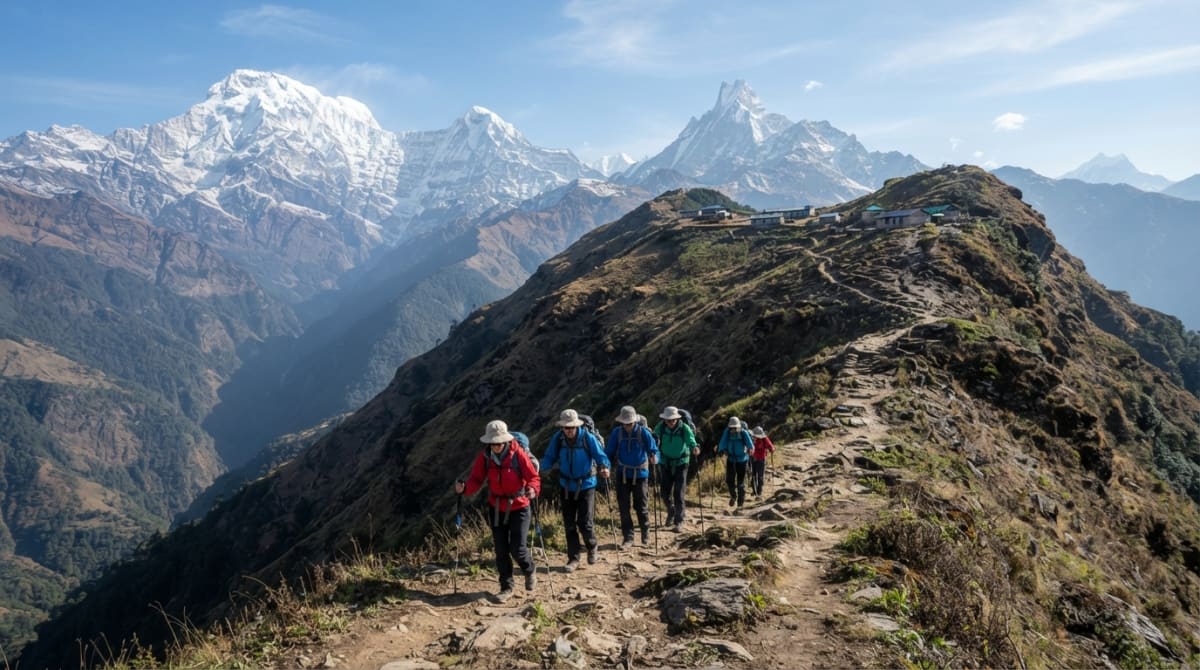
A slow itinerary is ideal for older trekkers who are fit enough to walk but prefer shorter days and more recovery time. It suits families with children, who can find long days tiring and benefit from plenty of rest and play time. It works well for people with joint problems, such as sensitive knees, who want to take the steep sections slowly. It is also a good choice for first-time trekkers who feel nervous about the challenge, and for anyone who wants to savour the journey rather than race to the top. See Mardi Himal for seniors and Mardi Himal with kids.
Stops Along the Way
A slow itinerary lets you experience every stop on the route. Australian Camp is a grassy meadow with a wide view of the Annapurnas, perfect for a first night with a gentle sunset and sunrise. Pitam Deurali is a comfortable stop with several lodges. Forest Camp sits in a quiet clearing in the rhododendron forest. Low Camp has one of the best sunset views of Machapuchare. Badal Danda, the "cloud hill", often sits above a sea of cloud. High Camp is the base for the summit hike, with close-up mountain views. Each has its own atmosphere, and staying at all of them gives you a much richer sense of the trek. See our tea house guide.
The Summit Day on a Slow Trek
On a slow itinerary, the Base Camp hike can also be taken gently. Many relaxed trekkers choose to go only as far as the Upper View Point, at around 4,200 meters, which offers a superb sunrise panorama with less effort. Those feeling strong continue to Base Camp. Either way, you return to High Camp for breakfast and then descend only as far as Badal Danda for the night, keeping the day manageable. See Upper View Point vs Base Camp.
The Descent
The descent is where many trekkers struggle, especially those with sensitive knees. On a slow itinerary, you split it into two days: from Badal Danda or High Camp down to Low Camp, then from Low Camp to Siding. Shorter descents are much easier on the joints, and trekking poles make them easier still. Take regular breaks and walk carefully on steep sections. See trekking with knee problems.
What a Slow Day Feels Like
On a slow itinerary, a typical day might look like this. You wake without an alarm, watch the morning light on the peaks from the lodge terrace, and enjoy an unhurried breakfast. Around 9 a.m., you set off at a comfortable pace, stopping often to rest, take photos, watch birds and chat with your guide. By late morning or early afternoon, you arrive at the next lodge, eat lunch, and have the whole afternoon free. You might take a short walk to a viewpoint, read in the sun, play cards with other trekkers or simply sit and watch the clouds move across the mountains. In the evening, you enjoy dinner by the stove and go to bed early, rested and content.
This rhythm is very different from a standard itinerary, where you might walk six or seven hours and arrive tired just before dark. Trekkers on slow itineraries often say they noticed far more: flowers by the trail, the calls of birds, the changing colours of the forest, the daily routines of lodge families.
Making the Most of Free Afternoons
With short walking days, you will have plenty of free time. Use it well. Take an acclimatization walk a little above your lodge in the afternoon, then return to sleep lower, which helps your body adapt to altitude. Photograph the mountains in the softer afternoon and evening light. Look for birds in the forest around Forest Camp and Low Camp. Keep a journal of the trek. Learn a few Nepali words from your guide or lodge owners. And rest: recovery is part of the plan. See birdwatching on Mardi Himal.
Best Season for a Slow Trek
A slow itinerary works in any season, but some are especially suitable. Spring, particularly April, is wonderful for relaxed walking, with rhododendrons blooming in the forest and warm days that make lingering at viewpoints pleasant. Autumn offers the clearest views and dry trails, though lodges at Low Camp and High Camp can be busy in October, so booking ahead matters. Winter can be very cold, making long afternoons at higher lodges less comfortable, though the trail is quiet and views are often clear. The monsoon brings rain, but a slow pace gives more chances to catch clear mornings. See the best time for the trek.
Slow vs Standard: A Comparison
On a standard 5-day trek from Pokhara, you walk five to six hours on most days, sleep at Pitam Deurali, Low Camp and High Camp, and complete the Base Camp hike and a long descent within five days. On a slow trek, you walk two to four hours on most days, sleep at six or seven different places, and take eight or nine days. The slow version costs more because of the extra days of guide wages, accommodation and meals, but it is far gentler, better for acclimatization and much more relaxing. The standard version suits fit trekkers with limited time; the slow version suits those who value comfort and experience over speed.
Packing for a Longer Trek
A slower trek means more days on the trail, so pack a little more thoughtfully. Bring an extra base layer and socks, a small laundry kit for rinsing clothes at lower lodges, a book or e-reader for the afternoons, and a power bank for charging. Keep the same warm layers for High Camp and the summit hike. Consider hiring a porter, which makes short walking days even more enjoyable. See our packing list.
Health and Safety on a Slow Trek
Slow trekking is generally safer than rushing, with lower risk of altitude sickness, fatigue and injury. Still, keep drinking plenty of water, eat well, and tell your guide about any symptoms. If you have health conditions, speak to your doctor before the trek and carry any necessary medication. Travel insurance covering trekking to 4,500 meters and helicopter evacuation is essential. See our safety guide.
Costs of a Slower Trek
A slow itinerary costs more than a standard one because it involves more days on the trail. Each extra day adds guide and porter wages, a night of tea house accommodation and three meals, plus small extras such as hot drinks, snacks and charging. Because the walking days are short, you may also spend more time in lodges ordering tea and snacks. On the other hand, you are less likely to need an unplanned rest day or to miss the Base Camp view because of weather, so the extra cost buys reliability as well as comfort. See our cost guide.
Tips for a Relaxed Trek
- Book privately. A private guide lets the pace match you exactly, without pressure from a group.
- Hire a porter. Walking with only a daypack makes short stages even more comfortable.
- Start after breakfast. There is no need for early starts except on the summit morning.
- Use trekking poles. They reduce strain on knees on both climbs and descents.
- Take regular breaks. Stop before you feel tired, and enjoy the views.
- Stay flexible. If you feel strong, you can combine two short stages; if tired, you can add a night.
- Book lodges ahead in peak season. Some small stops, such as Badal Danda, have only a few rooms.
Slow Trekking and Photography
A slow itinerary is excellent for photographers. With nights at Australian Camp, Low Camp, Badal Danda and High Camp, you get multiple sunrises and sunsets in different locations, and afternoons free to scout compositions and wait for the right light. You can photograph the rhododendron forest in the morning mist, Machapuchare glowing at sunset from Low Camp, the sea of clouds from Badal Danda, and the summit panorama from the Upper View Point. See the photography itinerary.
Extending a Slow Trek
If you enjoy the relaxed pace, it is easy to extend. You can add a night at Siding or Lwang on the descent to experience a Gurung village, spend an extra day at High Camp for a second sunrise, or continue from the lower Mardi Himal route to Landruk and the Jhinu Danda hot springs for a soak before returning to Pokhara. After the trek, a few quiet days in Pokhara by the lake round off the journey perfectly. Your guide can suggest options based on how you feel and what you enjoy most. See ending at Jhinu Danda and the Lwang exit.
A Trek for Every Generation
One of the joys of a slow itinerary is that it opens Mardi Himal to people who might otherwise think it beyond them. Grandparents, parents and children can trek together, each finding the pace manageable. Many families describe a slow Mardi Himal trek as a highlight of their travels together: shared sunsets, games in the dining room, and the pride of reaching High Camp as a family. See taking your parents on the Mardi Himal Trek.
Book a Slow-Paced Trek
Slow itineraries work best as private treks, so the pace can match you exactly. We can adapt our 9-day Mardi Himal Trek or our 5-day trek from Pokhara to a relaxed schedule with short daily stages and extra nights. Contact us to plan a gentle Mardi Himal journey.