

Most Mardi Himal itineraries are designed without a rest day. That is reasonable: the highest place you sleep is High Camp at 3,580 meters, well below the altitudes where treks such as Everest Base Camp build in acclimatization days, and many trekkers complete the route comfortably in four or five days. But "reasonable" is not the same as "ideal". A single rest day, placed in the right spot, can make the difference between a rushed, anxious trek and a relaxed one, between a clouded-out summit morning and a perfect sunrise, and between a trekker who struggles with headaches at High Camp and one who arrives at Base Camp feeling strong.
This guide explains when a rest day is worth adding, where to place it, what to do with it and when you can safely skip it. For a full itinerary that includes a spare day, see our 6-day itinerary with a buffer day, based on the 5-day Mardi Himal Trek from Pokhara.
Why Standard Itineraries Skip Rest Days
On longer, higher treks, rest days are built in because sleeping altitudes climb above 4,000 or 5,000 meters, where the body needs time to adapt. On Mardi Himal, you never sleep above High Camp, and the highest point, Base Camp at around 4,500 meters, is visited only briefly before you descend. The route is also short, so adding days quickly increases the cost and holiday time required. For fit trekkers in stable autumn weather, a rest day is often unnecessary, and most itineraries reflect that.
The trade-off is that the standard itineraries have little slack. There is exactly one morning planned for the Base Camp hike, and the ascent from Pokhara to High Camp is faster than mountain medicine guidelines would ideally suggest. If anything goes wrong, such as bad weather, illness or slow progress, there is no spare time. A rest day provides that margin.
Reason 1: Weather
The single biggest reason to add a rest day on Mardi Himal is weather. The whole point of the trek, for most people, is the sunrise view from the Upper View Point and Base Camp. If the one planned morning is cloudy, snowy or windy, you may see nothing but fog. With a spare day at High Camp, you simply wait and try again the next morning. In winter, when storms can bring snow and ice to the upper trail, and in the monsoon, when clear mornings are unpredictable, this flexibility is especially valuable. Even in autumn, the most reliable season, an occasional storm passes through.
Guides consistently report that trekkers with a spare day are more likely to see the view they came for, and far less likely to take risks in poor conditions to stay on schedule. See bad weather on summit day.
Reason 2: Acclimatization
The second reason is altitude. On a typical 5-day itinerary, you climb from about 820 meters in Pokhara to 2,970 meters at Low Camp by the second night and 3,580 meters at High Camp by the third. Many trekkers feel mild symptoms at High Camp, such as a headache, loss of appetite or poor sleep. An extra night, either at Low Camp before High Camp or at High Camp itself, gives your body more time to adjust. Mild symptoms often ease after a second night at the same altitude, making the summit hike more comfortable and safer.
If you have had altitude sickness before, are older, or are travelling from sea level with no recent altitude experience, a rest day is a wise precaution. See acclimatization on Mardi Himal and our altitude sickness guide.
Reason 3: Pace and Enjoyment
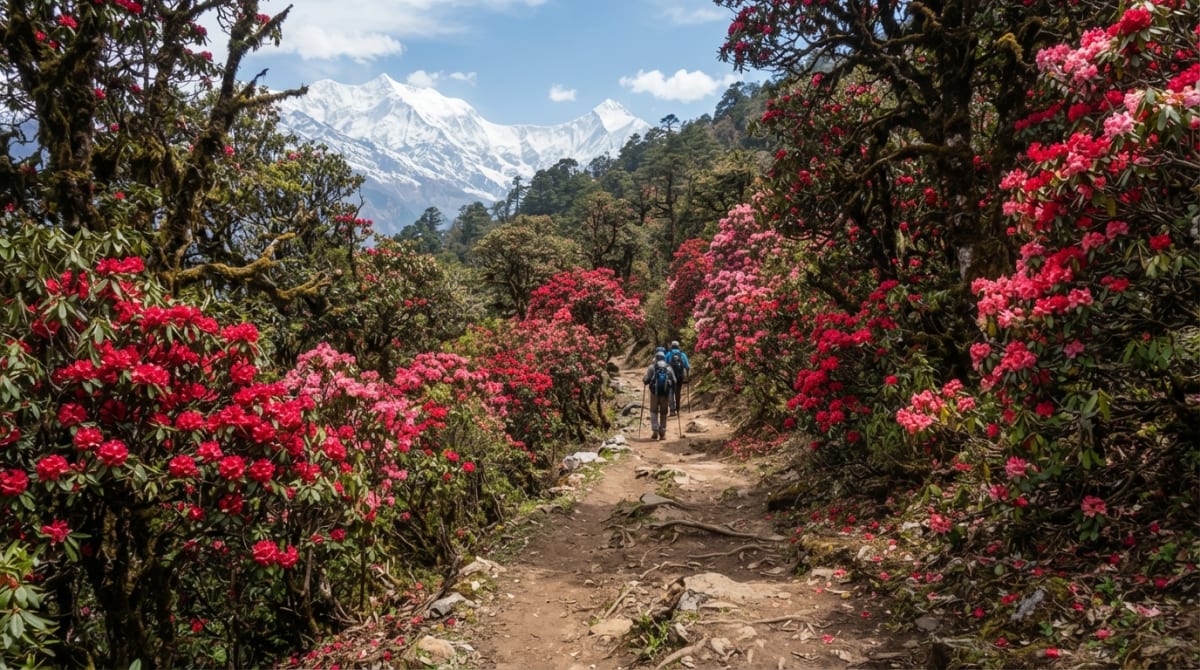
The third reason is simply enjoyment. The Mardi Himal Trek passes through beautiful places that deserve more than an overnight stop: the rhododendron forest around Forest Camp in spring, the sunset view from Low Camp, the cloud-swept ridge at Badal Danda, and the mountain panorama at High Camp. A rest day lets you linger, take photos in different light, talk with lodge owners and other trekkers, and recover from the previous day's effort. For slower walkers, families and older trekkers, it can turn a demanding trip into a comfortable one.
Where to Place the Rest Day
At High Camp: For the Sunrise
If your main concern is weather and the Base Camp view, spend the extra day at High Camp. You arrive, rest, and attempt the summit hike on the first clear morning. If the first morning is clear, you can use the spare day to relax at High Camp, spend a second night higher on the ridge, or descend slowly with a night at Badal Danda. This is the most popular placement. See our High Camp guide.
At Low Camp or Forest Camp: For Acclimatization
If your main concern is altitude, place the rest day before High Camp. A second night at Low Camp, just under 3,000 meters, or a night at Forest Camp that splits the long forest climb, gives your body a gentler step before sleeping at 3,580 meters. This suits trekkers who have had altitude problems before or who are coming from sea level. See our Low Camp guide and Forest Camp guide.
Flexible: Decided on the Trail
The most flexible approach is to book an itinerary with one spare day and let your guide decide where to use it based on weather, conditions and how you feel. This is how our 6-day trek works. Your guide watches the forecast and your condition and places the day where it helps most.
What to Do on a Rest Day
A rest day is not a day of doing nothing, but a day of doing things gently. Sleep in, eat a relaxed breakfast and drink plenty of fluids. Mid-morning, take a short acclimatization walk to a point a little higher than your lodge, such as the ridge above High Camp or Low Camp, then return to sleep lower; this "climb high, sleep low" approach helps your body adapt. Spend the afternoon reading, writing, sorting your gear, charging devices and chatting with other trekkers. Watch the sunset and, if the sky is clear, the stars.
At High Camp, a rest day also lets you scout the path above the lodges in daylight, so the pre-dawn hike feels more familiar. Photographers can use the day to capture the ridge in different light. See our photography guide.
A Sample Itinerary with a Rest Day at High Camp
| Day | Plan | Overnight |
|---|---|---|
| 1 | Pokhara to Kande, trek to Pitam Deurali | Pitam Deurali |
| 2 | Trek to Low Camp | Low Camp |
| 3 | Trek to High Camp | High Camp |
| 4 | Rest day or first Base Camp attempt | High Camp |
| 5 | Base Camp (if not done), descend to Low Camp | Low Camp |
| 6 | Descend to Siding, drive to Pokhara | Pokhara |
If the weather is clear on day four, you hike to Base Camp that morning and use day five for a relaxed descent with a night at Badal Danda or Low Camp. If it is cloudy, you rest and try again on day five.
Rest Days Through the Seasons
In autumn, a rest day is a luxury rather than a necessity, since clear mornings are common. It is most useful for acclimatization or for enjoying the views at a slower pace. In winter, it is close to essential: snowstorms can close the upper trail for a day, and icy conditions may need time to settle. It also gives your body more time to adjust to the cold. In spring, it helps with afternoon storms in May and occasional late snow in March, and gives time to enjoy the rhododendrons. In the monsoon, it significantly improves your chances of a clear morning, since breaks in the clouds are unpredictable. See the winter itinerary and the monsoon itinerary.
Rest Days for Families and Older Trekkers
For families with children and older trekkers, a rest day brings extra benefits. Children can find long days and altitude tiring, and a day of rest at Low Camp or Forest Camp keeps spirits high. Older trekkers often acclimatize well but benefit from shorter walking days and more recovery time between climbs. A rest day also reduces the pressure to keep up with a schedule, which makes the whole trek more enjoyable for everyone. See Mardi Himal with kids and Mardi Himal for seniors.
Common Mistakes with Rest Days
One mistake is using the rest day too early, for example resting at Pitam Deurali on a sunny day, then having no spare day left when cloud arrives on the summit morning. Another is treating a rest day as a lazy day and not taking an acclimatization walk, which helps your body adapt. Some trekkers also use a rest day to push extra distance, such as walking to the Upper View Point and back in the afternoon, which can leave them tired for the real summit hike. Talk to your guide about the best way to use the day.
When You Can Skip It
You can reasonably skip a rest day if you are fit, have recent experience at altitude, are trekking in autumn when the weather is stable, and your schedule is tight. The standard 5-day itinerary from Pokhara works well for most such trekkers. You should consider adding one if you are trekking in winter, spring or the monsoon, have had altitude sickness before, are a slower walker, are travelling with children or older family members, or if seeing the Base Camp sunrise is the main reason for your trip.
Signs You Need an Unplanned Rest Day
Sometimes a rest day is not planned but needed. Signs include a headache that does not ease with rest and fluids, nausea or loss of appetite, unusual tiredness, poor sleep over two nights, or a minor injury such as a blister or sore knee that needs time to settle. In these cases, staying an extra night at the same altitude, or even descending a little, is the right decision. Your guide will watch for these signs and suggest adjusting the plan. Having a spare day already built into your itinerary makes these decisions much easier, because you do not have to choose between your health and your schedule. See recognising altitude sickness.
Cost of a Rest Day
A rest day adds one day of guide and porter wages, one more night of tea house accommodation and meals, and a little extra spending on snacks, drinks and charging. Because prices rise with altitude, a rest day at High Camp costs slightly more than one lower down. Compared with the cost of international flights and the disappointment of missing the view, most trekkers find it good value. See our daily budget guide.
A Rest Day in Pokhara Instead?
Some trekkers prefer to keep the trail itinerary standard and add a spare day in Pokhara at the end. This protects your international flight from road or weather delays and gives you time to recover, but it does not help with weather on the summit morning or with acclimatization. If you can only add one day, adding it on the trail usually brings more benefit. If you can add two, one on the trail and one in Pokhara is ideal. See things to do in Pokhara.
What Trekkers Say About Rest Days
Trekkers who add a rest day often say it was the best decision they made. Some describe waking on the first summit morning to thick cloud, relaxing through a snowy day at High Camp, and then walking to Base Camp the next morning under a perfect blue sky. Others say the extra night at Low Camp meant they arrived at High Camp without the headache that affected others in their group. Many simply enjoyed having time to slow down. The most common regret among trekkers without a rest day is missing the view because the one planned morning was cloudy.
How to Book a Trek with a Rest Day
We can add a rest day to any of our Mardi Himal itineraries. The 5-day Mardi Himal Trek from Pokhara becomes a 6-day trek with a spare day, and the 9-day Mardi Himal Trek can be extended to 10 days. Your guide will decide where to use the day based on conditions. Contact us to plan a relaxed, flexible trek.