

Most Mardi Himal trekkers pass through Kathmandu, but many see little more than the airport, their hotel and the streets of Thamel. That is a shame, because the Kathmandu Valley holds one of the richest concentrations of cultural heritage in Asia. Ancient stupas, riverside temples, royal palaces and medieval towns are all within a short drive of each other, and several are part of a UNESCO World Heritage listing. Adding a day or two of heritage touring to your trek turns a mountain holiday into a fuller experience of Nepal.
This guide explains which sites to prioritise, how to fit a heritage tour around the trek, and practical tips for making the most of it. Our 9-day Mardi Himal Trek starts and ends in Kathmandu, making it easy to add sightseeing.
Why Add a Heritage Tour?
The Mardi Himal Trek shows you Nepal's mountains, forests and Gurung villages. Kathmandu shows you the country's history, religions and urban culture. Here you see the Hindu and Buddhist traditions that shape daily life across Nepal, the extraordinary woodcarving and temple architecture of the Newar people, and the living rituals of a city where temples are places of daily worship rather than museum pieces. Understanding this context makes the prayer flags, shrines and festivals you encounter on the trek more meaningful.
A heritage tour is also a gentle way to recover after the trek. Walking around temple squares and stupas is easy on tired legs, and there are plenty of cafés for rest stops.
Boudhanath Stupa
Boudhanath is one of the largest stupas in the world and the spiritual heart of Kathmandu's Tibetan Buddhist community. Its huge white dome is topped by a gilded tower painted with the watchful eyes of the Buddha, and strings of prayer flags stretch from its summit. Around the base, pilgrims walk clockwise, spinning prayer wheels and chanting, while monasteries, shops and rooftop cafés line the square. Visiting in the late afternoon or early evening, when the light softens and the crowds of devotees grow, is especially atmospheric. Walk clockwise around the stupa, as local people do.
Swayambhunath
Perched on a hilltop west of the city, Swayambhunath is one of Nepal's oldest and most sacred Buddhist sites. Often called the "monkey temple" because of the monkeys that roam its grounds, it features a white stupa with painted eyes, surrounded by shrines, prayer wheels and small temples used by both Buddhists and Hindus. A long staircase leads up from the east, and the reward at the top is a panoramic view over the Kathmandu Valley, with the Himalaya visible on clear days. Keep food out of sight, as the monkeys are bold.
Pashupatinath Temple
On the banks of the Bagmati River, Pashupatinath is one of the most important Hindu temples dedicated to Shiva. The main temple is open only to Hindus, but visitors can watch from the opposite bank and explore the surrounding complex of shrines, ashrams and ghats. Open-air cremations take place on the riverbanks, and witnessing them is a profound experience; visitors should be quiet, respectful and avoid photographing grieving families. Sadhus, Hindu holy men, are often seen around the complex. In the evening, a ceremony with lamps and music takes place by the river.
The Durbar Squares
The Kathmandu Valley once contained three rival kingdoms, each with a royal palace square, or durbar square. Kathmandu Durbar Square, in the old city, has temples, courtyards and the residence of the Kumari, the living goddess. Patan Durbar Square, across the river, is celebrated for its fine temples and museum of religious art. Bhaktapur, a short drive east, is a beautifully preserved medieval town with brick streets, pagoda temples, pottery squares and its famous juju dhau, "king curd" yogurt. Some monuments were damaged in the 2015 earthquake and have been restored or are under restoration.
Other Sites in the Valley
Beyond the famous highlights, the Kathmandu Valley has several quieter sites worth adding if you have time. Changu Narayan, a hilltop temple east of the city, is one of the oldest Hindu temples in the valley, with remarkable stone and wood carvings, and it is part of the valley's UNESCO listing. Nagarkot, on the eastern rim of the valley, is known for its Himalayan sunrise views on clear mornings and makes a pleasant overnight stay. Kirtipur, an old Newar town on a hill southwest of Kathmandu, offers traditional streets and temples with few tourists. Each gives a different window into valley life.
Newar Culture and Food
Much of the Kathmandu Valley's heritage was created by the Newar people, the valley's indigenous community, whose artisans built the temples, palaces and courtyards you see today. Newar culture is known for its elaborate festivals, fine woodcarving, metalwork and pottery, and its distinctive cuisine. Try a Newari meal with beaten rice, spiced meats, lentil patties called bara, and fermented dishes, often served in restaurants in Patan, Bhaktapur and Kirtipur. The famous yogurt of Bhaktapur, served in clay pots, is a must. Food is a delicious way to connect with the culture behind the monuments.
Etiquette at Religious Sites
Most heritage sites in the valley are active places of worship, so respectful behaviour matters. Dress modestly, covering shoulders and knees. Walk clockwise around stupas, prayer wheels and Buddhist shrines. Remove shoes before entering temples and some courtyards, and check whether entry is permitted; some Hindu temples, including the main Pashupatinath temple, are open only to Hindus. Do not touch offerings or religious objects, avoid pointing your feet at shrines, and ask before photographing people, especially at cremation sites and during rituals. A licensed guide can explain local customs as you go. See cultural dos and don'ts.
Kathmandu and the 2015 Earthquake
In April 2015, a major earthquake struck Nepal, damaging or destroying many historic buildings in the Kathmandu Valley. Some temples in the Durbar Squares collapsed, and others were badly damaged. Since then, extensive restoration work has rebuilt many monuments using traditional techniques and materials, and most major sites are open to visitors. In some places you will still see scaffolding or empty plinths where temples once stood. Visiting and paying entrance fees helps fund ongoing restoration and supports local communities.
Before or After the Trek?
There are good arguments for both. Touring before the trek helps you adjust to jet lag and the time zone, and gives you cultural context for what you will see in the mountains. Touring after the trek is more relaxing, as you are no longer thinking about gear and fitness, and walking around temple squares is gentle exercise for tired legs. If your flight times allow, a day on each side is ideal: a gentle afternoon at Boudhanath on arrival, and a full day of touring before you fly home.
Practical Tips
Start early to beat the crowds and heat, especially at Swayambhunath and the Durbar Squares. Carry small notes in Nepali rupees for entrance fees and donations. Wear comfortable shoes that are easy to remove at temples. Bring a scarf or light layer to cover your shoulders. Kathmandu's traffic can be slow, so allow plenty of time between sites or hire a private vehicle with a driver. A licensed guide makes a big difference, explaining the history and symbolism behind what you see and helping with etiquette. And take breaks; there are good cafés around every major site.
Photography in Kathmandu
Kathmandu's heritage sites are superb for photography, from the golden light on Boudhanath's dome at sunset to the carved windows and pagoda roofs of Bhaktapur. Early morning light is best for architecture and street scenes. Be respectful when photographing people, particularly worshippers and sadhus, some of whom may ask for a small payment. Never photograph cremations in a way that intrudes on grieving families. See photographing people respectfully.
Where to Stay
Most trekkers stay in or near Thamel, which is central, lively and full of hotels, restaurants and gear shops. For a quieter experience with more atmosphere, consider staying near Boudhanath, where guesthouses overlook the stupa, or in Patan, with its historic courtyards and calmer streets. Bhaktapur also has characterful guesthouses in old buildings, ideal if you want to experience the town after the day visitors leave. See where to stay in Kathmandu.
Shopping in the Valley
Kathmandu is a good place to buy souvenirs and gifts after your trek. Thamel is packed with shops selling pashmina scarves, singing bowls, thangka paintings, prayer flags, felt goods and trekking gear. Patan is known for metalwork and handicrafts, with workshops producing bronze statues using traditional techniques, and Bhaktapur for pottery and woodcarving. Fair-trade shops sell handicrafts made by local artisans and women's cooperatives, ensuring more of your money reaches the makers. Bargaining is common in markets but should be friendly and fair. See souvenir shopping in Pokhara for similar advice.
Festivals in Kathmandu
If your trip coincides with a festival, Kathmandu comes alive. During Dashain and Tihar in autumn, the city is decorated and families gather; during Holi in spring, the streets fill with colour. Indra Jatra, usually in September, features the procession of the Kumari, the living goddess, through Kathmandu Durbar Square. Buddhist festivals bring pilgrims to Boudhanath and Swayambhunath. Festivals can mean crowds and closures, but they also offer unforgettable glimpses of living culture. Ask your agency about festival dates when planning. See trekking during Dashain and Tihar.
Who Should Add a Heritage Tour?
A heritage tour suits almost every traveller, but it is especially valuable for first-time visitors to Nepal, who may never return to Kathmandu, and for anyone interested in history, religion, architecture or photography. It is also a good choice for families, as the sites are easy to reach and the pace is gentle. If you have visited Kathmandu before or are short of time, you might skip the full tour and simply visit Boudhanath on an evening before your flight.
Connecting the Mountains and the Temples
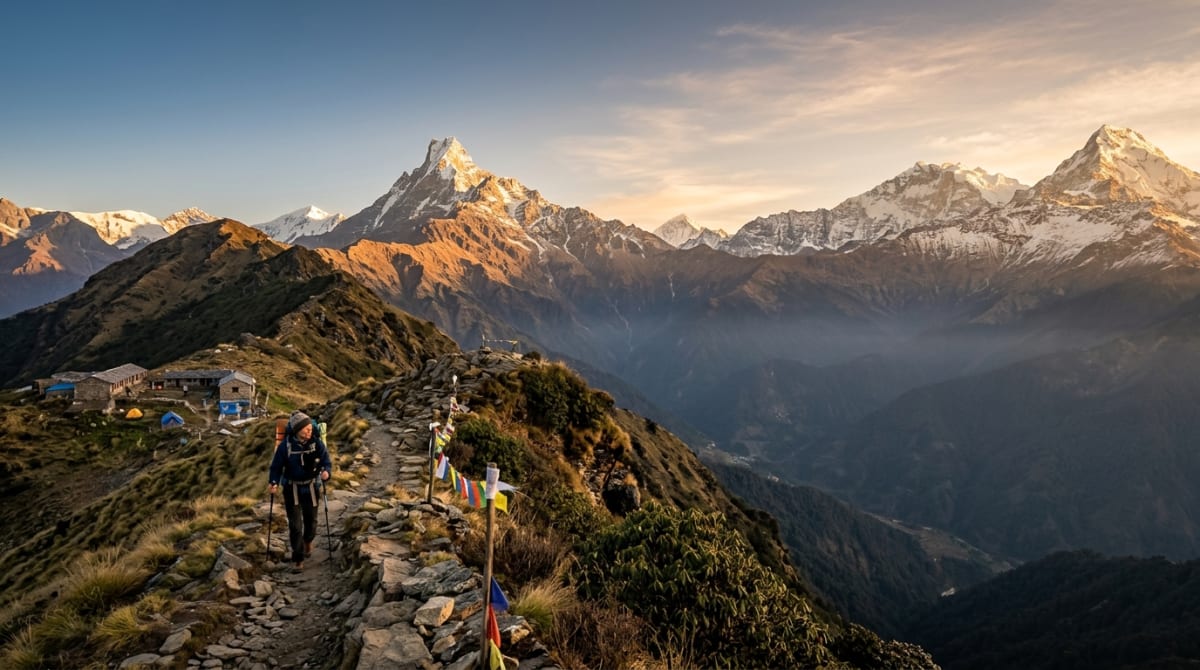
One of the pleasures of combining a heritage tour with the Mardi Himal Trek is noticing the connections between the two. The prayer flags fluttering on the ridge near High Camp are the same as those strung from the top of Boudhanath. The small shrines and chortens you pass on the trail echo the great stupas of the valley. Machapuchare, revered as sacred and closed to climbers, reflects the same reverence for the natural world that you see in Pashupatinath's riverside rituals. Many guides are happy to explain these links, turning the trek and the tour into one continuous story about how people in Nepal live alongside their mountains and gods.
Walking clockwise around a stupa in Kathmandu after days spent walking toward sacred peaks can feel surprisingly moving. It is a reminder that the Himalaya are not just a trekking destination but a landscape of deep spiritual meaning for the people who live among them. See prayer flags, chortens and shrines on the trail and why Machapuchare has never been climbed.
A Sample Itinerary
A simple way to add heritage touring is to include one full day after the trek. A typical day might start at Swayambhunath for morning views, continue to Kathmandu Durbar Square for late morning, visit Pashupatinath in the afternoon, and end at Boudhanath for sunset and dinner. With a second day, visit Bhaktapur and Patan at a more relaxed pace. Our 9-day itinerary can be extended by one or two days for this.
Getting Around the Valley
The heritage sites are spread across the valley, and traffic can be heavy, so transport planning matters. Taxis are widely available but fares should be agreed before you set off. A private vehicle with a driver for the day is the most efficient option for a full heritage tour, saving time and hassle. Walking works well within Thamel, around Durbar Square and inside Patan and Bhaktapur, where lanes are narrow and many areas are pedestrian-friendly. If you are short on time, focus on sites that are close together.
Book a Trek and Heritage Tour
We can add a guided Kathmandu heritage tour to the 9-day Mardi Himal Trek or to any trek starting from Pokhara, with a licensed city guide and private transport. Contact us to plan it, or read about other ways to extend the trek in our two-week Nepal itinerary.