

For many travellers, two weeks is the ideal length for a first visit to Nepal. It is long enough to trek in the Himalaya, explore the temples and squares of the Kathmandu Valley, relax by the lake in Pokhara and even spend a few days in the jungle, without feeling rushed. The Mardi Himal Trek fits perfectly into a two-week plan: short enough to leave time for other experiences, yet high and spectacular enough to be the centrepiece of the trip.
This guide sets out a balanced two-week itinerary built around the trek, followed by alternatives for keen trekkers and culture lovers. The trekking part is based on our 9-day Mardi Himal Trek, which can be extended.
A Balanced Two-Week Itinerary
| Day | Plan |
|---|---|
| 1 | Arrive in Kathmandu |
| 2 | Kathmandu heritage tour: Boudhanath, Swayambhunath, Pashupatinath, Durbar Square |
| 3 | Travel to Pokhara |
| 4 | Drive to Kande, trek to Pitam Deurali |
| 5 | Trek to Forest Camp |
| 6 | Trek to High Camp |
| 7 | Base Camp at sunrise, descend to Badal Danda |
| 8 | Descend to Siding, drive to Pokhara |
| 9 | Rest day in Pokhara: boating, Peace Pagoda or paragliding |
| 10 | Travel to Chitwan |
| 11 | Full day of safari activities |
| 12 | Travel to Kathmandu |
| 13 | Bhaktapur or Patan, souvenir shopping |
| 14 | Departure |
Kathmandu: Days 1 to 3
You arrive in Kathmandu and spend your first full day exploring the valley's heritage sites with a guide. Boudhanath, one of the largest stupas in the world, is the heart of Tibetan Buddhist life in the city. Swayambhunath offers views over the valley from its hilltop. Pashupatinath, on the Bagmati River, is one of the most sacred Hindu temples in South Asia. Kathmandu Durbar Square showcases palaces and temples of the old kingdom. On day three, you travel to Pokhara by tourist bus or flight. See combining the trek with a Kathmandu heritage tour.
The Mardi Himal Trek: Days 4 to 8
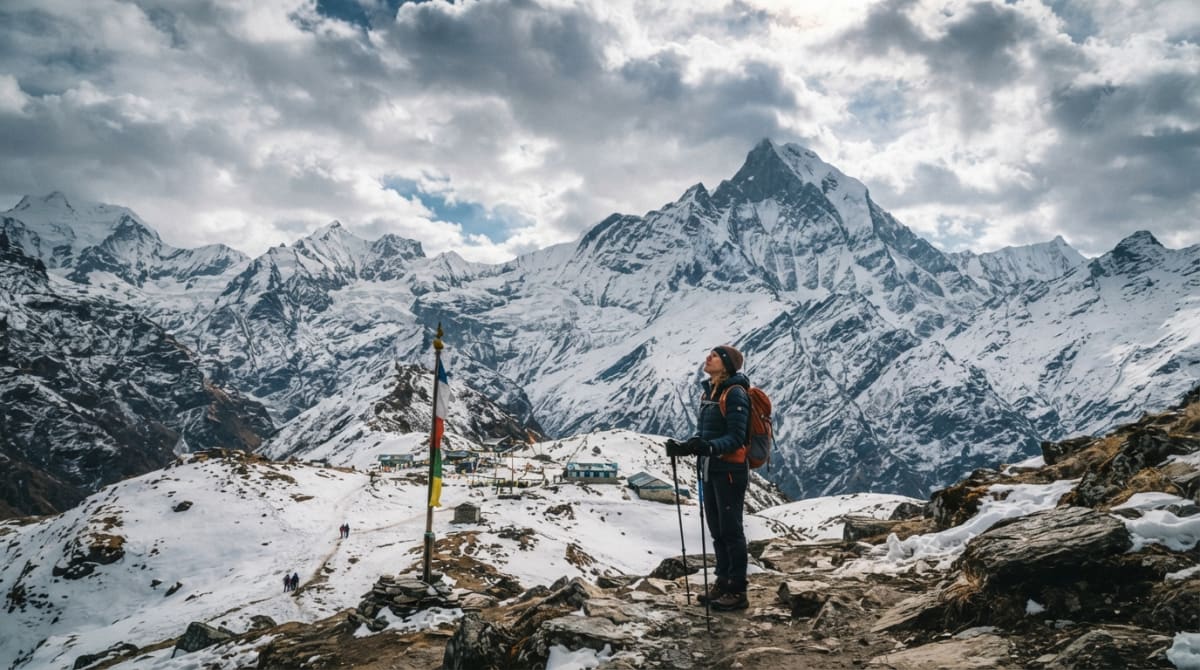
The trek follows the gentle pattern: Kande to Pitam Deurali, a short day to Forest Camp in the rhododendron forest, a climb to High Camp, the pre-dawn hike to the Upper View Point and Base Camp, a night at Badal Danda, and a descent to Siding. This pace gives good acclimatization and time to enjoy the views. See our day-by-day itinerary guide.
Pokhara: Day 9
After the trek, a rest day in Pokhara lets your legs recover. Rent a boat on Phewa Lake, walk to the World Peace Pagoda, visit the International Mountain Museum, or fly tandem with a paragliding pilot from Sarangkot. See things to do in Pokhara.
Chitwan: Days 10 to 12
Travel south to Chitwan National Park for jeep safaris, canoe trips and guided walks in search of rhinos, deer, crocodiles and a wealth of birdlife, then return to Kathmandu. See Mardi Himal and Chitwan.
Days 13 and 14: Final Days in Kathmandu
Back in Kathmandu, use your last full day to visit Bhaktapur, a beautifully preserved medieval town with brick streets, pagoda temples and pottery squares, or Patan, with its fine Durbar Square and museum of religious art. Pick up souvenirs in Thamel or at fair-trade shops, enjoy a farewell dinner, and head to the airport on day fourteen with a spare morning in case of delays.
Why Two Weeks Works So Well
Two weeks strikes a balance between depth and variety. It gives enough time for a trek of five to seven days without rushing, a rest day afterward, and one or two other experiences, such as Kathmandu's heritage sites or Chitwan's wildlife. It also leaves room for weather delays, jet lag and rest, which makes the whole trip more relaxed. For first-time visitors, it offers a well-rounded introduction to Nepal: mountains, culture, lakes and jungle.
Alternative: For Keen Trekkers
If trekking is your main interest, replace Chitwan with a second trek. Combining Mardi Himal with Poon Hill gives you two very different sunrise viewpoints and a mix of village trails and ridge walking in around nine to eleven trekking days. Fit trekkers might instead combine Mardi Himal with Annapurna Base Camp, crossing from Landruk to the Annapurna Sanctuary, though this needs closer to two full weeks of walking. See Mardi Himal and Poon Hill and Mardi Himal and ABC.
Alternative: For Culture Lovers
If culture is your priority, spend more time in the Kathmandu Valley and add stops such as Bandipur, a car-free Newar hill town between Kathmandu and Pokhara, or Lumbini, the birthplace of the Buddha, in the southern plains. A culture-focused two weeks might include two days of Kathmandu sightseeing, a night in Bandipur on the way to Pokhara, the Mardi Himal Trek, and a visit to Lumbini before returning to Kathmandu. See Mardi Himal and Bandipur and Mardi Himal and Lumbini.
Getting Around
Travel between Kathmandu, Pokhara and Chitwan is by tourist bus, private vehicle or domestic flight. Tourist buses are inexpensive and scenic but slow, typically five to eight hours per leg. Private vehicles are faster and more flexible, and allow stops such as Bandipur. Flights save time but can be delayed by weather. A mix often works best: road travel for scenic legs and flights when time is short. See our transportation guide.
Best Season for Two Weeks
October to November is the best season overall, with clear mountain views, stable weather and pleasant conditions in Chitwan after the monsoon. March to April is also excellent, with rhododendrons on the trek and warm, dry conditions in Chitwan, which is good for wildlife viewing. December to February works well for the lowlands but is cold on the trek. The monsoon is wet everywhere and less suitable. See the best time for the trek.
Budget for Two Weeks
A two-week trip includes the trek package, hotels in Kathmandu and Pokhara, transport between cities, a Chitwan package with activities, meals outside the trek, entrance fees, activities such as paragliding, tips and souvenirs. Costs vary widely with hotel standards and transport choices. Planning a budget in advance helps avoid surprises. See our cost guide.
Packing for Mountains and Jungle
Pack your trekking layers, boots and sleeping bag for the mountains, plus light, breathable clothes in neutral colours, a sun hat and insect repellent for Chitwan. Leave trekking gear at your Pokhara hotel or in your vehicle during the safari. See our packing list.
What Makes This Itinerary Balanced
The balanced itinerary is designed to give you the best of Nepal in fourteen days without exhaustion. It opens with culture in Kathmandu, which helps you recover from jet lag gently while learning about Nepal's history and religions. The trek comes next, while your energy is high, with a gradual ascent that gives good acclimatization. A rest day in Pokhara lets your body recover before the journey south. Chitwan offers a completely different environment of jungle and wildlife, with gentle activities. And the final days in Kathmandu add more heritage and time for shopping, with a buffer before your flight. Each part complements the others, and the pace alternates between active and restful days.
Adjusting the Order
You can rearrange the itinerary to suit your flights and preferences. Some travellers prefer to go to Chitwan first, helping with jet lag in the warm lowlands before heading to the mountains. Others do the trek first and save all the sightseeing for the end, when they are relaxed. If you fly into Pokhara directly, you might start with the trek and finish in Kathmandu. Whatever the order, keep the trek before any strenuous activities, and leave a spare day before your international departure.
Photography Across Nepal
A two-week trip offers remarkable variety for photographers: the carved temples and stupas of Kathmandu, the mountains and forests of the Mardi Himal Trek, the lake and paragliders of Pokhara, and the wildlife and river scenes of Chitwan. Bring a versatile zoom lens, spare batteries and plenty of storage, and always ask before photographing people. See our photography guide.
Food Across Nepal
Two weeks gives you a chance to taste Nepal's varied cuisine. In Kathmandu, try Newari dishes such as beaten rice sets and spiced lentil patties, and momos from street stalls and restaurants. On the trek, dal bhat becomes a daily staple, with free refills to fuel the climbs. In Pokhara, lakeside restaurants serve everything from Thakali thali sets to international dishes, a welcome treat after the trail. In Chitwan, lodges often serve Tharu specialities alongside familiar meals. Eating local food is one of the pleasures of travel in Nepal. See Nepali dishes to try and Thakali food in Pokhara.
If You Have More Than Two Weeks
Many travellers who plan two weeks later wish they had stayed longer, because Nepal has so much to offer beyond the classic highlights. With a third week, you can add a second trek, such as Poon Hill or Annapurna Base Camp, more time in Chitwan or Bardia, a visit to Lumbini, or simply more rest days. A three-week trip allows a slower pace throughout and more flexibility for weather. See our three-week Nepal itinerary for ideas.
Travelling Responsibly
Over two weeks, your choices add up. Use refillable water bottles, carry out your rubbish on the trek, choose locally owned hotels and lodges, hire local guides and porters, and choose wildlife activities in Chitwan that respect animal welfare. Dress modestly at religious sites and ask before photographing people. These small actions help ensure your visit benefits the people and places you encounter. See responsible trekking on Mardi Himal.
Pacing Your Two Weeks
A common mistake on a two-week trip is filling every day with activities. Nepal can be tiring: long road journeys, early starts, altitude and the intensity of Kathmandu all take energy. Build in rest days, particularly after the trek, when your legs will appreciate a slower pace. Arrange activities so that demanding days are followed by easier ones. For example, after the long descent to Siding, spend a relaxed day in Pokhara before travelling to Chitwan. A well-paced trip lets you enjoy each experience fully rather than rushing from one to the next.
Where to Stay
In Kathmandu, most travellers stay in or near Thamel for its convenience, restaurants and shops, while those seeking a quieter atmosphere choose Boudhanath or Patan. In Pokhara, Lakeside offers everything from guesthouses to comfortable hotels with lake views. On the trek, you stay in simple tea houses. In Chitwan, lodges near Sauraha range from budget guesthouses to comfortable jungle resorts, often with activities included. Choosing comfortable hotels before and after the trek makes a big difference to how rested you feel. See where to stay in Kathmandu and where to stay in Pokhara.
Health Across Different Environments
A two-week trip takes you from Kathmandu's dust and traffic, through the altitude and cold of the Mardi Himal ridge, to the heat and humidity of Chitwan. Each environment brings its own health considerations. In Kathmandu, air pollution and food hygiene are the main concerns; carry a mask for dusty days and eat freshly cooked food. On the trek, altitude and cold matter most. In Chitwan, heat and mosquitoes require sun protection and repellent. Speak to a travel clinic before your trip and pack a first aid kit that covers all three. See staying healthy in Kathmandu and our first aid kit guide.
Tips for Your Two Weeks
- Front-load Kathmandu or save it for the end. Sightseeing on arrival helps with jet lag; sightseeing at the end is relaxing after the trek.
- Keep a buffer before your flight home. A spare day protects against delays.
- Book the trek early in peak season. High Camp lodges fill up in October and November.
- Mix transport modes. Use flights where time matters and road travel where scenery matters.
- Carry cash. ATMs are plentiful in cities but absent on the trail and in some villages.
- Stay flexible. Weather and roads can change plans; a relaxed attitude helps.
Book a Two-Week Trip
We can build a two-week Nepal itinerary around the 9-day Mardi Himal Trek, including heritage tours, Pokhara activities and Chitwan. Contact us to plan your trip.