

If you have never trekked in the Himalaya before, the idea can feel intimidating. Words like altitude, tea house, permit and base camp can make it sound like an expedition for experienced mountaineers. The Mardi Himal Trek is a good answer to that fear. It is short, well supported by lodges, reachable within an hour of Pokhara, and still gives you real Himalayan scenery, with Machapuchare close enough to feel enormous.
This handbook is written for complete beginners. It explains, in plain language, what the trek involves, what a day on the trail looks like, how tea houses work, how to prepare your body and your bag, and how to choose an itinerary. If you want a short yes-or-no answer first, read is the Mardi Himal Trek suitable for beginners?, then come back here for the detail.
Why Mardi Himal Works Well as a First Trek
Several features make Mardi Himal a friendly introduction to Himalayan trekking. It is short, so you do not need weeks of holiday, and the trekking section can be as little as four or five days. It is close to Pokhara, a relaxed lakeside city with good hotels, gear shops and food, so the start and finish are comfortable. It is well served by tea houses, so you sleep in a bed and eat hot meals every night without carrying a tent or stove. And it offers a genuine sense of achievement: you climb to around 4,500 meters, higher than any summit in Europe outside the Caucasus, and stand beneath some of the most photographed mountains in Nepal.
It is not a stroll, though. The trail is steep in places, the Base Camp day starts before dawn, and altitude is a real factor. The rest of this guide explains how to prepare for those challenges so they become part of the adventure rather than obstacles.
What the Trek Involves in Simple Terms
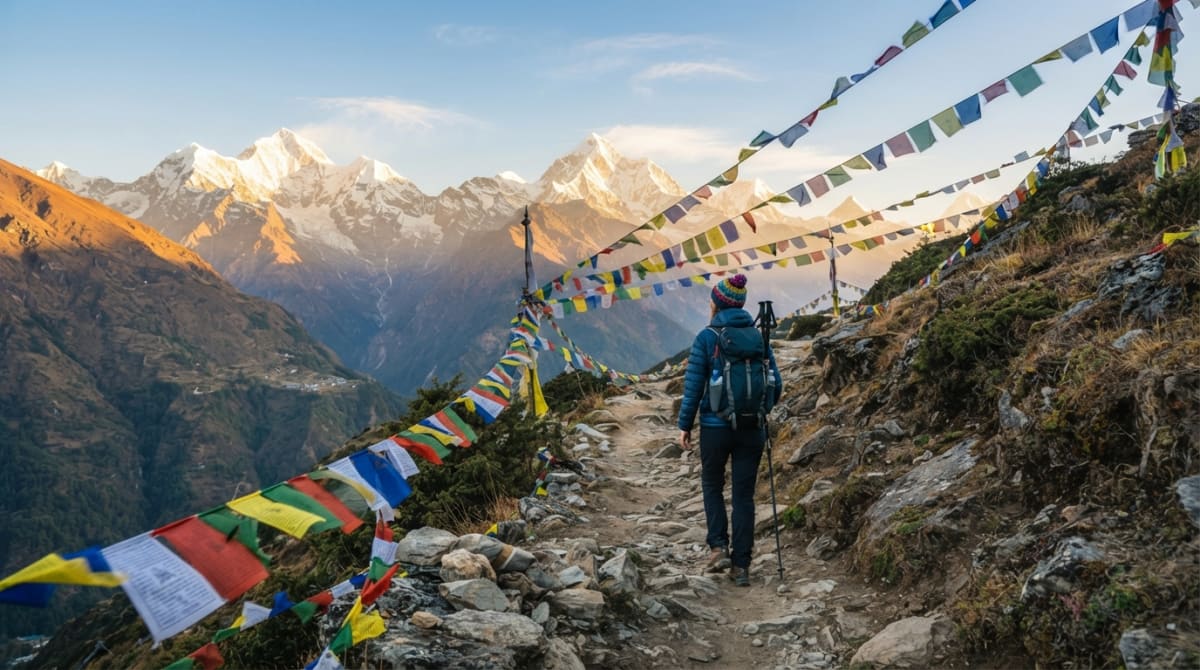
You drive about an hour from Pokhara to a small roadside village called Kande. From there you walk uphill through farmland and forest for two or three days, sleeping in small family-run lodges. As you climb, the forest thins and you come out onto a grassy ridge with the mountains in front of you. You spend a night at High Camp, 3,580 meters above sea level. The next morning you get up in the dark and hike to Mardi Himal Base Camp at around 4,500 meters to watch the sunrise over the peaks. Then you walk back down, spend another night on the trail, and descend to a village called Siding, where a jeep takes you back to Pokhara.
Our day-by-day itinerary guide explains each stage in detail, and the route guide shows where everything is on the map.
How Fit Do You Need to Be?
You do not need to be an athlete. You do need to be comfortable walking for five to six hours a day on uneven, hilly paths, with a small backpack, for several days in a row. The climbs are steep but short, and you can take them at your own pace. The hardest parts for most beginners are the early-morning climb to Base Camp and the long descent at the end, which is tough on the knees.
A simple test: if you can walk briskly uphill for an hour without stopping, and complete a five-hour hike with plenty of ascent and feel fine the next day, you are in a good position. If not, six to eight weeks of training will get you there. Our Mardi Himal fitness guide has a full training plan, and the fitness self-test helps you check where you stand.
Understanding Altitude as a Beginner
Altitude is the one thing that surprises beginners most. As you go higher, the air holds less oxygen, and your body has to adjust. On Mardi Himal you will notice this at Low Camp and High Camp as heavier breathing on climbs, and perhaps a mild headache in the evening. On the Base Camp hike everyone feels breathless. These are normal responses.
What matters is recognising when normal becomes a problem. A headache that gets worse, nausea, dizziness or unusual tiredness can be signs of acute mountain sickness. The fix is simple: stop going higher, rest, drink water and tell your guide. If symptoms continue, you walk down. Our guide to altitude sickness on Mardi Himal explains the warning signs clearly. The golden rules for beginners are to walk slowly, drink plenty and never hide symptoms from your guide.
Why You Trek with a Guide
Since 2023, foreign trekkers in Nepal's national parks and conservation areas have been required to trek with a licensed guide. For beginners this is good news. A guide does far more than show the way. They arrange permits, book lodges, help you order food, set a sensible pace, watch for signs of altitude sickness, translate, and make decisions about weather and safety. They also share stories about the mountains, villages and culture that you would otherwise miss.
You can also hire a porter to carry your main bag, leaving you with just a daypack. For beginners, this can make the difference between enjoying the climbs and struggling through them. Read hiring a guide for Mardi Himal and how porter service works.
Tea Houses: Where You Sleep and Eat
A tea house is a small lodge run by a local family. You sleep in a simple twin room with beds, a thin mattress, a pillow and blankets. Toilets are shared and may be squat toilets. Hot showers are available at lower lodges for a small fee. The heart of every tea house is the dining room, heated by a stove, where everyone eats and relaxes in the evening.
Food is simple but filling: dal bhat (rice, lentils and vegetable curry), noodles, fried rice, pasta, potatoes, soups, porridge, eggs and bread, with plenty of tea. Most beginners are pleasantly surprised by how good the food is. Read our food and accommodation guide for a full picture.
A Beginner's Daily Routine
- 6:30 a.m. Wake up, pack your bag and watch the morning light on the mountains.
- 7:00 a.m. Breakfast in the dining room.
- 8:00 a.m. Start walking. Your guide sets the pace, with regular rest stops.
- Noon. Lunch at a tea house along the way.
- 2:00 to 3:00 p.m. Arrive at the evening's lodge. Wash, change into warm clothes, rest.
- Late afternoon. Explore, take photos, read, chat with other trekkers.
- 6:30 p.m. Dinner, then an early night.
The Base Camp day is different: you leave High Camp around 4 or 5 a.m. with a headlamp. Read what a typical day looks like on the trek.
Choosing Your Itinerary
We offer four versions of the trek. For beginners, we recommend one of the longer options:
- 9-day Mardi Himal Trek from Kathmandu: includes airport pickup, the journey to Pokhara, hotel nights and the full trek at a comfortable pace. Ideal if this is your first time in Nepal.
- 5-day Mardi Himal Trek from Pokhara: the full trek at a moderate pace, starting and ending in Pokhara.
- 7-day trek with a direct flight to Pokhara: the same gentle trekking pattern as the 9-day version, for travelers who can fly straight into Pokhara.
The 3-day short trek is better left until you have some experience. Our comparison of which Mardi Himal trek is right for you helps you decide.
What to Pack as a Beginner
Beginners usually pack too much. You need layers rather than bulk: a couple of quick-drying base layers, a fleece, a warm down jacket, a waterproof shell, two pairs of trekking trousers, warm hat and gloves, good socks and broken-in boots. Add a sleeping bag, headlamp, water bottles, sunscreen, sunglasses and a small first aid kit, and you are nearly done. Down jackets, sleeping bags and trekking poles can be rented cheaply in Pokhara. Our complete packing list covers everything, and what to wear on the trek explains layering.
Permits and Paperwork
You need two documents: an ACAP permit for the Annapurna Conservation Area and a TIMS card. If you book with a trekking company, they arrange both. You will need your passport, passport photos and travel insurance details. Our permits guide explains the process.
Travel Insurance
Buy travel insurance that covers trekking up to at least 4,500 meters and includes emergency helicopter evacuation. Many standard policies exclude trekking or stop at 3,000 meters, so read the small print. Serious incidents are rare on Mardi Himal, but insurance is not optional. Read our travel insurance guide.
Money on the Trail
There are no ATMs on the trail, and cards are rarely accepted. Withdraw enough Nepali rupees in Pokhara for snacks, drinks, hot showers, charging, Wi-Fi and tips. If your package includes meals, you need much less. See how much cash to carry.
Etiquette Every Beginner Should Know
- Greet people with "namaste", palms together.
- Walk to the left of chortens, mani walls and other Buddhist shrines.
- Ask before photographing people.
- Dress modestly in villages.
- Step to the mountain side of the trail when porters or animals pass.
- Eat dinner and breakfast at the lodge where you sleep.
- Carry your rubbish out.
Read our cultural dos and don'ts and trail etiquette guide for more.
Common Beginner Mistakes
- Walking too fast on day one. Excitement makes people rush. A slow pace saves energy for later.
- New boots. Always break boots in before the trek.
- Not drinking enough. Aim for three to four liters a day.
- Skipping trekking poles. The descent is long and steep.
- Hiding symptoms. Tell your guide about any headache or nausea.
- Underestimating the cold. High Camp and the Base Camp hike are cold for most of the year.
- Booking tight connections. Leave a buffer day before your flight home.
For more, read Mardi Himal trek mistakes to avoid and our essential tips for first-time trekkers.
When Should a Beginner Go?
For a first trek, autumn (late September to November) is the best time. Skies are clear, the trail is dry and temperatures are comfortable during the day. Spring (March to May) is a close second, with rhododendrons in bloom but more afternoon cloud. Beginners should avoid winter, when the upper ridge can be icy, and the monsoon, when trails are wet and views are unreliable. See the best time for the Mardi Himal Trek.
What Happens If You Struggle?
Many beginners worry about slowing down a group or not reaching the top. On a guided trek, the pace is set for the group and adjusted when needed. If you are struggling, your guide can slow the pace, take longer breaks, or plan an extra night. If altitude or tiredness makes the full Base Camp hike unwise, the Upper View Point at around 4,200 meters is a spectacular alternative turnaround. No one will push you beyond what is safe, and reaching High Camp and watching sunrise over Machapuchare is a huge achievement in itself.
How to Prepare in the Weeks Before
- Eight weeks out: book your trek and flights, and start training with regular walks and stair climbs.
- Six weeks out: buy travel insurance and any gear you need, and start breaking in your boots.
- Four weeks out: do longer weekend hikes with a loaded daypack.
- Two weeks out: check your documents, visit a travel clinic if needed, and finalise your packing.
- In Pokhara: attend the pre-trek briefing, rent any missing gear, withdraw cash and get a good night's sleep.
Our preparation guide and pre-trip checklist cover each step.
Ready for Your First Himalayan Trek?
Mardi Himal is one of the best first treks in Nepal: short enough to be achievable, high enough to feel like a real adventure, and beautiful enough to leave you planning the next one. If you are new to trekking, the 9-day Mardi Himal Trek takes care of every detail from the moment you land. If you are already in Pokhara, the 5-day trek is a great introduction. Have questions? Get in touch and we will help you choose.