

Your first Himalayan trek is a big moment. The Mardi Himal Trek is a wonderful place to start: short, beautiful and well supported, with enough challenge to feel like a real achievement. But first-time trekkers tend to make the same handful of mistakes, from walking too fast on day one to underestimating the cold at High Camp. A few simple habits can make the difference between a trek you endure and a trek you love.
These tips come from years of guiding trekkers on the Mardi Himal route. They are practical rather than theoretical, and they apply whether you are fit and adventurous or nervous and new to hiking. For a complete beginner's handbook, see Mardi Himal for beginners.
Before You Go
1. Train for Hills, Not Just Distance
Walking ten kilometers on flat ground is very different from climbing 800 meters of stone steps. Include hills, stairs and descents in your training, carry a daypack, and build up to five or six-hour hikes. Your legs will thank you on the climb from Kande and the descent to Siding. See our fitness guide.
2. Break In Your Boots
New boots are the most common cause of blisters, and blisters can ruin a trek. Walk at least 30 to 50 kilometers in your boots before you arrive in Nepal, including hills and descents.
3. Get the Right Insurance
Make sure your travel insurance covers trekking to at least 4,500 meters and includes helicopter evacuation. Many standard policies do not. See our insurance guide.
4. Choose a Sensible Itinerary
For a first trek, choose the 5-day trek from Pokhara or the 9-day trip from Kathmandu rather than the 3-day short trek. The extra time makes altitude easier and the days more relaxed. See which Mardi Himal trek is right for you.
5. Arrive a Day Early
Spend at least one night in Pokhara before starting. It gives you time for the pre-trek briefing, gear rental and rest, and it protects your trek from travel delays.
Packing
6. Pack Layers, Not Bulk
Temperatures range from warm on the first morning to well below freezing at High Camp. A layering system of base layer, fleece, down jacket and waterproof shell covers everything. See what to wear on the trek.
7. Pack Light
If a porter carries your bag, keep it around 8 to 10 kilograms. If you carry your own, aim for under 12 kilograms including water. Everything you do not need can stay at your hotel in Pokhara.
8. Bring the Small Essentials
Warm gloves, a bright headlamp, trekking poles, blister tape, toilet paper, hand sanitiser, a power bank and earplugs are the items first-timers most often forget and most often wish they had. See small items that make a big difference.
9. Rent What You Need in Pokhara
Down jackets, sleeping bags and trekking poles can be rented cheaply in Pokhara. There is no need to buy expensive gear for a single trek. See renting gear in Pokhara.
On the Trail
10. Walk Slowly
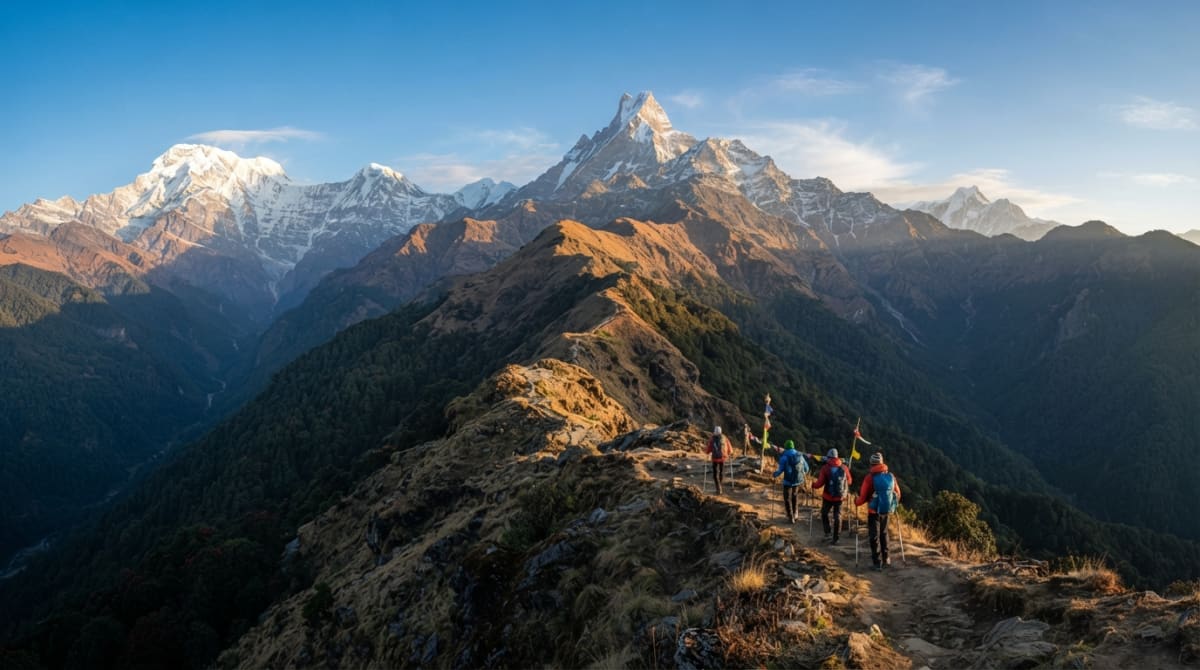
This is the golden rule. First-timers almost always start too fast, excited and full of energy on the first morning. A slow, steady pace saves energy, keeps your heart rate manageable and helps you acclimatize. If you cannot hold a conversation while climbing, slow down.
11. Drink Plenty
Aim for three to four liters a day. Dehydration makes you tired and can mimic altitude sickness. Refill at lodges and treat water rather than buying plastic bottles.
12. Eat Well
You burn a lot of energy trekking. Eat full meals, especially carbohydrate-rich dishes like dal bhat, and carry snacks for the trail. Do not skip breakfast before the long days.
13. Use Trekking Poles on Descents
The descent to Siding drops around 1,400 meters in a day. Poles take pressure off your knees and help with balance on steep, slippery ground. See why and how to use trekking poles.
14. Protect Yourself from the Sun
UV is strong at altitude, even on cold days. Wear sunglasses, a hat and sunscreen, and reapply often.
15. Tell Your Guide How You Feel
Headaches, nausea, dizziness or unusual tiredness can be early signs of altitude sickness. Tell your guide immediately; they will know what to do. Never hide symptoms to keep up with a group. See our altitude sickness guide.
In the Tea Houses
16. Eat Where You Sleep
Tea house owners keep room prices low because they earn from meals. Eating dinner and breakfast at your lodge is expected and appreciated.
17. Change into Dry Clothes Right Away
Sweaty clothes quickly become cold clothes. As soon as you arrive, change into dry layers, even if you feel warm.
18. Keep Your Batteries Warm
Cold drains batteries fast. Keep your phone, power bank and camera batteries in your sleeping bag at night.
19. Bring Earplugs
Thin walls, early starts and barking dogs can make sleep difficult. Earplugs help a lot.
Money
20. Carry Enough Cash
There are no ATMs on the trail. Withdraw enough Nepali rupees in Pokhara for snacks, drinks, hot showers, charging, Wi-Fi and tips. See how much cash to carry.
21. Budget for Tips
Tipping your guide and porter at the end of the trek is customary and an important part of their income. See our tipping guide.
The Base Camp Morning
22. Prepare the Night Before
Lay out your warm layers, fill your water bottles with hot water, pack snacks and check your headlamp before bed. A calm start at 4 a.m. is much easier than a frantic one. See the night before summit day.
23. Dress Warm, Then Shed Layers
Start in all your warm layers, then remove them as you warm up on the climb. Put them back on at the top while you wait for the sun.
24. It Is Okay to Stop at the Viewpoint
If you are exhausted, unwell or the weather turns, the Upper View Point is a spectacular place to turn around. Reaching Base Camp is wonderful but not essential.
Respect and Etiquette
25. Learn a Few Words of Nepali
"Namaste" (hello) and "dhanyabad" (thank you) go a long way. See useful Nepali phrases.
26. Ask Before Taking Photos
Always ask before photographing people, and respect a refusal.
27. Carry Out Your Rubbish
Take non-biodegradable waste back to Pokhara. The mountains have no rubbish collection.
Health and Comfort
28. Treat Hot Spots Immediately
The moment you feel rubbing or heat on your foot, stop and deal with it. A piece of tape applied early prevents a blister; a blister ignored for a day can become an open wound that makes every step painful. Keep blister care at the top of your daypack.
29. Keep Your Hands Clean
Most stomach upsets on treks come from hands and water, not the food itself. Use hand sanitiser before every meal and after the toilet. It is a small habit that prevents a lot of misery. See avoiding stomach problems.
30. Stretch Every Evening
Five minutes of gentle stretching for calves, hamstrings and quadriceps after arriving at each lodge reduces stiffness the next morning, especially before the long descent days.
31. Sleep Warm
Sleep in clean, dry base layers, a hat and socks. Fill a bottle with hot water at dinner and use it as a hot water bottle. A warm night makes the next day far more enjoyable.
Weather and Timing
32. Start Early
In most seasons, mornings are clear and clouds build from late morning. Leaving soon after breakfast means better views and arriving at your lodge before any afternoon rain or mist.
33. Do Not Chase the Clock
Walking times in guidebooks are averages. If you take longer, that is fine. What matters is arriving safely and enjoying the walk, not beating a time.
34. Build in a Spare Day
If your schedule allows, keep a spare day in Pokhara at the end. It protects you from weather and road delays and gives you a chance to try again for a clear Base Camp morning if needed.
Working with Your Guide and Porter
35. Trust Your Guide's Judgement
Your guide knows the route, the weather patterns and the signs of altitude sickness. If they suggest slowing down, changing the plan or turning back, there is a good reason. Their job is to get you home safely.
36. Get to Know Them
Ask your guide and porter about their families, villages and experiences. Many trekkers find these conversations are among the best memories of the trip. See a day in the life of a trekking guide.
37. Pack Considerately for Your Porter
Keep your duffel within the agreed weight and pack it so it is easy to carry. Porters are people, not pack animals.
Photography
38. Have Your Camera Ready
Views can appear and vanish within minutes as clouds move. Keep your phone or camera accessible rather than buried in your pack.
39. Put the Camera Down Sometimes
Take your photos, then stop and simply look. Some of the best moments on the ridge are ones you remember rather than record. See our photography guide.
Mindset
40. Expect Simplicity
Tea houses are basic, showers are occasional and rooms are cold. Arrive expecting simplicity and you will be pleasantly surprised by the warmth of the welcome.
41. Enjoy the Journey, Not Just the Destination
Base Camp is the goal, but the forest, the ridge, the evenings in the dining room and the people you meet are the heart of the experience. Slow down and enjoy them.
After the Trek
42. Tip Fairly and Personally
At the end of the trek, give tips directly to your guide and porter, ideally in an envelope with a thank-you note. It is a meaningful moment and an important part of their income.
43. Rest Before You Fly
Plan at least a day in Pokhara or Kathmandu before your international flight. Your legs will appreciate a day off, and you will have time for laundry, a massage, a lakeside meal and souvenir shopping.
44. Look After Your Legs
The descent to Siding leaves most people with sore thighs for a day or two. Gentle walking, stretching, plenty of water and a good night's sleep in Pokhara speed recovery. Pokhara's massage spas are popular with trekkers for good reason. See recovering after the trek.
45. Keep a Trek Journal
Write a few lines each evening: where you walked, what you saw, who you met, how you felt. Days on the trail blur together quickly, and a simple journal brings them back years later far more vividly than photos alone. It is also a pleasant way to pass the quiet hour between arriving at a lodge and dinner.
46. Plan Your Next Trek
Many first-time Mardi Himal trekkers finish the trip already dreaming of the next one, whether Annapurna Base Camp, Poon Hill or a longer route. Ask your guide for ideas while the experience is fresh. See Mardi Himal as a warm-up for bigger treks.
47. Share Honest Feedback
Reviews help future trekkers. Mention what went well, what could be better and how your guide and porter looked after you.
What We See First-Time Trekkers Get Right
It is not all about mistakes. The first-time trekkers who have the best experiences on Mardi Himal tend to share a few habits. They train steadily in the weeks before and arrive in Pokhara rested. They ask plenty of questions at the pre-trek briefing. They walk slowly on the first day, even when they feel strong. They drink and eat well, change into dry clothes as soon as they arrive, and go to bed early before the Base Camp morning. They tell their guide honestly how they feel. And they stay curious: about the forest, the villages, the food and the people they meet. None of this requires special experience or expensive gear, only a little preparation and the right mindset.
Start Your First Trek with Confidence
The Mardi Himal Trek is one of the best first treks in Nepal. Follow these tips and you will arrive at High Camp rested, warm and ready for one of the finest sunrises in the Himalaya. The 9-day Mardi Himal Trek is ideal for first-time visitors to Nepal, and the 5-day trek from Pokhara suits those already there. Ask us anything before you go.