

If you have a week or two in Nepal and want to see the Annapurnas up close, two treks usually top the list: Annapurna Base Camp and Mardi Himal. Both start from Pokhara. Both pass through Gurung villages and rhododendron forest. Both put Machapuchare, the sacred Fishtail mountain, right in front of you. And yet they feel like completely different journeys.
Annapurna Base Camp, often called ABC, is a classic valley trek that climbs deep into a glacial amphitheatre surrounded by 7,000 and 8,000-meter peaks. Mardi Himal is a ridge trek that climbs a long spur beside that valley, offering wide panoramas from above. This guide compares the two on every factor that matters so you can decide which suits you, or whether to do both.
The Quick Comparison
| Factor | Mardi Himal | Annapurna Base Camp |
|---|---|---|
| Trekking days from Pokhara | 3–5 | 7–10 |
| Highest point | About 4,500 m (Base Camp) | 4,130 m |
| Highest sleeping point | 3,580 m (High Camp) | 4,130 m (ABC) |
| Landscape | Forest, then open ridge | Villages, deep valley, glacial sanctuary |
| Signature view | Close-up Machapuchare panorama from the ridge | 360-degree ring of peaks including Annapurna I |
| Crowds | Moderate, growing | Busy in peak season |
| Lodges | Fewer, newer, more basic higher up | Many, well established |
| Main hazard | Exposed ridge in bad weather, ice in winter | Avalanche-prone section in the upper valley in winter and spring |
Time and Itinerary
This is often the deciding factor. Mardi Himal fits into a very short trip. From Pokhara, most people complete it in four or five days, and fit trekkers can do it in three. That means you can fly into Nepal, trek Mardi Himal, and still have time for Kathmandu or Chitwan in a single week or ten days.
ABC needs more time. The classic route from Nayapul or Ghandruk via Chhomrong takes seven to ten days of trekking, and routes that add Poon Hill take longer still. If you have two weeks or more, ABC is realistic; if you have a week, Mardi Himal is the obvious choice. Our Mardi Himal itinerary guide shows how the days work, and how many days you need for Mardi Himal helps you plan around your schedule.
Altitude
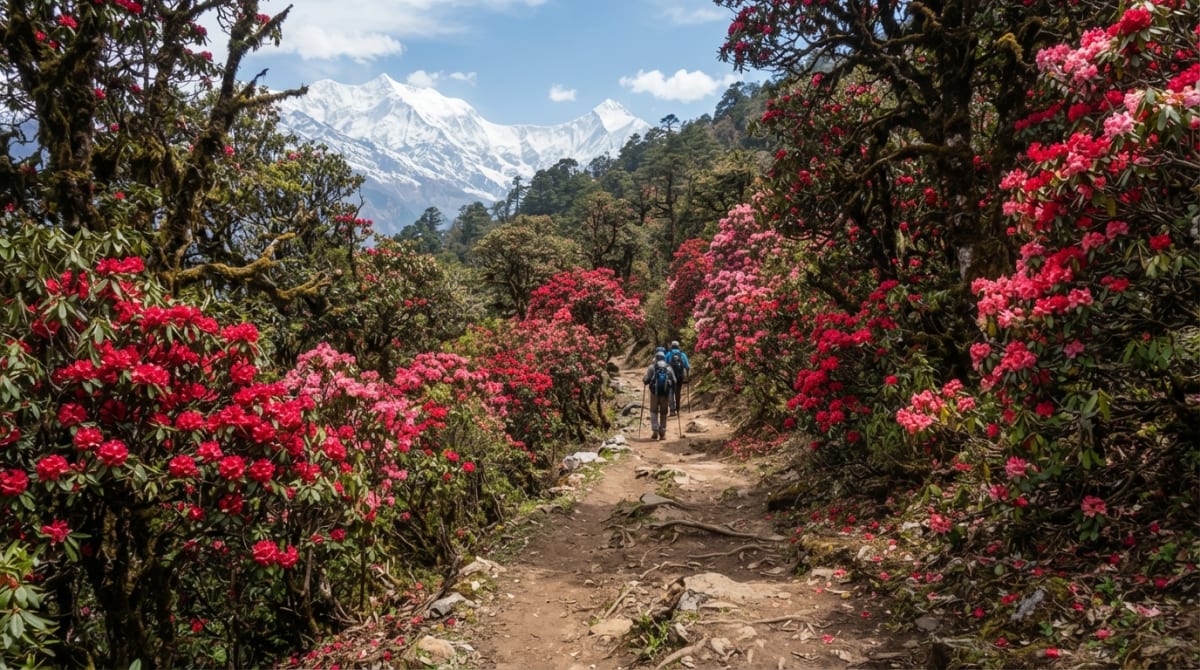
On paper, Mardi Himal reaches higher: its Base Camp viewpoint is at roughly 4,500 meters, while ABC is at 4,130 meters. But you do not sleep at Mardi Himal Base Camp. The highest night is at High Camp, 3,580 meters, and you visit Base Camp on a morning hike. On ABC you sleep at 4,130 meters, usually after a night at Machapuchare Base Camp around 3,700 meters.
The practical difference is the speed of ascent. Mardi Himal gains altitude fast over a short distance, while ABC climbs more gradually over more days. Both carry some risk of altitude sickness, and both are usually manageable with sensible pacing. Read our guide to altitude sickness on Mardi Himal for details.
Difficulty
Neither trek is technical, and both are graded moderate. The type of difficulty differs:
- Mardi Himal is short and steep. The climbs are concentrated, the Base Camp day is long and high, and the descent to Siding is a knee-testing drop of around 1,400 meters in one day.
- ABC is long and relentless. The famous stone staircases around Chhomrong and the Modi Khola valley go up and down repeatedly, and you walk for many more days in total.
If you are reasonably fit and prefer intensity over endurance, Mardi Himal will suit you. If you prefer a gentler daily gain spread over more days, ABC may feel easier despite being longer. Our Mardi Himal difficulty guide goes deeper.
Scenery and Views
This is where the treks differ most, and it is a matter of taste.
Mardi Himal gives you views from above. Once you climb out of the forest at Low Camp, you walk along an open ridge with Machapuchare, Mardi Himal, Annapurna South and Hiunchuli in front of you and the Modi Khola valley falling away to the west. Sunsets at Low Camp and sunrises at High Camp and the Upper View Point are among the best in the Annapurna region. Read about the mountains you see from Mardi Himal.
ABC gives you views from within. The final day takes you into the Annapurna Sanctuary, a high glacial basin encircled by Annapurna I, Annapurna South, Hiunchuli, Gangapurna, Annapurna III and Machapuchare. Standing at the base camp surrounded by walls of ice is an experience Mardi Himal cannot replicate. On the other hand, the valley walls hide the mountains for much of the way up.
What a Day Feels Like on Each Trek
Numbers only tell part of the story. The texture of each day is different too.
A typical Mardi Himal day is short in distance but intense in gradient. You might walk four or five hours, much of it climbing, and arrive at your lodge by early afternoon with time to rest and watch the clouds move across the peaks. Once you are above the forest, almost every minute of walking has a view. Evenings are quiet, with a small number of trekkers gathered around the dining-room stove.
A typical ABC day is longer and more varied. You pass through villages, cross suspension bridges, climb and descend long stone staircases, and walk through bamboo and rhododendron forest along a roaring river. The mountains appear and disappear as the valley twists. Lodges are busier and more social, with more choice on the menu and more people to swap stories with. The sense of arrival on the final day, walking into the sanctuary, is dramatic.
Villages and Culture
ABC passes through several large, well-known Gurung villages, including Ghandruk and Chhomrong, where you can see traditional stone houses, visit small museums and watch daily life. These villages are a big part of the ABC experience.
Mardi Himal spends most of its time in forest and on the ridge, with fewer villages. You do pass farmland and settlements at the beginning, and the descent to Siding or Lwang takes you through traditional Gurung villages surrounded by terraces. If culture is a priority, ABC offers more, but Mardi Himal still gives you a taste. Our guide to Gurung culture on the Mardi Himal Trek explains what to look for.
How Each Trek Handles Bad Weather
Weather in the Himalaya is unpredictable, and it affects the two treks differently. On Mardi Himal, most of the best views are from the open ridge and the Base Camp viewpoint, so a cloudy morning at High Camp can mean missing the main highlight. Because the trek is short, though, it is easy to add a spare day and wait for a clear morning. On ABC, the final destination is deep in the sanctuary, where cloud often builds by late morning, but you usually have at least one night at base camp and one at Machapuchare Base Camp, giving you two chances at clear skies. Neither trek is ideal in heavy rain, but both are possible with flexible planning.
Crowds and Atmosphere
ABC is one of the most popular treks in Nepal. In October, November and April its lodges are busy, and upper lodges can be full by early afternoon. The trail is lively and sociable, with trekkers from all over the world.
Mardi Himal is quieter. It opened to tea house trekking relatively recently, so it has fewer lodges and fewer trekkers, and much of the time you have long stretches of trail to yourself. It is getting busier every year, especially at High Camp in October, but it still feels calmer than ABC. See is Mardi Himal crowded?
Tea Houses and Comfort
ABC has a mature lodge network with many options at each stop, including attached bathrooms in some lower villages and bakeries in places such as Chhomrong. Mardi Himal's lodges are newer and more limited, and above Low Camp they are simple: shared toilets, limited showers and patchy charging. For most trekkers this makes little difference, but if comfort matters, ABC has the edge. Read our Mardi Himal food and accommodation guide.
Cost
Because it is shorter, Mardi Himal is cheaper overall. Daily costs are similar on both treks, as both use the same permits and tea house system, but ABC needs roughly twice as many days on the trail, so accommodation, food, guide and porter costs roughly double. Both treks need an ACAP permit and a TIMS card. For current prices, see our cost comparison of Mardi Himal, ABC and Poon Hill.
Safety
Each trek has a specific hazard to understand. On ABC, the upper valley between Deurali and Machapuchare Base Camp crosses avalanche paths, which have caused serious accidents in winter and spring after heavy snowfall. Guides monitor conditions and sometimes close that section. On Mardi Himal, the main risks are the exposed ridge above Low Camp in bad weather and ice on the path above High Camp in winter. Both are managed by trekking in the right conditions with an experienced guide. Read our Mardi Himal safety guide.
Best Seasons
Both treks are best in autumn, from late September to November, and in spring, from March to May. In winter, Mardi Himal's upper ridge can be icy, and ABC's avalanche risk increases. In the monsoon, both treks are wet and cloudy, with leeches in the forest, though Mardi Himal's shorter length makes it easier to time around weather windows. See the best time for the Mardi Himal Trek for a month-by-month view.
What the Two Treks Have in Common
For all their differences, the practical side of both treks is almost identical. Both lie inside the Annapurna Conservation Area, so you need the same ACAP permit and TIMS card, and both require foreign trekkers to walk with a licensed guide. Both start from Pokhara, use the same tea house system with similar menus, and suit the same gear list. Both are best in spring and autumn. That means the planning you do for one trek transfers almost entirely to the other, which makes it easy to switch your plans or combine the two. Our Mardi Himal permits guide and packing list apply equally well to ABC.
Who Should Choose Mardi Himal?
- Travelers with one week or less for trekking
- Trekkers who want quieter trails and a more off-the-beaten-path feel
- Photographers who want wide ridge-top panoramas and sunrise viewpoints
- Reasonably fit people who do not mind steep, intense days
- Anyone looking for a first taste of Himalayan altitude before a bigger trek
Who Should Choose Annapurna Base Camp?
- Travelers with ten days or more to spend trekking
- Trekkers who want the iconic experience of standing inside the Annapurna Sanctuary
- Those who value a wider choice of lodges and more social trails
- People who prefer steady daily effort over a short, intense push
- Trekkers who enjoy village life and want to spend nights in larger Gurung settlements such as Ghandruk and Chhomrong
- Anyone keen to finish a long walk with a soak in the natural hot springs at Jhinu Danda
Why Not Do Both?
You do not have to choose. The lower Mardi Himal trail connects to Landruk in the Modi Khola valley, where you can join the ABC route. A combined trek of around two weeks lets you see the Annapurnas from the ridge first and then from inside the sanctuary. Our Mardi Himal and ABC combined itinerary explains how it works, and our guide to linking Mardi Himal with Landruk covers the connecting trail.
How Mardi Himal Compares with Other Treks
If you are weighing up other options, we have also compared Mardi Himal with Poon Hill, the Annapurna Circuit and Everest Base Camp. Each suits a different mix of time, fitness and interests.
Our Recommendation
If time is short or you want solitude and ridge-top views, choose Mardi Himal. If you have more time and want the classic sanctuary experience, choose ABC. And if you can spare two weeks, combine them. For Mardi Himal, our 9-day Mardi Himal Trek from Kathmandu includes everything from airport pickup to your return, while the 5-day trek from Pokhara suits travelers who are already in Pokhara. If you want to combine routes, contact us and we will build an itinerary around your dates.