

Part of the appeal of the Mardi Himal Trek has always been its reputation as a quiet alternative to the busy classic routes of the Annapurna region. When it opened around 2012, trekkers often had the ridge almost to themselves. Since then, word has spread, and the trek has become one of the most popular short treks in Nepal, among both international visitors and Nepali trekkers. So is Mardi Himal crowded now? The honest answer is: it depends on when you go and where you are on the trail. For much of the year, it remains peaceful. In a few peak weeks, and at a few key spots, it can feel busy.
This guide explains how trail traffic varies through the year, where crowds build, how Mardi Himal compares with other treks, and how to find the quiet trail you are looking for. For timing advice, see the best time for the Mardi Himal Trek.
Crowds by Month
| Month | Trail traffic | Notes |
|---|---|---|
| January–February | Quiet | Cold, clear; snow possible on the upper ridge |
| March | Moderate to busy | Spring season builds; rhododendrons begin |
| April | Busy | Peak spring; Nepali New Year holiday in mid-April |
| May | Moderate | Warmer, hazier; numbers fall late in the month |
| June–August | Very quiet | Monsoon; rain, cloud, leeches |
| September | Moderate, rising | Monsoon ends; numbers climb late in the month |
| October | Busiest | Peak season; Dashain and Tihar festivals |
| November | Busy | Clear, stable weather; slightly quieter than October |
| December | Quiet to moderate | Cold; Christmas and New Year bring a small peak |
These are general patterns, and numbers vary from year to year. See the monthly weather guide.
Where Crowds Build
High Camp. This is the main pinch point. Almost every trekker sleeps at High Camp the night before the summit, and the lodges there have limited beds. On busy nights in October and November, rooms fill up, solo trekkers may be asked to share, and some people end up sleeping in the dining room. The dining room itself can be packed and noisy in the evening. See the High Camp guide.
The Upper View Point at sunrise. Because everyone leaves High Camp at roughly the same time to catch the sunrise, the steep climb to the viewpoint can feel like a procession of headlamps, and the viewpoint itself can hold dozens of people at dawn in peak season. See Upper View Point vs Base Camp.
Kande to Australian Camp. This first section is shared with trekkers heading to Landruk and the Annapurna Base Camp trail, and with day hikers and overnight visitors going to Australian Camp, a popular short excursion from Pokhara. On busy days, the stone steps can be crowded. See Australian Camp.
Where It Stays Quiet
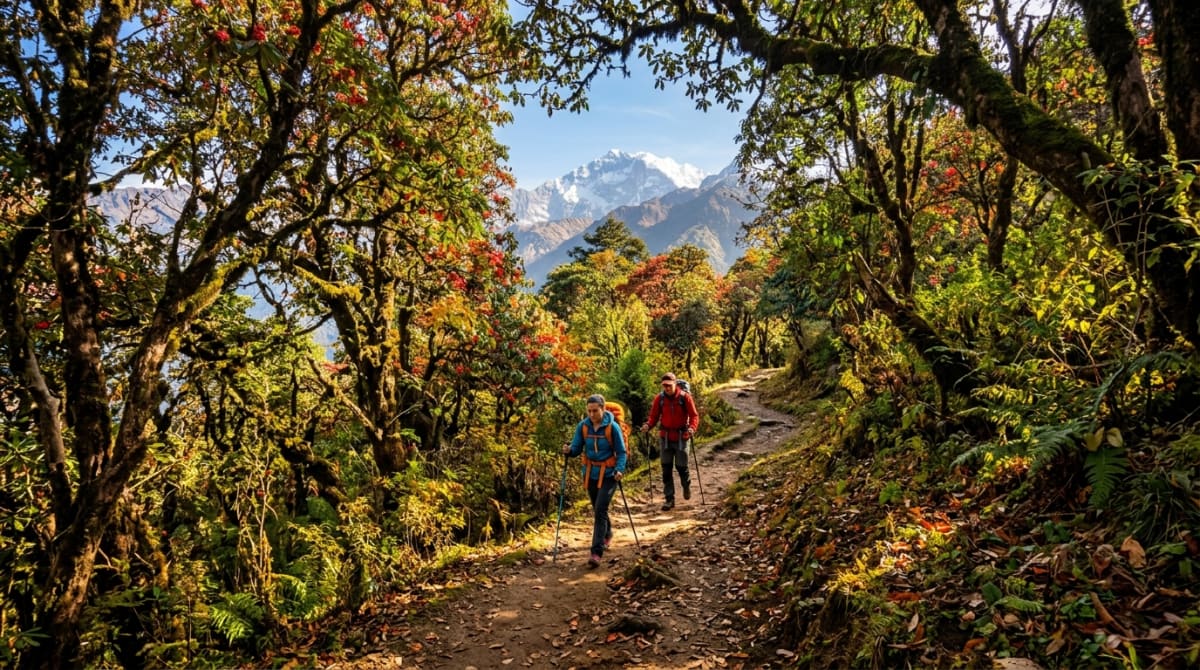
Once you pass Pitam Deurali and turn north into the forest, the trail usually thins out, because many of the people on the lower trail are heading to Landruk or Australian Camp rather than Mardi Himal. The forest between Pitam Deurali, Forest Camp and Low Camp is often peaceful, even in peak season, as groups spread out along the trail. The walk from the Upper View Point to Base Camp is also much quieter, because many trekkers stop at the viewpoint. The descent to Siding sees fewer people again. See the forest section.
Nepali Trekkers and Holidays
Mardi Himal has become very popular with Nepali trekkers, especially young people from Pokhara and Kathmandu, who often trek in groups of friends. Domestic trekking tends to peak around public holidays and festivals, such as Dashain and Tihar in October or November, Nepali New Year in mid-April, and on Saturdays, the weekly day off in Nepal. On these days, the trail and lodges can be noticeably busier, with a lively, sociable atmosphere. If you prefer quiet, avoid starting your trek on a Friday or Saturday in peak season and check the festival calendar. See trekking during Dashain and Tihar, Holi and Nepali New Year and Mardi Himal for Nepali trekkers.
How Mardi Himal Compares
| Trek | Typical crowd level in peak season |
|---|---|
| Poon Hill | Very busy, especially at sunrise on Poon Hill itself |
| Annapurna Base Camp | Busy along the whole trail |
| Everest Base Camp | Very busy along the main trail |
| Mardi Himal | Moderate on the trail; busy at High Camp and the viewpoint |
| Khopra Danda | Quiet |
Even in October, Mardi Himal is generally quieter than the classic routes. The difference is that its crowds are concentrated at a few points, especially High Camp, rather than spread along the trail. See Mardi Himal vs Poon Hill, Mardi Himal vs Annapurna Base Camp and Mardi Himal vs Khopra Danda.
How to Avoid the Crowds
Trek in the shoulder weeks. Early to mid-September, late November into December, and May all offer decent conditions with fewer people. Early September can still bring some monsoon rain, and May is hazier, but the trail is much quieter than in October. See the shoulder season.
Avoid weekends and holidays. Plan to be at High Camp on a weeknight rather than a Friday or Saturday, and check the Nepali festival calendar.
Start from Dhampus. The trail from Phedi or Dhampus to Pothana is quieter than the busy Kande to Australian Camp section. See starting from Dhampus.
Stagger your overnights. Sleeping at Badal Danda rather than Low Camp, or spending an extra night on the ridge, can put you out of step with the main flow of trekkers.
Continue to Base Camp. The walk beyond the viewpoint is far quieter, and Base Camp itself rarely feels crowded.
Try winter or the monsoon. If you can accept cold or rain, these seasons offer real solitude. See Mardi Himal in winter.
Timing Your Summit Morning
Most groups leave High Camp at a similar time to reach the viewpoint for sunrise. If you want a quieter experience, talk to your guide about leaving a little earlier, to be among the first at the viewpoint, or continuing straight on to Base Camp after sunrise while others linger. Some trekkers with a flexible itinerary spend a second night at High Camp and make the summit hike on a quieter morning, or simply enjoy the ridge after the crowds have left. See High Camp to Base Camp.
Booking Lodges in Peak Season
In October, November, March and April, it is wise to book lodges in advance, especially at High Camp. Your guide or trekking agency normally does this, and experienced guides have relationships with lodge owners that help secure beds on busy nights. If High Camp is full, the alternatives are to sleep at Badal Danda and start earlier on summit morning, share rooms, or sleep in the dining room. See booking tea houses in peak season.
What a Busy Night at High Camp Is Like
If you arrive at High Camp on a peak-season evening, expect a lively scene. Trekkers and guides crowd the dining room around the stove, drying socks and gloves, ordering dinner and swapping stories. Kitchen staff work flat out to serve everyone, so meals can take longer than usual, and it helps to order early and choose dishes that the kitchen is already making in quantity, such as dal bhat. Rooms may be full, and solo trekkers may be asked to share with another trekker of the same sex. Some guides and porters sleep in the dining room once the last trekkers go to bed. Thin walls mean you will hear other groups getting up early, so earplugs are useful. It is not luxurious, but it is part of the experience, and the atmosphere can be warm and friendly. See the night before summit day and tea house etiquette.
Trail Etiquette When It Is Busy
A few simple habits keep a busy trail pleasant for everyone. Step to the uphill side of the trail to let porters and mule trains pass, as they carry heavy loads and have right of way. Walk in single file on narrow sections and do not block the trail when stopping for photos or rest. On the pre-dawn climb, keep your headlamp pointed down rather than into other people's eyes, and let faster walkers overtake at wider spots. At the viewpoint, share the best spots and avoid flying drones, which are restricted in the conservation area and disturb others. In lodges, keep noise down late at night and early in the morning. See trail etiquette and drone rules.
Photography in a Crowd
Crowds can make photography at the Upper View Point frustrating, with people and tripods in every frame. A few strategies help. Arrive a little early to claim a good spot, or walk a short distance along the ridge away from the main viewpoint, where the view is almost as good and far less busy. Use people creatively: a line of headlamps on the ridge before dawn, or silhouetted trekkers against the sunrise, can make powerful images. The best pictures of Base Camp are often taken after the crowds have turned back at the viewpoint. See the photography guide.
Is Busy Always Bad?
A busier trail is not all bad. Many trekkers enjoy the social side of the trek in peak season: meeting people from around the world in the dining room, sharing stories and tips, and enjoying the camaraderie of the pre-dawn climb. Nepali groups often bring music and laughter. Lodges are fully staffed and menus fully stocked. If you are a solo trekker or enjoy company, peak season can be a pleasure. It is only if you are seeking solitude that crowds become a drawback. See Mardi Himal for solo travelers.
Crowds and Itinerary Length
Your itinerary affects how much of the crowd you meet. Most trekkers on standard five-day itineraries move up the trail in a similar rhythm, sleeping at the same places on the same nights, which concentrates numbers at Forest Camp, Low Camp and High Camp. Short three-day itineraries often use different stops or start from Siding, so they meet the main flow only on the upper ridge. Longer or custom itineraries, with extra nights at Badal Danda or a rest day on the ridge, naturally fall out of step with the busiest groups, and trekkers on them often find the trail much quieter than expected, even in October. If avoiding crowds matters to you, one extra day in the plan is often the simplest solution. See the custom itinerary guide and where to sleep on the ridge.
What Quiet Seasons Are Really Like
If you choose a quiet season, it helps to know what to expect. In winter, you may share High Camp with only a handful of other trekkers, and the ridge can feel wonderfully remote, but nights are very cold, some lodges may close or run reduced menus, and snow can make the upper trail harder. In the monsoon, you might walk all day without meeting another group, the forest is lush and alive, and lodge owners are glad of the company, but rain, mud and leeches are part of the deal, and views are uncertain. In the shoulder weeks, conditions are often surprisingly good, and the balance between weather and solitude is at its best. See Mardi Himal in the monsoon.
The Impact of Growing Numbers
The trek's popularity brings valuable income to lodges, guides, porters and villages, but it also puts pressure on the environment and facilities. More trekkers mean more waste, more demand for water and fuel, and more erosion on steep trails. You can help by carrying out your rubbish, using refillable water bottles, staying on the trail, and supporting lodges that manage waste responsibly. See responsible trekking on Mardi Himal and leave no trace.
Our Advice
If you want the best weather and do not mind company, trek in October or November and book ahead. If you want quiet trails and can accept a little more risk with the weather, choose early September, late November, December or May. And wherever you go, continue to Base Camp on summit morning for the quietest and most memorable part of the trek. See is the Mardi Himal Trek worth it?
Trek Mardi Himal with Us
We plan itineraries and lodge bookings to help you avoid the worst of the crowds. See the 5-day Mardi Himal Trek from Pokhara or the 9-day trek from Kathmandu, and contact us for advice on the quietest dates.