

Look at a map of the Annapurna foothills and you will see Mardi Himal and Annapurna Base Camp sitting almost side by side. The Mardi Himal ridge climbs north along the eastern side of the deep Modi Khola valley, while the Annapurna Base Camp trail follows the river itself, winding up into the Annapurna Sanctuary. From above, the two treks look like natural partners, and in practice they are. Combining them gives you the best of both: sweeping ridge-top views from Mardi Himal and the immersive, 360-degree experience of standing inside the sanctuary at ABC.
This guide explains how the two treks connect, offers a sample combined itinerary, and covers difficulty, safety, permits and seasons. For the Mardi Himal section, see our Mardi Himal Trek, which we can extend to include ABC. For a head-to-head comparison, read Mardi Himal vs Annapurna Base Camp.
Why Combine Mardi Himal and ABC?
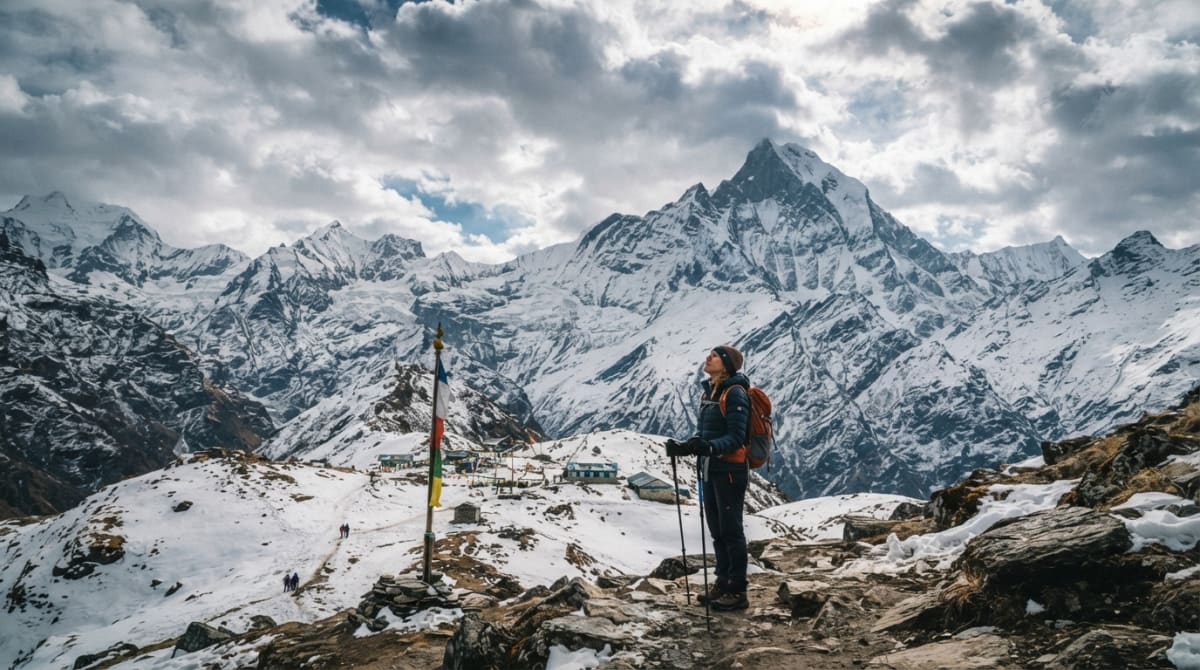
Each trek gives you a different perspective on the same mountains. On Mardi Himal, you walk along the crest of a ridge toward Machapuchare, with open views for days and a sunrise at Base Camp at around 4,500 meters, higher than ABC. At Annapurna Base Camp, you are surrounded by an amphitheatre of giants: Annapurna I, Annapurna South, Hiunchuli, Gangapurna, Annapurna III and Machapuchare rise on all sides above the glacier. Seeing the region from both the ridge and the sanctuary is one of the most complete experiences in the Annapurna region.
The combination also offers variety in landscape and culture. The ABC route passes through large Gurung villages such as Chhomrong, with its terraced fields and stone houses, and bamboo forests along the river, while Mardi Himal offers quiet rhododendron forest and open alpine grassland. Two different trails, two different moods and two very different base camps make for a richly varied two weeks.
How the Routes Connect
The link between the two treks is Landruk, a Gurung village on the eastern side of the Modi Khola valley, below the lower part of the Mardi Himal route. From the Mardi Himal side, trails descend through forest toward Landruk. From Landruk, the ABC route continues north up the valley to Jhinu Danda, with its natural hot springs, and then climbs steeply to Chhomrong, the gateway to the sanctuary. From Chhomrong, the classic ABC trail continues via Sinuwa, Bamboo, Dovan, Deurali and Machapuchare Base Camp to Annapurna Base Camp. See linking Mardi Himal with Landruk.
A common plan is to complete Mardi Himal first, then instead of exiting to Siding, descend toward Landruk and continue to ABC. Alternatively, you can walk ABC first and cross to Mardi Himal on the return. Your guide will suggest the best order for the season and your fitness.
A Sample 13-Day Combined Itinerary
| Day | Route | Overnight |
|---|---|---|
| 1 | Drive Pokhara to Kande, trek to Pitam Deurali | Pitam Deurali |
| 2 | Trek to Forest Camp or Low Camp | Forest Camp or Low Camp |
| 3 | Trek to High Camp | High Camp (3,580 m) |
| 4 | Mardi Himal Base Camp at sunrise, descend to Low Camp | Low Camp |
| 5 | Descend toward Landruk | Landruk |
| 6 | Trek via Jhinu Danda to Chhomrong | Chhomrong |
| 7 | Trek to Bamboo or Dovan | Bamboo or Dovan |
| 8 | Trek to Deurali | Deurali |
| 9 | Trek via Machapuchare Base Camp to Annapurna Base Camp | Annapurna Base Camp (4,130 m) |
| 10 | Sunrise at ABC, descend to Bamboo | Bamboo |
| 11 | Trek to Jhinu Danda, hot springs | Jhinu Danda |
| 12 | Trek out to the road, drive to Pokhara | Pokhara |
| 13 | Buffer day in Pokhara | Pokhara |
This is a sample; exact stops depend on lodge availability, pace and conditions. A buffer day is strongly recommended.
The Mardi Himal Section
The trek begins with the classic Mardi Himal route: the stone steps from Kande to Australian Camp, the forest to Pitam Deurali and Low Camp, the open ridge to High Camp, and the pre-dawn hike to the Upper View Point and Base Camp. These first four days give you the ridge-top panoramas and a high sunrise at around 4,500 meters, which also helps your acclimatization for the ABC section. See our Mardi Himal itinerary guide.
The Crossing to Landruk and Chhomrong
From the lower part of the Mardi Himal route, you descend through forest and farmland toward Landruk, a village with views of Annapurna South and Hiunchuli. From Landruk, the trail drops to the Modi Khola and follows it to Jhinu Danda, where natural hot springs by the river offer a welcome soak. A steep staircase then climbs to Chhomrong, a large Gurung village perched on a hillside with wonderful views of Annapurna South and Machapuchare. See Jhinu Danda hot springs.
The Annapurna Sanctuary Section
From Chhomrong, the ABC trail descends a famous staircase to the Chhomrong Khola and climbs to Sinuwa, then enters the dense bamboo and rhododendron forest of the upper Modi Khola valley. Lodges at Bamboo, Dovan and Himalaya are strung along the river. Above Deurali, the valley narrows into the gateway of the sanctuary, and the trail climbs past Machapuchare Base Camp, at around 3,700 meters, to Annapurna Base Camp at 4,130 meters. Waking up at ABC, surrounded by towering peaks and glaciers, is one of the great experiences of Himalayan trekking.
Safety: Avalanche Risk on the ABC Trail
The main safety concern on the combined trek is the section of the ABC trail between Deurali and Machapuchare Base Camp, which crosses slopes prone to avalanches, especially in winter and early spring after heavy snowfall. Serious accidents have occurred here. Experienced guides monitor conditions, talk to lodge owners and authorities, and will delay or change plans if the risk is high. Always follow their advice. On the Mardi Himal section, the main risks are the exposed ridge in bad weather and ice above High Camp in winter. See our safety guide.
Acclimatization Across Two Treks
One of the advantages of this combination is how naturally it handles altitude. On the Mardi Himal section, you sleep at High Camp, 3,580 meters, and hike to around 4,500 meters at Base Camp before descending. Your body then spends several days at lower altitudes on the way to Chhomrong and up the Modi Khola valley, before climbing gradually to Machapuchare Base Camp at around 3,700 meters and Annapurna Base Camp at 4,130 meters. By the time you sleep at ABC, you have already been higher on Mardi Himal and have had plenty of time to adjust.
Even so, altitude sickness can affect anyone. Walk slowly on the climbs, drink three to four liters of water a day, avoid alcohol at altitude and tell your guide about any symptoms. Sleeping at ABC is the highest overnight of the trek, and a mild headache there is common. See our altitude sickness guide.
Lodges Along the Combined Route
The two sections offer quite different lodge experiences. On Mardi Himal, tea houses are simple, especially above Low Camp, with shared toilets and limited showers. On the ABC route, the lodge network is older and more developed. Chhomrong has a wide choice of lodges, some with bakeries, while the stops along the upper valley, such as Bamboo, Dovan and Deurali, have a handful of lodges each. Machapuchare Base Camp and Annapurna Base Camp have several lodges but can be crowded in peak season, when rooms may be shared or dining-room floors used. Guides book ahead where possible. See our Mardi Himal tea house guide.
Best Seasons
Autumn, from late September to November, is the most popular season for the combined trek, with clear skies over both base camps and stable weather. Spring, from March to May, brings rhododendrons to both treks' forests and warmer temperatures, though avalanche risk on the upper ABC trail can remain after late-winter snow. Winter offers clear skies but deep cold, ice on the Mardi Himal ridge and higher avalanche risk in the ABC sanctuary, so it is best for experienced trekkers with flexible plans. The monsoon brings rain, leeches and poor visibility on both routes. See the best time for the trek.
Permits and Guides
Both treks lie within the Annapurna Conservation Area, so one ACAP permit and one TIMS card cover the whole combined route, provided your application lists the full itinerary. Foreign trekkers must walk with a licensed guide, which is especially valuable on a long, varied route like this. If you book with us, we arrange all permits and paperwork. See Mardi Himal permits.
Which Order Is Best?
Doing Mardi Himal first gives you the high ridge-top sunrise early in the trip, then a relaxing descent through villages and hot springs to the ABC route. Doing ABC first gives you gradual acclimatization up the Modi Khola valley before the steeper Mardi Himal ridge. In winter and spring, guides sometimes prefer to tackle the ABC sanctuary when avalanche conditions are safest, which can dictate the order. Discuss the options with your guide or agency when planning. Either order delivers an outstanding trek.
Costs
A combined trek of 12 to 14 days costs more than Mardi Himal alone, reflecting more days of guide and porter wages, accommodation and meals. Lodge prices on the upper ABC route rise with altitude, as on Mardi Himal. Budget for extras such as hot showers, charging, snacks and drinks, entry to the Jhinu Danda hot springs, and tips for your guide and porter at the end. See our cost comparison of Mardi Himal, ABC and Poon Hill.
Who the Combined Trek Suits
This combination suits fit trekkers with two weeks or more who want a comprehensive Annapurna experience without the length and remoteness of the Annapurna Circuit. It suits photographers who want both ridge panoramas and the sanctuary amphitheatre, and trekkers who have done shorter treks before and want a bigger challenge. It is less suitable for complete beginners or anyone with limited time, who would do better choosing one of the two treks.
Packing for Two Weeks on the Trail
A combined trek of 12 to 14 days needs slightly more thought than a short trek, but the core kit is the same. You need a layering system for cold nights at High Camp and Annapurna Base Camp: base layers, a fleece, a warm down jacket, a waterproof shell, a warm hat and insulated gloves, plus a sleeping bag rated for well below freezing. Add extra socks and underwear, a small laundry kit for rinsing clothes at lower lodges such as Chhomrong, plenty of blister care and a well-stocked first aid kit. Swimwear or quick-dry shorts are useful for the hot springs at Jhinu Danda. Trekking poles are essential for the long stone staircases. See our packing list.
The Hot Springs at Jhinu Danda
One of the most welcome stops on the combined route is Jhinu Danda, where natural hot springs bubble up beside the Modi Khola a short walk below the village. After days of walking, soaking tired legs in warm water beside a roaring river is a real treat, and many trekkers plan their itinerary to stop here on the way out from ABC. Bring swimwear and a small towel, and respect local customs by dressing modestly on the way to and from the pools. See ending at Jhinu Danda.
Difficulty and Fitness
This is a long trek of 12 to 14 days with significant daily ascent and descent. The ABC section includes thousands of stone steps, particularly around Chhomrong and Jhinu Danda, which are hard on the knees. The Mardi Himal section includes a steep, high summit hike. Train for at least 10 to 12 weeks with long hikes, stair climbing and back-to-back walking days, and consider hiring a porter to lighten your load. See our 12-week training plan.
Tips for the Combined Trek
Pace yourself for two weeks rather than one day: the early Mardi Himal climbs are exciting, but you have a long way to go. Rinse clothes at lower lodges where they can dry. Carry enough cash for the whole trek, since there are no ATMs on the trail. Keep a buffer day for weather at either base camp. Use trekking poles on every staircase. And take time to enjoy the villages, the hot springs and the changing landscapes between the two base camps, which are as much a part of the journey as the destinations themselves.
Book a Mardi Himal and ABC Trek
We can build a combined Mardi Himal and Annapurna Base Camp trek around your dates, including permits, a licensed guide, transport, tea house accommodation and meals throughout. Start with our 9-day Mardi Himal Trek or 5-day trek from Pokhara, and contact us to extend it to the Annapurna Sanctuary.