

A week is not long for Nepal, a country where even a short trek can involve a day of travel at each end. But it is enough to experience the Mardi Himal Trek, one of the finest short treks in the Himalaya, if you plan carefully. The key is minimising travel time and choosing an itinerary that fits the trek comfortably into the days available. With a direct flight into Pokhara, a one-week trip can include the full trek at a relaxed pace. Via Kathmandu, it is still possible with efficient travel and a slightly shorter trek.
This guide sets out realistic one-week itineraries, explains the trade-offs between the options, and offers tips for making the most of a short trip. The most efficient option is our 7-day Mardi Himal Trek with a direct flight to Pokhara.
Option 1: Fly Directly into Pokhara
If you can find a flight into Pokhara International Airport, a week becomes very comfortable. You land in Pokhara, rest overnight, and start trekking the next morning, following the gentle pattern with nights at Pitam Deurali, Forest Camp, High Camp and Badal Danda. After descending to Pokhara on day six, you fly out on day seven. There are no Kathmandu legs, no long bus journeys and no domestic flights to worry about.
| Day | Plan |
|---|---|
| 1 | Arrive at Pokhara International Airport, rest and briefing |
| 2 | Drive to Kande, trek to Pitam Deurali |
| 3 | Trek to Forest Camp |
| 4 | Trek to High Camp |
| 5 | Base Camp at sunrise, descend to Badal Danda |
| 6 | Descend to Siding, drive to Pokhara |
| 7 | Depart from Pokhara |
Scheduled international routes into Pokhara have been limited since the airport opened, so check current options early. See the 7-day itinerary and flying directly to Pokhara.
Option 2: Via Kathmandu with Domestic Flights
If you fly into Kathmandu, a one-week trip is still possible by flying to Pokhara and choosing a slightly faster trek. You arrive in Kathmandu on day one, fly to Pokhara early on day two and trek four or five days, returning to Pokhara and flying back to Kathmandu to connect with your international departure. This leaves little margin for delays, so it suits travellers with flexible flights or an evening departure.
| Day | Plan |
|---|---|
| 1 | Arrive in Kathmandu |
| 2 | Morning flight to Pokhara, drive to Kande, trek to Pitam Deurali |
| 3 | Trek to Low Camp |
| 4 | Trek to High Camp |
| 5 | Base Camp at sunrise, descend to Low Camp |
| 6 | Descend to Siding, drive to Pokhara |
| 7 | Fly to Kathmandu and depart |
This follows our 5-day trek from Pokhara, with the first trekking day starting straight after the flight.
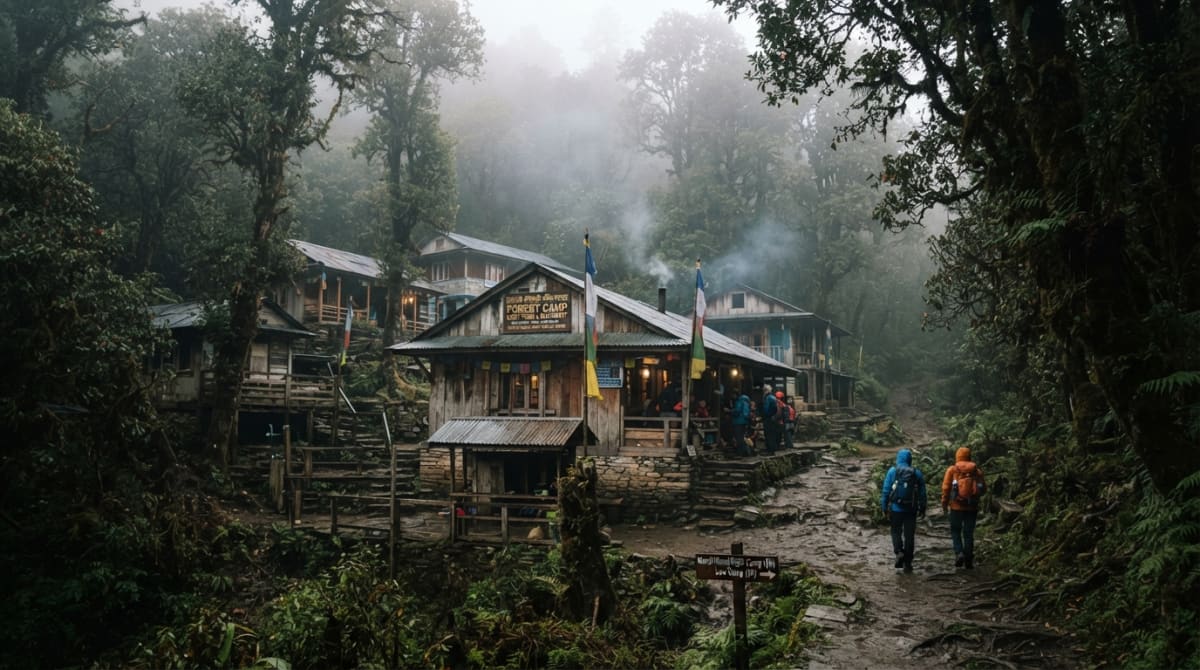
Option 3: Via Kathmandu by Road
If you prefer to travel by road, a week becomes tight. The tourist bus takes six to eight hours each way, using up most of two days. In this case, the 3-day Short Mardi Himal Trek is the realistic choice, which suits fit trekkers only. See the 3-day itinerary.
Why a Week Is Enough for Mardi Himal
Many Himalayan treks need two or three weeks, which is why a one-week trip to Nepal often seems too short for trekking. Mardi Himal is different. The trailhead is only an hour from Pokhara, the trekking section takes three to five days, and the route reaches around 4,500 meters with close-up views of Machapuchare, Annapurna South and Hiunchuli. That combination makes it one of the few treks in Nepal that genuinely fits into a week, while still delivering the feeling of a real Himalayan adventure. For travellers with limited annual leave, it is often the best way to experience the high mountains.
Choosing Your Flights
On a one-week trip, your flights shape everything. A direct international flight into Pokhara, if available from your region, is the most efficient option and allows the gentlest trekking pace. Flying into Kathmandu and connecting to Pokhara on a domestic flight works well if you can connect on the same day or early the next morning. Travelling by road from Kathmandu to Pokhara is the cheapest option but costs a full day each way, forcing a shorter trek. When booking, favour arrival times that let you reach Pokhara quickly and departure times late enough in the day to absorb small delays. See Kathmandu to Pokhara by flight.
Preparing Before You Fly
On a short trip, there is little time to fix problems once you arrive, so preparation is essential. Train for six to eight weeks with hiking, stair climbing and leg strength work. Break in your boots at home. Buy insurance covering trekking to 4,500 meters, helicopter evacuation and travel delays. Pack carefully so you do not need to shop in Pokhara, or plan to rent a sleeping bag and down jacket there on arrival. Send your passport details to your agency early so permits are ready when you land. See our preparation guide.
Jet Lag and Altitude on a Short Trip
A one-week trip combines two challenges: jet lag and rapid altitude gain. Arriving tired from a long-haul flight and heading straight up the mountain can make altitude symptoms feel worse. To help, sleep as much as possible on arrival, drink plenty of water, avoid alcohol for the first few days, and walk slowly on the first trekking day. The gentle itinerary via a direct flight to Pokhara handles this best, since it includes a rest night on arrival. See beating jet lag and our altitude sickness guide.
Best Season for a One-Week Trip
With no spare days for weather, timing matters more on a short trip. Autumn, from late September to November, offers the most reliable weather and the clearest mountain views, making it the safest choice for a one-week trip. Spring, from March to May, is also good, with rhododendrons and warm days, though afternoon cloud is more common. Winter brings clear skies but cold and ice, and domestic flights are occasionally delayed by morning fog. In the monsoon, rain, cloud and flight delays make a one-week trip risky. See the best time for the trek.
Packing Light for a Week
A one-week trip is a good reason to travel light. Bring one set of clothes for Pokhara, your trekking layers, boots, a sleeping bag or plan to rent one, a headlamp, water bottles, sun protection and a small first aid kit. Carry boots, medication and documents in your hand luggage in case checked bags are delayed. Leave anything you do not need on the trail at your Pokhara hotel. See our packing list.
What You Will Miss
A one-week trip focused on Mardi Himal leaves little or no time for Kathmandu's heritage sites, Chitwan National Park or other parts of Nepal. If you can add even one or two days, consider a day of sightseeing in Kathmandu or an extra day in Pokhara for paragliding or boating. If not, accept that this trip is about the mountains, and plan a future visit for the rest.
Making the First Trekking Day Count
On a short trip, the first trekking day often starts straight after travel, which makes pacing important. If you fly from Kathmandu to Pokhara in the morning and drive straight to Kande, you may begin walking around midday, already tired from an early start. Keep the first day's walking modest, as far as Pitam Deurali or even Australian Camp, rather than pushing on. Eat a good lunch before starting, drink plenty of water, and let your body settle into the rhythm of the trail. A calm first day sets you up for the climbs ahead and reduces the risk of altitude symptoms later.
Budgeting for a One-Week Trip
A one-week trip usually costs less overall than a longer holiday, but some costs are higher per day. Domestic flights between Kathmandu and Pokhara, used to save time, cost more than the bus. International flights directly to Pokhara, where available, may carry a premium. On the trail, costs follow the standard pattern of guide and porter wages, permits, lodges and meals, all included in our packages. Budget for extras such as snacks, hot drinks, charging and hot showers on the trail, meals in Pokhara, and tips at the end of the trek. See our cost guide.
A Day-by-Day Picture of the Direct-Flight Week
To see how a week feels in practice, imagine the direct-flight itinerary. You land in Pokhara in the afternoon, check into a lakeside hotel and walk along the shore as the sun sets behind the hills. That evening, your guide checks your gear and explains the route. The next morning, you drive to Kande and climb to Australian Camp, where the Annapurnas appear across the skyline, before an easy walk to Pitam Deurali. Day three is a gentle forest walk to Forest Camp, among rhododendrons and moss. Day four is the big climb, out of the trees at Low Camp and along the open ridge to High Camp, where the peaks feel close enough to touch.
On day five, you rise in the dark, climb to the Upper View Point for sunrise and continue to Base Camp, then descend to Badal Danda for a quiet evening above the clouds. Day six drops through forest and farmland to Siding and back to Pokhara, in time for a hot shower and a celebratory dinner. On day seven, you have a relaxed breakfast by the lake before heading to the airport. It is a short trip, but one packed with memorable moments.
Should You Hire a Porter on a Short Trip?
On a one-week trip, energy is precious. Hiring a porter to carry your main bag lets you walk with only a light daypack, which makes the stone steps, forest climbs and long descent much easier and leaves you fresher for the pre-dawn summit hike. One porter normally carries for two trekkers, so the cost is modest, and it supports local employment in the hills around Pokhara. See carry your own pack or hire a porter?
Who a One-Week Trip Suits
A one-week trip with Mardi Himal suits working professionals with limited leave, travellers adding Nepal to a wider trip around Asia, and anyone who wants a concentrated dose of the Himalaya. It works best for fit trekkers who are comfortable with a brisk pace and do not mind skipping sightseeing. It is also ideal for returning visitors who have already seen Kathmandu and want to focus on the mountains. First-time visitors who want culture as well as trekking should consider adding a few days.
Tips for a Smooth Week
- Book everything in advance. Flights, hotels, the trek and transport should be confirmed before you travel.
- Arrive with gear ready. Rent only what you must in Pokhara; do not spend a day shopping.
- Keep your first night simple. Rest, eat well and attend your briefing.
- Stay flexible on the trail. Let your guide adjust the plan to weather and how you feel.
- Protect your departure day. Aim for an afternoon or evening international flight.
Common Mistakes on a One-Week Trip
The biggest mistake is leaving no buffer before the international flight. A delayed domestic flight or a landslide on the road from Siding can easily cost a day. Another mistake is choosing the fastest possible trek without the fitness or altitude experience to enjoy it. Some travellers also try to add sightseeing on arrival day, starting the trek exhausted. Keep plans simple, prioritise the trek, and build in whatever margin you can.
If You Have Eight or Nine Days
Adding just one or two days transforms a one-week trip. An eighth day allows a gentler trek via Kathmandu or a spare day in Pokhara. A ninth day allows the full 9-day itinerary from Kathmandu, with buffer days at both ends.
Book a One-Week Trip
For the most relaxed week, choose the 7-day trek with a direct flight to Pokhara. If you are arriving through Kathmandu, we can adapt the 5-day trek from Pokhara around domestic flights. Contact us with your flight times.