

For decades, every Mardi Himal trekker from abroad had to fly into Kathmandu first, then spend a day on the road or a short domestic flight to reach Pokhara. With the opening of Pokhara International Airport in 2023, travellers who can find a suitable flight can now land within a short drive of Lakeside and be on the trail the next morning. That changes the shape of the trip: no Kathmandu traffic, no long bus journeys, and more of your holiday spent in the mountains.
Our 7-day Mardi Himal itinerary is built around this option. It starts and ends at Pokhara International Airport, follows the gentler trekking pattern with a night at Forest Camp, and includes a night at Badal Danda after the Base Camp hike. This guide explains each day and how to plan around a direct flight. For inclusions and dates, see the Mardi Himal Trek with a direct flight to Pokhara.
The 7-Day Itinerary at a Glance
| Day | Plan | Overnight |
|---|---|---|
| 1 | Arrive at Pokhara International Airport, transfer to hotel | Pokhara (822 m) |
| 2 | Drive to Kande, trek to Pitam Deurali | Pitam Deurali (2,150 m) |
| 3 | Trek to Forest Camp | Forest Camp (2,600 m) |
| 4 | Trek to High Camp | High Camp (3,580 m) |
| 5 | Sunrise hike to Base Camp, descend to Badal Danda | Badal Danda (3,210 m) |
| 6 | Descend to Siding and drive to Pokhara | Pokhara |
| 7 | Departure from Pokhara International Airport | — |
Day 1: Arrival in Pokhara
You land at Pokhara International Airport on the eastern side of the city, where we meet you at arrivals and drive you to your hotel in Lakeside, usually in under half an hour. After a long journey, the rest of the day is yours to recover. Walk along the shore of Phewa Lake, watch the boats, and on a clear evening catch your first view of Machapuchare rising above the city. In the afternoon or evening, your guide will hold a briefing to check your gear, explain the route and answer questions.
If you need to rent a sleeping bag, down jacket or trekking poles, Lakeside has plenty of shops within walking distance. Withdraw Nepali rupees for the trek, as there are no ATMs on the trail. Eat a good dinner and get an early night. See our Pokhara International Airport guide and your arrival day in Pokhara.
Day 2: Kande to Pitam Deurali
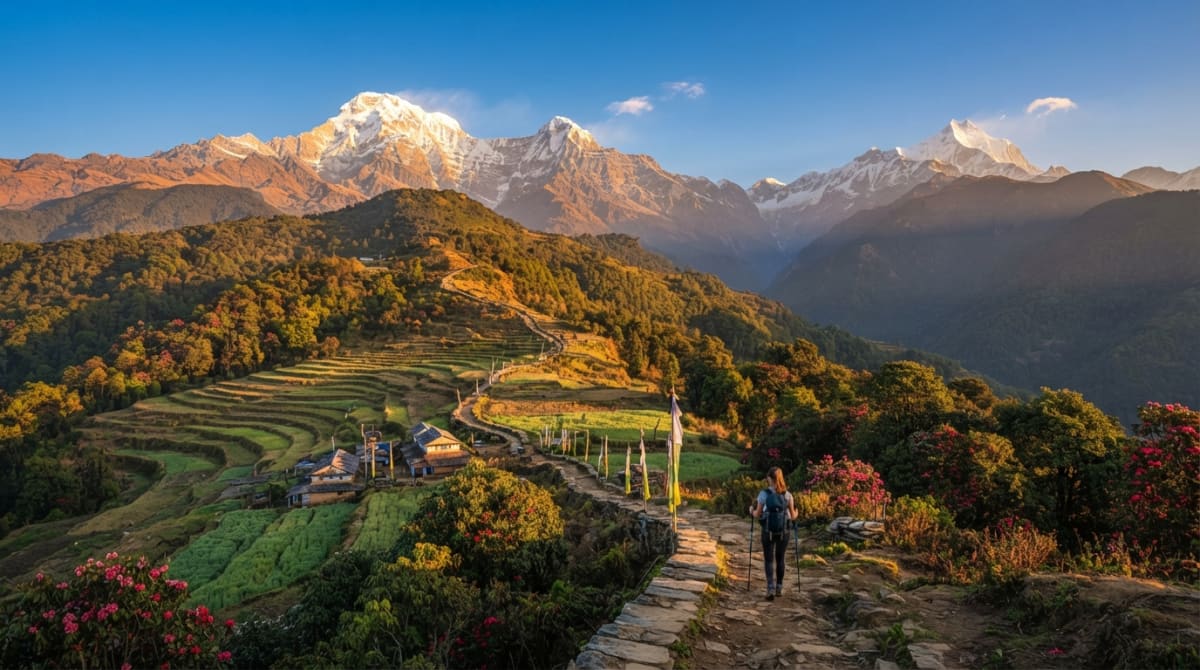
After breakfast, a private vehicle takes you about an hour west to Kande. The trek begins with a steep climb up stone steps to Australian Camp and its wide mountain panorama, then continues past Pothana and its permit checkpoint through forest to Pitam Deurali, around 2,150 meters. It is a gentle introduction of three to four hours, giving your legs and lungs time to adjust. Read Kande to Pitam Deurali.
Arriving at Pitam Deurali in the early afternoon, you have time to rest, explore and enjoy the views. The lodges here are among the best equipped on the route, often with hot showers and mobile signal, making it a comfortable first night on the trail.
Day 3: Pitam Deurali to Forest Camp
On this itinerary, the long forest section is split in two, making day three a shorter, more relaxed walk. The trail climbs steadily through rhododendron and oak forest, thick with moss and alive with birds, to Forest Camp at around 2,600 meters. Expect four to five hours of walking at an easy pace. In spring the rhododendron blooms make this one of the most beautiful sections of the trek.
Forest Camp is a peaceful clearing surrounded by tall trees, with a handful of lodges. Sleeping here adds a valuable step in acclimatization before you climb higher. See Pitam Deurali to Forest Camp and our Forest Camp guide.
Day 4: Forest Camp to High Camp
Day four is the big climbing day. You continue through the forest past Rest Camp and Low Camp, where Machapuchare appears directly ahead, then step out onto the open ridge. Passing Badal Danda, the trail follows the crest up to High Camp at 3,580 meters. It is a climb of nearly 1,000 meters, taking five to six hours, with the scenery getting better with every step.
At High Camp, rest, drink plenty of water and take a short, slow walk above the lodges to help acclimatize. Watch the sunset over the peaks, then eat an early dinner and prepare your gear for the pre-dawn start. See our High Camp guide.
Day 5: Base Camp and Badal Danda
You leave High Camp in the dark and climb to the Upper View Point for sunrise, then continue to Mardi Himal Base Camp at around 4,500 meters for close-up views of Mardi Himal, Machapuchare and Annapurna South. After returning to High Camp for breakfast, you descend the ridge to Badal Danda at around 3,210 meters for the night. It is a long day, but spending the night at Badal Danda rather than continuing further lets you rest after the summit hike.
Badal Danda is a quiet stop with only a few lodges, and it often offers dramatic evening views as clouds settle into the valleys below. See the Base Camp hike guide and our Badal Danda guide.
Day 6: Descent to Siding and Pokhara
The final trekking day drops steeply from Badal Danda through forest and terraced farmland to Siding, a Gurung village at the road head. The descent is long and demanding on the knees, so take it steadily with trekking poles. From Siding, a jeep takes you back to Pokhara, where you can celebrate with a lakeside dinner. See Badal Danda to Siding.
Day 7: Departure
After breakfast, we transfer you to Pokhara International Airport for your onward flight. If your flight is later in the day, you have time for a final walk along the lake, some souvenir shopping or a visit to the World Peace Pagoda. See things to do in Pokhara.
Why Fly into Pokhara?
Flying directly into Pokhara offers several advantages. It removes the Kathmandu–Pokhara journey, which takes six to eight hours by road each way or a domestic flight that can be delayed by weather. It spares you Kathmandu's traffic, dust and noise on arrival, when you are tired from long-haul travel. It lets you start the trek sooner, so a week-long holiday can include the full trek plus arrival and departure days. And Pokhara itself is a relaxed, pleasant place to recover from jet lag, with lakeside walks, good food and mountain views.
The trade-off is that you miss Kathmandu's cultural sights, such as its temples, squares and stupas. If you want both, consider adding a couple of days in Kathmandu at the end of your trip, or choose the 9-day itinerary, which includes time in both cities.
Who the 7-Day Trek Suits
This itinerary suits travellers with limited holiday time who want the full Mardi Himal experience at a comfortable pace. It works well for people flying from regions with direct or convenient connections to Pokhara, for those who have visited Kathmandu before and want to focus on the mountains, and for anyone who dislikes long road journeys. The gentle trekking pattern, with a night at Forest Camp and a night at Badal Danda, makes it suitable for first-time trekkers who have trained, couples, families with older children and older trekkers.
If you are very fit and short on time, the 5-day trek from Pokhara saves two days. If you want more rest or cultural time, add a day in Pokhara or Kathmandu. See which Mardi Himal trek is right for you.
Comparing the 5, 7 and 9-Day Versions
All three follow the same ridge to Base Camp, but they differ in pace and travel. The 5-day trek starts and ends in Pokhara with a moderate pace, sleeping at Pitam Deurali, Low Camp, High Camp and Low Camp. The 7-day trek adds arrival and departure days in Pokhara and uses the gentler trekking pattern, with nights at Forest Camp and Badal Danda. The 9-day trek adds Kathmandu at both ends and the journey to and from Pokhara, with the same gentle trekking pattern as the 7-day version. Choose the 7-day version if you are flying into Pokhara and want a relaxed pace without the Kathmandu legs.
Best Season for the 7-Day Trek
Autumn, from late September to November, is the best season, with clear skies for the Base Camp sunrise and generally reliable flying weather into Pokhara. Spring is also excellent, with rhododendrons in the forest on days two and three. Winter works with warm gear and microspikes, but hazy mornings can occasionally delay flights. In the monsoon, rain and cloud can affect flights and views, so build in flexibility. See the best time for the trek.
Preparing for the 7-Day Trek
Although the trekking pace is gentle, you still climb to High Camp at 3,580 meters and hike to around 4,500 meters at Base Camp, so preparation matters. Start training six to eight weeks before your trip with brisk walking, stair climbing, leg strength exercises and weekend hikes carrying a daypack, building up to five or six hours with plenty of ascent and descent. Break in your boots on these hikes. Buy travel insurance that covers trekking to at least 4,500 meters and helicopter evacuation, and check that it includes travel delay cover in case your flight to Pokhara is disrupted. Our fitness guide and insurance guide explain what you need.
Jet lag is worth considering too. Pokhara is several hours ahead of Europe and many hours different from the Americas, so your body clock may be off for the first few days. The rest day on arrival helps, and early nights on the trail tend to reset your sleep quickly. See beating jet lag.
Extending the 7-Day Trip
If you have a few more days, the 7-day plan is easy to extend. Adding a spare day in Pokhara at the end protects your departure flight from any delays on the road from Siding and gives you time for paragliding, a boat trip on Phewa Lake or a sunrise at Sarangkot. Adding a buffer day on the trail, usually at High Camp or Badal Danda, gives you a second chance at a clear Base Camp morning, which is especially valuable in spring, winter and the monsoon. You can also add a few days in Chitwan National Park for jungle wildlife, or connect to Kathmandu by a short domestic flight for its temples and heritage squares before flying home. Our guides can adjust the plan to fit your flights. See Mardi Himal and paragliding and Mardi Himal and Chitwan.
Luggage and Packing Tips
With a direct flight, you can travel with one main bag and a carry-on. Wear or carry your boots and warm layers in case checked luggage is delayed, and pack your medication and documents in your hand luggage. You will leave most of your luggage at your Pokhara hotel during the trek, taking only a duffel for the porter and a daypack. Down jackets, sleeping bags and trekking poles can be rented in Lakeside if you prefer not to fly with them. See our packing list and storing luggage in Pokhara.
Planning Around a Direct Flight
International routes into Pokhara have been limited since the airport opened, and schedules change, so check which airlines currently serve Pokhara from your region before committing. If no convenient direct route exists, you can still fly into Kathmandu and connect to Pokhara on a short domestic flight, then follow this same trekking plan. Build in some flexibility, especially in the monsoon and on hazy winter mornings, when flights can be delayed. See flying directly to Pokhara and what to do if your flight is delayed.
Book the 7-Day Trek
Our 7-day Mardi Himal Trek with a direct flight to Pokhara includes airport transfers in Pokhara, the international flight to Pokhara as set out in the itinerary, hotel accommodation in Pokhara with breakfast, private transport to and from the trail, permits, a licensed guide, and tea house accommodation with three meals a day while trekking. If you are arriving through Kathmandu instead, see the 9-day Mardi Himal Trek. Contact us for current flight options.