

Eight days is a popular length for a Mardi Himal trip from Kathmandu. It is long enough to travel to Pokhara, walk the full ridge to Base Camp at a sensible pace and get back for your flight home, but short enough to fit into a week and a weekend of leave. It sits between our 9-day trek, which includes a final night in Kathmandu, and the shorter trekking-only options from Pokhara.
This guide sets out a sample 8-day itinerary, explains the choices you need to make, especially about flights between Kathmandu and Pokhara, and helps you decide whether eight days suits you. We arrange 8-day trips by adapting the 9-day Mardi Himal Trek to your flights.
A Sample 8-Day Itinerary
| Day | Plan | Overnight |
|---|---|---|
| 1 | Arrive in Kathmandu, transfer to hotel | Kathmandu |
| 2 | Bus or flight to Pokhara, pre-trek briefing | Pokhara |
| 3 | Drive to Kande, trek to Pitam Deurali | Pitam Deurali (2,100 m) |
| 4 | Trek to Forest Camp or Low Camp | Forest Camp or Low Camp |
| 5 | Trek to High Camp | High Camp (3,580 m) |
| 6 | Base Camp at sunrise, descend to Badal Danda or Low Camp | Badal Danda or Low Camp |
| 7 | Descend to Siding, drive to Pokhara | Pokhara |
| 8 | Fly to Kathmandu and connect to your international flight | — |
Days 1 and 2: Arrival and Journey to Pokhara
You land in Kathmandu, complete visa formalities and transfer to your hotel. The first day is for rest and recovery from your journey, perhaps with a short walk around Thamel. On day two, you travel to Pokhara, either by tourist bus, which takes six to eight hours, or by a 25-minute domestic flight. The bus is cheaper and scenic; the flight saves most of the day and gives you time to rent gear and relax by the lake. In the evening, your guide holds a briefing to check your gear and explain the route. See Kathmandu to Pokhara by bus and by flight.
If you arrive in Kathmandu early on day one, you might be able to travel to Pokhara the same afternoon by flight, freeing a day for later. This depends on flight times and your energy after a long journey.
Days 3 to 7: The Trek
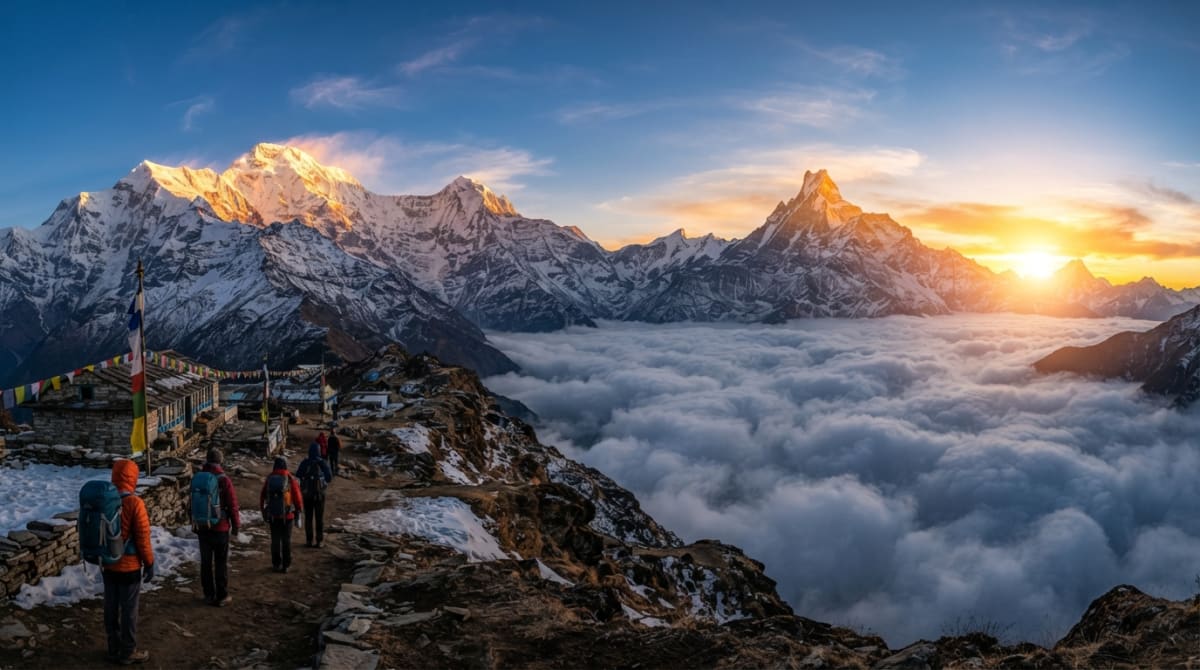
The trekking days follow a gentle pattern. On day three, you drive to Kande and walk to Pitam Deurali. On day four, you climb through the rhododendron forest to Forest Camp, or continue to Low Camp if you are strong and want a shorter day five. On day five, you climb the open ridge to High Camp. On day six, you hike to the Upper View Point and Base Camp for sunrise, then descend to Badal Danda or Low Camp. On day seven, you descend to Siding and drive back to Pokhara for a well-earned hot shower and dinner by the lake. See the day-by-day itinerary guide.
This pattern gives two nights below High Camp on the way up, which helps acclimatization, and a lower night after the summit hike, which aids recovery.
Day 8: Back to Kathmandu and Departure
On the final morning, you fly from Pokhara to Kathmandu and connect to your international flight. This is the part of the 8-day plan that needs care: domestic flights can be delayed by morning haze or weather, so allow plenty of time between your arrival in Kathmandu and your international departure, ideally several hours. If your international flight leaves early in the day, consider travelling back to Kathmandu on day seven instead, which would mean finishing the trek a day earlier. See what to do if your Pokhara flight is delayed.
Bus or Flight: Making the Right Choice
On an 8-day plan, the choice between bus and flight for the Kathmandu–Pokhara journey shapes the whole trip. The tourist bus is inexpensive, comfortable enough and a memorable way to see rural Nepal, following rivers through deep valleys and passing terraced hillsides and roadside villages. It takes most of a day, though, and traffic or roadworks can make it longer. A domestic flight takes around 25 minutes and, on a clear morning, offers spectacular views of the Himalaya from the right-hand side of the plane heading west. It costs more and is subject to weather delays, particularly on hazy winter mornings and during the monsoon.
Many travellers on an 8-day plan take the bus out to Pokhara, when there is no deadline to meet, and fly back on the final day, which saves time when it matters most. Others fly both ways to maximise time in Pokhara. Whatever you choose, keep a few hours of margin before your international flight. See domestic flights in Nepal.
Alternative 8-Day Pattern
If your international departure is early in the morning, a different pattern works better. Travel to Pokhara on day two, trek days three to six using the faster 5-day trekking plan, descend to Pokhara on day six, travel back to Kathmandu on day seven, and depart on day eight. This version walks a little faster on the trail, sleeping at Pitam Deurali, Low Camp and High Camp and returning to Low Camp after Base Camp, but it gives you a full buffer day in Kathmandu before your flight home, which is the safest option if your connection is tight. Your guide can tell you which pattern suits your flights best.
Best Season for an 8-Day Trip
Autumn, from late September to November, is the ideal season, with clear skies for the Base Camp sunrise and generally reliable flying weather between Kathmandu and Pokhara. Spring is also excellent, with rhododendrons in the forest on day four and warm days, though haze can occasionally affect flights. In winter, early morning fog in the valleys sometimes delays domestic flights, so travel by road or allow extra time. In the monsoon, both roads and flights can be disrupted, and a longer itinerary with more buffer is wiser. See the best time for the trek.
Preparing for the Trip
An 8-day trip leaves little time to recover from jet lag or buy forgotten gear, so arrive prepared. Train for six to eight weeks with regular walks, stair climbing and weekend hikes carrying a daypack. Break in your boots before you travel. Buy insurance that covers trekking to at least 4,500 meters, helicopter evacuation and travel delays. Pack your boots, medication and essential documents in your hand luggage in case checked bags are delayed. If you plan to rent a sleeping bag or down jacket, do so in Pokhara on day two. See our preparation guide.
Budgeting for Eight Days
Beyond the package price, budget for meals in Kathmandu and Pokhara, snacks, drinks, hot showers and charging on the trail, tips for your guide and porter, and souvenirs. If you upgrade to flights between Kathmandu and Pokhara, include that cost too. Carry enough Nepali rupees for the trail, as there are no ATMs above Pokhara. See our cost guide.
Who the 8-Day Trip Suits
The 8-day trip suits travellers arriving in Kathmandu who want the full trek at a comfortable pace but have one day less than the 9-day plan. It works for people with a week's leave plus a weekend, for those who have visited Kathmandu before and do not need extra city time, and for trekkers happy to fly at least one way between Kathmandu and Pokhara. It is suitable for fit beginners and experienced trekkers alike.
If you want more buffer for travel delays or time to explore Kathmandu, the 9-day itinerary is safer. If you can fly directly into Pokhara, the 7-day itinerary avoids Kathmandu entirely.
What You See in Eight Days
An 8-day trip packs a remarkable amount into a short time. You see Kathmandu's lively streets on arrival, the river gorges and terraced hills on the way to Pokhara, and the calm of Phewa Lake with Machapuchare reflected in its surface on clear mornings. On the trail, you walk through farmland and villages near Kande, a deep rhododendron and oak forest, and an open alpine ridge with some of the closest mountain views in the Annapurna region. You watch sunrise over Annapurna South, Hiunchuli, Mardi Himal and Machapuchare from above 4,000 meters, and descend through Gurung villages to Siding. For a single week, it is one of the most varied and rewarding trips Nepal offers.
Tea Houses and Hotels on the 8-Day Trip
You spend two nights in Kathmandu or Pokhara hotels at the start, four nights on the trail and one night back in Pokhara. City hotels on our packages are comfortable, with private bathrooms and breakfast included, and they store your spare luggage while you trek. On the trail, you sleep in simple tea houses at Pitam Deurali, Forest Camp or Low Camp, High Camp, and Badal Danda or Low Camp. Pitam Deurali is the most comfortable, with hot showers and often mobile signal; Forest Camp is a quiet clearing in the trees; High Camp is cold and basic but has the best views on the trek; Badal Danda is small and peaceful. Rooms are twin rooms with shared toilets higher up, and the dining room stove is where everyone gathers in the evening. See our tea house guide.
Acclimatization on an 8-Day Trip
Because the trekking pattern includes nights at Pitam Deurali and Forest Camp or Low Camp before High Camp, the 8-day plan gives your body a reasonable chance to adjust before you sleep at 3,580 meters. Most trekkers feel the altitude at High Camp, perhaps with a mild headache or restless night, but serious problems are rare. Walk slowly, drink three to four liters a day, avoid alcohol on the trail and tell your guide about any symptoms. Descending to Badal Danda or Low Camp after Base Camp means you sleep lower on the highest day, which helps recovery. See our altitude sickness guide.
Common Mistakes on an 8-Day Trip
The most common mistake is leaving no margin for travel delays. Booking an international flight for a few hours after a scheduled domestic flight from Pokhara is risky, especially in winter or the monsoon. Another is arriving in Nepal exhausted from a long-haul journey and heading straight to Pokhara without rest, then starting the trek tired. Some travellers try to fit too much into the trip, adding sightseeing tours on arrival or departure days and leaving no time to recover. And some underestimate the trek because it is short; the climbs, altitude and descent still demand preparation. Build in rest, keep your flights flexible where possible and train before you go.
Should You Hire a Porter?
On a short trip with long travel days, conserving energy matters. A porter carries your main bag between lodges, so you walk with only a light daypack containing water, snacks, a warm layer, rain gear and your camera. This makes the stone steps from Kande, the forest climb and the steep descent to Siding noticeably easier, and leaves you with more energy for the pre-dawn Base Camp hike. One porter usually carries for two trekkers, keeping the cost reasonable, and hiring local porters supports families in the hills around Pokhara. See porter cost and how porter service works.
Pack your duffel within the agreed weight limit, usually around 8 to 10 kilograms per trekker, and keep valuables, medication and essentials in your daypack.
Extending to Nine Days or More
If you can add even one more day, it is worth considering. A ninth day allows a final night in Kathmandu before your international flight, removing the stress of same-day connections, and gives you time to visit a heritage site such as Boudhanath or Pashupatinath. Two or three extra days open up Chitwan National Park for a jungle safari or a relaxed stay in Pokhara with paragliding and boating. See the 9-day itinerary and 10-day itinerary.
Book an 8-Day Trek
We arrange 8-day Mardi Himal trips by adapting our 9-day Mardi Himal Trek to your arrival and departure flights. Permits, a licensed guide, transport, hotels and trail accommodation with meals are included. Contact us with your flight times and we will build the best 8-day plan.