

Most Mardi Himal itineraries are built around efficiency: how quickly can you get to Base Camp and back? A 10-day trip takes the opposite approach. It keeps the same trail and the same spectacular high point, but adds the one thing shorter trips lack: slack. With a buffer day on the ridge and a free day in Pokhara after the trek, you are never rushing, never forced to walk in bad weather and never flying home with aching legs the morning after coming down from the mountains.
This guide sets out a relaxed 10-day Mardi Himal itinerary from Kathmandu, explains how to use the extra days, and helps you decide whether the slower pace is right for you. The plan is built by extending our 9-day Mardi Himal Trek by one day.
The 10-Day Itinerary at a Glance
| Day | Plan | Overnight |
|---|---|---|
| 1 | Arrive in Kathmandu | Kathmandu |
| 2 | Travel to Pokhara, pre-trek briefing | Pokhara |
| 3 | Drive to Kande, trek to Pitam Deurali | Pitam Deurali |
| 4 | Trek to Forest Camp | Forest Camp |
| 5 | Trek to High Camp | High Camp |
| 6 | Base Camp at sunrise, or buffer day at High Camp | High Camp or Badal Danda |
| 7 | Base Camp (if delayed) or descend to Badal Danda | Badal Danda |
| 8 | Descend to Siding, drive to Pokhara | Pokhara |
| 9 | Free day in Pokhara, or travel to Kathmandu | Pokhara or Kathmandu |
| 10 | Return to Kathmandu if needed, depart | — |
Days 1 and 2: Kathmandu and the Journey West
You arrive in Kathmandu, complete visa formalities and settle into your hotel. The first day is for resting after your flight; Kathmandu's energy can be tiring after a long journey, so there is no pressure to sightsee. On day two, you travel to Pokhara by tourist bus along the scenic Prithvi Highway, or by a short domestic flight if you prefer. In the evening your guide meets you for a briefing, checks your gear and explains the route. See arriving at Kathmandu airport and Kathmandu to Pokhara by tourist bus.
Arriving in Pokhara a day before the trek gives you time to rent any missing gear, withdraw cash and enjoy an evening walk along Phewa Lake, where on clear evenings Machapuchare rises above the water.
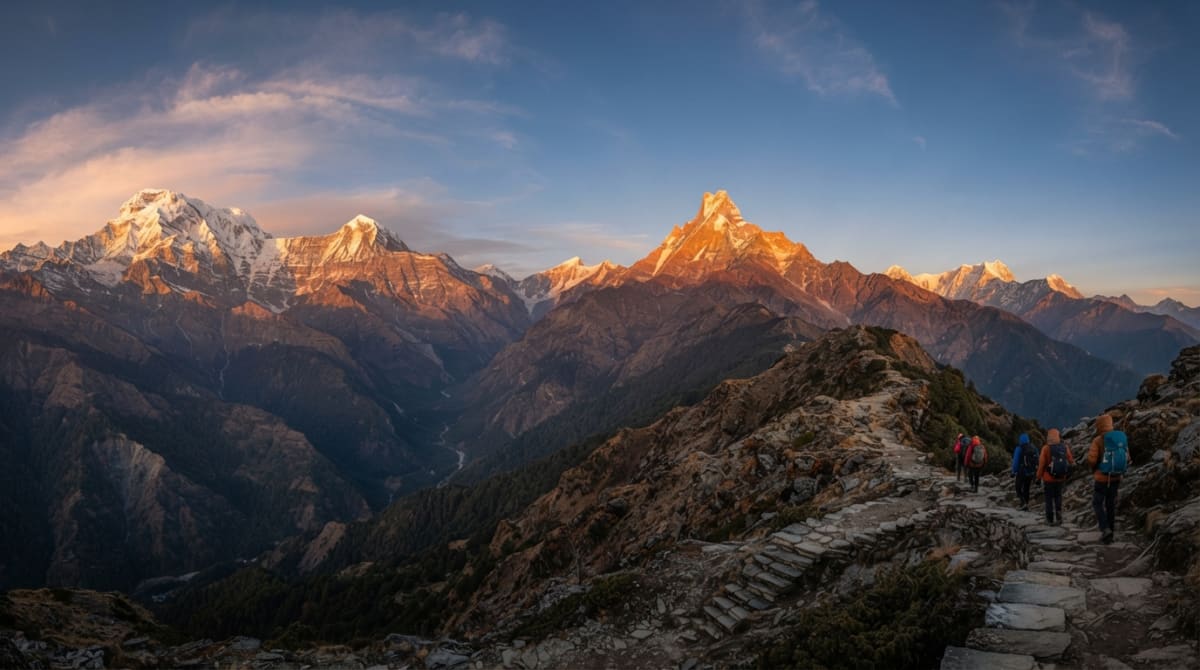
Days 3 to 5: Climbing the Ridge
The trek follows the gentlest trekking pattern. On day three, you drive to Kande and walk via Australian Camp to Pitam Deurali. On day four, you climb through the rhododendron and oak forest to Forest Camp, a short, pleasant day. On day five, you continue past Low Camp and up the open ridge past Badal Danda to High Camp at 3,580 meters. These days build gradually, giving your body time to acclimatize, and each has its own highlights, from the first mountain views at Australian Camp to the forest blooms and the dramatic ridge walk. See our day-by-day itinerary guide.
Days 6 and 7: Base Camp with Flexibility
On day six, you rise before dawn to hike to the Upper View Point and Mardi Himal Base Camp for sunrise, weather permitting. If the morning is clear, you complete the hike, return to High Camp for breakfast and descend to Badal Danda, leaving day seven as a relaxed, short day or an extra night on the ridge. If the morning is cloudy or icy, you rest at High Camp and try again on day seven. Either way, the buffer day means you can make safe, unhurried decisions. See the Base Camp hike guide and how buffer days work.
Day 8: Down to Siding and Pokhara
You descend steeply through forest and farmland to the Gurung village of Siding, then drive back to Pokhara. After several nights in simple tea houses, a hot shower and a comfortable bed feel wonderful. Celebrate with dinner by the lake. See Badal Danda to Siding.
Day 9: A Free Day in Pokhara
The free day is what makes the 10-day plan special. After the trek, your legs will thank you for a rest day, and Pokhara offers plenty of gentle ways to fill it. You could fly tandem with a paragliding pilot from Sarangkot, soaring above the lake with the Annapurnas on the horizon. You could rent a wooden boat and paddle across Phewa Lake to the Tal Barahi temple, or walk up to the World Peace Pagoda for views over the city. The International Mountain Museum tells the story of Himalayan mountaineering and cultures. Or you could simply book a massage, sit in a lakeside café and look back at the mountains you have just walked beneath. See things to do in Pokhara after the trek.
If you prefer, you can use day nine to travel back to Kathmandu instead, and spend the free day there visiting heritage sites such as Boudhanath, Swayambhunath or Bhaktapur before flying home on day ten.
Day 10: Departure
You travel from Pokhara to Kathmandu by flight or bus, or if you returned on day nine, you transfer to the airport for your departure. With a buffer day on the trail and a free day afterward, the risk of missing your international flight because of weather or road delays is very low.
Why Slow Down?
There is a strong temptation to squeeze Mardi Himal into as few days as possible, and shorter itineraries certainly work for fit trekkers in good weather. But slowing down brings real benefits. Your body acclimatizes more comfortably, which means fewer headaches and better sleep at High Camp. You arrive at each lodge with energy to explore, take photos and enjoy the evening light rather than collapsing into bed. You can wait for the weather instead of walking in cloud or rain. And you come home rested rather than exhausted.
Many trekkers who choose a relaxed itinerary say the trek felt less like an endurance test and more like a holiday. They remember conversations with lodge owners, a monal spotted on the ridge, a sunset they stayed out for, and a morning spent reading in the sun at High Camp. Speed has its place, but on a trek this beautiful, time is a luxury worth paying for.
Using the Free Day in Kathmandu Instead
If you prefer culture to lakeside relaxation, use the free day in Kathmandu. The valley holds several UNESCO-listed sites within easy reach of Thamel. Boudhanath, one of the largest stupas in the world, is the heart of Kathmandu's Tibetan Buddhist community, and walking clockwise around it with pilgrims at dusk is unforgettable. Swayambhunath, the "monkey temple", sits on a hill overlooking the city. Pashupatinath, on the banks of the Bagmati River, is one of the holiest Hindu temples in South Asia. Kathmandu Durbar Square and the old city of Bhaktapur showcase centuries of Newar architecture, with carved wooden windows, temples and courtyards.
A guided heritage tour helps make sense of the history and customs you encounter. See combining Mardi Himal with a Kathmandu heritage tour.
Adding More Days
A 10-day trip is also a good base for longer adventures. Add three days for a jungle safari in Chitwan National Park, where you can look for rhinos, deer and a huge variety of birds from jeeps, canoes and on guided walks. Add a day for a stop in the hill town of Bandipur on the way between Kathmandu and Pokhara, with its preserved Newar bazaar and Himalayan views. Or add Poon Hill for a second sunrise viewpoint. See Mardi Himal and Chitwan, Mardi Himal and Bandipur and Mardi Himal and Poon Hill.
Tea Houses on the 10-Day Route
On the trail, you sleep at Pitam Deurali, Forest Camp, High Camp (one or two nights) and Badal Danda. Pitam Deurali has several lodges with hot showers and often mobile signal. Forest Camp is a quiet clearing among tall trees. High Camp is the most basic and coldest stop, but its views and atmosphere are unforgettable, and a second night there means two chances at sunrise. Badal Danda is small and peaceful, often above a sea of cloud. In Kathmandu and Pokhara, you stay in comfortable hotels with breakfast. See our tea house guide.
Budgeting for Ten Days
A 10-day trip costs a little more than the 9-day version: one more day of guide and porter wages and one more night of accommodation and meals, either on the trail or in Pokhara. Budget separately for lunches and dinners in the cities, activities on the free day such as paragliding or boating, snacks and extras on the trail, tips for your guide and porter, and souvenirs. See our cost guide and hidden costs of the trek.
Common Mistakes on Longer Trips
Ironically, the most common mistake on a relaxed itinerary is filling the spare days with too much. Travellers book paragliding, a sunrise tour and a museum visit for the same free day, then head home exhausted. Leave some genuine rest. Another mistake is using the buffer day on the trail too early, for example by resting at Forest Camp when the weather is fine, then having no spare day left when cloud arrives on the summit morning. Talk to your guide about the best moment to use it. Finally, some trekkers relax their preparation because the itinerary is gentle; the climbs and altitude still require fitness and good gear.
A Sample Free Day in Pokhara
To give a sense of how the free day might unfold, imagine waking without an alarm for the first time in a week. After a slow breakfast in the hotel garden, you walk along the lakeshore to one of the boat stands and hire a colourful wooden boat to paddle across to the island temple of Tal Barahi. Back on shore by late morning, you take a taxi up to the World Peace Pagoda, a gleaming white stupa on a ridge above the lake, and walk down through the forest to the water. After lunch in a lakeside café, you book an hour-long massage to ease the ache in your thighs from the descent to Siding. In the late afternoon, you browse the shops of Lakeside for pashmina scarves or singing bowls, then watch the sunset light the mountains you walked beneath only a day earlier. It is a gentle, restorative way to end the trip. See souvenir shopping in Pokhara.
Who the 10-Day Trip Suits
A 10-day trip suits travellers who value comfort, flexibility and time to enjoy each place. It is ideal for first-time visitors to Nepal, for older trekkers who prefer shorter walking days and more rest, for families with children, and for photographers who want more chances at clear sunrise light. It is also the safest choice outside the main autumn season, when the weather is less predictable. See Mardi Himal for seniors and the family trek itinerary.
If you are fit, short on time and trekking in stable autumn weather, the 9-day version may be all you need. If you are already in Pokhara, the 5-day trek from Pokhara or its 6-day variant covers the trail efficiently.
Best Season for a 10-Day Trip
The relaxed pace works in any season. In autumn, you gain time to enjoy the clear views rather than rushing. In spring, you can linger in the rhododendron forest. In winter, the buffer day is valuable for waiting out snow or ice above High Camp. In the monsoon, the extra days give you more chances at a clear morning and protect your flights from road and weather delays. See the best time for the trek.
Preparing for the Trip
Prepare as you would for any Mardi Himal trek: six to eight weeks of training with walks, stairs and weekend hikes carrying a daypack, broken-in boots, insurance covering trekking to 4,500 meters and helicopter evacuation, and a layered clothing system with a warm down jacket and sleeping bag. The extra days give you more time to rest if you arrive tired, but they do not replace preparation. See our preparation guide.
Book a 10-Day Trip
We build the 10-day trip by extending the 9-day Mardi Himal Trek, which includes airport transfers, travel between Kathmandu and Pokhara, hotels with breakfast, private transport to and from the trail, permits, a licensed guide, and tea house accommodation with meals while trekking. We can place the extra day on the trail or in Pokhara to suit you, and arrange activities such as paragliding. Contact us to plan your dates.