

Summit day on the Mardi Himal Trek begins in the dark, often before four in the morning, with a cold, steep climb toward the Upper View Point and Base Camp. How that morning goes depends a great deal on the evening before. Trekkers who arrive at High Camp early, rest, eat well, prepare their gear and get into their sleeping bags warm and hydrated usually find the summit hike challenging but manageable. Those who scramble around in the dark looking for gloves, skip dinner or spend the evening in the cold dining room with a headache tend to struggle.
This guide walks through the afternoon and evening at High Camp, from arrival to lights out, and the first minutes of summit morning. For High Camp itself, see the High Camp guide, and for the hike, High Camp to Base Camp.
A Typical Evening at High Camp
| Time | What happens |
|---|---|
| Early afternoon | Arrive at High Camp, check in, hot drink and snack |
| Mid-afternoon | Rest, short acclimatization walk above the lodges |
| Late afternoon | Prepare gear, watch the sunset over the peaks |
| 6–6:30 p.m. | Dinner in the dining room |
| 7 p.m. | Briefing with your guide: wake time, weather, plan |
| 7:30–8:30 p.m. | Final preparations, bed |
| 3:30–4:30 a.m. | Wake up, hot drink, snack, set off |
Exact times vary with the season and your guide's plan, but the pattern is the same: arrive, rest, prepare, eat, sleep early.
Arriving at High Camp
Most groups reach High Camp, at 3,580 meters, in the early afternoon, after walking up the ridge from Low Camp or Forest Camp. Your first priorities are simple: get warm, drink something hot, and eat a snack. Change out of sweaty clothes into dry layers as soon as possible, because damp clothing chills you quickly once you stop. Take your sleeping bag out of its stuff sack so it can loft. Then sit down, drink more, and let your body adjust to the altitude. See Low Camp to High Camp.
A Short Acclimatization Walk
If you feel well, a short, gentle walk up the ridge above High Camp in the afternoon helps acclimatization. Climb slowly for 20 to 40 minutes, gaining perhaps 100 to 200 meters, spend a few minutes higher up, then come back down to sleep. This follows the principle of climbing high and sleeping low, and it gives you a preview of the first part of the summit trail, which is useful for the morning. Do not overdo it; the goal is gentle activity, not a workout. If you have a headache or feel tired, rest instead. See acclimatization on Mardi Himal.
Sunset at High Camp
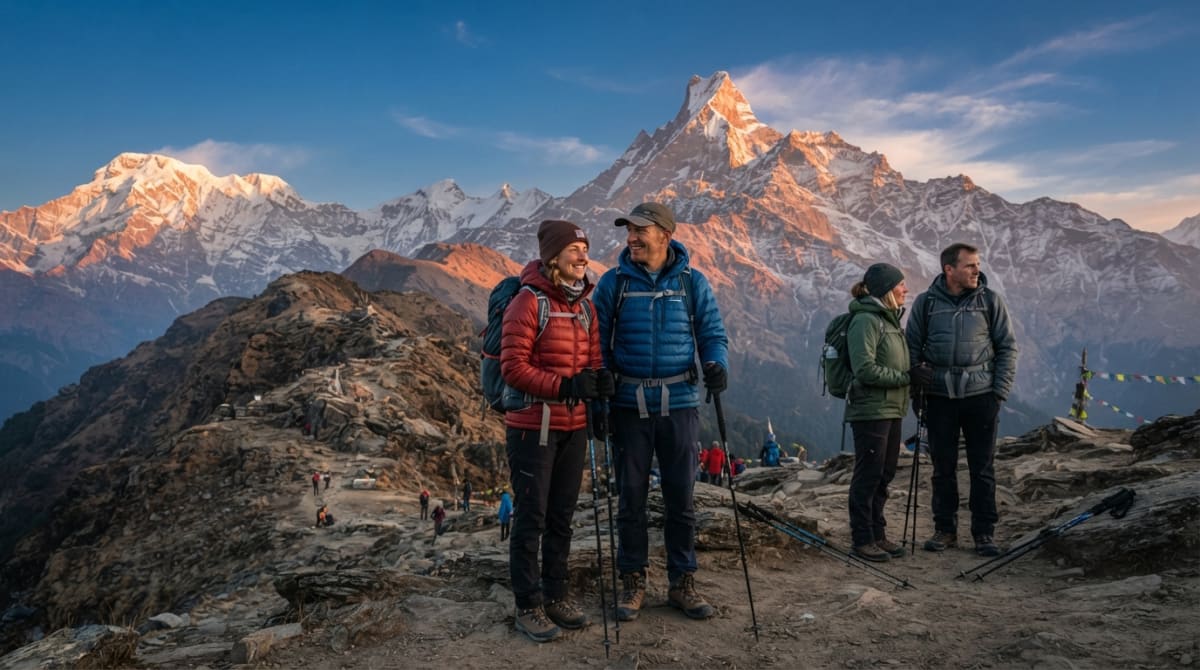
Sunset at High Camp is one of the highlights of the trek. As the sun sinks, the snow on Machapuchare, Mardi Himal, Annapurna South and Hiunchuli turns gold, then pink, then fades to blue. On many evenings, the valleys below are filled with cloud, and the peaks seem to float above it. Put on your warm layers and step outside to watch. It is also a good time to take photographs and to look at the ridge you will climb in the morning. See golden hour on Mardi Himal.
Dinner
Eat a good dinner, even if your appetite is low, as it often is at altitude. Carbohydrates are your friend: dal bhat with its free refills, pasta, noodles, fried rice or potatoes all provide the energy you need for the morning. Add a bowl of soup, such as garlic soup, a trekking favorite, and drink plenty of hot tea or water. Avoid alcohol, which disrupts sleep, dehydrates you and can mask or worsen altitude symptoms. Avoid very heavy, greasy or unfamiliar food that might upset your stomach. Dinner is usually served early at High Camp, around 6 or 6:30 p.m., so that everyone can get to bed early. See eating enough at altitude and dal bhat on Mardi Himal.
The Briefing
After dinner, your guide will brief the group on the plan for summit morning. This usually covers the wake-up time, when breakfast or a hot drink will be ready, when you will set off, the weather forecast, how long the hike will take, what to carry and wear, and the plan for turning back if anyone feels unwell or conditions are poor. It is also your chance to ask questions and to tell your guide about any symptoms you have. Be honest; a mild headache is common and manageable, but your guide needs to know. See questions to ask your guide.
Checking How You Feel
Before bed, take stock of how you feel. A mild headache that eases with rest, water and perhaps a painkiller is normal at 3,580 meters. So is some breathlessness when walking and a reduced appetite. Warning signs that need attention include a severe or worsening headache, nausea or vomiting, dizziness, unusual fatigue, breathlessness at rest, confusion or loss of coordination. If you have any of these, tell your guide immediately. It may mean resting for a day, starting later, stopping at the Upper View Point, or descending. See our altitude sickness guide and headaches on Mardi Himal.
Packing Your Daypack
Pack your daypack the night before, so you only have to pick it up in the morning. It should contain:
- Down jacket (if not wearing it) and a windproof shell
- Spare gloves or mittens and a warm hat
- Water: at least one liter, to be filled with hot water in the morning
- Snacks: chocolate, nuts, energy bars, biscuits
- Sunglasses, sunscreen and lip balm for the descent
- Camera or phone and spare batteries, kept warm
- Small first aid kit and any personal medication
- Microspikes in winter or after snow
- Toilet paper and a small bag to carry it out
See choosing a daypack and small items that matter.
Laying Out Your Clothes
Lay out the clothes you will wear in the morning in the order you will put them on, so you can dress quickly in the dark and cold. A typical summit outfit includes thermal base layers top and bottom, trekking trousers, thick socks, a fleece, a down jacket, a buff or balaclava, a warm hat and gloves. Some trekkers sleep in their base layers and put the rest on in the morning. Keep your socks, gloves and base layers inside your sleeping bag overnight so they are warm when you put them on. Put your boots where you can find them, with the laces loosened. See what to wear on summit day.
Headlamp, Batteries and Charging
Your headlamp is essential for the first two hours of the summit hike. Put in fresh batteries or fully charge it, and carry spares. Keep it on your head or in a pocket where you can find it by touch. Charge your phone and camera batteries, and keep them inside your sleeping bag overnight, as cold drains batteries fast. Charging at High Camp may be limited or cost extra, so a power bank is useful. See choosing a headlamp and power banks and charging.
Hot Water
Ask the lodge to fill your water bottles with boiling water before bed. Wrap one in a sock or cloth and put it in your sleeping bag as a hot water bottle; it will keep you warm for hours and will still be warm, and unfrozen, in the morning. In the morning, ask for fresh hot water for your insulated bottle for the hike. Hot water is much more pleasant to drink in the cold than icy water, and it will not freeze on the way up. See water on the Mardi Himal trail.
Sleeping at High Camp
Sleep at High Camp is often light and broken. The altitude, cold, excitement and early alarm all play a part. Many trekkers wake frequently, have vivid dreams, or notice periods of irregular breathing, which is common and usually harmless at altitude. Do not worry if you do not sleep well; even resting with your eyes closed helps. To give yourself the best chance:
- Get into your sleeping bag warm, perhaps after a hot drink.
- Wear a hat, dry base layers and clean socks.
- Use the hot water bottle trick.
- Use earplugs, as lodge walls are thin and others may be up early.
- Keep a water bottle and headlamp within reach.
- Go to the toilet before bed to reduce night trips into the cold.
- Avoid sleeping pills, which can suppress breathing at altitude.
See sleeping well at altitude and choosing a sleeping bag.
Summit Morning: The First Minutes
When the alarm goes off, get up straight away; lingering in a warm sleeping bag only makes it harder. Dress quickly in the clothes you laid out, put on your boots, and pick up your daypack. Head to the dining room for a hot drink and a light snack, such as biscuits, porridge or toast. Fill your insulated bottle with hot water. Visit the toilet. Then step outside with your headlamp on, gloves and hat ready. The first minutes outside are the coldest; start walking slowly, and you will warm up. See hiking to Base Camp in the dark.
Mental Preparation
Summit day is as much a mental challenge as a physical one. Expect the first hour to be hard: cold, dark, steep and breathless. Knowing this in advance helps. Focus on small goals, such as the next bend in the trail or the next rest stop, rather than the whole climb. Walk at a slow, steady pace you could sustain for hours. Remember that turning around at the Upper View Point, or earlier if needed, is always an option and never a failure. See mental preparation for the trek and Upper View Point vs Base Camp.
If the Weather Looks Poor
Sometimes the evening at High Camp brings cloud, wind, rain or snow, and the forecast for the morning is uncertain. Your guide will explain the options. You may start as planned and hope for a clear window, wait for a later start, or, on a flexible itinerary, wait a day and try again the next morning. In very poor conditions, such as heavy snow or strong wind, the summit hike may be shortened or cancelled for safety. See bad weather on summit day.
The Night Before on the 3-Day Short Trek
On the 3-day Short Mardi Himal Trek, the night before summit day comes after a much faster ascent, and the following day is very long, combining the summit hike with the full descent to Siding and the drive to Pokhara. That makes the evening routine even more important. Eat as much as you comfortably can, drink steadily, pack everything, including your main bag, before bed so you can leave High Camp quickly after breakfast, and get to sleep as early as possible. Because acclimatization is shorter, pay close attention to how you feel and be ready to stop at the Upper View Point if your guide advises it. See the 3-day itinerary.
Staying Warm in the Dining Room
At High Camp, the dining room is usually the only heated space, often warmed by a stove in the center. It is tempting to spend the whole evening there, chatting with other trekkers, playing cards and drinking tea. Enjoy it, but keep an eye on the clock. Stay long enough to eat, drink and warm up, then head to bed while you are still warm, which makes it much easier to fall asleep. Wear your down jacket for the walk from the dining room to your room, and change quickly into your sleeping clothes. See staying warm in tea houses and evenings in the tea houses.
Sharing a Room
If you share a room at High Camp, agree with your roommate on the wake-up time and on who will use the light first. Pack quietly in the morning, keeping your headlamp on its red setting if it has one, and leave your gear organized so you do not have to search through bags in the dark. In busy seasons, lodges may be full, and some trekkers and guides may sleep in the dining room, so be considerate of others who are trying to rest. See tea house etiquette.
A Quick Checklist Before Lights Out
- Daypack packed and by the door
- Clothes laid out in order; socks, gloves and base layers in your sleeping bag
- Headlamp charged, on your head or in reach, with spare batteries
- Phone and camera batteries in your sleeping bag
- Hot water bottle in your sleeping bag; hot water ordered for the morning
- Wake-up and departure times confirmed with your guide
- Any symptoms reported to your guide
- Bills settled with the lodge if you are leaving early
Common Mistakes
- Spending the afternoon in wet, sweaty clothes.
- Skipping dinner because of low appetite.
- Drinking alcohol at High Camp.
- Leaving packing until the morning.
- Letting batteries and water bottles freeze overnight.
- Not telling the guide about symptoms.
- Staying up late in the dining room.
Summit with Us
On our treks, your guide handles the timing, the briefing and the lodge arrangements at High Camp, and walks with you every step of summit morning. See the 5-day Mardi Himal Trek from Pokhara, the 9-day trek from Kathmandu or the 3-day Short Mardi Himal Trek, and contact us to book.