

After a day or two in the forest, Low Camp is where the Mardi Himal Trek truly reveals itself. The trees thin, the trail emerges onto a shoulder of the ridge, and there, rising directly ahead, is Machapuchare, the sacred Fishtail mountain, filling the sky. At around 2,970 meters, Low Camp is the first stop with a close, uninterrupted mountain view, and its sunset is one of the highlights of the entire trek. For many trekkers on the popular 5-day itinerary, it is also home for two nights: once on the way up and again after the Base Camp hike.
This guide covers everything you need to know about Low Camp: lodges, facilities, views, sleeping and acclimatization, seasonal conditions and tips. For the walk here, see Forest Camp to Low Camp.
Where Low Camp Is
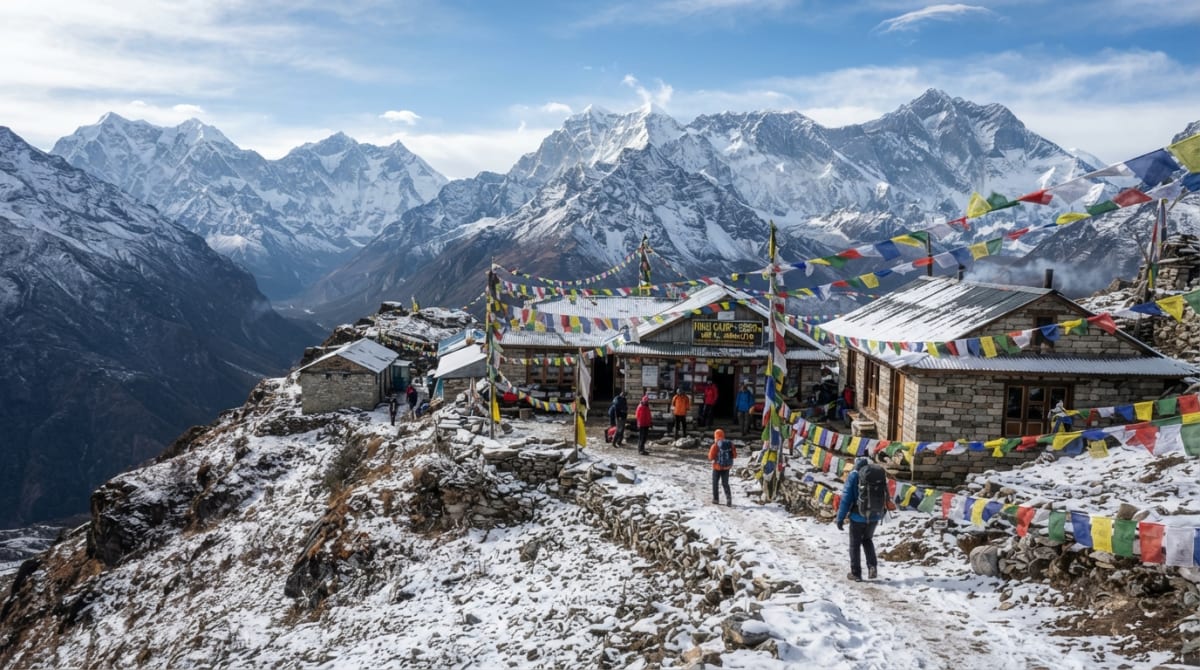
Low Camp sits on the Mardi Himal ridge at around 2,970 to 2,990 meters, at the upper edge of the forest. It lies around two to three hours above Forest Camp, one hour below Badal Danda and three to four hours below High Camp. It is also where the trail to Siding branches off on the descent, making it a key point on most itineraries. See the Mardi Himal route guide.
The View
Low Camp's great attraction is its view of Machapuchare. From the lodges, the mountain rises almost directly in front of you, its steep pyramid shape and sharp summit framed by the ridge. At sunset, if the sky is clear, the last light turns the snow orange, then pink, then fades to blue, while clouds often fill the valleys below. At sunrise, the first light touches the summit before spreading down the face. Even in cloudy weather, the peak sometimes appears briefly through gaps, a sight that stops conversation in the dining room. See sunset at Low Camp and Badal Danda.
Lodges and Facilities
Low Camp has several lodges, more than Forest Camp or Badal Danda. Rooms are simple twin rooms with beds, mattresses and blankets, and toilets are shared. Most lodges offer hot showers and charging for a fee. Mobile signal is patchy, and Wi-Fi, where available, is slow. Dining rooms are warm and sociable, with menus similar to other stops: dal bhat, noodles, fried rice, momos, soups and hot drinks. In busy seasons, guides reserve rooms in advance. See our tea house guide.
Sleeping and Acclimatization
At nearly 3,000 meters, Low Camp is high enough that some trekkers begin to feel the altitude, with a mild headache, slightly faster breathing or a restless night. This is normal. Drink plenty of water, eat a good dinner, avoid alcohol and tell your guide about any symptoms. Nights are cold for much of the year, so use your sleeping bag inside the lodge blankets. Sleeping at Low Camp before High Camp is an important step in acclimatization, and sleeping here again after the Base Camp hike aids recovery. See our altitude sickness guide.
Low Camp on Different Itineraries
Low Camp plays a different role depending on your itinerary. On the 5-day trek from Pokhara, you sleep here on night two after the long forest climb, and again on night four after the Base Camp hike, before descending to Siding. On the 3-day short trek, it is the first night, at the end of a very long climb from Kande. On the 9-day and 7-day treks, you pass through Low Camp on the way from Forest Camp to High Camp, stopping for tea or lunch, and descend past it via Badal Danda on the way down. On slow itineraries, it is often an overnight stop in both directions. See the 5-day itinerary.
A Night at Low Camp
Arriving at Low Camp in the early or mid-afternoon, you drop your bag, order tea and sit outside facing Machapuchare. Clouds often swirl around the mountain in the afternoon, revealing and hiding the summit. After a hot shower and a change into warm clothes, you join other trekkers outside as the sun sets. If the sky clears, the Fishtail peak glows orange and pink, and cameras click all around. As darkness falls and the temperature drops sharply, everyone moves into the dining room, where the stove is lit and dinner orders are taken. Conversations turn to the next day's climb onto the ridge, or, on the way down, to stories from Base Camp. By nine, most people are in their sleeping bags.
Food at Low Camp
Menus at Low Camp offer the usual trekking dishes: dal bhat with free refills, fried rice, noodles, momos, soups, pasta, potatoes, pancakes and eggs, with tea, coffee, hot lemon and hot chocolate. Prices are higher than lower down because everything is carried up through the forest. Garlic soup is a popular choice at this altitude, and dal bhat remains the most filling and best-value meal. Order breakfast the night before if you plan an early start. See the tea house menu guide and food prices by altitude.
Low Camp Through the Seasons
In autumn, Low Camp is at its busiest, with clear skies and spectacular sunsets most evenings; rooms fill up in October. In winter, nights are well below freezing, the air is often crystal clear, and snow sometimes lies around the lodges after storms. In spring, the surrounding forest blooms, evenings are milder, and clouds often gather around Machapuchare in the afternoon, clearing again at sunset. In the monsoon, Low Camp is quiet, often in cloud, with rain most afternoons, but brief breaks can reveal the mountain dramatically. See the best time for the trek.
The Trail to Siding
Low Camp is also the junction for the descent to Siding. On the final day of the 5-day trek, you leave Low Camp and follow a trail that drops east off the ridge through forest and then terraced farmland to the Gurung village of Siding, at around 1,750 meters. The descent takes four to five hours and is steep, so trekking poles are valuable. At Siding, a jeep waits to drive you back to Pokhara. See Low Camp to Siding.
Low Camp, Badal Danda or High Camp?
A common planning question is where to spend the nights around the ridge. Low Camp has the most lodges, the best sunset view of Machapuchare and a more comfortable altitude for sleeping. Badal Danda, an hour higher, is smaller and quieter, often above a sea of cloud, and shortens the climb to High Camp. High Camp is the essential base for the summit hike but is the coldest and most basic. Many itineraries use Low Camp on the way up and again on the way down; others use Badal Danda after the summit hike. See where to sleep on the ridge.
Staying Warm at Low Camp
At nearly 3,000 meters, nights at Low Camp are cold for most of the year, and rooms are unheated. Change into dry clothes as soon as you arrive, eat a hot dinner, and fill a bottle with hot water to put in your sleeping bag. Sleep in a clean base layer, warm socks and a hat, and use the lodge blankets on top of your sleeping bag. Keep your phone and batteries inside the bag overnight to preserve charge. See staying warm at night in tea houses.
Photography at Low Camp
Low Camp is one of the best places on the trek for photographing Machapuchare. At sunset, frame the peak above the lodges or between trees on the ridge, and keep shooting after the sun drops, as colours often intensify. At sunrise, watch for the first light touching the summit. A telephoto lens isolates the distinctive shape of the peak, while a wide lens captures the lodges and ridge in context. Clouds swirling around the mountain in the afternoon can create dramatic images. See how to photograph Machapuchare.
Wildlife Around Low Camp
Low Camp sits at the edge of the forest, a good place to watch for birds. In the early morning, you may see the Himalayan monal on the slopes nearby, along with other high-forest birds. Birds of prey, including griffon vultures, sometimes soar along the ridge. Keep food away from any wildlife and never feed animals. See birds of prey over Mardi Himal.
Returning to Low Camp After Base Camp
On the 5-day trek, you return to Low Camp on the evening of the Base Camp hike. After a long day that started before dawn at High Camp, the descent to Low Camp's warmer, thicker air feels wonderful. Many trekkers sleep better here than at High Camp, and the evening in the dining room is full of stories about the sunrise and the views from Base Camp. If the sky is clear, you get a second sunset over Machapuchare, this time with the satisfaction of having stood beneath it. The next morning, you descend to Siding and return to Pokhara.
Low Camp for Families
Low Camp is a comfortable and exciting stop for families. Children are often thrilled by the sudden view of Machapuchare after the forest, and the lodges offer space and warm dining rooms. At nearly 3,000 meters, watch children for signs of altitude sickness, such as irritability, loss of appetite or unusual tiredness, and descend if needed. Some families with younger children choose Low Camp as their highest overnight, enjoying sunrise views from here rather than climbing to High Camp. See Mardi Himal with kids.
Why Low Camp Is So Popular
Low Camp has become one of the most popular stops on the Mardi Himal Trek for good reasons. It is the first place where the mountains feel close, with Machapuchare seemingly within reach. It sits at a comfortable altitude for sleeping, below the colder, harsher conditions of High Camp. It has more lodges than most stops, giving a choice of accommodation. And it is conveniently placed for both the ascent to High Camp and the descent to Siding. For many trekkers, the view from Low Camp at sunset is the image that stays with them long after the trek.
Weather at Low Camp
Low Camp's weather follows the typical pattern of the ridge. Mornings are often clear, with the best views of Machapuchare. By late morning, clouds tend to rise from the valleys, sometimes enveloping the lodges in mist by early afternoon. In the late afternoon and evening, the clouds often settle back below the ridge, clearing the view for sunset. Temperatures drop quickly after sunset, and nights are cold, below freezing in winter and around freezing in spring and autumn. In the monsoon, rain is frequent, especially in the afternoons. See the month-by-month weather guide.
Supporting the Lodges
Everything at Low Camp, from rice and gas cylinders to beer and chocolate, is carried up through the forest by porters or mules. Eating dinner and breakfast at the lodge where you sleep, paying fair prices and carrying out your rubbish help the families who run these lodges through the season.
Short Walks Around Low Camp
If you arrive early, a short walk up the ridge above Low Camp gives wider views of the surrounding peaks and valleys, and helps with acclimatization. Keep walks short and return before dark, as temperatures drop quickly. Always tell your guide where you are going.
Busy Seasons and Booking
Low Camp can be busy in October, November and April, when many groups stay here on the same nights. Guides usually book rooms in advance. If you arrive late in peak season without a booking, you may be offered a shared room or dining room floor space. See booking tea houses in peak season.
Tips for Low Camp
- Be outside for sunset; it is one of the best on the trek.
- Shower in the afternoon while solar water is warm.
- Drink plenty of water and watch for altitude symptoms.
- Keep batteries warm overnight.
- Order breakfast early before the climb to High Camp or descent to Siding.
Book a Trek with Nights at Low Camp
The 5-day Mardi Himal Trek from Pokhara spends two nights at Low Camp. Contact us to book.