

The Annapurna Circuit is one of the most famous treks in the world, a multi-week journey around the Annapurna massif through subtropical valleys, Tibetan-influenced villages and over the high Thorong La pass at around 5,416 meters. Mardi Himal is a short, spectacular ridge trek near Pokhara. At first glance they seem very different, but they combine beautifully. After weeks on the Circuit, you arrive in Pokhara fit and fully acclimatized, and Mardi Himal becomes a relatively easy, joyful finale with close-up views of Machapuchare.
This guide explains how to combine the two, why the order matters, and what to expect. For the Mardi Himal part, see our 5-day Mardi Himal Trek from Pokhara, which can be booked to follow a Circuit trek.
Why Add Mardi Himal to the Circuit?
The Annapurna Circuit is a journey around the mountains, with views of Annapurna II, Gangapurna, Dhaulagiri and many other peaks, but it does not bring you face to face with Machapuchare, the sacred Fishtail mountain that dominates the skyline above Pokhara. Mardi Himal does exactly that. Adding it at the end gives you a completely different perspective on the Annapurna range and a final high sunrise before heading home. Because you are already acclimatized, you can move faster and enjoy the trek without the altitude concerns that newcomers face.
A Sample Combined Itinerary
| Stage | Plan | Approx. days |
|---|---|---|
| 1 | Kathmandu to Besisahar or beyond by road | 1 |
| 2 | Annapurna Circuit through Manang with acclimatization days | 8–10 |
| 3 | Cross Thorong La to Muktinath | 1–2 |
| 4 | Descend or drive through the Kali Gandaki valley to Pokhara | 2–4 |
| 5 | Rest day in Pokhara | 1 |
| 6 | Mardi Himal Trek | 3–5 |
| 7 | Return to Kathmandu and depart | 2 |
Total time is typically around three to four weeks. Roads now reach much of the Circuit, and many trekkers choose to drive some lower sections, which can shorten the trip.
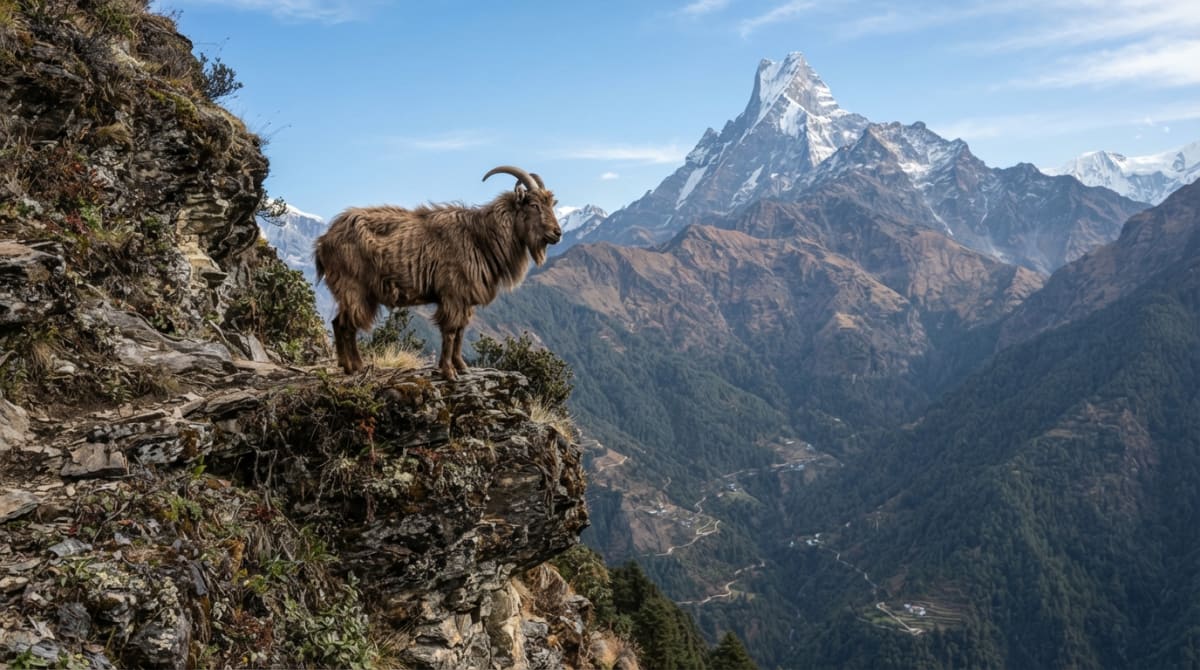
The Annapurna Circuit in Brief
The Annapurna Circuit traditionally begins in the Marsyangdi valley east of the Annapurna massif and climbs north through terraced farmland, waterfalls and pine forest into the high, dry landscapes around Manang, where Tibetan-influenced villages, monasteries and views of Annapurna II, Annapurna III and Gangapurna dominate. After acclimatization days around Manang, trekkers cross the Thorong La pass at around 5,416 meters, one of the highest trekking passes in the world, and descend to Muktinath, an important pilgrimage site for both Hindus and Buddhists. The route then continues down the Kali Gandaki valley, one of the deepest gorges on earth, between Dhaulagiri and the Annapurnas, through Jomsom and on toward Pokhara.
Road construction has changed parts of the Circuit, and many trekkers now drive sections of the lower valleys or use alternative walking trails. Even so, the heart of the trek, from the upper Marsyangdi over Thorong La, remains one of the great mountain journeys.
The Acclimatization Advantage
After crossing Thorong La, your body is well adapted to altitude. By the time you reach Pokhara and start Mardi Himal, sleeping at High Camp's 3,580 meters and visiting Base Camp at around 4,500 meters will feel far easier than for trekkers arriving straight from sea level. This means you can safely follow a faster Mardi Himal itinerary if you wish, such as the 3-day Short Mardi Himal Trek, or enjoy the standard pace with plenty of energy to spare. The steep climbs will also feel easier thanks to the fitness gained on the Circuit.
Getting from the Circuit to Pokhara
From Muktinath or Jomsom, you have several options for reaching Pokhara. Jeeps and buses travel down the Kali Gandaki valley via Beni, a long and bumpy but scenic journey. Some trekkers walk parts of the lower valley or detour to Poon Hill via Tatopani and Ghorepani before reaching Pokhara. Flights between Jomsom and Pokhara are short and spectacular, flying between Dhaulagiri and the Annapurnas, though they are weather-dependent and usually operate in the mornings. Your agency can arrange the best option for your schedule.
A Rest Day in Pokhara
After two weeks or more on the Circuit, a rest day in Pokhara before Mardi Himal is well earned. Use it to do laundry, restock snacks, replace worn gear and enjoy lakeside restaurants. Your legs will recover quickly, and you will start Mardi Himal refreshed. If you are feeling strong and short on time, you can start Mardi Himal the day after arriving in Pokhara. See things to do in Pokhara.
Mardi Himal as a Finale
Mardi Himal makes a perfect last chapter. After the vast, arid landscapes around Thorong La and the deep Kali Gandaki gorge, the green rhododendron forest and the open ridge facing Machapuchare feel fresh and intimate. You finish your journey with a sunrise at Base Camp, looking at peaks you circled on the Circuit from a completely new angle. Descending to Siding and returning to Pokhara, you complete a grand tour of the Annapurna region. See the Mardi Himal itinerary and the 9-day Mardi Himal Trek for standard trekking patterns.
Why Not Do Mardi Himal First?
Some trekkers consider doing Mardi Himal first as a warm-up for the Circuit. This can work, giving you a taste of altitude and trekking conditions before the longer journey. However, you then need to return to Pokhara and travel to the Circuit's start in the east, adding travel days. And the acclimatization benefit is modest, since you still need to ascend gradually to Thorong La. Doing the Circuit first and finishing with Mardi Himal is usually more efficient, because the Circuit naturally ends near Pokhara, and you arrive at Mardi Himal already acclimatized. See Mardi Himal as a warm-up for bigger treks.
Highlights of the Combined Journey
A combined trek offers an extraordinary sequence of experiences. On the Circuit, you watch the landscape change from rice terraces and waterfalls to pine forests and barren high desert. You visit monasteries around Manang, cross the snowy Thorong La at dawn, and descend to the sacred temples of Muktinath. In the Kali Gandaki valley, you walk or drive between two 8,000-meter peaks, Dhaulagiri and Annapurna I. Then, on Mardi Himal, you climb through rhododendron forest to a ridge facing Machapuchare and watch a final sunrise from Base Camp. Few treks anywhere offer such variety in a single journey.
Cultural Contrasts
The combined route passes through many communities. In the lower Marsyangdi valley, villages are home to several ethnic groups. Around Manang and in the upper Kali Gandaki, Tibetan Buddhist culture is strong, with prayer wheels, chortens and monasteries. In the Mustang district around Jomsom and Marpha, Thakali culture is famous for its hospitality and cuisine, including the Thakali thali and local apple products. On Mardi Himal and around Pokhara, Gurung villages and traditions predominate. See Thakali food and Gurung culture.
Budgeting for the Combined Trek
A combined trek of three to four weeks involves significant costs: guide and porter wages for the full duration, tea house accommodation and meals, transport to the Circuit's start and from the Kali Gandaki to Pokhara, possible flights from Jomsom, and extras on the trail. Lodge prices rise in the high sections of the Circuit, around Manang and Thorong Phedi. Because both treks share the same permits, you save on permit fees compared with separate treks. See our cost guide.
Permits
Both the Annapurna Circuit and Mardi Himal lie inside the Annapurna Conservation Area, so one ACAP permit and one TIMS card can cover both treks if your application lists the complete route and dates. Tell your agency your full plans before permits are issued. A licensed guide is required for foreign trekkers. See Mardi Himal permits.
Best Season
The combined trek is best done from October to November and from March to April. In these months, Thorong La is usually passable, the weather is relatively stable, and Mardi Himal offers clear mornings. In winter, heavy snow can close Thorong La for days or longer, and Mardi Himal's upper ridge can be icy. In the monsoon, the lower Circuit is wet and landslide-prone, although the upper valleys around Manang lie partly in a rain shadow. See the best time for the trek.
Thorong La: Know Before You Go
Crossing Thorong La is the most demanding part of the combined trek. Most trekkers start from Thorong Phedi or High Camp in the early hours, climbing in the dark and cold to reach the pass in the morning before winds strengthen, then descending a long way to Muktinath. Altitude sickness is a real risk, so the acclimatization days around Manang are essential. Snow can make the pass dangerous or impassable, especially from December to March, and guides monitor conditions closely. Once you have crossed, Mardi Himal's altitudes will feel comfortable by comparison.
Lodges Along the Way
The Annapurna Circuit has one of the most developed lodge networks in Nepal, with comfortable tea houses in villages such as Chame, Pisang, Manang and Muktinath, many offering hot showers, Wi-Fi, bakeries and varied menus. At Thorong Phedi and High Camp, below the pass, lodges are basic and busy. In the Kali Gandaki valley, Marpha and Jomsom have comfortable lodges and famous apple products. On Mardi Himal, lodges are simpler, especially above Low Camp. The contrast between the busy, well-equipped Circuit villages and Mardi Himal's quiet ridge camps adds variety to the journey. See our Mardi Himal tea house guide.
Trekking Fitness Over Four Weeks
A month of trekking builds impressive fitness. By the time you finish the Circuit, your legs and lungs will be stronger than when you started, and the climbs of Mardi Himal will feel much easier. Still, prepare well before the trip with long hikes, stair training and back-to-back walking days, so the early days of the Circuit are enjoyable rather than exhausting. Look after your knees on the long descents, particularly from Thorong La to Muktinath and from the Mardi Himal ridge to Siding. See our fitness guide.
The Joy of Finishing High
Many trekkers say that finishing a long Circuit with Mardi Himal gave their journey a perfect ending. Instead of the trip fading out with a long drive, it closes with a final climb, a cold, starry night at High Camp and a sunrise over Machapuchare, before a satisfying walk down to Siding and a well-earned celebration in Pokhara.
Shorter Alternatives
If a month is too long, there are shorter ways to combine a high pass or long route with Mardi Himal. You could drive to Manang, trek over Thorong La to Muktinath, and then continue to Pokhara and Mardi Himal, cutting days from the lower Circuit. Or you could skip the Circuit and combine Mardi Himal with Poon Hill or Annapurna Base Camp for a two-week Annapurna experience. Your agency can help you choose based on your time, fitness and interests. See Mardi Himal and Poon Hill and Mardi Himal vs the Annapurna Circuit.
Tips for the Combined Journey
- Take acclimatization days seriously. Rest days around Manang are essential before Thorong La.
- Keep a rest day in Pokhara. Recover before starting Mardi Himal.
- Adjust your Mardi Himal pace. Acclimatized trekkers can go faster, but enjoy the views.
- Carry plenty of cash. ATMs are limited on the Circuit and absent on Mardi Himal.
- Plan for flight delays. Jomsom flights are weather-dependent.
- Look after your feet. Weeks of walking magnify small problems.
Packing for a Month
For three to four weeks of trekking, pack for extremes: cold nights and a freezing pass crossing on the Circuit, and warm, humid lower valleys. A good sleeping bag, a warm down jacket, layers, a waterproof shell, broken-in boots and trekking poles are essential. Bring enough blister care and a comprehensive first aid kit. Laundry is available in larger villages and in Pokhara. See our packing list.
Who This Combination Suits
This combination suits experienced or very fit trekkers with a month to spare who want the full Annapurna experience. It is ideal for those who want to cross a high pass and then enjoy a shorter, scenic finale. It is less suitable for beginners or travellers with limited time.
Book a Combined Trek
We can arrange the 5-day Mardi Himal Trek from Pokhara to follow your Annapurna Circuit, or a fully guided combined journey. Contact us to plan.