

Trekking in the Himalaya with your children can be one of the most rewarding family experiences imaginable. Shared sunsets over Machapuchare, evenings playing cards by the tea house stove, spotting monkeys in the forest and the pride of reaching High Camp together create memories that last a lifetime. The Mardi Himal Trek, with its short distances, closely spaced lodges and easy access from Pokhara, is one of the best treks in Nepal for families, as long as the itinerary is designed with children in mind.
This guide sets out a family-friendly itinerary and practical advice for trekking Mardi Himal with children. For a broader family guide, including age suitability and health, see Mardi Himal with kids. Family treks are usually arranged privately by adapting our 9-day Mardi Himal Trek.
Principles of a Family Itinerary
A good family itinerary on Mardi Himal follows a few principles. Walking days should be short, typically two to four hours, so children arrive at each lodge with energy for play and exploration. Altitude should be gained gradually, with nights at several intermediate stops before High Camp. There should be at least one spare day for rest, illness or weather. The high point should be flexible, with the Upper View Point or High Camp as acceptable goals. And there should be plenty of time for fun: games, birdwatching, short walks and simply enjoying the lodges.
A Sample 8-Day Family Itinerary from Pokhara
| Day | Route | Overnight | Walking |
|---|---|---|---|
| 1 | Drive to Kande, walk to Australian Camp | Australian Camp | 1–1.5 hours |
| 2 | Australian Camp to Pitam Deurali | Pitam Deurali | 2 hours |
| 3 | Pitam Deurali to Forest Camp | Forest Camp | 4–5 hours with breaks |
| 4 | Forest Camp to Low Camp | Low Camp | 2–3 hours |
| 5 | Low Camp to High Camp via Badal Danda | High Camp | 3–4 hours |
| 6 | Sunrise at the Upper View Point (or Base Camp for older children), descend to Low Camp | Low Camp | 5–7 hours |
| 7 | Spare day, or descend to Siding | Low Camp or Siding | 0–5 hours |
| 8 | Descend to Siding, drive to Pokhara | Pokhara | 4–5 hours plus drive |
The longest walking day is the forest section to Forest Camp; break it with plenty of rest stops and snacks. Adjust the plan to your children's age and energy.
The High Point: Viewpoint or Base Camp?
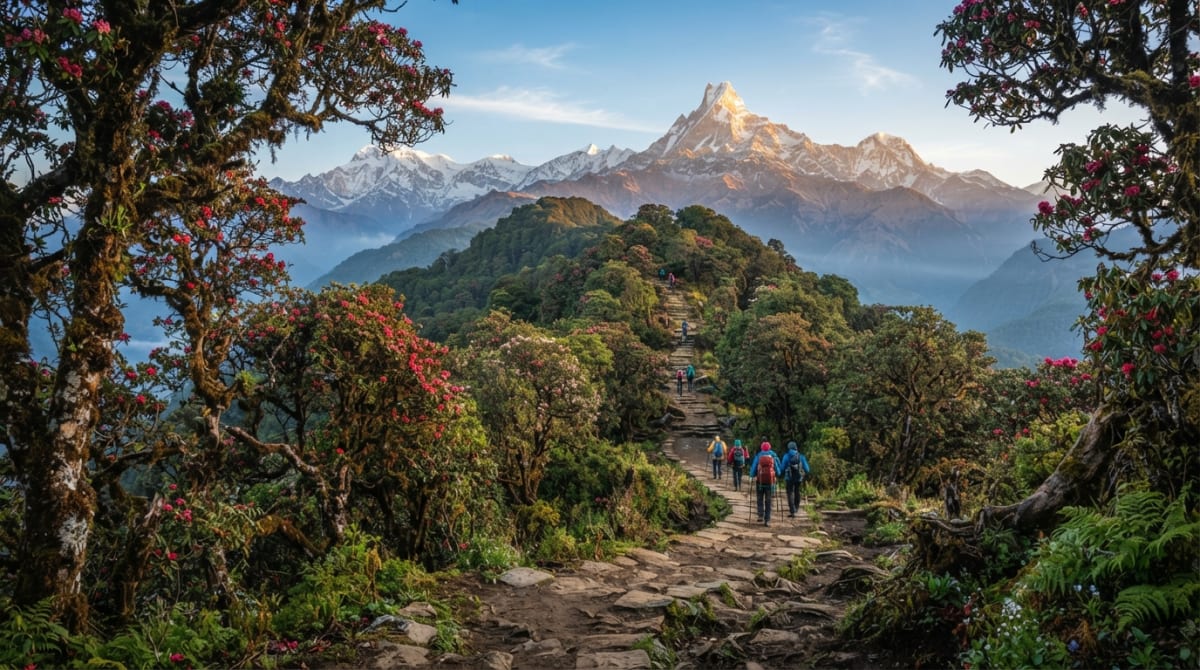
The pre-dawn hike from High Camp is demanding: it starts in the dark and cold, climbs steeply at high altitude and involves a long day overall. For younger children or those who are tired or feeling the altitude, watching sunrise from High Camp or walking to the Upper View Point at around 4,200 meters is more than enough; the view is spectacular. Older, fit children who feel well may continue to Base Camp at around 4,500 meters. Decide on the morning, based on how everyone feels and the weather. See Upper View Point vs Base Camp.
Altitude and Children
Children can get altitude sickness just like adults, but they may not recognise or describe symptoms. Watch for changes in behaviour: unusual irritability, loss of appetite, tiredness, poor sleep, headache or vomiting. A slow itinerary, good hydration and early descent if symptoms appear are the keys to safety. Speak to your doctor before the trip, especially for younger children or those with health conditions. See our altitude sickness guide.
Keeping Children Happy on the Trail
Happy children make happy family treks. Give them small roles, such as navigating with the map or counting prayer flags. Bring favourite snacks and treats from Pokhara. Play spotting games for birds, monkeys and animals. Let them carry a small daypack with their own water and snacks. Build in plenty of breaks and praise their progress. In the evenings, cards, books and games in the dining room keep everyone entertained. See Mardi Himal with kids.
Why Mardi Himal Works for Families
Several features make Mardi Himal particularly family-friendly. The trailhead is only an hour from Pokhara, so there are no long, tiring journeys to reach the start. Tea houses are spaced closely along the route, allowing short walking days and flexible stops. The trek is short overall, so children do not face weeks of walking. The scenery changes quickly, from villages to forest to open ridge, which keeps children interested. And Pokhara, at the start and finish, is a relaxed, family-friendly city with lakeside walks, boating and good food.
Compared with longer treks such as Annapurna Base Camp or Everest Base Camp, Mardi Himal is far more manageable for families, while still offering the thrill of high mountains and a genuine sense of achievement.
Preparing Children Before the Trip
Preparation helps children enjoy the trek. In the months before, take them on regular hikes, gradually increasing the length and including hills and stairs. Let them wear their trekking boots on these walks so they are comfortable. Talk to them about what the trek will be like: simple lodges, cold nights, early mornings and basic toilets. Show them photos and maps of the route, and read about Nepal together. Involving children in planning builds excitement and helps them cope with challenges on the trail.
Food for Children on the Trail
Tea house menus include plenty of child-friendly options, such as pasta, fried rice, noodles, potatoes, pancakes, eggs, bread and soup, as well as Nepali dal bhat. Bring favourite snacks from Pokhara, such as biscuits, chocolate and dried fruit, to keep energy up between meals and to use as treats. Make sure children drink plenty of water, which is essential at altitude; flavoured electrolyte drinks can help reluctant drinkers. Be careful with food hygiene: wash hands before meals and choose freshly cooked hot food. See the tea house menu guide.
Packing for Children
Children need the same layering system as adults: base layers, a fleece, a warm down jacket, a waterproof shell, warm hat, gloves and good socks. They lose heat faster than adults, so pack an extra warm layer. Well-fitted, broken-in boots are essential. A child-sized sleeping bag rated for cold nights, sunglasses, sunscreen, a small daypack and a headlamp complete the kit. Bring games, books and a small comfort item for evenings. See packing for kids on Mardi Himal.
Tea Houses with Children
Tea houses on Mardi Himal are simple but welcoming, and lodge families often enjoy having children visit. Rooms are basic twin rooms, so families may need two rooms or share with extra blankets. Toilets are shared and sometimes squat-style, which children may need help with. Evenings in the warm dining room are a highlight, with games, conversation and meeting other trekkers. In busy seasons, book rooms in advance so you are not searching for space with tired children. See our tea house guide.
Safety on the Ridge
The ridge above Low Camp is exposed, with steep drops on both sides. In good weather, the path is wide enough for safe walking, but children should stay close to an adult and never run on the ridge. In fog or wind, keep children especially close. On the pre-dawn hike, hold hands on steep or icy sections. Avoid the ridge entirely in bad weather. See our safety guide.
A Family Health Kit
Bring a first aid kit tailored to your family: plasters, blister dressings, antiseptic, child-appropriate painkillers and fever medication, rehydration salts, any prescribed medication, and remedies for minor stomach upsets as advised by your doctor. Carry a thermometer and know the signs of altitude sickness and dehydration in children. Travel insurance covering trekking to 4,500 meters and helicopter evacuation is essential for every family member. See our first aid kit guide.
Best Season for Families
Autumn and spring are the best seasons for family treks. Autumn offers clear views and dry trails, while spring brings flowers and warmer temperatures, which children often find more comfortable. Many families trek during school holidays, so check for busy periods and book early. Winter is very cold at High Camp and brings ice, making it less suitable for children. The monsoon brings rain, mud and leeches, which few children enjoy. See the best time for the trek.
Guides and Porters for Families
A private guide who is experienced and patient with children makes a huge difference. Guides can adjust the pace, share stories, point out wildlife and keep an eye on everyone's wellbeing. Porters carry the heavy bags, leaving parents free to carry only daypacks and help the children. For families with young children, an extra porter or assistant guide can be helpful. See hiring a guide.
After the Trek: Family Fun in Pokhara
After the trek, Pokhara offers plenty of family-friendly activities. Rent a boat on Phewa Lake, walk to the World Peace Pagoda, visit the International Mountain Museum, explore caves such as Gupteshwor Mahadev, or simply enjoy ice cream by the lake. Older children may enjoy a tandem paragliding flight, subject to operator rules. See things to do in Pokhara.
Adapting the Plan for Different Ages
Every family is different, and the itinerary should reflect your children's ages and abilities. For children around eight to ten who are keen walkers, consider a shorter version that goes as far as Low Camp or Badal Danda, with sunrise views from there, rather than climbing to High Camp. For children aged ten to thirteen, the full itinerary to High Camp and the Upper View Point is often manageable with the slow pace described above. Teenagers who are fit and experienced may complete the full trek to Base Camp, sometimes at a faster pace than their parents. Whatever their age, watch for signs of fatigue and altitude sickness and be willing to adapt. See Mardi Himal for teenagers.
Turning the Trek into Learning
A family trek is an education in itself. Children can learn about mountains, glaciers and weather, identify birds and plants, practise Nepali greetings, and discover how people live in mountain villages. Keep a family trek journal where children draw and write about each day. Talk to your guide about Gurung culture, farming and festivals. Visit a village school or monastery if the opportunity arises, respectfully and through your guide. Many children come home from the trek with a new curiosity about the world. See Gurung culture on the trek and flora and fauna along the trail.
Budgeting for a Family Trek
A family trek costs more than a standard trek for a couple, because of the extra days, additional rooms and possibly an extra porter or assistant guide. Children pay the same permit fees as adults in most cases, although policies can vary, so check current rules. Meals and snacks add up with several hungry children. On the positive side, a private family trek means the whole itinerary is built around your needs, and many families say it was the best-value experience of their trip. See our guide to family trek costs.
What Families Remember
Ask families what they remember from Mardi Himal, and the answers are rarely about distances or altitude. Children remember spotting a troop of langur monkeys swinging through the forest, the dog that followed them from Low Camp to High Camp, the cards games by the stove, and the thrill of waking in the dark for sunrise. Parents remember watching their children grow in confidence each day, and the shared silence as the sun lit Machapuchare. These moments are what make a family trek so special.
Common Family Trek Mistakes
The most common mistake is planning too much walking each day. Children, especially younger ones, tire quickly and lose motivation on long days. Another is underestimating the cold at Low Camp and High Camp; bring warm layers and a proper sleeping bag for every child. Some parents push to reach Base Camp even when children are struggling, turning a highlight into a miserable experience. Others forget to build in rest days. A relaxed, flexible plan with short days and plenty of breaks is far more enjoyable for everyone.
Book a Family Trek
We design private family treks with experienced guides who are patient and good with children, porters to carry the load and an itinerary built around your family's pace. Start with the 9-day Mardi Himal Trek or the 5-day trek from Pokhara, and contact us to plan a family adventure.