

The classic Mardi Himal Trek runs in one direction. You start at Kande or Phedi, climb gradually through Australian Camp, Pitam Deurali and Forest Camp, follow the ridge up to Base Camp, and then drop steeply east to Siding. It is a proven loop, with a gentle ascent that helps acclimatization and a quick descent to the road at the end. But the loop can also be walked the other way round. Starting at Siding, you climb straight up the steep eastern flank of the ridge to Low Camp, continue to High Camp and Base Camp, and then descend at leisure through the forest to Pitam Deurali and out to Kande or Dhampus.
The reverse route has real advantages for some trekkers, and a significant drawback that everyone should understand before choosing it. This guide explains how it works, offers a sample itinerary, and helps you decide whether it suits you. For the standard route, see the day-by-day itinerary and the map and route guide.
Standard vs Reverse at a Glance
| Standard (Kande to Siding) | Reverse (Siding to Kande) | |
|---|---|---|
| Start | Kande or Phedi, paved highway | Siding, rough jeep road |
| Ascent profile | Gradual over 3–4 days | Steep: about 1,200 m on day one |
| Acclimatization | Good | Needs an extra night at Low Camp |
| Descent profile | Steep: Low Camp to Siding | Gradual via Forest Camp and Deurali |
| Finish | Siding, then a rough road | Kande or Dhampus, paved highway |
| Crowds on day one | Busier around Australian Camp | Quiet forest trail |
| Best for | Most trekkers | Fit trekkers with a flexible schedule |
How the Reverse Route Works
The reverse route begins with a drive from Pokhara to Siding on the rural road via Lumre, usually two to three hours, depending on conditions. From Siding, at around 1,750 meters, a steep trail climbs west through farmland, bamboo and rhododendron forest to Low Camp at about 2,970 meters, joining the Mardi Himal ridge. From Low Camp, you follow the standard route up through Badal Danda to High Camp at 3,580 meters and make the pre-dawn summit hike to the Upper View Point and Base Camp. On the way down, instead of descending east to Siding, you follow the ridge south to Low Camp and continue down through Rest Camp and Forest Camp to Pitam Deurali, then out via Pothana and Australian Camp to Kande, or via Dhampus to Phedi.
Sample Reverse Itinerary
| Day | Route | Walking time | Overnight |
|---|---|---|---|
| 1 | Drive Pokhara to Siding; short walk in the village | 1 hour | Siding, about 1,750 m |
| 2 | Siding to Low Camp | 6–7 hours | Low Camp, about 2,970 m |
| 3 | Low Camp to Badal Danda or High Camp, or rest at Low Camp | 2–4 hours | Badal Danda or High Camp |
| 4 | Summit hike to Base Camp; descend to Low Camp | 7–9 hours | Low Camp |
| 5 | Low Camp to Forest Camp and Pitam Deurali | 5–6 hours | Pitam Deurali, about 2,100 m |
| 6 | Pitam Deurali to Kande via Australian Camp; drive to Pokhara | 3–4 hours | Pokhara |
This is a comfortable six-day version. Spending the first night in Siding means you start the big climb fresh rather than after a long drive. On day three, trekkers who feel strong can go to High Camp, while those who want more acclimatization can go only as far as Badal Danda. Faster versions exist, but they compress the ascent and increase the risk of altitude problems. See custom Mardi Himal itineraries.
The Big Climb: Siding to Low Camp
The defining feature of the reverse route is the climb from Siding to Low Camp. It gains about 1,200 meters in six to seven hours, most of it on steep forest trail, roots and stone steps. Starting from the farmland around Siding, the path climbs through terraced fields, then enters bamboo and mixed forest, and finally a beautiful old forest of rhododendron and oak draped in moss. There are few facilities on the way, perhaps a seasonal tea stall, so carry plenty of water and snacks. The gradient is relentless in places, and it is a demanding first full day, especially for trekkers who have just arrived in Nepal. See Low Camp to Siding for the same trail in the other direction.
The key is pace. Start early, walk slowly, rest often, and resist the temptation to push hard. Arriving at Low Camp tired but well is far better than arriving exhausted with a headache. See pacing on the Mardi Himal Trek.
The Acclimatization Challenge
The biggest drawback of the reverse route is altitude. On the standard route, you climb gradually from Kande to Pitam Deurali, Forest Camp and Low Camp over several days, which gives your body time to adjust. On the reverse route, you jump from around 1,750 meters to nearly 3,000 meters in a single day. That is a big step, and although Low Camp is not high enough to cause serious altitude illness for most people, it can bring headaches, poor sleep and loss of appetite.
The bigger risk comes if you continue straight to High Camp the next day and make the summit hike the day after. To reduce that risk, we recommend an extra night at Low Camp or at least a short day to Badal Danda before sleeping at High Camp, as in the sample itinerary above. Drink plenty of water, eat well, avoid alcohol, and tell your guide about any symptoms. See acclimatization on Mardi Himal and our altitude sickness guide.
Advantages of the Reverse Route
- A quiet start. The trail from Siding sees far fewer trekkers going uphill than the busy approach from Kande to Australian Camp.
- A gentler descent. Coming down via Forest Camp and Pitam Deurali is more gradual than the steep drop to Siding, which is kinder on the knees.
- Finishing on the paved highway. You end at Kande or Phedi, a short, smooth drive from Pokhara, rather than facing the rough Siding road when you are tired.
- Village life at the start. A night in Siding before the trek offers a glimpse of rural life and a peaceful start.
- Flexibility. The reverse route can be useful when road or trail conditions make the standard descent to Siding difficult.
Disadvantages of the Reverse Route
- Steep ascent early. Day two is one of the hardest days of the trek, coming before you have your trekking legs.
- Weaker acclimatization. A big gain in altitude on day two requires an extra night to manage safely.
- The rough road at the start. The drive to Siding is bumpy and can be affected by rain or landslides, which is less than ideal right after arriving in Pokhara.
- Retracing part of the ridge. Between Low Camp and High Camp, you walk the same section up and down, as on the standard route.
- Less common. Fewer groups use it, so lodge availability in peak season may need extra planning.
Who Should Consider the Reverse Route?
The reverse route suits fit, experienced trekkers who are comfortable with a big climb early in the trip and who have a flexible schedule that allows an extra night on the ridge. It also suits trekkers who want to avoid the steep descent to Siding, perhaps because of knee concerns, and who prefer to finish on a paved road. It is less suitable for complete beginners, families with young children, trekkers with a very limited number of days, and anyone who has struggled with altitude before. See Mardi Himal as your first high-altitude trek and trekking with knee problems.
Short Treks That Start from Siding
Some very short Mardi Himal treks start from Siding for speed rather than as a full reverse loop. They drive to Siding, climb to Low Camp or beyond, make the summit hike, and return to Siding, walking the steep eastern trail in both directions. This is the fastest way to reach Base Camp, but it combines the steepest ascent with the steepest descent and very limited acclimatization. It suits strong, fit trekkers who already have some altitude experience. Our 3-day Short Mardi Himal Trek is designed for trekkers in exactly that situation. See how hard the short trek is and can you do Mardi Himal in 2 days?
Lodges and Facilities on the Reverse Route
The reverse route uses the same lodges as the standard route, simply in a different order. Siding has a few simple lodges and homestay-style guesthouses. Low Camp, Badal Danda and High Camp have the tea houses that serve all Mardi Himal trekkers, with basic rooms and hearty food. On the way down, Rest Camp, Forest Camp and Pitam Deurali have well-established lodges, and there are more options at Pothana and Australian Camp. In peak season, High Camp in particular can fill up, so your guide will plan overnights carefully. See the tea house guide and booking tea houses in peak season.
Weather and Seasons
The reverse route can be walked in any season, but conditions on the Siding trail matter more when you are climbing it. In the monsoon, the steep, muddy forest and leeches make the ascent slow and tiring, and the Siding road is more likely to be affected by landslides, so the standard route is usually a better choice. In autumn and spring, conditions are good, and the quiet start is appealing. In winter, the lower trail is dry and pleasant, and the extra acclimatization night is doubly useful, since cold and altitude combine higher up. See the best time for the Mardi Himal Trek.
Descending via Forest Camp
The descent on the reverse route is one of its pleasures. From Low Camp, the trail follows the ridge down through Rest Camp and Forest Camp, through thick forest of rhododendron, oak and magnolia, then on to Pitam Deurali. It is longer than the Siding descent but more gradual, with a mix of downhill and level sections, and it passes lodges where you can stop for tea and lunch. The last morning, from Pitam Deurali through Pothana and Australian Camp, offers a final view of the mountains before the short descent to Kande. See Forest Camp, Pitam Deurali to Forest Camp and Australian Camp.
How the Views Change in Reverse
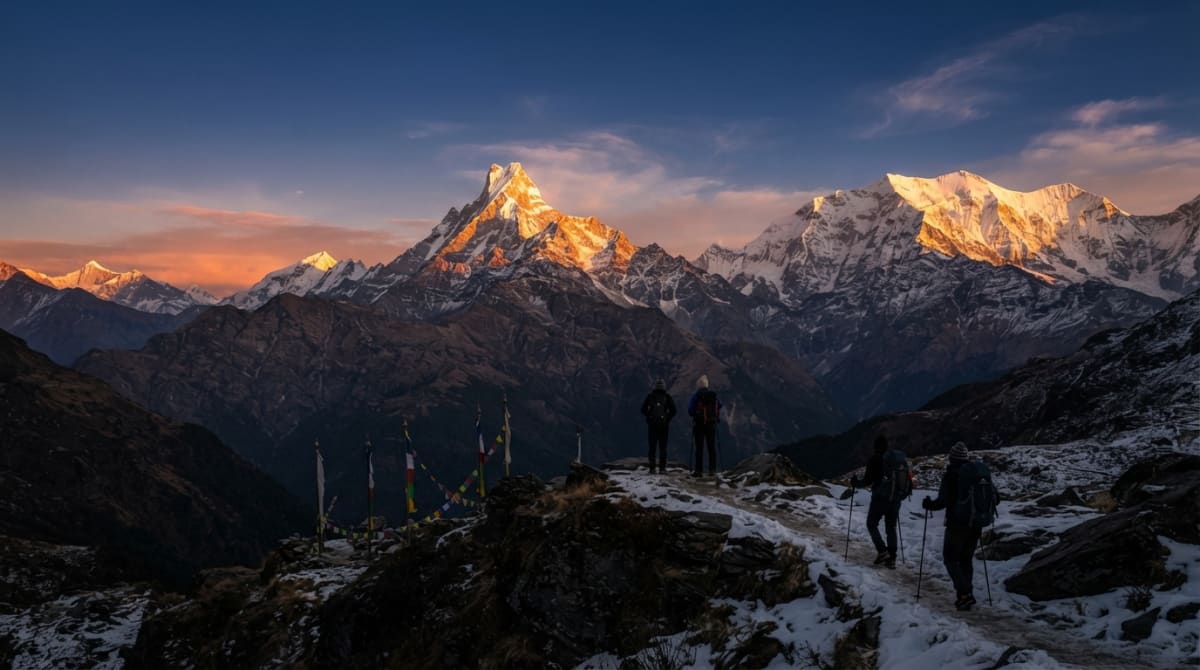
Walking the loop in reverse changes when and how you see the mountains. On the standard route, the peaks appear gradually: glimpses from Australian Camp on day one, then hidden in the forest for a day or two, and finally the dramatic reveal on the open ridge above Low Camp. On the reverse route, the forest hides the mountains for most of the climb from Siding, and then Machapuchare appears suddenly as you reach Low Camp at the end of the hardest day, a moment many trekkers find very rewarding. On the descent, the peaks are behind you along the ridge, so turn around often, and the final morning at Australian Camp gives a last, wide panorama of the range before you drop to the road. Photographers should note that the eastern trail from Siding faces morning shade, while the Forest Camp descent passes several good viewpoints in the afternoon light. See the mountains you see from Mardi Himal.
Safety Considerations
Because the reverse route front-loads the steepest climb and gains height quickly, safety planning matters. Your guide will watch closely for signs of altitude sickness from the first night at Low Camp onward, and will adjust the plan if needed, adding a rest day or descending if symptoms appear. The steep forest trail from Siding is also where slips and fatigue can occur, especially in wet conditions, so poles and good boots are essential. Make sure your travel insurance covers trekking to around 4,500 meters and helicopter evacuation, as it should for any Mardi Himal itinerary. See travel insurance for Mardi Himal and is Mardi Himal safe?
Tips for Trekking in Reverse
- Spend the first night in Siding to start the big climb fresh.
- Start early on the climb to Low Camp and walk very slowly.
- Carry at least two liters of water and plenty of snacks for the ascent.
- Plan an extra night at Low Camp or Badal Danda before High Camp.
- Use trekking poles, even on the ascent, to save your legs.
- Tell your guide early about any headache or nausea.
- Enjoy the gentle descent; it is a great way to end the trek.
Plan a Reverse Mardi Himal Trek with Us
If you would like to walk the Mardi Himal loop in reverse, tell us when you book, and we will build an itinerary with the right pacing and acclimatization. Our standard trips, like the 5-day Mardi Himal Trek from Pokhara and the 9-day trek from Kathmandu, follow the classic direction, but we can adapt them. Contact us to plan your route.