

Halfway up the long climb through the Mardi Himal forest, the trees suddenly open onto a small clearing with a handful of lodges. This is Forest Camp, sometimes called Kokar, a peaceful stop at around 2,600 meters surrounded on all sides by rhododendron, oak and moss-draped trees. There are no big mountain views here, but there is a quiet, sheltered atmosphere that many trekkers love, especially in spring, when the surrounding forest is in bloom. On longer itineraries, Forest Camp is where you spend your second night, splitting the forest climb into two comfortable days.
This guide explains what to expect at Forest Camp, including lodges, facilities, atmosphere and how it fits into different itineraries. For the walk here from Pitam Deurali, see Pitam Deurali to Forest Camp.
Where Forest Camp Is
Forest Camp sits in a clearing on the Mardi Himal ridge at around 2,600 meters, roughly four to five hours of walking above Pitam Deurali and two to three hours below Low Camp. It lies deep in the rhododendron and oak forest that covers the middle section of the trek, with the trail continuing north toward Rest Camp and Low Camp. Because of its sheltered position, it is calmer and often less windy than the open camps higher up. See the Mardi Himal route guide.
Lodges and Facilities
Forest Camp has a small cluster of lodges, fewer than Pitam Deurali or Low Camp. Rooms are simple twin rooms with beds, foam mattresses, pillows and blankets. Toilets are usually shared, in a separate block. Hot showers, heated by gas or solar, are generally available for a fee, as is charging for devices. Mobile signal is limited or absent in many spots, so do not count on it. Dining rooms are warm and friendly, with menus offering dal bhat, noodles, fried rice, soups, pasta and hot drinks. Because there are only a few lodges, guides often book ahead in busy seasons. See our tea house guide.
The Forest Setting
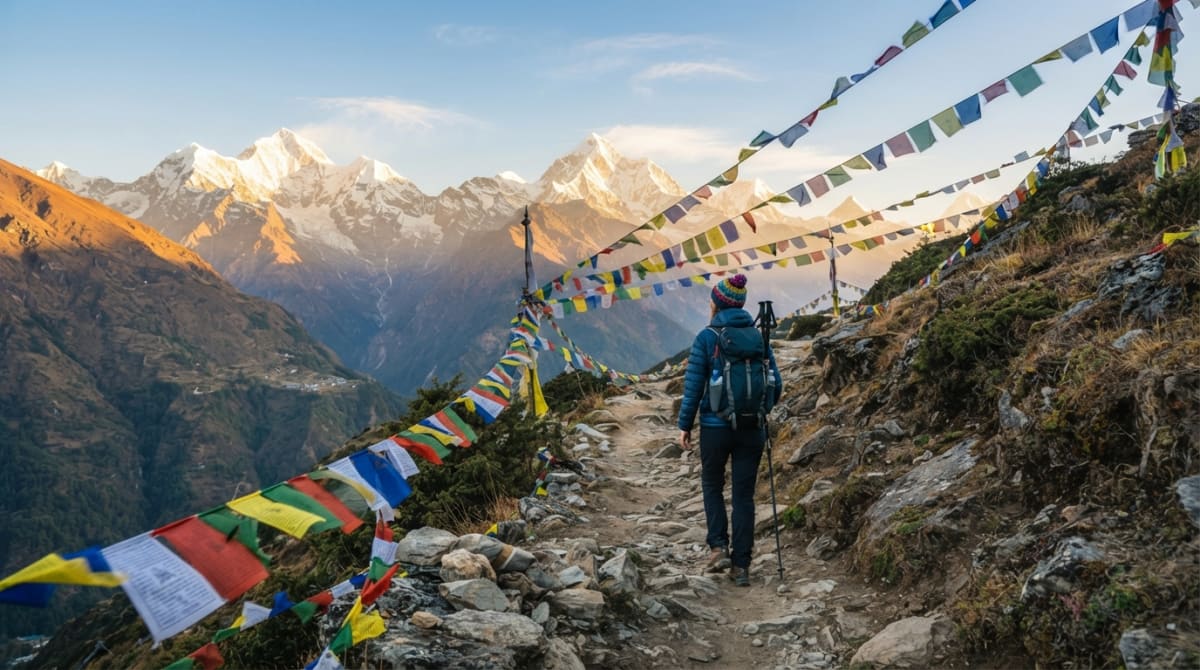
What makes Forest Camp special is its setting. The clearing is ringed by tall trees, their trunks covered in moss and ferns, and the forest floor is thick with leaf litter and undergrowth. In the morning, birdsong fills the air; in the late afternoon, mist often drifts through the trees, creating a hushed, almost magical atmosphere. In spring, rhododendrons bloom around the camp in shades of red and pink. For trekkers who love forests, a night here is one of the highlights of the trek. See the rhododendron forest section.
What to Do at Forest Camp
Afternoons at Forest Camp are relaxed. After lunch and a hot shower, you might take a short walk into the surrounding forest to look for birds, photograph moss-covered trees or simply enjoy the quiet. Birdwatchers can spot laughingthrushes, tits, warblers and pheasants. Read, write in your journal, or chat with fellow trekkers in the dining room. As evening falls, the temperature drops, and everyone gathers around the stove. Go to bed early; the next day climbs out of the forest to Low Camp and onto the ridge. See birdwatching on Mardi Himal.
Sleeping at Forest Camp
At around 2,600 meters, Forest Camp is a comfortable altitude for most trekkers, and nights are usually cool rather than freezing, except in winter. Sleeping here adds a useful step in acclimatization between Pitam Deurali and the higher camps, which often means a better night at High Camp later. Use your sleeping bag inside the lodge blankets, and bring earplugs, as walls can be thin. See our altitude sickness guide.
Forest Camp on Different Itineraries
On our 9-day Mardi Himal Trek and the 7-day direct-flight itinerary, Forest Camp is the second night's stop, splitting the forest climb and giving a gentler ascent. On the 5-day trek from Pokhara, you pass through Forest Camp around lunchtime on day two before continuing to Low Camp. On the 3-day short trek, it is a brief stop on the long first day. On slow and family itineraries, Forest Camp is an ideal overnight. See the 9-day itinerary.
Forest Camp Through the Seasons
In spring, Forest Camp is at its most beautiful, with rhododendrons blooming around the clearing and birds singing from dawn. Days are mild and evenings cool. In autumn, the forest is green and fresh after the monsoon, mornings are clear and crisp, and the camp is busy with trekkers. In winter, Forest Camp is quiet and cold, with frost in the mornings and sometimes snow on the surrounding trees after storms; the dining room stove becomes the heart of the lodge. In the monsoon, the forest is lush and misty, rain is frequent, and leeches are common on the trail approaching the camp. See the best time for the trek.
Food at Forest Camp
Lunch or dinner at Forest Camp is a welcome reward after the long forest climb. Dal bhat, with rice, lentils, vegetable curry and free refills, is the most filling option and a favourite with guides and porters. Noodle soups, fried rice, momos and pasta are quicker choices. Garlic soup and ginger tea are popular for warmth. Prices are higher than at Pitam Deurali, reflecting the effort needed to carry supplies up through the forest. Order breakfast the night before, especially if you plan an early start to reach Low Camp and High Camp. See the tea house menu guide.
Why Forest Camp Is Worth a Night
On shorter itineraries, Forest Camp is just a lunch stop, and that can feel like a missed opportunity. Spending the night here offers several benefits. It turns a long, sustained climb from Pitam Deurali to Low Camp into two comfortable days. It adds an intermediate sleeping altitude, helping your body adjust before the higher camps. It lets you experience the forest at its most atmospheric, in the evening mist and early morning light. And it is simply a peaceful place, away from the busier camps above and below. For many trekkers, especially beginners, families and older walkers, it makes the whole trek more enjoyable.
Photography at Forest Camp
Forest Camp is a paradise for forest photography. Early morning and late afternoon light filters through the trees, and mist often adds depth and mood. Look for moss-covered trunks, twisting branches, ferns and, in spring, rhododendron blossoms. The lodges themselves, with prayer flags and smoke rising from kitchen chimneys, make charming scenes. A wide-angle lens captures the sense of being surrounded by forest, while a close-focusing lens reveals the fine details of moss and flowers. See the photography guide.
Wildlife Around Forest Camp
The forest around the camp is home to many birds, including laughingthrushes, tits, warblers and the kalij pheasant. Langur monkeys sometimes move through the trees near the lodges, and barking deer can occasionally be heard in the evening. Walk quietly into the forest at dawn for the best chance of seeing wildlife. Keep food out of reach of monkeys, and never feed them. See flora and fauna along the trail.
Leaving Forest Camp
The next morning, the trail climbs steadily through the upper forest past Rest Camp to Low Camp, taking around two to three hours. As you climb, the trees become shorter and more wind-shaped, the moss thicker, and glimpses of Machapuchare begin to appear through gaps in the canopy. At Low Camp, the view opens dramatically. On the 9-day and 7-day itineraries, you continue beyond Low Camp along the open ridge to High Camp the same day. See Forest Camp to Low Camp and Low Camp to High Camp.
A Night at Forest Camp
Picture arriving at Forest Camp around midday after four hours in the forest. You drop your pack, order a plate of dal bhat and sit outside as the sun filters through the trees. After lunch, you take a hot shower and change into warm clothes. In the late afternoon, mist rises from the valleys and drifts between the trunks, and the clearing grows quiet. You take a short walk along the trail with your camera, then join other trekkers in the dining room as the stove is lit. Dinner is simple and filling, and the talk turns to tomorrow's climb onto the ridge. By nine, the camp is silent except for the drip of moisture from the trees. In the morning, birdsong wakes you, and you step outside into cool, fresh air, ready for the day ahead.
Forest Camp or Low Camp for Night Two?
A common planning question is whether to spend the second night at Forest Camp or push on to Low Camp. Forest Camp offers a shorter day two, a gentler altitude gain and a peaceful forest setting, but no mountain views and a longer day three to High Camp. Low Camp offers a sunset view of Machapuchare and a shorter climb to High Camp the next day, but a long day two of five to seven hours and a steeper altitude gain. Beginners, families and older trekkers often prefer Forest Camp; fit trekkers on tighter schedules usually choose Low Camp. See where to sleep on the ridge.
Acclimatization Value
Sleeping at around 2,600 meters at Forest Camp adds an important step between Pitam Deurali, at around 2,100 meters, and High Camp, at 3,580 meters. Mountain medicine advice favours gradual increases in sleeping altitude, and Forest Camp helps achieve that. Trekkers who stay here often feel better at High Camp, with fewer headaches and better sleep, than those who climb from Pitam Deurali to Low Camp in one day. See acclimatization on Mardi Himal.
Water and Hygiene
Lodges at Forest Camp provide boiled or filtered water for a fee, and water from taps or streams should be treated before drinking. Wash your hands with soap or use sanitiser before meals to avoid stomach upsets. Toilets are shared and sometimes squat-style, so carry toilet paper and a headlamp for night trips. Hot showers are welcome after the long climb, but keep them short, as water and fuel are limited. See safe drinking water on the trek.
Forest Camp for Families and Older Trekkers
Forest Camp is an ideal overnight stop for families and older trekkers. The shorter walking days on either side, the sheltered setting and the gentle altitude make it comfortable, and children often enjoy exploring the edge of the clearing and spotting birds and monkeys. For older trekkers, breaking the forest climb reduces strain and gives time to recover. Keep children within sight, as the forest around the camp is dense. See the family trek itinerary and Mardi Himal for seniors.
Walking Times from Forest Camp
From Forest Camp, Rest Camp is a short walk up the trail, and Low Camp is around two to three hours away. Badal Danda is about an hour beyond Low Camp, and High Camp two to three hours further along the ridge. Going down, Pitam Deurali is around three to four hours away. On the 9-day itinerary, the day from Forest Camp to High Camp takes five to six hours in total. See distance and duration explained.
Busy Seasons and Booking
With only a few lodges, Forest Camp can fill up in October, November and April, particularly on weekends and holidays. Guides usually reserve rooms in advance for their groups. If Forest Camp is full, Rest Camp, a short walk higher, offers a quieter alternative. See Rest Camp and booking tea houses in peak season.
Tips for Your Stay
- Shower in the afternoon, when solar-heated water is warmest.
- Charge devices when possible; power can be limited.
- Walk quietly into the forest at dawn for birds and soft light.
- Keep food away from monkeys.
- Prepare for a big day on the ridge tomorrow if you are continuing to High Camp.
Book a Trek with a Night at Forest Camp
Choose the 9-day Mardi Himal Trek for a night at Forest Camp, or ask us to add one to the 5-day trek from Pokhara. Contact us to plan.