

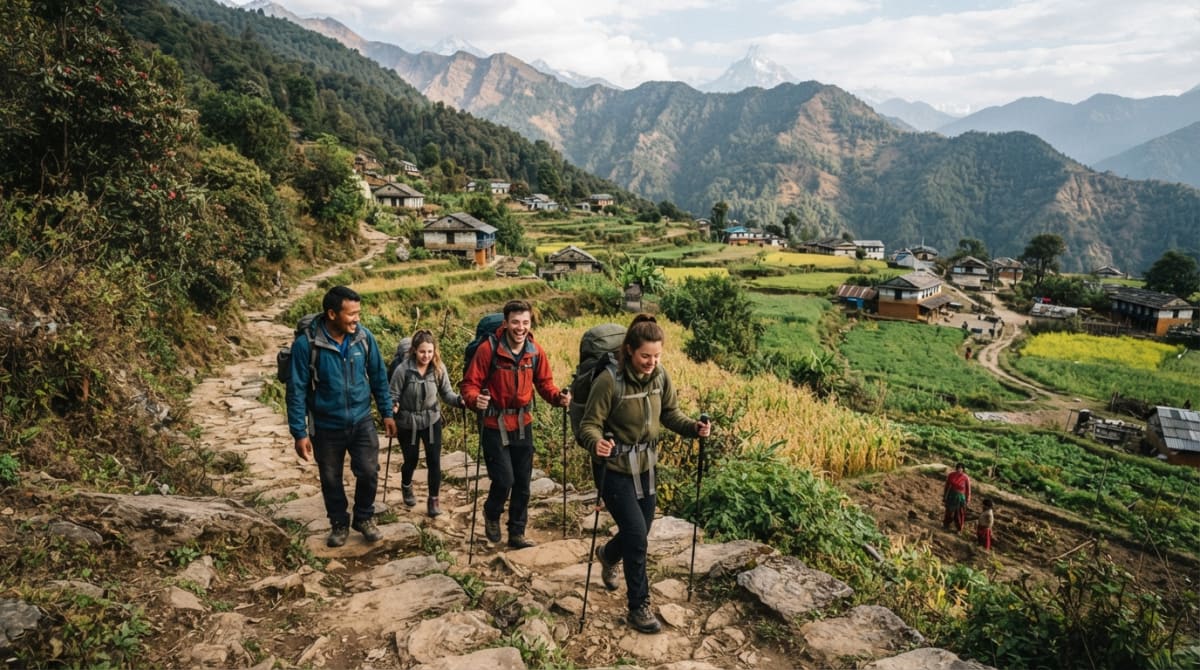
If you live in Nepal, the Himalaya are always on the horizon, but work and daily life can make them feel far away. Mardi Himal is the answer for many residents of Pokhara and Kathmandu: a trek short enough to fit into a long weekend, yet high enough to stand beneath Machapuchare at around 4,500 meters. Nepali students, office workers, teachers and expats all use holidays and long weekends to walk the ridge, and it has become one of the most popular domestic treks in the country.
This guide explains how to trek Mardi Himal in a weekend or long weekend, with a practical itinerary, transport options, permits and tips for making the most of limited time. For a fully supported version, see our 3-day Short Mardi Himal Trek.
The Three-Day Weekend Plan
| Day | Route | Overnight |
|---|---|---|
| 1 | Pokhara to Kande by road, trek to Low Camp | Low Camp |
| 2 | Low Camp to High Camp | High Camp |
| 3 | Base Camp at sunrise, descend to Siding, drive to Pokhara | Pokhara |
This is the same pattern as our 3-day Short Mardi Himal Trek. It works best for fit hikers comfortable with long days and fast altitude gain. See the 3-day itinerary for details of each day.
Starting from Kathmandu
If you live in Kathmandu, the challenge is getting to Pokhara quickly. The fastest option is a morning flight on the first day of your break, which gets you to Pokhara in time to drive to Kande and start walking, though the first day becomes very long. Alternatively, take an evening or night bus the day before, or leave work early and travel to Pokhara the evening before your trek. On the return, an evening flight or bus from Pokhara after descending from Siding gets you home, though delays are common. If you can, take one extra day off to make the trip less rushed. See Kathmandu to Pokhara by flight and by bus.
Permits and Guides for Residents
Permit rules depend on your nationality. Nepali citizens do not pay the foreigner ACAP fee but should carry citizenship or other identification and may need to register at checkpoints. Foreign residents, including expats working in Nepal, generally need the same ACAP permit and TIMS card as tourists, and must trek with a licensed guide under the rules introduced in 2023. SAARC nationals pay reduced fees. See permit rules for Nepali and SAARC trekkers and is a guide mandatory?
Is a Weekend Trek Safe for Altitude?
The weekend plan gains altitude quickly: from Pokhara at around 820 meters to Low Camp at nearly 3,000 meters on day one, and High Camp at 3,580 meters on day two. That is faster than standard acclimatization advice. Residents of Kathmandu, at around 1,400 meters, have a slight advantage over visitors from sea level, but anyone can be affected. Walk slowly, drink plenty of water, avoid alcohol on the trail, and turn around at the Upper View Point if you feel unwell. See our altitude sickness guide.
Why Mardi Himal Is Popular with Residents
For people living in Nepal, Mardi Himal hits a sweet spot. It is close to Pokhara, so there is no long journey to a remote trailhead. It is short enough to fit into a long weekend or public holiday. It reaches a genuinely high point with close-up views of Machapuchare, Mardi Himal and Annapurna South. And tea houses along the way mean you do not need to carry camping gear. For students and young professionals in Kathmandu and Pokhara, it has become something of a rite of passage, and many people walk it several times in different seasons.
The trek is also a great way for expats and long-term visitors to experience the high Himalaya without taking weeks off work. Many international schools, embassies and companies organise group trips to Mardi Himal for staff and families.
Choosing Your Weekend
Timing matters on a short trek. Long weekends and public holidays, especially around Dashain, Tihar and Nepali New Year, are the busiest times on the trail, as many residents travel at once. High Camp and Low Camp can fill up, and transport between Kathmandu and Pokhara becomes crowded. If you can, choose a weekend outside major holidays, or book lodges and transport early. Autumn weekends from October to November offer the best views; spring weekends bring rhododendrons; winter weekends are quiet but cold, with possible ice above High Camp. See the best time for the trek and trekking during Dashain and Tihar.
Packing Light for a Short Trek
On a three-day trek, you need very little. Pack a base layer, a fleece, a warm down jacket, a waterproof shell, warm hat and gloves, one change of socks and underwear, a headlamp, water bottles, sunscreen, sunglasses, a small first aid kit, toilet paper and your ID or permits. A sleeping bag makes cold nights at High Camp more comfortable, and you can rent one in Pokhara if you do not own one. Keep your pack under eight or nine kilograms to make the long first day easier. See our packing list for short treks.
Training on a Busy Schedule
Many residents trek Mardi Himal after weeks of office work, and the steep climbs can come as a shock. Even with a busy schedule, a few habits help. Take the stairs instead of lifts, walk or cycle to work where possible, and use weekends for short hikes around the Kathmandu Valley, such as Shivapuri, Nagarjun or Chandragiri, or around Pokhara, such as Sarangkot and the World Peace Pagoda. A few weeks of regular walking uphill makes the trek much more enjoyable. See our fitness guide.
Trekking with Friends and Colleagues
Group trips are a popular way to trek Mardi Himal, and they can be great fun. Agree on the pace in advance, as fitness levels often vary within a group, and plan for the slowest member. Share costs for transport and guides. Book lodges early, especially for larger groups. Assign someone to carry a first aid kit and keep emergency contacts. And make sure everyone understands the effects of altitude and the importance of turning back if they feel unwell. See planning Mardi Himal with a group of friends.
Being a Responsible Domestic Trekker
As Mardi Himal becomes more popular with domestic trekkers, its trails and lodges face more pressure. Carry out all your rubbish, including plastic bottles and wrappers, and avoid leaving litter at viewpoints. Keep noise down in the evenings and at sunrise, as many people come for the peace of the mountains; loud music on the trail and at camps disturbs others and wildlife. Respect lodge owners and staff, eat where you sleep, and treat porters and guides fairly. Small actions by thousands of trekkers make a big difference. See responsible trekking on Mardi Himal.
Costs for Residents
Costs for a weekend trek depend on your nationality, how you travel and whether you book a package. Nepali citizens pay lower permit costs than foreigners, and many domestic trekkers travel by local bus and share guides and rooms to keep costs down. Foreign residents pay the same permit fees as tourists and must hire a licensed guide, but can save by sharing transport and guides with friends. Lodge and meal prices are the same for everyone and rise with altitude. Budget for transport between Kathmandu and Pokhara, jeeps to Kande and from Siding, food and lodging, snacks, hot showers, charging and tips. See our cost guide and costs in Nepali rupees.
Tips for a Successful Weekend Trek
- Book lodges on holidays. High Camp fills quickly on long weekends.
- Start early on day one. The climb to Low Camp is long; leave Pokhara at dawn if you can.
- Pace yourself. Do not race the first day, even if you are fit; the altitude gain is significant.
- Carry enough cash. There are no ATMs on the trail.
- Keep plans flexible. If you feel unwell or the weather turns, be willing to turn around at the Upper View Point or shorten the trek.
- Plan your return. Allow time for road or flight delays if you need to be at work the next day.
Winter Weekends
Winter weekends on Mardi Himal can be beautiful, with clear skies and snow on the peaks, and the trail is quieter than in autumn. They also bring challenges: bitterly cold nights at High Camp, ice on the trail above High Camp, and shorter days that leave less margin on the long first and third days. If you trek in winter, carry microspikes, a warm sleeping bag and extra layers, and be prepared to turn back if the upper trail is icy. A four-day plan is safer in winter. See Mardi Himal in winter.
Transport Within Pokhara
If you are starting from Pokhara, getting to the trailhead is straightforward. Local buses toward Baglung leave from the Baglung bus park and pass Kande, which is cheap but slow and crowded, especially on holidays. Taxis from Lakeside to Kande take around an hour and are a good option for small groups sharing costs. At the end of the trek, jeeps from Siding back to Pokhara take two to three hours on a rough road; on busy weekends, shared jeeps may be available, but booking a private jeep in advance guarantees your return. See Pokhara to Kande transport and Siding to Pokhara jeeps.
Staying Safe on a Fast Trek
Fast itineraries leave less margin for error. Tell someone your plans and expected return. Stay with your guide or group, especially on the ridge in fog and on the pre-dawn hike. Carry a warm layer and headlamp every day, even if the morning is sunny. Do not push through worsening altitude symptoms to stay on schedule; descending is always the right choice. And avoid trekking after heavy snow in winter unless your guide confirms the upper trail is safe. Travel insurance covering trekking and helicopter evacuation is wise for residents as well as tourists. See our safety guide.
Coming Back Again
One advantage of living in Nepal is that you can return to Mardi Himal in different seasons. Many residents walk the ridge once in autumn for clear views, again in spring for rhododendrons, and perhaps in winter for snow-covered peaks. Each season gives the trek a different character, from golden autumn grasses to red forests and frosty winter dawns. If your first weekend trek is clouded out, there is always another holiday. See the month-by-month weather guide.
Food and Water on a Fast Trek
Long days need good fuel. Eat a solid breakfast before leaving Pokhara, carry snacks such as nuts, biscuits and chocolate bought in the city, and stop for a proper lunch around Forest Camp on day one. Drink three to four liters of water a day, refilling at lodges and treating it rather than buying plastic bottles.
Making the Most of a Short Break
A weekend on Mardi Himal is short, but it can feel like a real escape. Switch off your work phone, enjoy the forest on the first day, watch sunset at Low Camp and sunrise from the Upper View Point, and talk with lodge owners and other trekkers in the evenings. Many residents say a weekend in the mountains resets their perspective far more than a weekend in the city ever could. See Mardi Himal as a digital detox.
A Four-Day Alternative
If you can take one extra day off, a four-day plan is much more comfortable. It adds a night on the descent, so the Base Camp hike and the long drop to Siding are not combined into a single day. You sleep at Low Camp, High Camp and Low Camp again, and finish on day four with a relaxed descent to Siding. See the 4-day itinerary.
Book a Weekend Trek
Our 3-day Short Mardi Himal Trek is ideal for a long weekend, with transport from Pokhara, permits, a licensed guide, tea house accommodation and meals included. If you can take a fourth day, the 5-day trek from Pokhara can be shortened to four days for a gentler pace. Contact us to fit the trek around your holidays.