

If you ask trekkers which part of the Mardi Himal Trek they remember most vividly, many will name the walk from Low Camp to High Camp. After days in the forest, the trail climbs onto an open, grassy ridge that runs straight toward the mountains. Machapuchare rises ahead, Mardi Himal and Annapurna South come into view, and the land drops away steeply on both sides into deep valleys often filled with cloud. It is only three or four hours of walking, but every step feels like progress toward the heart of the Himalaya.
This guide explains what to expect on the ridge walk, from terrain and timing to views, weather, altitude and safety. On the 5-day Mardi Himal Trek from Pokhara, this is day three.
The Section at a Glance
| Detail | Information |
|---|---|
| Start | Low Camp, about 2,970 m |
| Via | Badal Danda, about 3,210 m |
| End | High Camp, 3,580 m |
| Walking time | 3–4 hours |
| Approximate distance | 4–5 km |
| Terrain | Open grassy ridge, narrow in places |
Leaving the Forest
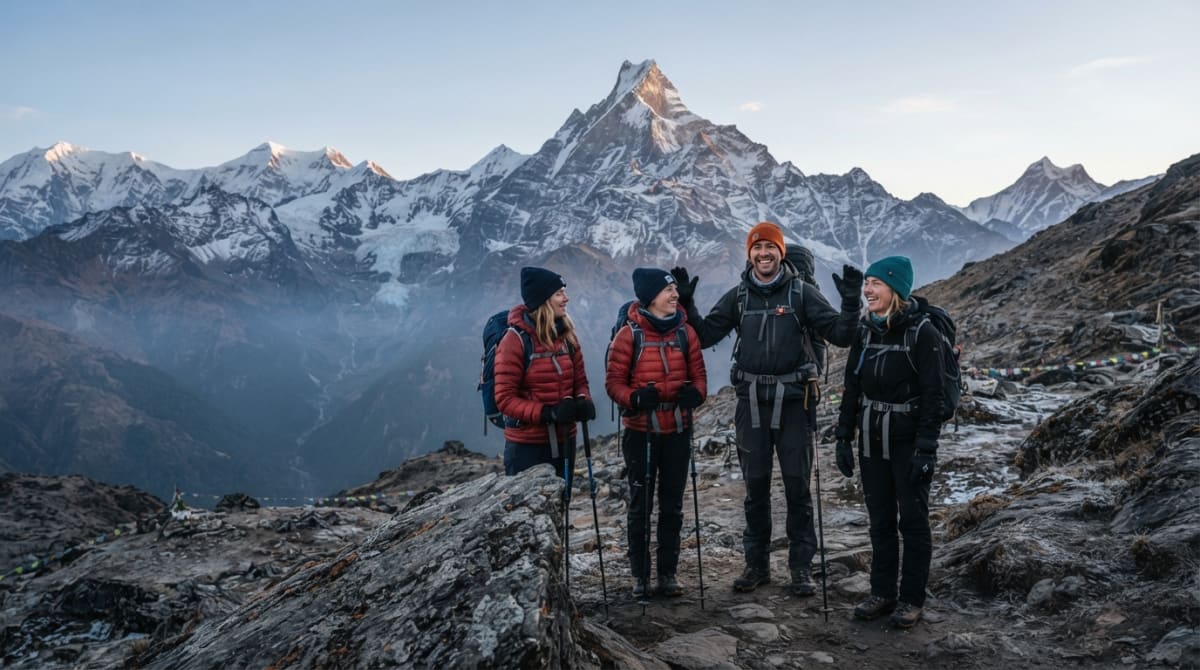
Just above Low Camp, the last of the trees give way to open grassland and dwarf rhododendron. The change is sudden and dramatic: the sky opens, the wind picks up, and the ridge stretches ahead toward the peaks. On a clear morning, the view is overwhelming, with Machapuchare's sharp summit directly ahead and the Annapurna South massif to the west. Take a moment to absorb it before starting the climb. See the Mardi Himal ridge.
Low Camp to Badal Danda
The first hour climbs steadily along the ridge to Badal Danda, a small lodge stop at around 3,210 meters. Its name means "cloud hill", and it often sits right at the level where clouds rise from the valleys. Badal Danda makes a good place for a tea break, and on some itineraries it is an overnight stop, either on the way up or after the Base Camp hike. See Badal Danda.
Badal Danda to High Camp
Beyond Badal Danda, the ridge narrows and climbs more steeply. The path winds along the crest, sometimes on the ridge top and sometimes just below it, with steep slopes on either side. In clear weather, it is wide and firm enough for comfortable walking, and the views grow more spectacular with every step. As you approach High Camp, the air feels noticeably thinner, and many trekkers slow down. After two to three hours from Badal Danda, the lodges of High Camp appear on a shoulder of the ridge beneath the peaks. See our High Camp guide.
Views Along the Ridge
The ridge walk offers some of the best continuous views on any short trek in Nepal. Machapuchare dominates the northern skyline, its shape changing as you climb: from Low Camp it looks like a sharp pyramid, while from higher on the ridge its twin-summited "fishtail" profile becomes more apparent. To its left, Mardi Himal rises steeply, and farther west, Annapurna South and Hiunchuli form a wall of snow and ice. Below the ridge to the west lies the deep Modi Khola valley, carrying the Annapurna Base Camp trail, while to the east the land falls toward the valleys draining to Pokhara. On clear days, you can see the forested hills and farmland stretching south toward the lowlands. See the mountains you see from the trek.
Weather and Wind
The ridge is exposed, so weather plays a big role. Mornings are usually the clearest, with calm air and sharp views. By late morning, clouds often rise from the valleys and drift across the ridge, sometimes reducing visibility to a few meters. Wind can be strong on the narrow sections, especially in the afternoon and in winter, making it feel much colder than the thermometer suggests. In spring, particularly May, afternoon thunderstorms can bring lightning risk to the open ridge. Starting early from Low Camp gives you the best chance of good conditions. See weather safety on the ridge.
Safety on the Exposed Ridge
In normal conditions, the ridge path is clear and wide enough for safe walking, but it deserves respect. Stay on the trail, especially where the ridge narrows, and do not step off toward the edges for photos. In fog, stay close to your guide, as the path and the drop-offs can be hard to see. In strong wind, lower your centre of gravity and use trekking poles for balance. In winter, snow and ice can cover sections between Badal Danda and High Camp, requiring microspikes and extra care. If a thunderstorm approaches, descend from the highest points and seek shelter. Your guide will decide when conditions are unsafe to continue. See trekking safely in fog.
Altitude and Pacing
This section climbs from nearly 3,000 meters to 3,580 meters, and you will likely feel the thinner air, especially on the steeper stretch below High Camp. Walk slowly and steadily, breathe deeply, and take short rests. Drink plenty of water, as the wind and exertion dehydrate you. A mild headache on arrival at High Camp is common; rest, drink and tell your guide. If symptoms are more severe, descending to Badal Danda or Low Camp brings quick relief. See our altitude sickness guide.
The Ridge Through the Seasons
In autumn, the ridge is dry and golden with grasses, and clear mornings make for spectacular walking. In winter, it can be frozen and windy, with snow possible on the upper part, but views are often crystal clear. In spring, shrub rhododendrons bloom on the slopes, and wildflowers appear, though clouds build earlier in the day. In the monsoon, the ridge is often in cloud, with wet grass and occasional glimpses of the peaks through the mist. See the best time for the trek.
Wildlife on the Ridge
The open ridge is a good place to watch for birds of prey. Himalayan griffon vultures often soar along the ridge on thermals, sometimes passing at eye level, and eagles and kestrels are also seen. In the early morning, look for the Himalayan monal on the slopes near the treeline. Herds of Himalayan tahr sometimes graze on steep grassy slopes, especially higher up toward Base Camp; binoculars help. See birds of prey over Mardi Himal.
Hour by Hour
A typical ridge day begins with breakfast at Low Camp around 7 a.m. and a start by 8. Within minutes, you leave the last trees behind and step onto the open ridge, with the peaks ahead. The first hour climbs steadily to Badal Danda, where most groups stop for tea. From Badal Danda, the ridge narrows and steepens, and the pace slows as the altitude increases. You stop frequently, partly to rest and partly because the views demand it. By late morning or around midday, you reach High Camp, where you have the afternoon to rest, acclimatize and prepare for the pre-dawn hike to Base Camp.
On Different Itineraries
On the 5-day trek from Pokhara, this section is the whole of day three, a relatively short day that gives time to acclimatize at High Camp. On the 9-day and 7-day treks, it is the second half of a long day from Forest Camp, following the climb through the cloud forest to Low Camp. On the 3-day short trek, it is day two, after a long first day to Low Camp. On slow itineraries, it may be split, with a night at Badal Danda. See the 5-day itinerary and the 9-day itinerary.
What to Wear on the Ridge
The ridge is exposed to sun and wind, so layers matter. On a calm, sunny morning, a base layer and light fleece may be enough while climbing. When the wind picks up or cloud arrives, add a windproof shell, warm hat and gloves. Sun protection is essential at this altitude: wear sunglasses, a hat and sunscreen, and cover your neck with a buff. In winter, start with more layers and carry microspikes. See what to wear on the trek.
Food and Water
Badal Danda is the only lodge stop between Low Camp and High Camp, so plan to refill water and have tea there. Carry at least a liter of water and some snacks. Most trekkers eat lunch on arrival at High Camp. The wind and altitude make you lose fluids faster than you realise, so drink regularly even if you do not feel thirsty. See hydration on the trek.
Photography on the Ridge
The ridge offers endless compositions. Use the winding trail as a leading line toward Machapuchare, include fellow trekkers for scale against the vast backdrop, and shoot from slightly above or below the path to show the steep drops on either side. Morning light is best for clear, sharp images, while afternoon clouds can create dramatic moods. A telephoto lens compresses the layers of ridges and peaks. See how to photograph Machapuchare.
If You Are Nervous About Heights
Some trekkers worry about the exposure on the ridge. In good weather, the path is broad enough that most people with a mild fear of heights manage comfortably, especially if they focus on the trail ahead rather than the drop. Walk on the inside of the path, use trekking poles, and ask your guide to walk just in front of you. Avoid stopping on the narrowest parts. See Mardi Himal for people afraid of heights.
Walking the Ridge Down
After the Base Camp hike, you walk this section in reverse, descending from High Camp past Badal Danda toward Low Camp. Descending is faster, typically two hours or less, but the steep sections below High Camp require care, especially when frozen early in the day or muddy later. The views are just as spectacular in the other direction, with the ridge stretching south toward Pokhara. See coming down from Base Camp.
The Ridge for Families and Older Trekkers
For families with children and older trekkers, the ridge is both the most exciting and the most demanding section before the summit hike. The views keep spirits high, but the altitude and exposure require care. Keep children close, especially on narrow sections, and walk at a gentle pace with frequent stops. Consider breaking the climb with a night at Badal Danda, which reduces both the walking time and the altitude gain in a single day. See the family trek itinerary and Mardi Himal for seniors.
Arriving at High Camp
High Camp appears as a small cluster of lodges on a shoulder of the ridge, with Machapuchare and Mardi Himal towering above. After checking into your lodge, eat lunch and rest. In the afternoon, a short, slow walk a little higher up the ridge helps acclimatization, then return to rest. Prepare your warm clothes, headlamp, water and snacks for the pre-dawn hike, and go to bed early. See the night before summit day and the High Camp to Base Camp guide.
Why This Section Is So Special
Many treks spend days in valleys before reaching open views, but on Mardi Himal, the ridge walk delivers wide panoramas for hours at a time, with the mountains growing closer with each step. The combination of the narrow ridge, the deep valleys on either side, the sea of clouds below and the peaks ahead creates a sense of walking in the sky. It is this section, as much as the Base Camp sunrise, that has made the Mardi Himal Trek so popular.
Common Mistakes
Frequent mistakes on the ridge include starting too late and walking into afternoon cloud, overheating in too many layers on the climb then chilling at rest stops, forgetting sun protection, and rushing the steep final section and arriving at High Camp exhausted. In bad weather, pushing on when your guide suggests waiting is a serious error. Start early, pace yourself and enjoy the views.
Walk the Ridge with Us
The ridge walk is part of every Mardi Himal itinerary. See the 5-day trek from Pokhara or the 9-day trek, and contact us to book.