

When you walk the Mardi Himal Trek, every step from the trailhead to Base Camp is inside the Annapurna Conservation Area, Nepal's largest protected area. You will pay for a permit to enter it, show that permit at checkpoints, and see its signboards along the trail. But many trekkers know little about what the conservation area actually is, how it works, or why it matters. Understanding it makes the trek more meaningful, helps you follow the rules, and shows how your visit supports the forests, wildlife and communities you pass through. For permit details, see the ACAP permit and Mardi Himal permits.
The Conservation Area at a Glance
| Fact | Detail |
|---|---|
| Established | Project launched in 1986 |
| Area | About 7,600 square kilometers |
| Status | Nepal's largest protected area |
| Managed by | A national conservation trust, working with local communities |
| Key features | Annapurna massif, Annapurna Sanctuary, Kali Gandaki gorge, forests, villages |
| Popular treks | Mardi Himal, Annapurna Base Camp, Poon Hill, Annapurna Circuit, Khopra Danda |
| Permit | ACAP entry permit required for all trekkers |
A Brief History
By the early 1980s, the Annapurna region had become one of the world's most popular trekking destinations, and the growth of tourism was putting pressure on its forests and communities. Lodges burned large amounts of firewood for cooking and heating, forests were being cleared, rubbish was accumulating along trails, and local people were seeing few benefits from the tourists passing through their villages. In response, the Annapurna Conservation Area Project, known as ACAP, was launched in 1986.
ACAP took a new approach. Rather than creating a national park that excluded local people, it treated the villages and their residents as partners in conservation. The idea was that people who live in the area and benefit from tourism would have the greatest interest in protecting it. This community-based model became influential around the world. See a short history of trekking in the Annapurna region.
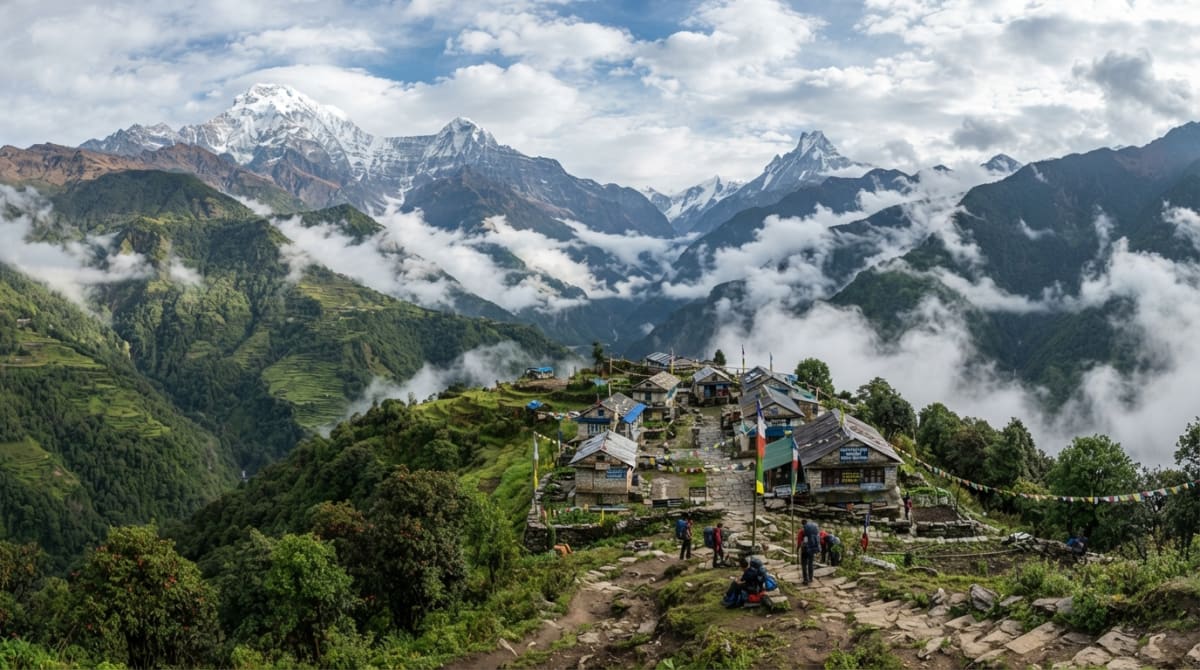
How the Model Works
In the Annapurna Conservation Area, local people continue to live, farm, graze livestock and run businesses such as lodges. Local committees work with the conservation authority to manage forests, plan development and decide how resources are used. The conservation authority provides technical support, training and funding, much of it from trekkers' permit fees. Programs cover forest management, wildlife protection, alternative energy, clean drinking water, sanitation, education, health, women's empowerment and cultural preservation. Lodge owners receive training in hygiene, waste management and hospitality. See how your trek supports local communities.
What the Area Protects
The Annapurna Conservation Area stretches from the subtropical lowlands near Pokhara to the high, arid Tibetan plateau north of the Himalaya, and it contains an extraordinary range of habitats. It includes the Annapurna massif with peaks over 8,000 meters, the Annapurna Sanctuary, the Kali Gandaki gorge, one of the deepest in the world, and high-altitude desert landscapes in the north. It is home to more than a thousand species of flowering plants and hundreds of bird species, along with mammals ranging from langur monkeys and barking deer in the southern forests to Himalayan tahr, blue sheep and the elusive snow leopard in the high north.
It also protects living cultures. The area is home to many communities, including Gurung, Magar, Thakali, Manangi and others, each with their own languages, traditions and ways of life. See ecosystems by altitude and Gurung culture.
Mardi Himal's Place in the Conservation Area
The Mardi Himal Trek lies in the southern part of the conservation area, on the ridge between the Modi Khola and Mardi Khola valleys, south of the Annapurna Sanctuary. This part of the area is characterized by rich temperate forests of rhododendron, oak and magnolia, alpine grasslands on the upper ridge, and farming villages on the lower slopes. It is one of the most biodiverse sections of the conservation area, and the forests between Pitam Deurali and Low Camp are particularly important for birds and other wildlife. See where Mardi Himal is and flora and fauna on the trail.
Wildlife You Might See
On the Mardi Himal Trek, the conservation area's wildlife is most visible in the forests and on the open ridge. Look for the Himalayan monal, Nepal's national bird, near the forest edge around Low Camp; langur monkeys in the forest canopy; birds such as laughing thrushes, sunbirds, minivets and barbets; and large birds of prey, including Himalayan griffon vultures, soaring over the ridge. On the upper slopes, Himalayan tahr are occasionally seen. Leopards and other mammals live in the forests but are rarely seen. See the Himalayan monal, Himalayan tahr and responsible wildlife watching.
The ACAP Permit
All trekkers entering the Annapurna Conservation Area need an ACAP entry permit. For foreign nationals, the fee has been around NPR 3,000, with reduced rates for nationals of SAARC countries and different arrangements for Nepali citizens. Fees and procedures can change, so check current information before you travel. Permits can be obtained in Pokhara or Kathmandu, and most trekking agencies arrange them for you. You will need your passport details and photos or digital copies. The permit is checked at checkpoints along the trail, so keep it handy. See the ACAP permit, getting permits in Pokhara and checkpoints on the trek.
Where Your Fee Goes
Your permit fee is not simply an entry charge. It is reinvested in the conservation area. Funds support conservation programs such as forest management and wildlife protection, trail maintenance and signposting, community development including schools, health posts and drinking water systems, alternative energy projects such as micro-hydro schemes and improved cooking stoves that reduce firewood use, and waste management. In this way, every trekker helps protect the landscape and support the communities that make the trek possible.
Rules for Trekkers
- Carry a valid permit and show it at checkpoints when asked.
- Trek with a licensed guide if you are a foreign national, as required since 2023.
- Carry out your rubbish, especially plastic, batteries and wrappers.
- Do not collect plants, flowers, seeds or animals, and do not buy products made from protected species.
- Do not disturb or feed wildlife, and keep a respectful distance.
- Stay on established trails to limit erosion and damage to vegetation.
- Do not fly drones without the necessary permission.
- Do not light open fires or use firewood for your own fires.
- Respect local culture, religious sites and private property.
See ACAP rules for trekkers, drone rules and leave no trace.
The Guide Requirement
Since April 2023, foreign trekkers in Nepal's national parks and conservation areas, including the Annapurna Conservation Area, have been required to trek with a licensed guide. The rule aims to improve trekker safety and support local employment. On the Mardi Himal Trek, this means every foreign trekker walks with a guide, who can also help explain the conservation area's rules and the natural and cultural heritage you pass through. See is a guide mandatory?
Energy and the Forests
One of the conservation area's earliest concerns was firewood. In the early days of trekking, lodges cooked every meal and heated water over wood fires, and the growing number of trekkers drove heavy cutting in the forests around popular routes. Over the years, programs promoted alternatives: micro-hydropower schemes that bring electricity to villages, solar water heaters and panels on lodge roofs, liquefied petroleum gas for cooking, and more efficient stoves that use less wood. On the Mardi Himal Trek, you will see solar panels on many lodges, and gas cylinders carried up by porters. Choosing solar-heated showers, eating the same meals as others to save fuel, and avoiding unnecessary hot water all help the forests you walk through. See the carbon footprint of a Mardi Himal trip.
Waste and Water
Waste is a growing challenge on busy routes. Rubbish must either be burned, buried or carried down, and none of these options is easy on a remote ridge. Plastic bottles, wrappers, batteries and wet wipes are the biggest problems. Conservation programs have supported waste collection points, awareness campaigns and, in some areas, safe drinking water stations where trekkers can refill bottles with treated water rather than buying plastic. As a trekker, the most effective thing you can do is not bring waste into the mountains in the first place: use refillable bottles, repackage snacks before the trek, and carry out batteries and anything that cannot be burned safely. See water sources on the trail.
Culture as Part of Conservation
The conservation area's model recognizes that culture and nature are intertwined. Traditional practices, such as community forest management, seasonal grazing on the high pastures and sacred protection of certain mountains and groves, have helped preserve the landscape for generations. Programs support cultural preservation through museums, festivals, traditional crafts and the revival of local knowledge. For trekkers, respecting local customs, dressing modestly in villages, asking before photographing people and religious sites, and learning a little about the communities you meet are part of being a good visitor in a conservation area. See cultural dos and don'ts and why Machapuchare has never been climbed.
Challenges Facing the Area
The conservation area has achieved a great deal, but it still faces challenges. Growing trekker numbers on popular routes like Mardi Himal put pressure on water supplies, waste systems and trails. Road building has expanded into many valleys, bringing benefits for local people but also changing landscapes and trekking routes. Climate change is affecting glaciers, snowlines, water sources and weather patterns. Balancing development, tourism and conservation is an ongoing task. See climate change and Mardi Himal and is Mardi Himal crowded?
Other Treks in the Conservation Area
The Mardi Himal Trek is one of many routes within the Annapurna Conservation Area, and the same permit covers them all. To the west, the trek to Annapurna Base Camp follows the Modi Khola into the Annapurna Sanctuary, and the Poon Hill trek climbs to a famous viewpoint above Ghorepani. Khopra Danda offers a quieter ridge with community-run lodges. The Annapurna Circuit loops around the whole massif, crossing the Thorong La pass, and Upper Mustang lies in the arid north, requiring an additional restricted-area permit. Many trekkers combine Mardi Himal with one of these routes. See Mardi Himal and Annapurna Base Camp, Mardi Himal vs Khopra Danda and Mardi Himal vs the Annapurna Circuit.
Conservation Areas vs National Parks
Nepal has both national parks, such as Sagarmatha around Everest and Chitwan in the lowlands, and conservation areas, such as Annapurna and Manaslu. The main difference is in how people and nature are managed together. National parks traditionally place stronger restrictions on residents and resource use, while conservation areas are designed around communities living within them and sharing in management and benefits. For trekkers, the practical experience is similar: you pay an entry fee, follow rules, and trek with a licensed guide. But understanding that the Annapurna region is a living landscape, where people farm, graze and run lodges alongside conservation, helps explain what you see on the trail. See Mardi Himal and Chitwan.
How You Can Help
Trekkers can support the conservation area's goals in simple ways. Use a refillable water bottle and treat water rather than buying plastic bottles. Carry out all rubbish, including toilet paper where there are no bins. Choose lodges that use solar power, gas or improved stoves rather than large amounts of firewood. Limit hot showers heated by firewood. Buy local products and meals to support the local economy. Tip your guide and porter fairly. And respect the people, wildlife and landscapes around you. See responsible trekking on Mardi Himal and plastic-free trekking.
Signs of Conservation on the Trail
Once you know what to look for, you will see the conservation area's work all along the Mardi Himal Trek. Signboards at trailheads and checkpoints explain rules and routes. Solar panels glint on lodge roofs. Rubbish bins and collection points appear in some settlements. Trail sections have been repaired with stone steps and drainage channels to reduce erosion. Community forests around villages show regrowth where cutting has been controlled. And the rich forest between Pitam Deurali and Low Camp, alive with birds and draped in moss, is itself a sign of what careful management can protect. See the rhododendron forest.
Trek Responsibly with Us
We arrange ACAP permits for all our treks and brief every group on the conservation area's rules. See the 5-day Mardi Himal Trek from Pokhara or the 9-day trek from Kathmandu, and contact us to plan a responsible trek.