

Nepal is full of famous treks. Everest Base Camp, the Annapurna Circuit and Annapurna Base Camp draw trekkers from all over the world, and for good reason. But they take time: two or three weeks for the big routes, or at least ten days for the classics. Many visitors do not have that long. They have a week, or perhaps ten days including travel, and they want to see the high Himalaya up close without spending most of their holiday on the trail. For those trekkers, one route stands out above all others: the Mardi Himal Trek.
In three to five trekking days from Pokhara, Mardi Himal takes you from the lakeside through deep rhododendron forest onto a high, open ridge that climbs straight toward the sheer faces of Machapuchare, finishing at a base camp around 4,500 meters. Guides who have walked every trail in the Annapurna region often call it their favorite short trek. This article explains why, and helps you decide whether it is the right trek for you. For the full picture, see the complete guide to the Mardi Himal Trek.
Mountain Views That Rival Much Longer Treks
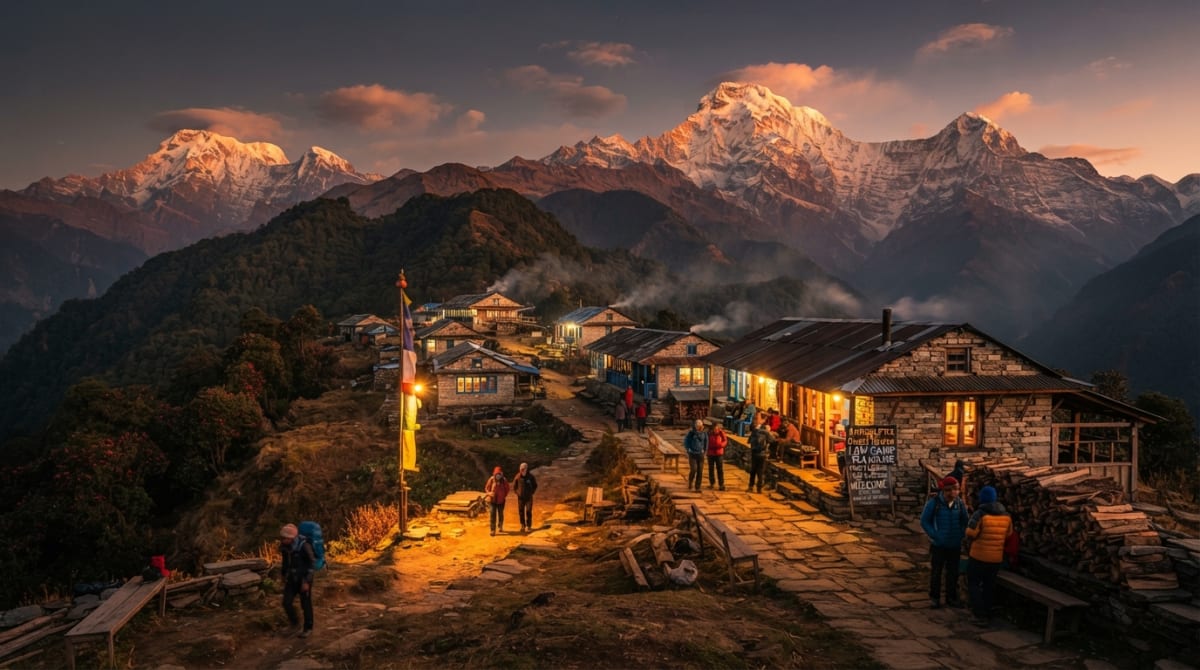
The single biggest reason to choose Mardi Himal is the view. From the moment you step out of the forest above Low Camp, Machapuchare, the Fishtail, fills the horizon ahead of you. Its twin-summited peak, sacred and never officially climbed, rises nearly 7,000 meters, and on the Mardi Himal ridge you walk directly toward it for two days. Mardi Himal itself, Annapurna South and Hiunchuli complete the panorama, and at Base Camp you stand beneath walls of snow and ice that feel close enough to touch.
Few short treks anywhere in the Himalaya bring you this close to peaks of this scale. Poon Hill offers a wonderful distant panorama, and the Australian Camp ridge a beautiful day-one view, but Mardi Himal puts you right among the mountains. Many trekkers who have also done longer routes say the views from the Mardi Himal ridge are among the best they have seen in Nepal. See the mountains you see from Mardi Himal and why Machapuchare has never been climbed.
A Ridge Walk, Not a Valley Walk
Most Himalayan treks follow river valleys, with the mountains rising above you on either side and the big views reserved for passes, viewpoints and base camps. The Mardi Himal Trek is different. For its best section, from Low Camp to Base Camp, it follows the crest of a long, grassy ridge. That means views in every direction for hours at a time, rather than only at the end of the day, and a constant sense of being high above the world, often above a sea of clouds.
The ridge walk gives the trek its character. You watch the peaks change with the light, see the valleys drop away on either side, and feel the scale of the landscape in a way that is hard to experience from a valley floor. It is the section trekkers remember most, and it is the reason the trek feels so much bigger than its length suggests. See the Mardi Himal ridge and the sea of clouds.
Remarkable Variety in a Few Days
In a handful of days, the Mardi Himal Trek passes through an astonishing range of landscapes. You start among terraced fields and villages near Pokhara, climb through one of the finest rhododendron and oak forests in the region, draped in moss and alive with birds, emerge onto open alpine grassland, and finish on high, rocky ground beneath glaciers. You climb from around 800 meters in Pokhara to around 4,500 meters at Base Camp, crossing several ecological zones on the way.
That variety keeps every day interesting. The forest days feel completely different from the ridge days, and the descent through farmland and villages to Siding adds a cultural finale. In spring, the rhododendrons bloom in red, pink and white. In autumn, the skies are crystal clear. Each season brings its own character. See ecosystems by altitude and the rhododendron forest.
Easy Access from Pokhara
Many treks begin with a long bus journey, a jeep ride on a rough road or a weather-dependent mountain flight. Mardi Himal begins barely an hour from Pokhara's lakeside, at Kande or Phedi on the paved highway toward Baglung. You can have breakfast by Phewa Lake and be walking uphill through the forest by mid-morning. At the end, a jeep from Siding brings you back to Pokhara in a few hours. There are no domestic flights to worry about, and very little time is lost to travel.
That accessibility matters enormously for short trips. It means almost all your time is spent trekking rather than traveling, and it reduces the risk of delays that can derail a tight schedule. It also means you can combine the trek with other experiences in Pokhara, such as paragliding, boating or simply relaxing by the lake. See Pokhara to Mardi Himal door to door and transport to the trailhead.
Flexible Itineraries for Every Schedule
Mardi Himal adapts to almost any schedule. Fit trekkers with very little time can do it in three days from Pokhara. Most trekkers choose five days from Pokhara, which balances time and acclimatization. Those arriving from abroad can do it in seven days with a direct flight to Pokhara, or nine days from Kathmandu including travel. And for those with more time, it can be extended with rest days, village stays or combinations with Annapurna Base Camp, Poon Hill or Khopra Danda.
Few other treks offer this range. It makes Mardi Himal an ideal choice for travelers with fixed holidays, for those combining trekking with other activities in Nepal, and for groups with different amounts of time. See the 9-day Mardi Himal Trek, how many days you need and which Mardi Himal trek is right for you.
Quieter Than the Classic Routes
The Mardi Himal trail only opened to trekkers relatively recently, around 2012, and it remains much less crowded than Annapurna Base Camp, Poon Hill or the Everest region. Lodges are smaller and fewer, the trail is narrower, and for much of the year you may walk for long stretches without meeting another group. In the peak weeks of October and November, the trail is busier, and High Camp can fill up, but even then it rarely feels as crowded as the classic routes.
For many trekkers, that relative quiet is a big part of the appeal. It gives the trek a sense of wilderness and discovery that is harder to find on the busier trails, and it makes the lodges feel more personal. See is Mardi Himal crowded? and the history of the Mardi Himal Trek.
High Enough to Feel Like the Himalaya
At around 4,500 meters, Mardi Himal Base Camp is higher than Annapurna Base Camp and far higher than Poon Hill, giving you a genuine taste of high-altitude trekking. You feel the thin air, see the snowline up close, and experience the cold, clear mornings of the high mountains. For many trekkers, it is the highest they have ever been, and the sense of achievement at Base Camp is real.
Yet the trek manages altitude well. You sleep no higher than High Camp, at around 3,580 meters, and visit Base Camp only on a day hike, which keeps the risk of serious altitude illness low. That makes Mardi Himal an excellent introduction to Himalayan altitude, and a great warm-up for longer, higher treks later. See how high Base Camp is and Mardi Himal as a warm-up for bigger treks.
Challenging but Achievable
The Mardi Himal Trek is a proper mountain trek, not a stroll. It involves steep climbs through the forest, long days on the ridge, and a demanding pre-dawn summit hike of around 900 meters. But it is non-technical, with no scrambling, ropes or glacier crossings in normal conditions, and it is well within reach of reasonably fit people who prepare sensibly. Many first-time trekkers complete it successfully.
That balance of challenge and accessibility is part of what makes it special. You earn the views, but you do not need years of mountain experience to reach them. See how difficult the trek is and is Mardi Himal suitable for beginners?
Good Value
Because it is short and close to Pokhara, the Mardi Himal Trek costs less than longer treks. There are fewer days of guide and porter fees, fewer nights in lodges, and minimal transport costs. For trekkers on a budget, it offers some of the best mountain scenery in Nepal for a relatively modest outlay. For those with more to spend, the savings can go toward extra days, a private guide, or other experiences in Nepal. See the cost guide and Mardi Himal vs ABC vs Poon Hill cost.
Warm Hospitality in Small Lodges
The lodges on the Mardi Himal Trek are simple, family-run tea houses, many of them owned by people from the villages below the ridge. Because they are small, the atmosphere is often personal and friendly. Evenings are spent around the stove in the dining room, sharing stories with other trekkers, guides and porters, and watching the lodge family cook dal bhat for everyone. On the lower trail and at the end of the trek, villages such as Dhampus, Pothana and Siding offer glimpses of Gurung and other hill communities, their farms, festivals and daily routines. It is not a cultural trek in the way Poon Hill or Ghandruk are, but the human side of the journey is a real part of its charm. See Gurung culture on the trek and evenings in the tea houses.
A Photographer's Trek
For photographers, Mardi Himal is exceptional. The ridge provides natural leading lines toward Machapuchare, the sea of clouds creates dramatic foregrounds, and the sunrise from the Upper View Point lights up an entire range at once. Sunset at Low Camp, Badal Danda and High Camp can be spectacular, and on clear nights the stars above the ridge are dazzling. The forest offers softer subjects: moss, flowers, mist and birds. Because the trek is short, you can even plan your dates around the moon or the best light of the season. See the photography guide and stargazing on Mardi Himal.
How It Compares with Other Short Treks
| Trek | Typical days from Pokhara | Highest point | Character |
|---|---|---|---|
| Mardi Himal | 3–5 | About 4,500 m | Forest, high ridge, close-up peaks |
| Poon Hill | 3–4 | 3,210 m | Villages, famous sunrise viewpoint |
| Khopra Danda | 5–7 | About 3,660 m | Quiet ridge, community lodges |
| Australian Camp | 1–2 | About 2,060 m | Easy overnight with a great view |
| Annapurna Base Camp | 6–10 | 4,130 m | Valley walk into a mountain sanctuary |
Each has its merits, but none combines Mardi Himal's closeness to the peaks, ridge walk and short duration. See short treks from Pokhara compared, Mardi Himal vs Poon Hill and Mardi Himal vs Annapurna Base Camp.
Who Mardi Himal Is Best For
Mardi Himal suits a wide range of trekkers. It is ideal for travelers with a week or so who want to see the high Himalaya up close, for first-time trekkers who are reasonably fit and want a real challenge, for photographers drawn to Machapuchare and the ridge, and for experienced trekkers looking for a quieter alternative to the classic routes. It also works well for couples, groups of friends and older teenagers.
It is less suited to those who want an easy, gentle walk, who have serious health conditions affecting altitude tolerance, or who are looking mainly for village culture, where Poon Hill or Ghandruk may be better choices. See is the Mardi Himal Trek worth it?
What to Keep in Mind
No trek is perfect, and Mardi Himal has a few limitations worth knowing. Lodges on the upper ridge are basic, with limited facilities and cold rooms. High Camp can be crowded in peak season. The summit day is long and demanding. Weather on the ridge can hide the views, especially in spring and the monsoon. And the trek offers less village culture than routes like Poon Hill or Ghandruk. None of these outweigh its strengths for most trekkers, but they are worth planning around. See mistakes to avoid.
Start Planning Your Mardi Himal Trek
If you have a week or so in Nepal and want to walk among the high Himalaya, Mardi Himal is hard to beat. See the 9-day Mardi Himal Trek from Kathmandu, the 5-day trek from Pokhara or the 3-day Short Mardi Himal Trek, and contact us to plan your trip.