

Most of Nepal's famous treks have long histories. Traders, pilgrims and villagers walked the paths of the Annapurna Circuit and the Everest region for centuries before the first trekkers arrived in the 1960s and 1970s. The Mardi Himal Trek is different. Although local herders have used the ridge for generations, it only became an established trekking route in the last decade or so, and in that short time it has grown from an obscure side path into one of the best-loved short treks in the country. This is the story of how that happened, and of the mountain that gave the trek its name.
For an overview of the trek today, see the complete guide to the Mardi Himal Trek and key facts and figures.
What the Name Means
The word "Himal" is Nepali for a snow-covered mountain or mountain range, and it appears in the names of many Himalayan peaks and massifs, such as Dhaulagiri Himal and Manaslu Himal. "Mardi" is generally associated with the Mardi Khola, the river that rises on the slopes of the peak and flows south through the valley east of the ridge, past villages such as Siding and Lwang, toward the Seti River and Pokhara. In that sense, Mardi Himal is simply "the snow mountain of the Mardi," named for the river its snows feed.
As with many place names in the Himalaya, local explanations vary, and the names used by different communities for peaks and rivers do not always match those on maps. The Gurung people of the area have their own names and stories for many features of the landscape. See Gurung culture on the trek and the Modi and Mardi Khola valleys.
The Peak Itself
Mardi Himal is a peak of 5,587 meters on the southern rim of the Annapurna Sanctuary, standing just in front of Machapuchare. Viewed from Pokhara, it is often overlooked, dwarfed by its famous neighbor, and many visitors do not realize it is a separate mountain. Yet it has a distinctive profile of steep snow slopes and ridges, and it has attracted mountaineers for decades. It is classified as a climbing peak, and ascents require a permit, technical skills and equipment. The trek, by contrast, stops at Base Camp around 4,500 meters, beneath the peak's southern flanks. See the peak climbing guide.
The Herders' Ridge
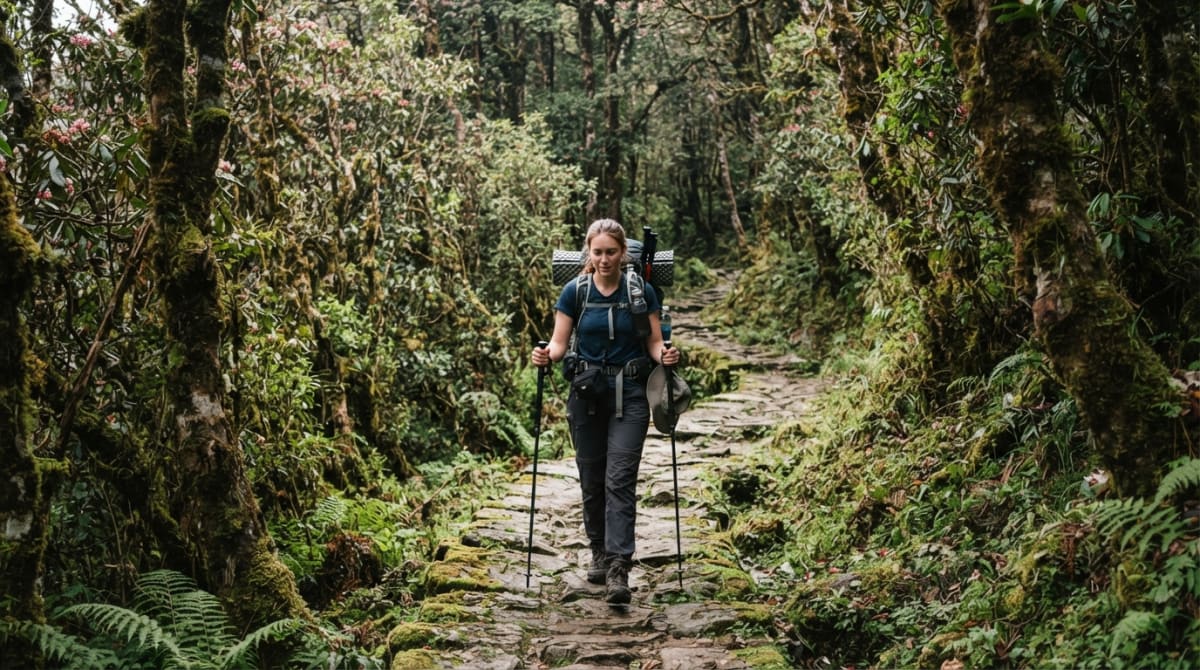
Long before trekkers arrived, the Mardi Himal ridge was part of the working landscape of the villages below. Herders from settlements on both sides of the ridge drove cattle, buffalo, sheep and goats up to the high grasslands in summer, a practice known across the Himalaya as transhumance. The open slopes above the forest, now crossed by trekkers on their way to High Camp, were seasonal pastures, or kharka, where herders built simple stone and timber shelters. Some of these seasonal camps became the sites of today's lodges.
The forests below were equally important, providing firewood, fodder, timber and medicinal plants. The trails through them were used by villagers, herders and hunters, not by outsiders. For most of history, the ridge was known only to those who lived beneath it. See farming and village life below Mardi Himal.
Machapuchare and the 1957 Expedition
The history of the Mardi Himal ridge is closely tied to Machapuchare, the mountain that dominates its views. In 1957, a British expedition led by Lieutenant Colonel Jimmy Roberts attempted Machapuchare via its north ridge. Two climbers, Wilfrid Noyce and David Cox, reached a point about 50 meters below the summit before turning back, having agreed not to set foot on the very top out of respect for the mountain's sacred status. Soon afterward, Machapuchare was closed to climbing, and it remains officially unclimbed. See why Machapuchare has never been climbed.
Jimmy Roberts went on to play a central role in the history of trekking in Nepal. In the 1960s, he organized some of the first commercial treks for foreign visitors, laying the foundations of an industry that now brings hundreds of thousands of trekkers to the country. See a short history of trekking in the Annapurna region.
Trekking Arrives in the Annapurna Region
From the 1970s onward, the Annapurna region became one of the world's great trekking destinations. The Annapurna Circuit, the Annapurna Sanctuary route to Annapurna Base Camp, and the short trek to Poon Hill drew growing numbers of visitors, and villages such as Ghandruk, Chhomrong and Ghorepani built lodges to serve them. Pokhara grew from a quiet lakeside town into a busy tourist hub. The Mardi Himal ridge, however, remained off the main routes, visible from the trail to Annapurna Base Camp but rarely visited.
A Ridge Shaped by Geology
The deepest history of Mardi Himal is written in its rocks. The Himalaya were formed by the collision of the Indian and Eurasian tectonic plates, which began tens of millions of years ago and continues today, pushing the mountains higher by millimeters each year. The Mardi Himal ridge is one of the many spurs that run south from the main Annapurna range, carved into its present shape by rivers and ancient glaciers. The Modi Khola and Mardi Khola cut deep valleys on either side, leaving the ridge standing high between them, which is exactly why it makes such a fine viewpoint today. See the geology behind the Mardi Himal views.
The Annapurna Conservation Area
As tourism grew, so did concerns about its impact on forests, wildlife and communities. In 1986, the Annapurna Conservation Area Project was launched, pioneering a model in which local communities play a central role in conservation and benefit from tourism. The Annapurna Conservation Area, Nepal's largest protected area, now covers more than 7,600 square kilometers, including the whole of the Mardi Himal Trek. Trekkers' permit fees help fund conservation, community development and trail maintenance. See the Annapurna Conservation Area and the ACAP permit.
Opening the Trek
By the early 2010s, trekking agencies and local communities were looking for new routes that could spread the benefits of tourism and relieve pressure on the busy classic trails. The Mardi Himal ridge, with its superb views of Machapuchare and relatively easy access from Pokhara, was an obvious candidate. Around 2012, the route was opened as an established trek, and lodges began operating at Forest Camp, Low Camp and High Camp, with more following at Rest Camp and Badal Danda. Trail improvements made the route more accessible, and signposts were added at key junctions.
Early trekkers found a quiet, wild route with basic lodges and spectacular views, and word spread quickly through guidebooks, trekking forums and social media. See tea houses along the trail.
The Names Along the Trail
Many place names on the trek reflect its recent development. Forest Camp, Low Camp, High Camp and Base Camp are English labels that describe the trek's stages rather than traditional village names. Rest Camp is simply a resting place between Forest Camp and Low Camp. Australian Camp is said to take its name from an Australian group that camped there in the early days of trekking. Other names are Nepali: Pitam Deurali, where "deurali" refers to a pass or hilltop shrine; Badal Danda, meaning "cloud hill"; and villages such as Kande, Pothana, Dhampus and Siding, which long predate trekking. See the trek glossary.
A Rapid Rise in Popularity
Over the following decade, Mardi Himal became one of the most popular short treks in Nepal. Several factors drove its rise. It offered close-up views of Machapuchare that few other short treks could match. Its ridge walk gave it a distinctive character. It could be done in three to five days from Pokhara, ideal for visitors with limited time. And it was quieter than the classic routes. The trek also became very popular with Nepali trekkers, especially young people from Pokhara and Kathmandu, and domestic tourism grew strongly in the early 2020s. See why Mardi Himal is Nepal's best short trek and Mardi Himal for Nepali trekkers.
The Guide Requirement
In 2023, Nepal introduced a rule requiring foreign trekkers in national parks and conservation areas, including the Annapurna Conservation Area, to trek with a licensed guide. The rule aimed to improve safety, after incidents involving lost or injured solo trekkers, and to support local employment. It changed the character of trekking on routes like Mardi Himal, where many visitors had previously walked independently. See is a guide mandatory? and how trekking guides are licensed.
Growth and Its Challenges
Popularity has brought benefits and challenges. Lodge owners, guides, porters and villages along the route have gained new sources of income, and the trek has helped spread tourism beyond the classic trails. But growth has also brought crowding at High Camp in peak season, pressure on water and fuel supplies, waste management issues and erosion on steep trail sections. Road building has reached further up the valleys, changing the approach to places such as Siding. Managing these pressures is an ongoing task for local communities and conservation authorities, and trekkers can help by traveling responsibly. See is Mardi Himal crowded? and responsible trekking.
A Sacred Landscape
For the people who live beneath it, the landscape of the Mardi Himal ridge has always been more than scenery. Machapuchare is widely regarded as sacred, associated in Hindu tradition with the god Shiva, and its closure to climbers reflects that reverence. Shrines, prayer flags and small offerings mark passes, springs and viewpoints along the trail, and the name Pitam Deurali itself refers to a hilltop shrine. Gurung communities have their own relationships with the mountains, forests and rivers, woven into festivals, rituals and stories passed down through generations. Trekkers who walk the ridge are passing through a landscape layered with meaning, and treating it with respect, by not disturbing shrines, walking clockwise around stupas and chortens, and asking before photographing ceremonies, honors that history. See prayer flags and shrines and Hindu and Buddhist traditions.
How the Lodges Were Built
The lodges on the upper ridge were built in a place with no roads, no electricity grid and, in some cases, limited water. Almost everything, from timber and corrugated roofing to mattresses, gas cylinders, rice and cooking oil, was carried up on the backs of porters, a journey of one to three days from the nearest road. Many lodges began as simple huts with a kitchen and a few beds, expanding room by room as trekker numbers grew. Most are family businesses, often run by people from villages below the ridge who move up to the lodges during the trekking seasons. Solar panels, water pipes from springs and small hydropower schemes gradually brought electricity and running water. Understanding the effort behind every meal and every bed at High Camp helps explain why prices rise with altitude. See how food reaches the tea houses and life of a porter.
Mardi Himal Today
Today, the Mardi Himal Trek is firmly established as one of Nepal's classic short treks. Lodges line the route, the trail is well maintained, and thousands of trekkers each year climb the ridge toward Machapuchare. Yet it retains much of the character that made it special: the ancient forest, the open ridge, the sea of clouds, and the sunrise from the Upper View Point. For many, it remains the best way to see the high Himalaya in a short time. See the trek highlights.
The Future of the Trek
The next chapter of Mardi Himal's history is still being written. Road access continues to expand in the valleys around the ridge, which may shorten approaches but also changes the character of village trails. Climate change is affecting snowlines, water sources and weather patterns in the Annapurna region, with implications for lodges and trekkers alike. Local communities, conservation authorities and trekking businesses face the challenge of managing growing numbers while protecting the forest, the ridge and the quality of the experience. Initiatives such as waste management schemes, alternative energy for lodges, and spreading trekkers across more routes and seasons will shape how the trek evolves. Trekkers who travel responsibly, respect local culture and support local businesses are part of that story. See climate change and the Mardi Himal region and how your trek supports local communities.
Walk the Ridge with Us
Follow in the footsteps of herders and early trekkers on one of our Mardi Himal itineraries. See the 9-day Mardi Himal Trek from Kathmandu or the 5-day trek from Pokhara, and contact us to plan your trip.