

Before you trek, it helps to know not just where the trail goes but what it feels like underfoot. On Mardi Himal, the surface changes several times: from stone staircases near the villages, to soft forest paths laced with roots, to an open grassy ridge, and finally to a steep, sometimes frozen track above High Camp. Each type of ground asks something slightly different of your feet, legs and footwear, and each changes with the seasons.
This guide describes trail conditions on the Mardi Himal Trek section by section and season by season, with tips for walking each type of terrain safely.
Section by Section
Kande to Australian Camp: Stone Steps
The trek begins with a staircase. From the road at Kande, stone steps climb steeply through farmland and small settlements to the ridge at Australian Camp. The steps are generally solid but uneven in height, which makes them tiring. They can be slippery when wet or covered in fallen leaves. Take them slowly, use short steps, and do not race. See the Kande trailhead guide.
Australian Camp to Pitam Deurali: Gentle Forest Trail
After Australian Camp, the trail becomes a pleasant, mostly gentle path through forest, dropping slightly to Pothana and then undulating to Pitam Deurali. It is a mix of dirt, stone and roots, usually in good condition. This is the easiest walking of the trek.
Pitam Deurali to Low Camp: Forest Climb
This is the longest forest section. The trail climbs steadily through rhododendron and oak forest on a dirt path criss-crossed with roots and occasional rocky sections. In dry seasons it is firm and pleasant. After rain, it becomes muddy and slippery, particularly on steeper sections, and roots become slick. In the monsoon, leeches are common here. Watch your footing on roots and use trekking poles.
Low Camp to High Camp: The Open Ridge
Above Low Camp, the trail leaves the forest and follows the spine of the ridge. The path is a narrow dirt and grass track, generally clear, with steep slopes on both sides. In good weather it is straightforward walking. In strong wind, fog or rain, it demands more care, as visibility drops and the ground can be slippery. Stay on the path, keep your pace steady and stay close to your guide in poor visibility. See walking the Mardi Himal ridge.
High Camp to Base Camp: Steep and Exposed
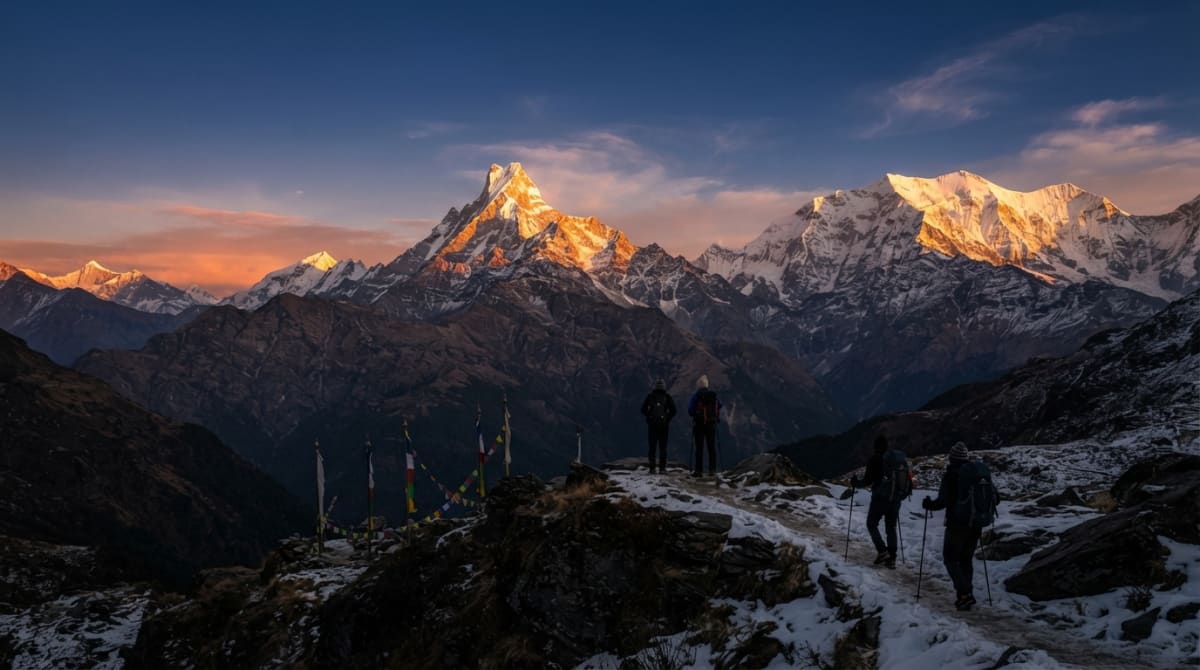
The trail above High Camp is the steepest on the trek. It climbs a grassy ridge to the Upper View Point on a narrow, sometimes loose path, then traverses open slopes toward Base Camp. In the pre-dawn cold, frost often makes the grass slippery, and in winter or after snowfall the path can be covered in snow and ice. Microspikes are often necessary in these conditions. On the descent, the thawing ground can become muddy. See the High Camp to Base Camp hike.
The Descent to Siding: Steep Forest and Farm Tracks
The descent from the ridge to Siding drops steeply through forest and then farmland. The path includes steep dirt sections, rocky steps and, lower down, farm tracks between terraces. It is long and hard on the knees, and slippery after rain. Trekking poles help a great deal. See coming down from Base Camp.
Conditions by Season
| Season | Lower sections | Forest | Ridge and above High Camp |
|---|---|---|---|
| Autumn | Dry, firm | Dry after early September | Dry; frost at dawn; occasional snow in late November |
| Winter | Dry | Dry, sometimes frosty | Frost, snow and ice likely above High Camp |
| Spring | Dry, dusty | Mostly dry; occasional mud after storms | Mostly clear; late snow possible in March |
| Monsoon | Wet, slippery | Muddy, leeches | Wet grass, fog, slippery path |
See the best time for the trek for more on seasons.
The Same Trail in October and July
To see how much seasons change the trail, compare a walk from Pitam Deurali to Low Camp in October with the same walk in July. In October, the path is dry and firm, the air is cool and clear, and patches of sunlight fall through the canopy. Roots and rocks are easy to see and grip well, and you can walk at a steady rhythm, stopping only to catch glimpses of Machapuchare through gaps in the trees.
In July, the same path is dark with moisture. The soil has turned to mud in places, roots are slick, and small streams run down the trail after heavy rain. Mist hangs between the trees, leeches wait on the damp vegetation, and every step needs attention. The forest is extraordinarily green and beautiful, but walking takes longer and is more tiring. Neither is better or worse in every way, but they demand different preparation, footwear and expectations.
Hazards Underfoot
- Wet roots and stones: the most common cause of slips in the forest. Step on flat, dry surfaces where possible.
- Frost on grass: early mornings on the ridge and above High Camp can be treacherous before the sun thaws the ground.
- Snow and ice: in winter, the slope above High Camp can be icy enough to require microspikes.
- Loose gravel: on steeper sections of the ridge and the descent, small stones can roll underfoot.
- Landslide debris: after heavy rain, sections of trail or road may be partly blocked or undermined.
- Animal dung: livestock use lower trails, and dung on stone steps can be slippery.
See slippery trails after rain and landslides and trail hazards.
How Conditions Affect Walking Times
Published walking times assume dry, normal conditions. Mud, snow, ice and fog all slow you down, sometimes significantly. A forest section that takes four hours in October might take five or more in July. The Base Camp hike in snow can take much longer than in autumn, and breaking trail after fresh snowfall is exhausting. Your guide will adjust start times and plans to allow for conditions, and on some days may suggest turning around earlier to avoid descending in poor light.
Conditions for Children and Older Trekkers
Stone steps with uneven heights are particularly tiring for children and for older trekkers with stiff knees. Slippery roots and mud increase the risk of falls for everyone, but especially for those with less balance or strength. If you are trekking with children or older family members, choose a dry season, allow extra time, use trekking poles and take plenty of breaks. See Mardi Himal with kids and Mardi Himal for seniors.
Checking Current Conditions
Trail conditions can change from week to week, especially in the shoulder seasons and winter. Before your trek, ask your agency about recent snowfall, monsoon damage and road conditions. Guides stay in touch with lodge owners along the route, who report on snow, ice and trail damage. On the trek itself, ask each evening about conditions ahead, particularly before the Base Camp hike.
Trail Etiquette on Narrow Sections
On narrow sections of the ridge and forest, give way to porters carrying heavy loads and to anyone coming uphill. Step to the mountain side of the trail, never the drop side, when letting others pass. Do not stop to rest or take photos in narrow spots where you block the path. See trail etiquette on the Mardi Himal Trek.
Navigation and Signage
The main trail is well used and easy to follow in good weather, but signposts are limited, and side trails used by villagers branch off in the lower sections. On the ridge, fog can hide the path, and snow can cover it above High Camp. This is one reason trekking with a guide is both required for foreign trekkers and sensible. See trail markings and navigation.
Trail Maintenance
Local communities and conservation authorities maintain the trail, repairing sections damaged by monsoon rains and landslides. Occasionally, a section may be temporarily rerouted after damage. Your guide will know the current state of the trail.
Tips for Walking Each Surface
- Stone steps: short steps, steady rhythm, poles for balance on descents.
- Roots and mud: step on flat surfaces rather than wet roots, and test your footing.
- Grassy ridge: stay on the main path and keep your weight over your feet on slopes.
- Frost and ice: use microspikes, slow down and take small steps.
- Loose gravel: keep your weight centred and use poles on descents.
Footwear for the Conditions
Broken-in, waterproof trekking boots with a grippy sole suit the full range of Mardi Himal terrain, from muddy forest to frosty ridge. Gaiters help in snow and mud, and microspikes are essential for ice in winter. See choosing boots for Mardi Himal.
Water Along the Trail
Streams and taps appear regularly in the lower and forest sections, and lodges at each stop sell boiled or filtered water. On the ridge above Low Camp, water sources are fewer, and above High Camp there are none. Fill your bottles at each lodge, treat stream or tap water before drinking, and carry enough for the whole Base Camp hike. In winter, water pipes can freeze at High Camp, so fill up with hot water the evening before. See water sources and refill points.
Gear Checklist for Trail Conditions
- Broken-in waterproof boots with deep lugs for grip
- Trekking poles, especially for the steps near Kande and the descent to Siding
- Gaiters for mud, snow and leeches
- Microspikes from December to February, and after any late or early snowfall
- A headlamp for the pre-dawn hike on frosty ground
- Rain gear and a pack cover in the monsoon
- Spare socks to change into after muddy or wet days
See our complete packing list.
Road Conditions to the Trailheads
Trail conditions start before the trail. The road from Pokhara to Kande is paved and usually in good condition, though traffic leaving the city can be slow. The road from Siding back to Pokhara is a rougher dirt road, narrow in places, bumpy in dry weather and muddy or occasionally blocked by landslides in the monsoon. Jeeps are the usual vehicles, and the drive can be uncomfortable for anyone prone to motion sickness. In heavy rain, your guide may suggest waiting for the road to be cleared or choosing a different exit via Lwang. See jeep and road safety.
Which Sections Are Easiest and Hardest?
If you want a simple ranking, the easiest walking is the gentle forest trail between Australian Camp and Pitam Deurali. The long forest climb to Low Camp is moderate but sustained. The ridge to High Camp is steeper and higher, but its views make it feel easier than it is. The hardest sections are the steep climb from High Camp to the Upper View Point, especially in the cold and dark, and the long descent to Siding, which punishes tired legs. See difficulty section by section.
Conditions Around Tea Houses
Around the lodges themselves, conditions matter too. At Low Camp and High Camp, the ground between rooms and toilet blocks can be icy at night in winter, so wear your boots or grippy camp shoes rather than sandals for night-time trips, and always take a headlamp. Steps and paths around lodges are often uneven stone or packed earth. In the monsoon, lodge courtyards can be muddy, so keep a pair of camp shoes clean for indoors.
Common Mistakes on the Trail
The most frequent trail mishaps on Mardi Himal are avoidable. Trekkers rush the first staircase from Kande and tire themselves early. They hurry down the forest trail after rain and slip on roots. They leave microspikes behind in winter because the lower trail is clear, then face ice above High Camp. They start the descent to Siding without poles and end the day with aching knees. And they stop to take photos in narrow spots on the ridge, blocking others and standing too close to the edge. Slow down, look where you place your feet, carry the right gear for the season and listen to your guide, and the trail becomes far more enjoyable.
Trek with Local Knowledge
Our guides walk this trail every season and know how each section changes with the weather. They will advise on footwear and microspikes and choose the safest line on icy or muddy days. Explore the 5-day Mardi Himal Trek from Pokhara or the 9-day trek, and ask us about current conditions.