

The weather on the Mardi Himal ridge is the one thing no trekker can control. On a perfect autumn morning, the Base Camp sunrise is almost guaranteed. In winter, a snowstorm can close the upper trail for a day; in spring, cloud can roll in early; in the monsoon, clear mornings come and go unpredictably. On a tight itinerary, a single bad morning can mean missing the view you came for. That is why many experienced guides recommend adding just one day to the classic 5-day trek from Pokhara.
The 6-day Mardi Himal itinerary is exactly that: the standard route with a buffer day built in. It costs a little more time and money, but it gives you flexibility, better acclimatization and a far higher chance of standing at Base Camp in clear light. This guide explains the itinerary, where to use the extra day and who benefits most. For the base package, see the 5-day Mardi Himal Trek from Pokhara.
The 6-Day Itinerary at a Glance
| Day | Plan | Overnight |
|---|---|---|
| 1 | Drive Pokhara to Kande, trek to Pitam Deurali | Pitam Deurali (2,150 m) |
| 2 | Trek to Low Camp | Low Camp (2,970 m) |
| 3 | Trek to High Camp | High Camp (3,580 m) |
| 4 | Base Camp hike (or buffer day if weather is poor) | High Camp or Low Camp |
| 5 | Second chance at Base Camp, or descend to Badal Danda or Low Camp | Low Camp or Badal Danda |
| 6 | Descend to Siding, drive to Pokhara | Pokhara |
This is one common pattern. Your guide will place the extra day where it is most useful for the season and your group.
Days 1 to 3: The Classic Climb
The first three days follow the standard 5-day trek. On day one, you drive from Pokhara to Kande, climb the stone steps to Australian Camp and walk through forest to Pitam Deurali. On day two, you climb through the rhododendron forest past Forest Camp to Low Camp, where Machapuchare rises directly ahead. On day three, you leave the forest and follow the open ridge past Badal Danda to High Camp at 3,580 meters. These days build gradually and give your body time to adjust before the summit hike. See the 5-day itinerary for details of each day.
If you want an even gentler start, the extra day can be used on day two to stop at Forest Camp, splitting the long forest climb in two. This is a good option in spring, when the rhododendrons are in bloom and you may want time to enjoy them, or for trekkers who prefer shorter walking days.
Day 4: Base Camp or Wait
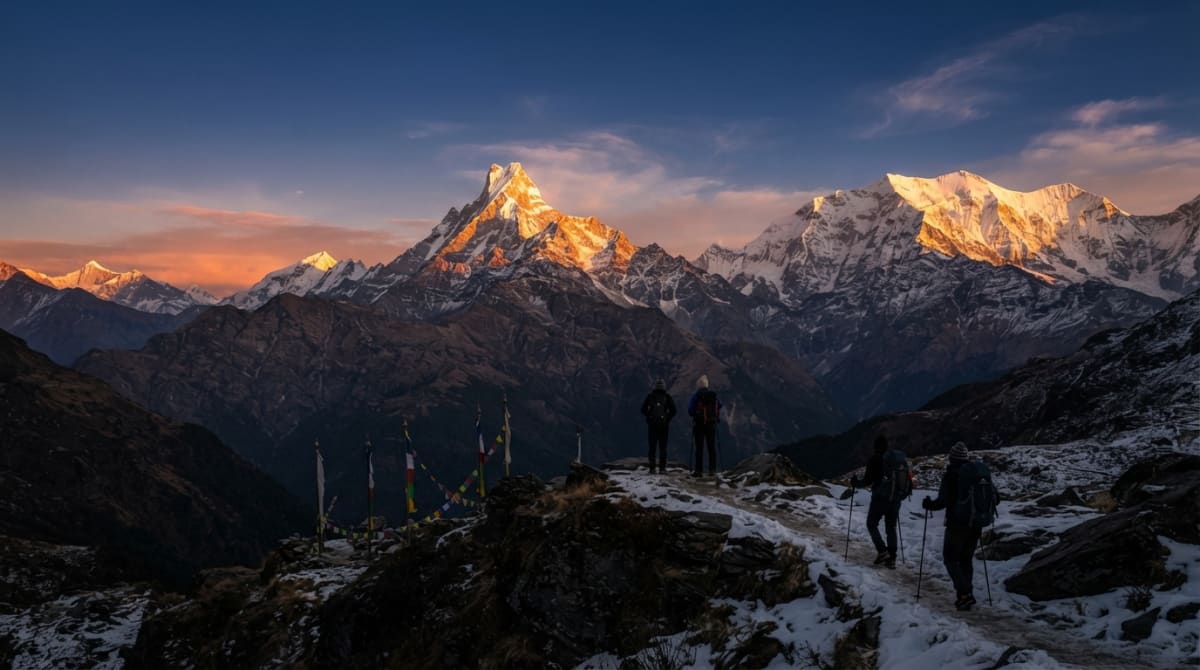
On the morning of day four, your guide checks the sky and conditions before dawn. If it is clear, you climb to the Upper View Point for sunrise and continue to Mardi Himal Base Camp, then return to High Camp. With your buffer day intact, you can take your time at the top without worrying about the schedule, and spend the night either back at High Camp or lower at Low Camp. If the morning is cloudy, snowy or windy, you simply wait, resting at High Camp and acclimatizing further.
Waiting at High Camp is not wasted time. A second night at 3,580 meters improves acclimatization, making the Base Camp hike easier when you do go. You can take a short walk up the ridge in the afternoon if conditions allow, read, play cards and chat with other trekkers. See the High Camp to Base Camp guide.
Day 5: Second Chance or Slow Descent
If you waited on day four, day five is your second attempt at the Base Camp sunrise, followed by a descent to Low Camp or Badal Danda. If you reached Base Camp on day four, day five becomes a relaxed descent, perhaps with a night at Badal Danda for a quiet evening above the clouds, or at Low Camp for a final sunset over Machapuchare. Either way, you finish the trek without rushing. See our Badal Danda guide and Low Camp guide.
Day 6: Siding and Pokhara
The final day drops steeply through forest and farmland to Siding, where a jeep takes you back to Pokhara. Having spread the effort over six days, most trekkers find this descent more comfortable than on shorter itineraries. You arrive in Pokhara in the afternoon. See Low Camp to Siding.
When the Buffer Day Matters Most
In winter, from December to February, snow and ice can make the trail above High Camp dangerous for a day or two after a storm, and the extra day gives time for conditions to settle. In the monsoon, from June to August, clear mornings are unpredictable, and two chances at Base Camp greatly improve your odds of a view. In late spring, especially May, afternoon storms and early cloud are common, and an extra morning helps. Even in autumn, the most reliable season, an occasional storm passes through, and the buffer day protects you if it coincides with your summit morning.
The buffer day also helps if anyone in your group feels unwell at High Camp. A mild headache often clears after an extra night of rest, whereas on a tight schedule you might have to choose between pushing on and turning back. See bad weather on summit day and acclimatization on Mardi Himal.
Who the 6-Day Trek Suits
The 6-day trek suits anyone for whom seeing the view from Base Camp really matters, including photographers, travellers who have come a long way specifically for the mountains, and those trekking outside the main autumn season. It also suits beginners and older trekkers who appreciate a less pressured pace, families with children, and anyone who has had altitude symptoms before. If your schedule is tight but flexible by one day, this is often the smartest way to use that extra day. See the photography itinerary.
If you are very fit, trekking in stable autumn weather and short on time, the standard 5-day version is usually enough. If you are arriving from abroad and want everything arranged, the 9-day trek from Kathmandu already includes buffer time in the cities.
Alternative Ways to Use the Extra Day
The buffer day does not have to be spent waiting at High Camp. Depending on the season and your interests, there are several good ways to use it. In spring, you might spend a night at Forest Camp in the heart of the rhododendron forest, giving yourself a whole afternoon among the blooms and splitting the long climb to Low Camp. If you love photography, you might spend two nights at High Camp regardless of the weather, giving yourself two sunrises and two sunsets in the best light on the trek. If you are travelling with children or older family members, you might use the day to shorten each walking day, so no one is rushed.
Another option is to exit by a different route. Instead of descending directly to Siding, you could walk down via Lwang village, known for its tea gardens, or spend a night in Siding itself, experiencing a traditional Gurung village before returning to Pokhara. Your guide will suggest the best option based on conditions and what you enjoy. See Mardi Himal via Lwang and the rhododendron forest section.
What a Waiting Day at High Camp Is Like
If bad weather keeps you at High Camp for a day, it can be surprisingly enjoyable. Mornings often start with cloud or snow swirling around the lodges, and you retreat to the dining room with a hot drink and a book. Guides and lodge owners share stories, other trekkers swap plans, and card games appear. Around midday, the weather sometimes breaks, and a short walk up the ridge rewards you with glimpses of the peaks through the clouds. In the evening, everyone watches the sky, hoping for stars and a clear dawn.
The key is to use the time well. Drink plenty of water, eat regularly and rest, because your body is continuing to acclimatize. Keep your gear organised and dry so that you are ready to leave quickly when the weather clears. And stay patient: many of the most memorable sunrises on Mardi Himal come on the second morning, after a stormy day has washed the air clean.
Budgeting for Six Days
Adding a day adds a modest cost: another night of accommodation and meals, another day of guide and porter wages, and a little more spending on snacks, drinks, charging and hot showers. Because prices rise with altitude, a day spent at High Camp costs slightly more than one lower down. Compared with the overall cost of your trip, including international flights, the extra day is a small investment for a much better chance of clear views. See our cost guide and daily budget guide.
Preparing for the 6-Day Trek
Preparation is the same as for the 5-day trek. Train for six to eight weeks with brisk walks, stair climbs and weekend hikes with a daypack. Break in your boots. Buy travel insurance covering trekking to at least 4,500 meters and helicopter evacuation. Pack layers, a warm down jacket, a sleeping bag rated for well below freezing, a headlamp and trekking poles, and add microspikes in winter. The extra day on the trail means a little more budget for snacks, charging and hot drinks. See our fitness guide and packing list.
Tea Houses on the 6-Day Route
On the 6-day trek you sleep at Pitam Deurali, Low Camp and High Camp on the way up, and at Low Camp or Badal Danda on the way down, with the extra night usually at High Camp or Forest Camp. Pitam Deurali is the most comfortable, with several lodges, hot showers and often mobile signal. Forest Camp is peaceful and sheltered in the trees. Low Camp offers the best sunset over Machapuchare. High Camp is the coldest and most basic, but a second night there means a second chance at the finest sunrise of the trek. Badal Danda is small and quiet, perfect for an evening above the clouds. In peak season your guide reserves rooms, and the flexible schedule makes it easier to find space. See our tea house guide and where to sleep on the ridge.
How Guides Decide When to Go
On a 6-day trek, the decision about which morning to attempt Base Camp belongs to your guide, working with you. They check the sky before dawn, talk to lodge owners and other guides about conditions, look at recent snowfall and wind, and consider how everyone in the group is feeling. If the morning is clear and stable, you go. If there is fresh snow on the steep slope, strong wind or thick cloud, they may suggest waiting. Having a buffer day means these decisions can be made purely on safety and experience, without pressure from the schedule.
If you are unsure whether to wait or go, ask your guide to explain their reasoning. Understanding the conditions helps you make the most of whichever morning you choose, and most trekkers find it reassuring to know the decision is based on experience rather than the calendar.
Is the Extra Day Worth It?
For most trekkers, yes. The cost of one additional day is small compared with the cost of flights to Nepal and the disappointment of missing the Base Camp view. The extra day also reduces stress: you do not need to push through bad weather or ignore mild symptoms to stay on schedule. Guides consistently report that trekkers with a buffer day enjoy the trek more and make safer decisions. If you have the time, add it. See adding a rest day to your itinerary and how many days you need.
Book a 6-Day Trek
We arrange the 6-day Mardi Himal Trek by adding a day to our 5-day trek from Pokhara, which includes private transport between Pokhara, Kande and Siding, ACAP and TIMS permits, a licensed guide, tea house accommodation and three meals a day on the trail. Your guide decides on the day how best to use the extra time. Contact us to plan your dates.