

About an hour above Low Camp, on the open grassy ridge that leads to High Camp, a handful of lodges cling to a small shoulder of the hillside. This is Badal Danda, the "cloud hill", and it lives up to its name. Sitting at around 3,210 meters, it is often right at the level where clouds rise from the valleys, so on some days you walk through mist, and on others you look down on a white sea stretching toward the horizon, with the peaks rising above it. It is smaller and quieter than Low Camp or High Camp, and for many trekkers, a night here is one of the most atmospheric experiences of the trek.
This guide explains what to expect at Badal Danda, including lodges, views, weather and when to stay. On our 9-day Mardi Himal Trek, Badal Danda is usually the overnight stop after the Base Camp hike.
Where Badal Danda Is
Badal Danda lies on the Mardi Himal ridge at around 3,210 meters, roughly an hour above Low Camp and two to three hours below High Camp. It sits just above the treeline, where the forest gives way to grassland and shrub rhododendron. The trail to Siding descends from the ridge in this area, making Badal Danda a convenient last night before the final descent. See the Mardi Himal route guide.
The Name
In Nepali, badal means cloud and danda means hill or ridge. The name reflects the stop's position at the cloud line, where mist often drifts over the ridge in the afternoon and settles below it in the evening. Many places in the Himalaya carry descriptive names like this, and learning their meanings adds to the experience. See the Mardi Himal glossary.
Lodges and Facilities
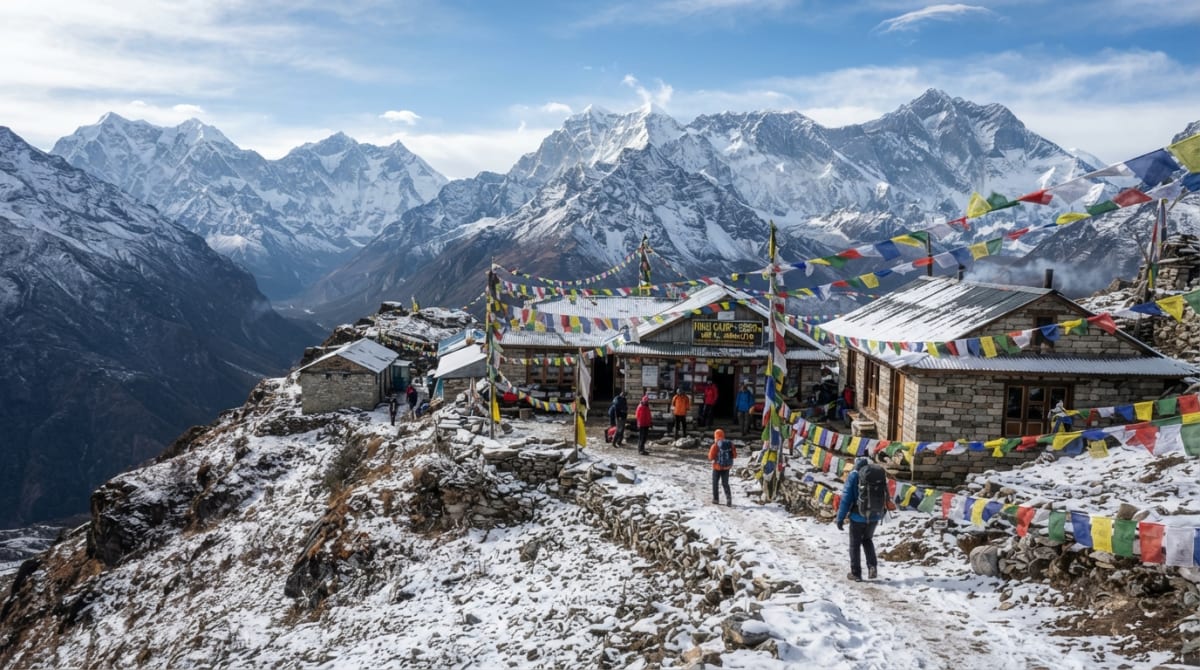
Badal Danda has only a few lodges, which gives it a quiet, intimate feel. Rooms are simple twin rooms with blankets; toilets are shared. Hot showers are limited or unavailable, and charging depends on solar power. Mobile signal is patchy. Dining rooms are small and warm, with a limited but reliable menu of dal bhat, noodles, soups and hot drinks. Because there are so few rooms, guides book ahead in busy seasons. See our tea house guide.
The Sea of Clouds
Badal Danda's most famous feature is the sea of clouds. On many afternoons and evenings, especially in autumn and winter, clouds fill the valleys below the ridge, forming a white blanket that stretches toward the horizon. From Badal Danda, you look down on this sea, with Machapuchare and the Annapurna peaks rising above it. At sunset, the clouds glow pink and orange, and the peaks catch the last light. At sunrise, the scene repeats in reverse. It is one of the most magical sights on the trek, and Badal Danda, sitting just above the cloud line, is one of the best places to see it. See the sea of clouds on Mardi Himal.
A Night at Badal Danda
Spending a night here feels different from the larger camps. With only a few lodges, the evening is quiet and intimate. After arriving, perhaps tired from the Base Camp hike, you rest in the afternoon while clouds swirl around the ridge. As evening approaches, the clouds often sink into the valleys, and you step outside to watch the sunset over the sea of cloud. Dinner is served in a small, warm dining room with a handful of trekkers and guides. The night is cold and still, and if the sky is clear, the stars are brilliant. In the morning, you wake early to watch the sunrise before breakfast and the descent to Siding.
Badal Danda After the Base Camp Hike
On our 9-day and 7-day itineraries, Badal Danda is the overnight stop after the Base Camp hike. After climbing to around 4,500 meters before dawn and returning to High Camp for breakfast, you descend for an hour or two along the ridge to Badal Danda. Stopping here, rather than continuing to Low Camp or Siding, keeps the day manageable and gives you a relaxed afternoon. At around 3,210 meters, it is low enough for a comfortable night after the high point of the trek. The next day, you descend to Siding and return to Pokhara. See the 9-day itinerary.
Badal Danda or Low Camp?
Badal Danda and Low Camp are only an hour apart, and many trekkers wonder which is better. Low Camp has more lodges, better facilities and a famous direct view of Machapuchare, but it is busier. Badal Danda is smaller, quieter and often above a sea of clouds, with a more remote atmosphere, but facilities are more basic. On the way up, Badal Danda shortens the climb to High Camp; on the way down, it shortens the day after Base Camp. See where to sleep on the ridge.
Weather at Badal Danda
Because it sits near the cloud line, Badal Danda's weather can change quickly. Mornings are often clear, with sharp mountain views. By late morning, clouds frequently rise over the ridge, sometimes enveloping the lodges in mist. In the late afternoon and evening, the clouds often settle below, creating the sea of clouds. Wind can be strong on the exposed ridge, especially in winter, and nights are cold. In the monsoon, rain and cloud are frequent. See fog and afternoon clouds on Mardi Himal.
Badal Danda Through the Seasons
In autumn, Badal Danda often offers the clearest views and the most reliable sea of clouds. In winter, nights are very cold, snow sometimes covers the ridge, and lodges may close temporarily during severe weather; check with your guide. In spring, shrub rhododendrons bloom around the lodges, and afternoons bring clouds and occasional showers. In the monsoon, it is often in cloud, with frequent rain and few trekkers. See the best time for the trek.
Food at Badal Danda
With only a few small lodges, the menu at Badal Danda is simpler than at the larger camps, but you can count on dal bhat, noodles, fried rice, soups and hot drinks. Dal bhat, with its free refills, is the best choice after the long Base Camp day. Prices are similar to Low Camp, reflecting the effort needed to carry supplies up the ridge. Order breakfast the night before, especially if you plan to watch sunrise and then start the long descent to Siding.
Staying Warm
At over 3,200 meters on an exposed ridge, Badal Danda can be cold and windy at night. Rooms are unheated, so use your sleeping bag inside the lodge blankets, sleep in dry base layers with a warm hat, and fill a bottle with hot water from the kitchen. The small dining room becomes cosy when the stove is lit, and it is the best place to spend the evening. See staying warm at night in tea houses.
Photography at Badal Danda
Badal Danda is one of the best spots on the trek for photographing the sea of clouds. At sunset and sunrise, compose images with the ridge, lodges or trekkers in the foreground and Machapuchare and the Annapurnas rising above the clouds. Mist swirling over the ridge in the afternoon creates moody, atmospheric shots. A wide-angle lens captures the scale of the cloud sea, while a telephoto isolates the peaks. See the photography guide.
Wildlife
Being just above the treeline, Badal Danda is a good place to look for the Himalayan monal, especially in the early morning on the slopes below the ridge. Griffon vultures and other birds of prey often ride the thermals along the ridge in the late morning. Occasionally, Himalayan tahr are seen on steep slopes nearby. See spotting the Himalayan monal.
Descending from Badal Danda
From Badal Danda, the trail to Siding drops steeply off the ridge through forest and then terraced farmland, descending around 1,400 meters in five to six hours. It is a demanding descent, hard on the knees, so use trekking poles and take regular breaks. At Siding, a jeep waits to take you back to Pokhara. See Badal Danda to Siding.
Walking Times from Badal Danda
From Badal Danda, it takes about an hour to descend to Low Camp and around two to three hours to climb to High Camp. The descent to Siding takes five to six hours. These times vary with fitness, weather and trail conditions. See distance and duration explained.
Badal Danda for Families
For families, Badal Danda can be an excellent overnight stop. It shortens the climb to High Camp on the way up, and its quiet atmosphere and sea-of-cloud views delight children and adults alike. Keep children close on the exposed ridge, and watch for signs of altitude sickness at this height. See the family trek itinerary.
Badal Danda on the Way Up
Although Badal Danda is most often used after the Base Camp hike, it can also be a good overnight stop on the way up, especially on slow or family itineraries. Sleeping here, at around 3,210 meters, splits the climb from Low Camp to High Camp and provides an extra step in acclimatization before sleeping at 3,580 meters. It also means a shorter walk to High Camp the next day, leaving more time to rest there before the pre-dawn hike. See the slow itinerary.
Life on the Ridge
The lodges at Badal Danda are run by families who spend the trekking seasons on this exposed ridge, often returning to villages below in the quiet months. Supplies are carried up by porters and mules, and water can be limited, especially in the dry season. Life here is simple and demanding. Supporting the lodges by eating where you stay, paying fair prices and carrying out your rubbish helps these families continue to host trekkers. See how your trek supports local communities.
Acclimatization and Sleep
After the Base Camp hike, sleeping at Badal Danda means descending roughly 1,300 meters from the day's high point, which helps your body recover and usually brings a better night's sleep than at High Camp. On the way up, a night here gives a gentler step between Low Camp and High Camp. Either way, drink plenty of water, eat well and tell your guide about any lingering headache or nausea. Most trekkers sleep well at this altitude, though the cold and wind can make nights restless without a good sleeping bag. See our altitude sickness guide.
Why Trekkers Love Badal Danda
Trekkers who stay at Badal Danda often describe it as their favourite night of the trek. They mention the quiet after the bustle of High Camp, the magical sea of clouds at sunset, the feeling of being alone on a ridge in the sky, and the satisfaction of resting after the Base Camp hike with the peaks glowing above them.
Safety on the Ridge
Badal Danda sits on an exposed ridge, so take care in bad weather. In fog, stay close to the lodges and your guide, as the path can be hard to see. In strong wind, avoid the edges. In winter, snow and ice can cover the ridge. Carry a headlamp for night-time toilet trips, as the ground around the lodges can be uneven. See weather safety on the ridge.
Booking in Busy Seasons
With only a few rooms, Badal Danda can fill quickly in October, November and April. Guides usually book ahead for their groups. If it is full, Low Camp, an hour below, has more options. See booking tea houses in peak season.
Tips for Badal Danda
- Be outside at sunset and sunrise for the sea of clouds.
- Bring a power bank; charging is limited.
- Dress warmly for the windy ridge at night.
- Carry toilet paper and a headlamp.
- Book ahead in peak season.
Book a Trek with a Night at Badal Danda
The 9-day Mardi Himal Trek typically includes a night at Badal Danda after the Base Camp hike. We can also add it to the 5-day trek from Pokhara. Contact us to plan.