

Read enough trekking blogs and you will see the Mardi Himal Trek described as a hidden gem, the best short trek in Nepal, and a must-do for anyone visiting Pokhara. Much of that praise is deserved. But no trek suits everyone, and glowing reviews can set expectations that the reality does not always match, especially if the weather turns or your expectations differ from what the trek offers. So is the Mardi Himal Trek worth it for you? This article gives an honest assessment: what makes it worthwhile, what can disappoint, who it suits and who might be happier elsewhere.
For a straightforward overview of the trek, see the complete guide and key facts.
The Short Answer
For most trekkers who have around a week in Nepal, are reasonably fit, and want to see the high Himalaya up close, the Mardi Himal Trek is absolutely worth it. It offers some of the finest mountain scenery of any short trek in the country, in a compact, accessible package that starts barely an hour from Pokhara. The combination of ancient forest, an open ridge walk and a sunrise beneath Machapuchare is hard to match anywhere in the world for the time and money involved.
It is less worthwhile if you want easy walking, comfortable accommodation throughout, deep immersion in village life, or a guaranteed view in a season when clouds are common. Understanding these trade-offs before you go is the key to a great experience. The sections below look at each side in turn, so you can weigh them against your own priorities, fitness and schedule rather than relying on anyone else's enthusiasm.
What Makes It Worth It: The Views
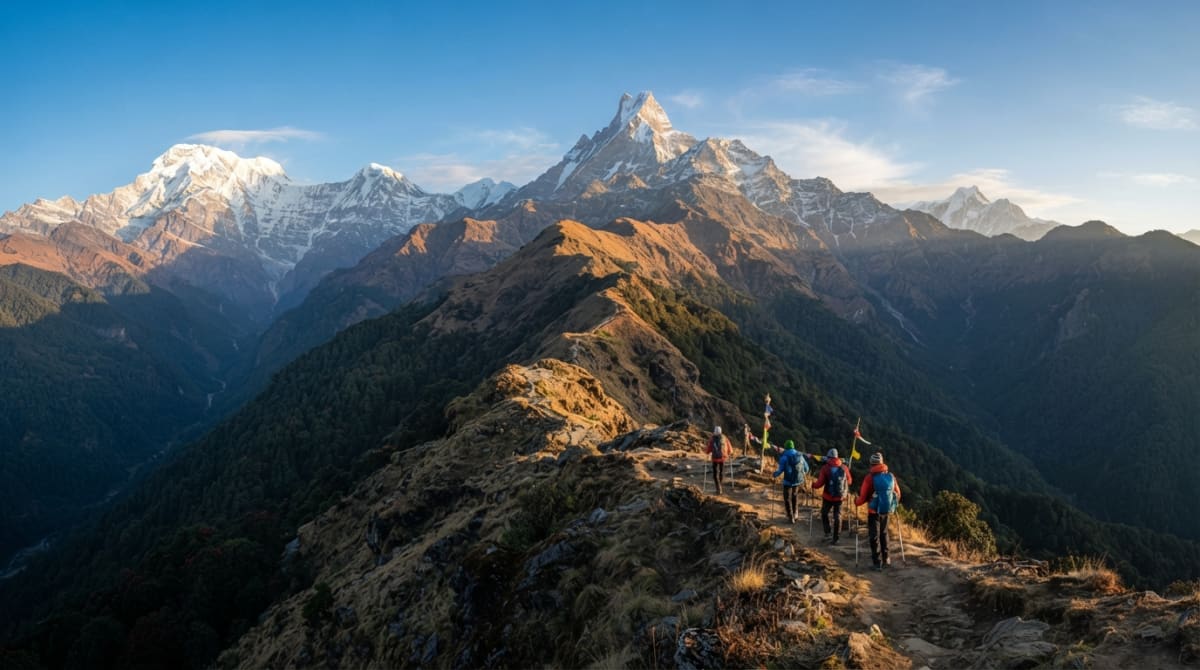
The biggest reason to do the Mardi Himal Trek is the view of Machapuchare. From the ridge above Low Camp to Base Camp, the Fishtail rises directly ahead, sharp and enormous, for two full days. Mardi Himal, Annapurna South and Hiunchuli complete one of the most dramatic mountain panoramas in Nepal. At the Upper View Point at sunrise, as the first light turns the peaks pink and gold, most trekkers feel every step was worth it.
Few short treks bring you this close to peaks of this scale. That is the core of the trek's value, and on a clear day it rarely disappoints. See the mountains you see and the sunrise guide.
What Makes It Worth It: The Variety
In a few days, you pass from terraced farmland through a rhododendron and oak forest draped in moss, onto an open alpine ridge, and finally to high, rocky ground beneath glaciers. Each day feels different. The forest is a highlight in its own right, especially in spring when the rhododendrons bloom, and the descent through villages to Siding adds a gentle cultural coda. This variety makes the trek feel longer and richer than its duration suggests. See the trek highlights.
What Makes It Worth It: Time and Access
For travelers with limited time, Mardi Himal's efficiency is a huge advantage. There are no domestic flights to remote airstrips, no long bus rides to distant trailheads, and very little time lost to travel. You can complete the trek in five days from Pokhara, or even three if you are fit, and still see the high mountains up close. That leaves time for other experiences in Nepal, such as Chitwan, Kathmandu's heritage sites or simply relaxing in Pokhara. See how many days you need.
What Makes It Worth It: Value for Money
Because it is short and close to Pokhara, the Mardi Himal Trek costs less than longer treks. Fewer days mean lower guide, porter and lodge costs, and transport is minimal. For the scenery it delivers, it is one of the best-value treks in Nepal. See the cost guide.
What Can Disappoint: The Weather
The single biggest risk to your experience is the weather. The trek's value depends heavily on mountain views, and clouds can hide them. In autumn, clear mornings are the norm, but in spring, haze and cloud often build by late morning, and in the monsoon, from June to August, many days are cloudy or rainy from dawn to dusk. Even in good seasons, you can be unlucky. Trekkers who reach Base Camp in thick cloud after a freezing pre-dawn climb understandably feel let down.
You can reduce this risk by trekking in autumn, building a spare day into your itinerary to allow a second summit attempt, and keeping expectations flexible. See the best time for the trek and bad weather on summit day.
What Can Disappoint: Basic Lodges
Accommodation on the upper ridge is simple. Rooms are small and unheated, with thin walls and basic beds. Toilets are usually shared, often squat style, and hot showers may be unavailable or cost extra at High Camp. The dining room, heated by a stove, is the only warm place in the evening. For many trekkers, this simplicity is part of the charm, but those expecting the more developed lodges of the Annapurna Base Camp trail or Poon Hill may find it a shock. See the tea house guide.
What Can Disappoint: Crowds at High Camp
Mardi Himal is quieter than the classic routes, but it has become much more popular, and in October and November, High Camp can be crowded. Lodges fill up, rooms may be shared, and the pre-dawn climb to the viewpoint can feel like a procession of headlamps. Outside the peak weeks, the trail is much quieter. See is Mardi Himal crowded?
What Can Disappoint: The Effort
Some trekkers underestimate the Mardi Himal Trek because it is short. In fact, it is a genuine mountain trek, with steep forest climbs and a demanding summit day that combines an early start, cold, a steep climb of around 900 meters, altitude and a long descent. Short itineraries, especially the three-day version, make it tougher still. Trekkers who arrive unfit or unprepared can find it harder than expected. See how difficult the trek is and the hardest day.
What Can Disappoint: Less Village Culture
Once you leave the lower trail, the Mardi Himal Trek passes through no permanent villages, only lodge settlements. If you are looking for rich cultural experiences, such as staying in traditional villages, visiting monasteries or seeing daily life, other treks like Poon Hill, Ghandruk or the Annapurna Circuit offer more. You can add culture by starting in Dhampus or ending with a homestay in Lwang. See villages around Mardi Himal and Mardi Himal via Lwang.
Is It Worth It in Each Season?
The answer to whether Mardi Himal is worth it depends partly on when you go. In autumn, from late September to November, the answer is an emphatic yes for almost everyone: skies are usually clear, temperatures are comfortable, and the views from the ridge are at their best, though the trail and High Camp are at their busiest. In spring, from March to May, it is still very worthwhile, especially for the blooming rhododendron forest and milder temperatures, but you should expect more afternoon cloud and haze, and plan to be on the ridge early in the day. In winter, from December to February, it is worth it for trekkers who handle cold well and want crystal-clear skies and quiet trails, but snow and ice can limit how far you go above High Camp. In the monsoon, from June to August, it is worth it only for trekkers who value lush forest, solitude and a sense of adventure more than guaranteed views. See the monthly weather guide.
Is the Short Version Worth It?
Many travelers wonder whether the 3-day Short Mardi Himal Trek is worth doing, or whether they should wait until they have more time. For fit trekkers who are short on days, it is well worth it: you still walk the ridge and see the sunrise beneath Machapuchare. But it comes at a cost. The days are long, altitude gain is rapid, and there is little time to rest, enjoy sunsets or wait for better weather. If you can find two more days, the 5-day trek from Pokhara is much more rewarding for most people, giving you time to acclimatize, enjoy the forest and the ridge at a relaxed pace, and have a better chance of clear views. See the 3-day itinerary and the 5-day itinerary.
What You Gain Beyond the Views
The Mardi Himal Trek offers benefits that go beyond scenery. For many first-time trekkers, it is their first experience of high altitude, and learning how their body responds at 3,500 to 4,500 meters is valuable preparation for bigger treks in future. It builds confidence: completing a demanding summit day in the cold and dark is a real achievement. It offers a break from screens and routines, with days shaped by walking, eating and sleeping. And it introduces you to the people of the Himalaya, from guides and porters to lodge families, whose hospitality is a highlight in its own right. See Mardi Himal as a warm-up for bigger treks and Mardi Himal as a digital detox.
Who Will Love It
- Travelers with about a week who want close-up Himalayan views
- Reasonably fit first-time trekkers looking for a real challenge
- Photographers drawn to Machapuchare, sunrises and the sea of clouds
- Experienced trekkers seeking a quieter alternative to the classic routes
- Nature lovers who enjoy forests, birds and flowers
- Those planning bigger treks who want an altitude warm-up
Who Might Be Happier Elsewhere
- Those wanting an easy, gentle walk: consider Australian Camp or Panchase
- Those focused on village culture: consider Poon Hill and Ghandruk
- Those with more time who want an iconic destination: consider Annapurna Base Camp or Everest Base Camp
- Those needing comfortable accommodation throughout: consider shorter, lower treks
- Those with health conditions affected by altitude: seek medical advice first
See short treks from Pokhara compared and Mardi Himal vs Poon Hill.
Mardi Himal Compared with Longer Treks
How does Mardi Himal stack up against the big-name treks? Annapurna Base Camp takes you into the heart of a mountain sanctuary surrounded by peaks, but it takes longer and the trail is busier. Everest Base Camp offers the ultimate Himalayan pilgrimage, but it requires around two weeks, domestic flights and much greater altitude. The Annapurna Circuit crosses a high pass and passes through diverse cultures, but it takes two to three weeks. Mardi Himal cannot match these for sheer scale or cultural depth. What it offers instead is an extraordinary amount of mountain scenery for the time, a high ridge walk that none of the others quite replicates, and relative quiet. For many travelers, that makes it the better choice for this trip, and a perfect preparation for a longer trek in the future. See Mardi Himal vs Annapurna Base Camp and Mardi Himal vs Everest Base Camp.
Making It Worth It
A few choices make a big difference to whether the trek lives up to your hopes. Go in autumn if mountain views are your priority, or spring if you love flowers. Choose an itinerary with enough time to acclimatize and a spare day for weather. Train beforehand so the effort is enjoyable rather than exhausting. Keep an open mind about the lodges. And remember that turning around at the Upper View Point is always an option. See how to get the most out of Mardi Himal and mistakes to avoid.
Our Verdict
The Mardi Himal Trek is one of the best treks in Nepal for its length, and for most trekkers with limited time it is the finest way to experience the high Himalaya. It is not perfect: the lodges are basic, the summit day is hard, and the weather can let you down. But on a clear morning at the Upper View Point, with Machapuchare glowing in front of you, few trekkers wonder whether it was worth it. See why Mardi Himal is Nepal's best short trek.
Decide and Plan with Us
If you are still unsure, contact us and tell us about your time, fitness and interests; we will give you an honest recommendation. To start planning, see the 9-day Mardi Himal Trek from Kathmandu or the 5-day trek from Pokhara.