

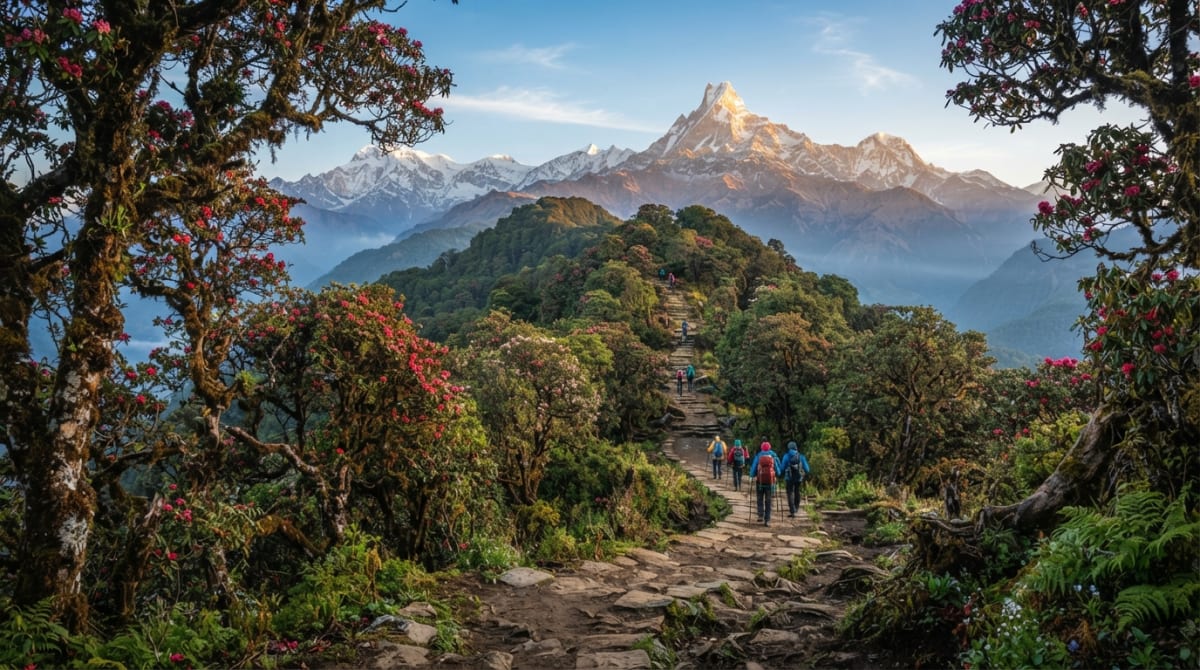
If Poon Hill is the Annapurna region's most famous sunrise, Khopra Danda is its best-kept secret. This high, grassy ridge west of Ghorepani rises to around 3,600 meters and faces the enormous south face of Dhaulagiri across the Kali Gandaki gorge, with Annapurna South and its neighbours close by to the east. Because it is less developed and a little more demanding than Poon Hill, it sees only a fraction of the trekkers. Combine it with Mardi Himal, another ridge trek on the other side of the Modi Khola, and you have a two-week route that offers solitude, huge views and plenty of variety.
This guide explains how the two ridges link, suggests an itinerary and covers the practical details. For the Mardi Himal section, see our Mardi Himal Trek, which we can extend to include Khopra.
What Khopra Danda Adds
Khopra's appeal is its combination of big views and few people. From the ridge, Dhaulagiri, the seventh-highest mountain in the world, fills the western skyline, while Annapurna South, Nilgiri and other peaks rise to the north and east. Community-run lodges on the ridge were set up to bring tourism income to local villages, and the atmosphere is peaceful and remote. For keen walkers, a demanding side trip from Khopra leads toward Khayer Lake, a sacred lake at higher altitude, though it requires good fitness and suitable weather.
Where Mardi Himal gives you close-up views of Machapuchare and the peaks at the head of the Modi Khola, Khopra gives you broad panoramas across to Dhaulagiri and the Kali Gandaki. Together they show you the Annapurna region from two very different angles.
How the Treks Connect
The usual approach to Khopra goes via Ghorepani, the village below Poon Hill. From Ghorepani or nearby, a trail climbs west and north through forest and pasture to the Khopra ridge. From Khopra, the route descends east toward Tadapani or Swanta and continues to Ghandruk, a large Gurung village on the western side of the Modi Khola valley. From Ghandruk, you descend to the river and cross to Landruk on the eastern side, then climb to join the Mardi Himal route. The final days follow the Mardi Himal ridge to High Camp and Base Camp and descend to Siding. See linking Mardi Himal with Landruk.
A Sample Itinerary
| Day | Route |
|---|---|
| 1 | Drive from Pokhara, trek to Ulleri area |
| 2 | Trek to Ghorepani |
| 3 | Poon Hill sunrise, trek toward Khopra approach |
| 4 | Climb to Khopra Danda |
| 5 | Rest and views at Khopra, optional side hike |
| 6 | Descend east toward Tadapani or Swanta |
| 7 | Trek to Ghandruk |
| 8 | Cross the Modi Khola to Landruk |
| 9 | Climb to the Mardi Himal route, Forest Camp area |
| 10 | Trek to High Camp |
| 11 | Mardi Himal Base Camp at sunrise, descend to Low Camp |
| 12 | Descend to Siding, drive to Pokhara |
Stops vary with pace, lodge availability and conditions. Your guide will tailor the route.
Difficulty
This combination is more demanding than Mardi Himal alone or Poon Hill alone. The Khopra section involves long climbs and descents on quieter trails, and the ridge sits at around 3,600 meters, similar to Mardi Himal's High Camp. The crossing of the Modi Khola between Ghandruk and Landruk involves a steep descent and climb. Then the Mardi Himal section adds the high, steep summit hike. Train for 10 to 12 weeks, including long back-to-back hiking days. See our fitness guide.
Lodges
Lodges on the Khopra ridge are fewer and simpler than in Ghorepani, and in some seasons they may be limited, so guides confirm availability in advance. Villages such as Ghandruk and Landruk offer comfortable lodges, and the Mardi Himal section follows the familiar pattern of simple tea houses. See our Mardi Himal tea house guide.
Why Choose a Quieter Route?
The Annapurna region is one of the most popular trekking areas in Nepal, and its classic routes can be busy in peak season. Poon Hill's sunrise viewpoint sometimes hosts crowds of trekkers, and lodges on Annapurna Base Camp fill quickly in October. Khopra Danda and the Mardi Himal ridge offer an antidote. Both are high, open ridges with outstanding mountain views, yet both see far fewer trekkers. Walking them together, you can spend days on quiet trails, share lodges with only a handful of other trekkers and enjoy sunrises in peace.
Quieter routes also tend to feel more personal. Lodge owners have more time to talk, guides can adjust plans more easily, and there is space to stop and simply look. For trekkers who value solitude and nature over the social buzz of the busier trails, this combination is hard to beat.
Two Ridges, Two Perspectives
Khopra and Mardi Himal are both ridge treks, but they face different mountains. From Khopra, the view is dominated by Dhaulagiri to the west, across the deep Kali Gandaki valley, with Annapurna South and other peaks nearby. It is a broad, sweeping panorama that emphasises the scale of the Himalaya. From Mardi Himal, you look straight up the Modi Khola toward Machapuchare, with Mardi Himal, Hiunchuli and Annapurna South close at hand. It is a more intimate, close-up view that emphasises the steepness and drama of the peaks. Experiencing both gives you a remarkably complete picture of the region's mountains. See the mountains you see from Mardi Himal.
Acclimatization
Khopra sits at a similar altitude to Mardi Himal's High Camp, so walking it first helps your body adjust before the Mardi Himal summit hike. By the time you reach High Camp and climb toward Base Camp at around 4,500 meters, you have spent over a week at moderate altitude and should feel stronger. Continue to walk slowly on climbs, drink plenty of water and report any symptoms to your guide. See acclimatization on Mardi Himal.
Villages and Culture
The route passes through a range of villages with different communities. Around Ghorepani and the approach to Khopra, you pass through farming settlements where many families are Magar or Gurung. Ghandruk, on the western side of the Modi Khola, is a well-known Gurung village with traditional stone houses and a small museum, and Landruk, across the river, is another attractive Gurung village. The Mardi Himal section is mostly forest and ridge, with Gurung villages such as Siding at the end. See Gurung culture on the Mardi Himal Trek.
Best Seasons
Autumn is the best season for clear views of Dhaulagiri from Khopra and Machapuchare from Mardi Himal, with stable weather and dry trails. Spring brings rhododendron blooms to the forests on both ridges and warmer days, with more afternoon cloud. Winter can bring snow to both ridges and some lodges may be closed, so it suits experienced trekkers with flexible plans. The monsoon brings rain and poor visibility. See the best time for the trek.
Packing for a Longer Trek
For 11 to 13 days on the trail, pack a layering system suitable for cold nights at around 3,600 meters on both ridges: base layers, fleece, a warm down jacket, a waterproof shell, warm hat and gloves, and a sleeping bag rated for well below freezing. Add a spare base layer and extra socks, a small laundry kit for lower villages, blister care and a good first aid kit. Hiring a porter is strongly recommended on a trek of this length. See our packing list.
Safety and Remoteness
Khopra is more remote than Poon Hill and Mardi Himal, with fewer lodges and fewer people on the trail. That means help can be further away if something goes wrong. Trek with an experienced, licensed guide who knows the route, carry insurance covering trekking to at least 4,500 meters and helicopter evacuation, and follow your guide's advice about weather and side trips. Side hikes above Khopra to higher ground should only be attempted in good weather and with adequate fitness. See our safety guide.
Costs
A combined trek costs more than a single short trek because of the extra days of guide and porter wages, accommodation and meals. Lodge prices on remote ridges can be slightly higher because supplies travel further. Budget for extras such as hot drinks, charging and snacks, and for tips at the end of the trek. See our cost guide.
Who This Combination Suits
The Khopra and Mardi Himal combination suits fit, experienced trekkers with about two weeks who want quiet trails, big views and a sense of remoteness without the length of the Annapurna Circuit. It suits photographers who want two very different ridge panoramas, and trekkers who have already done Poon Hill or Annapurna Base Camp and want something new. It is less suitable for beginners or anyone who prefers busy trails and comfortable lodges.
A Day on the Khopra Ridge
To picture the Khopra section, imagine waking before dawn at a small lodge on the ridge. You step outside wrapped in your down jacket, and as the sky lightens, the vast white wall of Dhaulagiri appears across the valley, its summit turning pink with the first light. To the east, Annapurna South and its neighbours catch the sun one by one. There may be only a few other trekkers around, and the silence is broken only by the wind and the calls of birds. After breakfast, you might explore the ridge, watch eagles and vultures riding the thermals, or simply sit and take in the view. In the afternoon, clouds often rise from the valleys, and in the evening they settle again below you, leaving the peaks floating above a white sea.
It is this sense of space and quiet that makes Khopra special. Many trekkers who visit say it was the highlight of their trip, even compared with the more famous viewpoints nearby.
Photography on Both Ridges
Photographers will find this combination especially rewarding. Khopra offers wide panoramas of Dhaulagiri and the Annapurnas, best captured at sunrise and sunset with a wide-angle lens, and dramatic cloudscapes in the afternoons. Mardi Himal offers close-up compositions of Machapuchare and the peaks at the head of the Modi Khola, with the ridge trail leading the eye toward the mountains. Both ridges are excellent for star photography on clear, moonless nights. Carry spare batteries and keep them warm, as nights on both ridges are cold. See our photography guide.
Khopra or Poon Hill With Mardi Himal?
Many trekkers wonder whether to pair Mardi Himal with Poon Hill or Khopra. Poon Hill is shorter, easier and more social, with a famous sunrise viewpoint, well-developed lodges and plenty of fellow trekkers. It fits into a combined trek of around nine to eleven days. Khopra is higher, quieter and more remote, with bigger views of Dhaulagiri and a stronger sense of wilderness, but it adds days and requires more fitness. The classic Khopra approach passes close to Ghorepani anyway, so many itineraries include a Poon Hill sunrise on the way. If you have the time and fitness, Khopra adds something special. If you prefer comfort and a shorter trip, Poon Hill is the better partner. See Mardi Himal and Poon Hill and Mardi Himal vs Khopra Danda.
Tips for the Khopra and Mardi Himal Trek
- Confirm lodge availability. Khopra's lodges are few, and in some seasons limited; your guide will check ahead.
- Build in buffer days. Two high ridges mean two chances for weather to interfere with sunrise; spare days protect both.
- Carry enough cash. There are no ATMs on the trail, and remote lodges rarely accept cards.
- Pace the crossing. The descent from Ghandruk to the Modi Khola and the climb to Landruk are steep; take them slowly.
- Look after your feet. Nearly two weeks of walking magnifies small problems; deal with hot spots early.
- Respect the remoteness. Stay with your guide on quieter trails and follow advice on side trips and weather.
Book a Combined Trek
We can design a Mardi Himal and Khopra Danda trek with permits, a licensed guide, transport and accommodation included. Start with the 9-day Mardi Himal Trek or the 5-day trek from Pokhara, and contact us to add Khopra.