

If you have more than two weeks in Nepal and love trekking, combining two contrasting treks is a great way to see more of the Himalaya. Mardi Himal and Langtang Valley make a natural pair. Both are relatively short, both are reachable by road without the need for mountain flights, and they sit in very different regions: Mardi Himal in the Annapurna foothills north of Pokhara, and Langtang in the mountains north of Kathmandu, close to the Tibetan border. Together, they show you two faces of the Nepal Himalaya.
This guide explains how to combine them, with a sample itinerary and practical notes on travel, altitude and permits. For the Mardi Himal part, see our 9-day Mardi Himal Trek.
What Langtang Offers
The Langtang Valley Trek begins at Syabrubesi, a day's drive north of Kathmandu, and follows the Langtang Khola upstream through forest into a broad glacial valley. The trail passes Tamang villages, yak pastures and cheese factories, and ends at Kyanjin Gompa, a settlement at around 3,870 meters surrounded by glaciers and peaks, including Langtang Lirung. From Kyanjin, optional hikes to viewpoints such as Kyanjin Ri reward you with panoramic views. The valley was badly affected by the 2015 earthquake, and the rebuilt villages and memorials are a poignant part of the journey. See Mardi Himal vs Langtang Valley.
A Sample 17-Day Itinerary
| Days | Plan |
|---|---|
| 1–2 | Arrive in Kathmandu, travel to Pokhara |
| 3–7 | Mardi Himal Trek, return to Pokhara |
| 8 | Travel back to Kathmandu |
| 9 | Drive to Syabrubesi |
| 10–14 | Langtang Valley Trek to Kyanjin Gompa and back toward Syabrubesi |
| 15 | Drive to Kathmandu |
| 16 | Buffer day and Kathmandu sightseeing |
| 17 | Departure |
Why Pair These Two Treks?
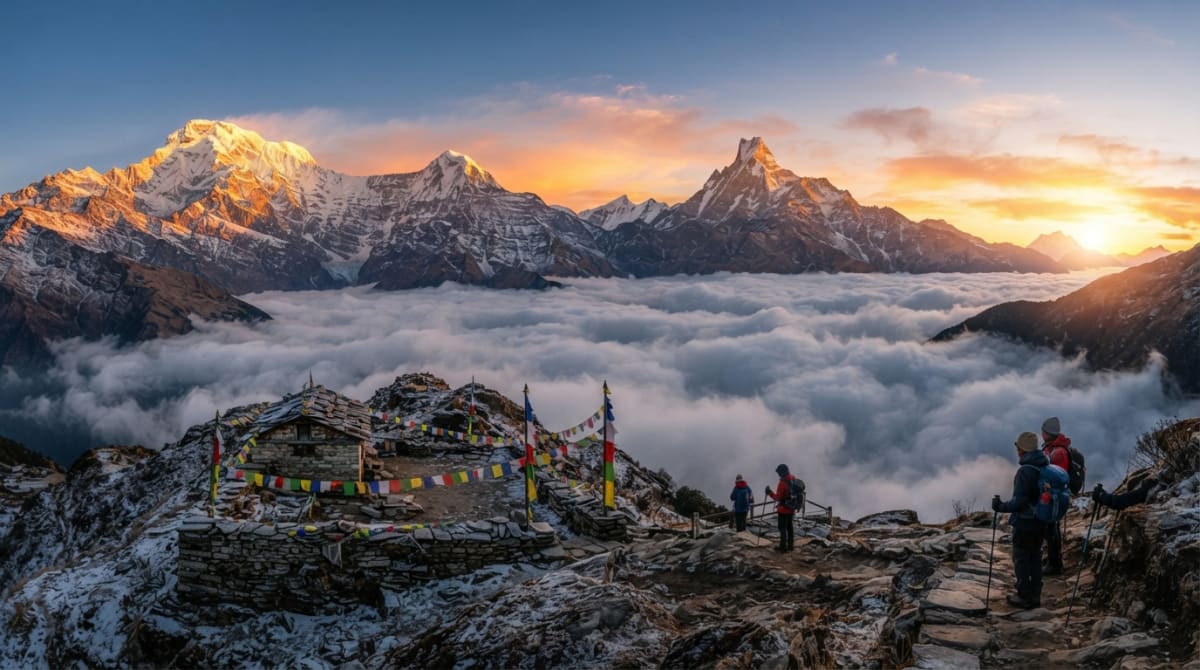
Mardi Himal and Langtang complement each other in almost every way. Mardi Himal is a ridge trek: you climb through rhododendron forest onto an open crest and walk toward the peaks, with the mountains in front of you for days. Langtang is a valley trek: you follow a river upstream through forest and gorges until the valley opens into a wide glacial basin ringed by snow peaks. Mardi Himal's villages are Gurung; Langtang's are mostly Tamang, with a strong Tibetan Buddhist influence. Mardi Himal's signature view is Machapuchare at close range; Langtang's is Langtang Lirung and the glaciers above Kyanjin Gompa. Walking both gives you two distinct experiences of the Nepal Himalaya without flights to remote airstrips.
Travelling Between the Treks
The main challenge of this combination is the road travel. After Mardi Himal, you return from Pokhara to Kathmandu by tourist bus, private vehicle or flight. From Kathmandu, the drive north to Syabrubesi, the Langtang trailhead, takes most of a day on a winding mountain road that can be rough in places and affected by landslides in the monsoon. A private jeep is more comfortable and flexible than local buses. Allow at least one night in Kathmandu between the treks to rest, do laundry and repack. See bus travel in Nepal.
The Langtang Trek Day by Day
A typical Langtang itinerary begins with the drive from Kathmandu to Syabrubesi. The first trekking day follows the Langtang Khola upstream through forest to the lodge settlement of Lama Hotel. The second day continues up the valley as it widens, passing yak pastures to Langtang village, rebuilt after the 2015 earthquake. The third day brings you to Kyanjin Gompa, where you can visit the monastery and a local cheese factory. The fourth day is usually spent exploring from Kyanjin, with an early hike to a viewpoint such as Kyanjin Ri for panoramic views of the surrounding peaks and glaciers. The final days retrace the route down the valley to Syabrubesi and back to Kathmandu.
Altitude Across Both Treks
Doing Mardi Himal first helps with acclimatization for Langtang. On Mardi Himal, you sleep at High Camp at 3,580 meters and visit about 4,500 meters at Base Camp. In Langtang, you sleep at Kyanjin Gompa at around 3,870 meters, higher than High Camp, and may hike to viewpoints above 4,500 meters. Some acclimatization is lost during the days back in Kathmandu, so still ascend gradually in Langtang, drink plenty of water and watch for symptoms. See our altitude sickness guide.
Permits for Both Treks
The two treks need different permits. Mardi Himal requires an Annapurna Conservation Area Permit and a TIMS card. Langtang requires a Langtang National Park entry permit and a TIMS card. Foreign trekkers must walk with a licensed guide in both areas. Your agency can arrange everything before you arrive. See Mardi Himal permits and our Nepal trekking permits guide.
Two Cultures
The cultural contrast between the two treks is one of the joys of combining them. In the Annapurna foothills, many villages are Gurung, with stone houses, terraced fields and a blend of Buddhist, shamanic and Hindu traditions. In Langtang, most communities are Tamang, closely related to Tibetan culture, with prayer flags, mani walls, chortens and monasteries throughout the valley. Food, dress and architecture differ subtly between the two, and guides from each region can share their own stories. See Gurung culture on the Mardi Himal Trek.
Best Season
Autumn, from October to November, is the best season for both treks, with clear skies and stable weather. Spring, from March to May, brings rhododendrons to both forests and warmer temperatures, with more haze. Winter is cold, with snow possible at Kyanjin Gompa and above High Camp, but trails are quiet. The monsoon brings rain, leeches and landslide risk on the road to Syabrubesi, making the combination harder. See the best time for the trek.
Landscapes Compared
The two treks offer strikingly different scenery. On Mardi Himal, you climb from terraced farmland through dense rhododendron and oak forest, draped in moss, onto a grassy ridge above the treeline. The views are dominated by steep, dramatic peaks at close range, especially Machapuchare, with the deep Modi Khola valley falling away to one side. On Langtang, you follow a roaring river through a forested gorge with bamboo and oak, until the valley widens into open pastures dotted with yaks and stone huts, surrounded by glaciers and snow peaks. The landscape feels more alpine and Tibetan, with long views up the valley toward the border. Photographers will find very different subjects on each trek.
The 2015 Earthquake and Langtang Today
The Langtang valley suffered a devastating landslide triggered by the 2015 earthquake, which destroyed the original Langtang village and claimed many lives. Walking through the area today, you pass memorials and see where the old village once stood, alongside rebuilt lodges and homes. Many trekkers find this a moving part of the journey and a reminder of the resilience of mountain communities. Visiting and staying in local lodges supports the continued recovery of the valley. Treat memorial sites with respect.
Lodges on Both Treks
Both treks use tea house accommodation. On Mardi Himal, lodges are simple and become more basic above Low Camp, with High Camp the most rustic. In Langtang, lodges at Lama Hotel, Langtang village and Kyanjin Gompa range from simple to fairly comfortable, many rebuilt since 2015, with dining rooms warmed by stoves and menus similar to those on Mardi Himal. Kyanjin Gompa is known for yak cheese and fresh bakery items in some lodges. Facilities such as hot showers and charging are available for a fee on both treks. See our Mardi Himal tea house guide.
Alternative Order: Langtang First
If your flights arrive and leave from Kathmandu, doing Langtang first can reduce travel: you drive from Kathmandu to Syabrubesi soon after arrival, complete the Langtang trek, return to Kathmandu, then travel to Pokhara for Mardi Himal and fly home from Kathmandu or, if possible, directly from Pokhara. The acclimatization from Kyanjin Gompa, which is higher than Mardi Himal's High Camp, makes Mardi Himal feel easier afterward. The choice depends on your flights and which trek you want as the finale. Both orders work well with sensible pacing.
Other Two-Trek Combinations
If Langtang does not appeal, Mardi Himal also pairs well with other treks. Poon Hill is the easiest partner, sharing the Pokhara base and fitting into a shorter trip. Annapurna Base Camp connects directly via Landruk. Khopra Danda offers a quieter ridge with views of Dhaulagiri. For those wanting the Everest region, the short Everest View Trek is possible with flights to Lukla. See Mardi Himal and Poon Hill, Mardi Himal and ABC and Mardi Himal and the Everest View Trek.
Food on Both Treks
Tea house menus on both treks feature Nepali staples such as dal bhat, noodles, fried rice, momos, soups and porridge, with tea and hot drinks throughout the day. Langtang adds a few regional specialities: yak cheese from the cheese factory at Kyanjin Gompa, Tibetan bread, butter tea and, in some lodges, freshly baked goods. On Mardi Himal, the menu is simpler higher up, with dal bhat the reliable favourite. Prices rise with altitude on both treks. Eat well to fuel two treks back to back, and carry snacks bought in Kathmandu or Pokhara. See the Mardi Himal menu guide.
Guides for Two Regions
You can trek both routes with the same guide, which gives continuity and a relationship built over two weeks, or with local guides from each region, who know every lodge and trail and can share their own community's culture. Either approach works well. Our guides know both regions and can arrange whichever suits you best. See hiring a guide.
Two Treks, Two Memories
Trekkers who combine these routes often describe two distinct highlights: the intimate, glowing sunrise over Machapuchare from the Mardi Himal ridge, and the vast, peaceful glacial valley at Kyanjin Gompa, with yaks grazing beneath the peaks and prayer flags snapping in the wind.
Safety on Both Treks
Each trek has its own hazards to understand. On Mardi Himal, the exposed ridge in bad weather and ice above High Camp in winter are the main risks. In Langtang, landslides can affect the trail and the road to Syabrubesi, particularly during and after the monsoon, and altitude becomes a factor at Kyanjin Gompa and on viewpoint hikes. On both treks, trek with a licensed guide, carry insurance covering trekking altitudes and helicopter evacuation, and follow your guide's advice on weather and conditions. See our safety guide.
Photography on Two Treks
Combining the two treks gives photographers a wide variety of subjects: the sunrise over Machapuchare from the Mardi Himal ridge, rhododendron forest in spring, prayer flags and mani walls in Langtang, yaks grazing beneath glaciers, and the monastery at Kyanjin Gompa. Early mornings are best on both treks. Carry spare batteries, as charging can be limited at high lodges on both routes. See our photography guide.
Tips for Combining the Treks
- Allow a rest day between treks. The road journeys are tiring, and your legs will benefit.
- Keep a buffer day before your flight. Mountain roads can be delayed by landslides.
- Book separate permits in advance. Your agency can prepare both sets.
- Consider a private jeep to Syabrubesi. It is more comfortable than local buses.
- Carry enough cash for both treks. ATMs are not available on either trail.
- Pace yourself. Two treks in two and a half weeks is rewarding but demanding.
Packing and Budget
The same gear serves both treks: layers, a warm down jacket, waterproof shell, broken-in boots, a sleeping bag rated for well below freezing, trekking poles and a headlamp. Budget for two sets of permits, two guided treks, road transport, hotels in Kathmandu and Pokhara, and extras such as hot showers, charging and snacks on both trails. See our packing list and cost guide.
Who This Combination Suits
This combination suits keen trekkers with around two and a half weeks who want variety without long walks or mountain flights. It suits those interested in comparing cultures and landscapes, and photographers who want two contrasting sets of mountain views. It is less suitable for travellers with only a week or two, who may prefer one trek plus other experiences.
Book a Two-Trek Trip
We can combine the 9-day Mardi Himal Trek with a Langtang Valley trek, with permits, guides and transport arranged. Contact us to plan.