

After the open meadow of Australian Camp, the Mardi Himal trail dips gently into forest and arrives at Pothana, a small settlement of lodges strung along the ridge. It is easy to walk through without paying it much attention, but Pothana plays an important role on the trek: it is where the Annapurna Conservation Area checkpoint records your permits, marking your formal entry onto the trail. It is also a pleasant, quieter place for tea or lunch, surrounded by oak and rhododendron forest, with occasional views of the peaks.
This guide explains what to expect at Pothana, from the checkpoint and lodges to the surrounding forest, and how it fits into day one of the trek. For the full first day, see Kande to Pitam Deurali.
Where Pothana Is
Pothana lies at around 1,990 meters on the forested ridge a short walk beyond Australian Camp, which is slightly higher. From Australian Camp, the trail descends gently for about 30 to 45 minutes to reach it. Pothana sits on a busy junction of trails: the path continues toward Pitam Deurali, where the Mardi Himal route branches north, and onward toward Landruk and the Annapurna Base Camp route to the west. Other paths lead down toward Dhampus. This makes Pothana a crossroads for trekkers heading to several destinations.
The Conservation Area Checkpoint
The main reason Pothana matters to trekkers is the Annapurna Conservation Area checkpoint. Staff here check and record your ACAP permit and trekking details, a formality that takes only a few minutes. If you are trekking with a guide, they will usually handle the paperwork while you rest, but keep your permits accessible if you carry them yourself. The checkpoint helps authorities keep track of trekkers in the conservation area, which is important for safety and for managing visitor numbers. See where permits are checked on Mardi Himal and our permits guide.
Lodges and Food
Pothana has several lodges, each with a dining room and simple rooms. Menus include the usual trekking fare: dal bhat, noodles, fried rice, momos, soups, pancakes and hot drinks. Many trekkers stop here for an early lunch or a mid-morning tea after the climb to Australian Camp. Because it sits in the forest, Pothana feels calmer and more sheltered than the busy meadow at Australian Camp. Charging and hot showers are often available for a fee. See our tea house guide.
The Forest Around Pothana
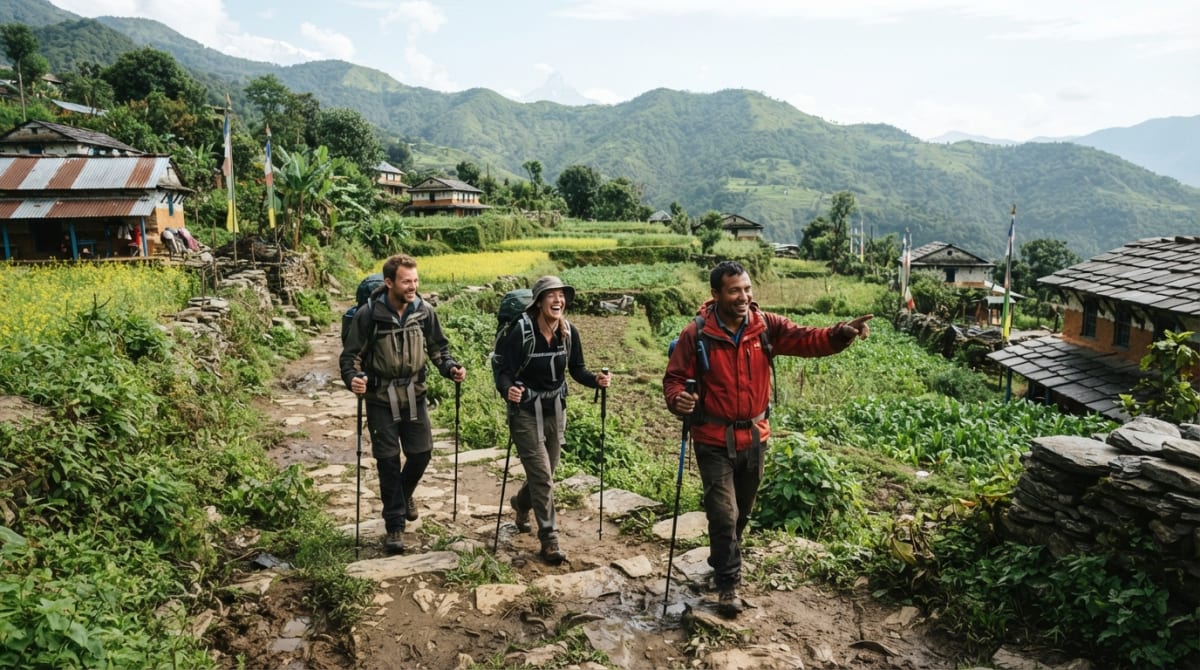
Pothana is surrounded by broadleaf forest, including oak and rhododendron, which is especially beautiful in spring when the rhododendrons bloom. The forest is home to many birds, and early mornings are filled with song. Langur monkeys are sometimes seen in the trees. The trail from Pothana to Pitam Deurali is mostly shaded and gentle, a pleasant walk after the steep stairs from Kande. See flora and fauna along the trail.
Views from Pothana
The forest limits views at Pothana compared with Australian Camp, but there are glimpses of the Annapurna range through gaps in the trees and from open spots around the lodges, particularly in the early morning and evening. Machapuchare's distinctive peak often appears above the treeline. For the best panoramic views, walk back up to Australian Camp or continue toward Pitam Deurali.
Pothana to Pitam Deurali
From Pothana, the trail continues through forest for about an hour to an hour and a half to Pitam Deurali, climbing gently with a few short ups and downs. The path is well used and clearly defined. At Pitam Deurali, the Mardi Himal route branches north from the trail to Landruk. See Pitam Deurali: your first night.
Staying Overnight in Pothana
Most itineraries pass through Pothana without staying, but it can be a good alternative overnight stop, especially if Australian Camp is busy. Evenings are quiet, and the forest setting is peaceful. For relaxed itineraries, a night in Pothana makes the first day very short. See the slow Mardi Himal itinerary.
How the Checkpoint Works
At the checkpoint, a staff member from the Annapurna Conservation Area Project checks each trekker's entry permit, notes your details and planned route in a register, and may stamp your permit. The process is quick if your paperwork is in order. Checkpoints like this serve several purposes: they confirm that trekkers have paid the conservation fee, they record who is on the trail in case of emergencies, and they help authorities understand how many people use each route. If you arrive without a valid permit, you may be asked to buy one at a higher price or be turned back, so always arrange permits in Pokhara or Kathmandu beforehand. Remember that since 2023 foreign trekkers are expected to walk with a licensed guide, and your guide's details may be recorded as well. See the ACAP permit for Mardi Himal and is a guide mandatory?
A Crossroads of Trails
Pothana is a genuine junction in the trail network of the Annapurna foothills. From here, trails lead in several directions: back up to Australian Camp and down to Kande; toward Dhampus and Phedi, an alternative start and finish; north-west to Pitam Deurali, where the Mardi Himal route climbs north along the ridge; and onward toward Tolka and Landruk, the gateway to the Modi Khola valley and the Annapurna Base Camp trail. Because of this, you will meet trekkers bound for many different destinations. Signposts exist at some junctions, but with a guide you do not need to worry about taking the wrong path. See the Mardi Himal route guide and linking Mardi Himal with Landruk.
Pothana Through the Seasons
In spring, the forest around Pothana is at its most colourful, with rhododendrons blooming in red and pink and birds singing in the canopy. In autumn, the forest is green and fresh after the monsoon, and clear mornings offer glimpses of the peaks through the trees. In winter, mornings are cool and crisp, with frost in shaded spots and clear views from open places. In the monsoon, the forest is lush and misty, the trail can be muddy, and leeches appear in damp areas. Pothana's sheltered position makes it pleasant in most weather. See the best time for the trek.
What to Do at Pothana
Most trekkers spend only a short time in Pothana, but there are good reasons to linger. Enjoy a cup of tea or an early lunch on a lodge terrace. Watch birds in the surrounding forest, especially in the morning. Take photos of the forest and, when visible, the peaks above the trees. If you are staying overnight, take a short walk back to Australian Camp in the late afternoon for sunset, then return for dinner. Chat with lodge owners, many of whom come from nearby villages and can tell you about the area.
Pothana and Local Livelihoods
The lodges at Pothana, like those throughout the trek, are important sources of income for local families. Trekking and day-hiking tourism provide jobs in lodges, as guides and porters, and in supplying food and goods. When you stop for tea, lunch or a night, you contribute directly to this local economy. Choosing locally run lodges, paying fair prices and treating staff with respect all help ensure tourism benefits the communities who live here. See how your trek supports local communities.
Pothana vs Australian Camp for an Overnight
If you are planning a gentle first night, you might choose between Australian Camp and Pothana. Australian Camp has the bigger view, an open meadow and a livelier atmosphere, with more day visitors and sometimes groups of Nepali tourists on weekends. Pothana is quieter and more sheltered in the forest, with fewer visitors and a calmer evening, but more limited views from the lodges themselves. Photographers and view-lovers usually prefer Australian Camp; those seeking peace and quiet may prefer Pothana. Both are a short walk apart, so you can stay in one and visit the other for sunset or sunrise.
Walks from Pothana
Pothana makes a convenient base for short walks. A gentle stroll back up to Australian Camp, around 45 minutes, rewards you with sunset or sunrise views of the Annapurnas. A walk toward Dhampus takes you through forest and farmland to a larger village with traditional houses and mountain views. For those heading on to Mardi Himal, the forest trail to Pitam Deurali is an easy introduction to the longer forest section of day two. Your guide can suggest routes that fit your time and energy.
Safety and Navigation
Pothana is a safe, well-travelled area, but a few simple precautions apply. The trail junctions around Pothana can be confusing, particularly in fog or at dusk, so stay with your guide and do not wander off alone. In the monsoon, parts of the trail can be muddy and slippery. Keep valuables with you, as you would anywhere. If you feel unwell on day one, Pothana is close to the road at Kande and Dhampus, making it easy to return to Pokhara if needed. See our safety guide.
Pothana for Photographers
While Pothana's forest setting means fewer sweeping views, it offers its own photographic opportunities. The forest trail, with sunlight filtering through oak and rhododendron, makes atmospheric images, especially on misty mornings. In spring, rhododendron blooms add colour. The lodges, with their gardens and prayer flags, offer charming scenes of trail life. For mountain panoramas, walk back to Australian Camp at dawn. See the photography guide.
Pothana on Different Itineraries
On the standard 5-day trek from Pokhara, you pass through Pothana mid-morning on day one, pausing at the checkpoint and perhaps for tea before continuing to Pitam Deurali. On the 9-day and 7-day treks, the pattern is the same, with a relaxed first day. On the 3-day short trek, Pothana is a brief stop on a long first day to Low Camp, so the checkpoint visit is kept short. On slow or family itineraries, Pothana can be an overnight stop, making the first day especially gentle. On treks that combine Mardi Himal with Landruk or Annapurna Base Camp, Pothana is where trails toward the Modi Khola begin. See the 5-day itinerary and the 3-day itinerary.
Food and Drink at Pothana
Lunch at Pothana is often the first real tea house meal of the trek, and it is a good introduction to trail menus. Dal bhat, with rice, lentil soup, vegetable curry and pickle, is filling and usually comes with free refills. Noodle soups, fried rice and momos are quick options if you want to keep moving. Ginger lemon honey tea is a trekker favourite. Prices at Pothana are lower than at the higher camps, since supplies travel a shorter distance. See the tea house menu guide.
A Short Stop with a Big Role
It is easy to overlook Pothana on the way to the grander viewpoints higher up the ridge, but the settlement plays a quiet, important role. It is where the conservation area begins to manage your visit, where trails from several directions meet, and where local families have built a small community around trekking. A few minutes spent here, drinking tea in the shade of the forest and chatting with a lodge owner, is a pleasant pause before the trail climbs toward Pitam Deurali and the long forest section beyond. For many trekkers, it is also the moment when the trek begins to feel real: the road is behind you, your permit is stamped, and the mountains are ahead.
Practical Tips
- Keep permits handy. The checkpoint comes soon after Australian Camp on day one.
- Refill water here. Treat water from lodges rather than buying plastic bottles.
- Stop for lunch if needed. Pothana is a convenient place for an early lunch on day one.
- Stay on the right trail. Several paths meet here; follow your guide.
- Carry cash. There are no ATMs beyond Pokhara.
Pass Through Pothana on Your Trek
All our standard Mardi Himal itineraries pass through Pothana on day one, and our guides handle the checkpoint formalities. See the 5-day Mardi Himal Trek from Pokhara, and contact us to book.