

After a morning of stone steps, a mountain view at Australian Camp and a gentle forest walk past Pothana, most Mardi Himal trekkers arrive at Pitam Deurali in the early afternoon of day one. It is a small cluster of lodges on the ridge, but it marks an important point on the trek: this is where the Mardi Himal route leaves the busier trail to Landruk and heads north into the forest toward the mountains. It is also where most people spend their first night on the trail, settling into the rhythm of tea house life.
This guide explains what to expect at Pitam Deurali, from lodges and facilities to views, evenings and preparation for day two. For the walk that gets you here, see Kande to Pitam Deurali.
Where Pitam Deurali Is
Pitam Deurali sits on the ridge at around 2,100 to 2,150 meters, about an hour to an hour and a half beyond Pothana and roughly three to four hours from the road at Kande. In Nepali, a deurali is a pass or saddle, a place where a trail crosses a ridge, often marked by a small shrine, and many villages across Nepal share the name. Pitam Deurali is sometimes simply called Deurali on the Mardi Himal route, but it should not be confused with the Deurali on the Annapurna Base Camp trail, which lies far up the Modi Khola valley. See the Mardi Himal route guide.
A Junction of Trails
At Pitam Deurali, the trail divides. The main path continues west, dropping toward Tolka and Landruk, the gateway to the Modi Khola valley and the Annapurna Base Camp route. The Mardi Himal route turns north and climbs along the ridge into dense forest. Until now, you may have shared the trail with day hikers and trekkers bound for other destinations; from here on, the path is mainly used by Mardi Himal trekkers, and it becomes noticeably quieter. The next morning, your guide will lead you onto the correct trail. See linking Mardi Himal with Landruk.
Lodges and Facilities
Pitam Deurali has several tea houses, making it one of the best-equipped stops on the Mardi Himal route. Rooms are simple twin rooms with beds, mattresses, pillows and blankets. Some lodges offer rooms with attached bathrooms, while others have shared toilets. Hot showers, heated by solar or gas, are usually available for a small fee, as is charging for phones and cameras. Mobile signal is often available, useful for sending a message home before you head into the forest, where coverage becomes patchier. Dining rooms serve a full menu of trekking food. See our tea house guide.
Food at Pitam Deurali
Dinner at Pitam Deurali is often your first full evening meal on the trail. Menus include dal bhat, fried rice, fried noodles, noodle soup, momos, pasta, potato dishes, soups, pancakes and eggs, with tea, coffee and hot chocolate. Prices are moderate compared with higher camps. Order breakfast the night before, as kitchens prepare for many guests in the morning. For a big climbing day ahead, a filling breakfast of porridge, eggs and bread is ideal. See the tea house menu guide.
Views from Pitam Deurali
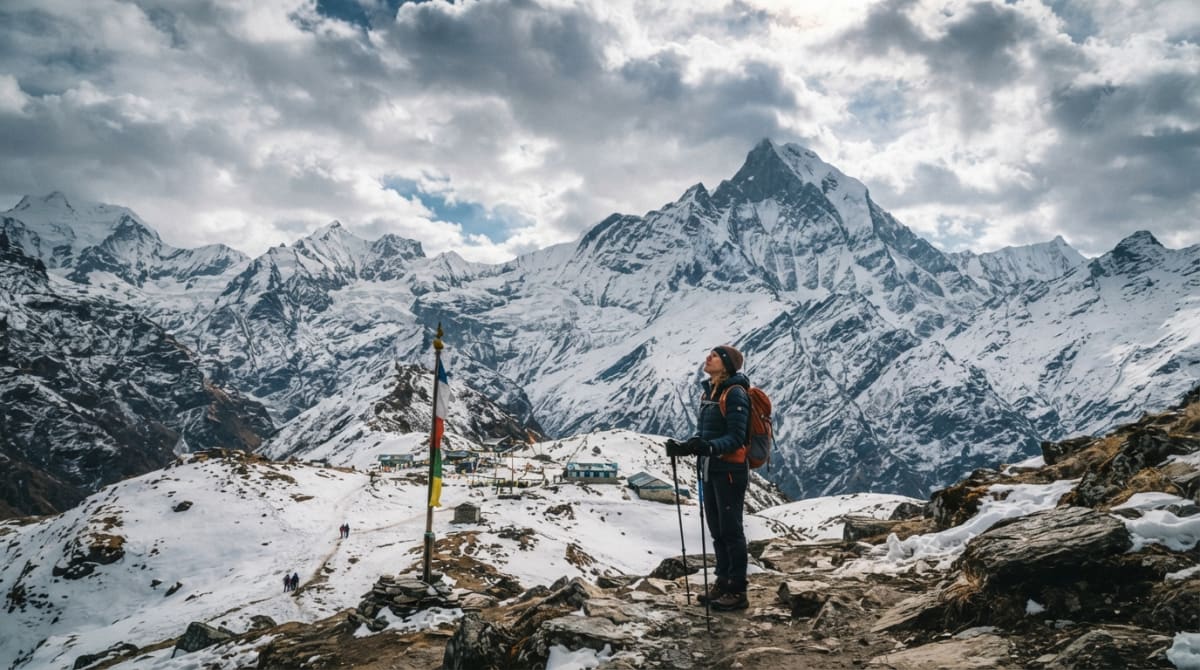
Pitam Deurali is partly surrounded by forest, but on clear mornings and evenings there are views toward the Annapurna range, including Machapuchare rising above the trees. Sunsets can be lovely, with clouds settling into the valleys below and the peaks catching the last light. Walk a few minutes to an open spot near the lodges for the best view. The biggest mountain panoramas come later, above Low Camp, but Pitam Deurali offers an enticing preview.
The Afternoon and Evening
Arriving in the early afternoon gives you plenty of time to settle in. Take a hot shower while the water is warm, change into dry clothes, and rest with a cup of tea. Wash small items of clothing if you need to; they have more chance to dry here than higher up. Charge your devices and check the next day's plan with your guide. As the sun goes down, the temperature drops, and everyone gathers in the dining room around the stove. Evenings are sociable, with trekkers sharing stories and plans. Most people are in bed by 8:30 or 9 p.m. See evenings in a Mardi Himal tea house.
Sleeping at Pitam Deurali
At around 2,100 meters, Pitam Deurali is low enough that altitude rarely affects sleep, and nights are milder than at the camps above. Even so, it can be chilly, especially in winter, so use your sleeping bag inside the lodge blankets. Earplugs help if walls are thin or dogs bark at night. A good night's sleep here sets you up well for the long forest climb of day two.
Pitam Deurali Through the Seasons
In autumn, Pitam Deurali is busy, with clear mornings and cool evenings. In winter, nights can drop to around freezing, and mornings are often crisp and clear. In spring, the surrounding forest bursts into rhododendron bloom, and evenings are mild. In the monsoon, the lodges are quiet, the forest is lush and misty, and rain is common in the afternoons. See the best time for the trek.
Preparing for Day Two
Day two is the longest forest day, climbing from Pitam Deurali through rhododendron and oak forest to Forest Camp or Low Camp. It involves several hours of steady climbing with few open views and fewer lodges. Before bed, fill your water bottles, pack snacks for the trail, and lay out your clothes. Eat a good breakfast in the morning. See Pitam Deurali to Forest Camp.
Pitam Deurali on Different Itineraries
On our 5-day trek from Pokhara, and on the 7-day and 9-day treks, Pitam Deurali is the first overnight stop. On the 3-day short trek, you pass through in the late morning or early afternoon on the way to Low Camp. On slow itineraries, you might arrive here on day two after a first night at Australian Camp. On treks combining Mardi Himal with Landruk and Annapurna Base Camp, Pitam Deurali is where you choose which way to go. See the 5-day itinerary.
Life Around the Lodges
Pitam Deurali exists largely because of trekking. Its lodges are run by families, many from villages in the surrounding hills, who work through the trekking seasons to host visitors. Supplies arrive by porter or mule from the road below, and lodge owners grow some vegetables in small gardens. In the quieter months, some families return to their home villages to farm. Taking a moment to talk with your hosts, learning their names and asking about their families and villages, adds a human dimension to the trek. Buying meals and drinks at the lodge where you stay supports their livelihood directly. See how your trek supports local communities.
Short Walks Around Pitam Deurali
If you arrive early and still have energy, a short walk can be rewarding. Wander a little way along the ridge in either direction for views through the trees, or walk a few minutes up the Mardi Himal trail to preview the next day's forest. Birdwatchers will find the late afternoon a good time to watch and listen for birds in the canopy. Keep walks short and gentle, since the goal is to rest and prepare for the longer day ahead. Always tell your guide where you are going, and return before dark.
Health and Acclimatization
By the end of day one, you have climbed from around 820 meters in Pokhara to about 2,100 meters, a significant change even if you feel fine. This is a good point to establish healthy habits for the rest of the trek. Drink plenty of water throughout the afternoon and evening, eat a full dinner, avoid alcohol, and get a good night's sleep. If you have a slight headache, it is usually due to dehydration or exertion rather than altitude at this height, but mention it to your guide. Over the next two days, you will climb to 3,580 meters, so starting well matters. See our altitude sickness guide.
Photography at Pitam Deurali
For photographers, Pitam Deurali offers sunset and sunrise opportunities if the skies are clear, with the Annapurna range above the forest and clouds filling the valleys below. The forest trail heading north makes a good subject in the soft morning light, especially in spring. Lodge scenes, with prayer flags, gardens and trekkers relaxing, capture the atmosphere of trail life. Charge your batteries here, as power becomes less reliable higher up. See the photography guide.
Busy Seasons and Booking
In October, November and April, Pitam Deurali can be busy, with many groups starting the trek on the same days. Lodges may fill by late afternoon, particularly on weekends and holidays when Nepali trekkers join international visitors. Guides usually reserve rooms in advance for their groups. If you are trekking independently with a guide who has not booked ahead, aim to arrive by early afternoon. See booking tea houses in peak season.
Pitam Deurali vs Other First-Night Stops
Most itineraries spend the first night at Pitam Deurali, but there are alternatives. Australian Camp, about two hours earlier, offers bigger views and a livelier meadow, making it a good choice for a very gentle first day. Pothana is quieter and more sheltered in the forest. Forest Camp, four to five hours beyond Pitam Deurali, suits fast itineraries that want to cover more ground on day one. Pitam Deurali strikes a balance: it is far enough to make good progress on day one, low enough for comfortable sleep, and well equipped with lodges. It also positions you perfectly for the forest climb of day two. See Australian Camp and Forest Camp.
A Typical Evening at Pitam Deurali
A typical evening at Pitam Deurali begins with the arrival of trekkers in the early afternoon, dropping their bags and ordering tea on the lodge terraces. Some head for hot showers while the solar-heated water is still warm; others rinse socks and hang them in the sun. As the afternoon wears on, porters arrive with duffels, and guides chat in Nepali by the kitchen. Around sunset, if the sky is clear, people drift outside to watch the peaks glow above the forest. When the temperature drops, everyone moves into the dining room, where the stove is lit and dinner orders are taken. Conversation flows between tables, with trekkers comparing plans and swapping tips. By nine o'clock, the lodge is quiet, and the only sounds are the wind in the trees and perhaps a distant dog.
What to Expect the Next Morning
Mornings at Pitam Deurali start early, with trekkers packing and ordering breakfast around 6:30 to 7 a.m. On clear mornings, step outside before breakfast to catch the first light on the peaks. Fill your water bottles, apply sunscreen and check that your daypack contains snacks for the long forest day. Porters usually leave around the same time as trekkers or shortly after. Your guide will confirm the plan: Forest Camp on longer itineraries, or Low Camp on the 5-day trek.
Staying Connected
Pitam Deurali is one of the last places on the route where mobile signal is fairly reliable, although coverage can vary by network and weather. Use the evening to send messages to family, check the weather forecast and download anything you want for offline use. Higher up, at Forest Camp, Low Camp and High Camp, signal becomes patchy and Wi-Fi, where available, is slow and costs extra. Let people at home know you may be out of touch for a day or two. See Wi-Fi, mobile signal and charging on the trek.
Tips for Your Night at Pitam Deurali
- Shower in the afternoon, when solar-heated water is warmest.
- Charge devices here, as charging becomes more limited higher up.
- Send messages home while mobile signal is available.
- Order breakfast early and pack snacks for the long forest day.
- Go to bed early; day two is the longest walking day before the summit hike.
Stay at Pitam Deurali on Your Trek
Pitam Deurali is the first night on our 5-day Mardi Himal Trek from Pokhara and our 9-day trek from Kathmandu. Our guides book comfortable lodges and help you settle in. Contact us to plan your trek.