

Most Mardi Himal treks begin at Kande, a roadside village on the Pokhara to Baglung highway, with a steep one-hour climb to Australian Camp. It is quick and efficient, but it is not the only way in. A short distance to the east, on a broad ridge above the Phedi valley, sits Dhampus, a long-established village of farmhouses, lodges and terraced fields with some of the finest mountain views of any trailhead in the area. Starting the Mardi Himal Trek from Dhampus adds a dose of village life and a gentler introduction to the trail, and for trekkers with an extra half day, it can be the best start of all.
This guide explains how to reach Dhampus, the trail from the village to Pothana and Pitam Deurali, where to stay, what you will see, and how the Dhampus start compares with Kande. For the standard first day, see Kande to Pitam Deurali.
Dhampus at a Glance
| Detail | Information |
|---|---|
| Location | Kaski District, northwest of Pokhara, above Phedi |
| Approximate altitude | About 1,650 m |
| Access | Drive to Phedi and walk up, or drive to the village |
| Time to Pothana | About 2.5–3 hours |
| Time to Pitam Deurali | About 4–5 hours |
| Facilities | Lodges, homestays, small shops, mobile signal |
| Best for | Village atmosphere, views, a gentler first day |
Getting to Dhampus
There are two main ways to reach Dhampus from Pokhara.
Via Phedi on foot. The traditional approach is to drive west from Pokhara on the Baglung highway to Phedi, a small roadside settlement at around 1,130 meters, about 45 minutes to an hour from Lakeside. From Phedi, a steep stone staircase climbs through forest and fields to Dhampus, gaining around 500 meters in one to one and a half hours. It is a solid warm-up, and the views open up as you climb. See Phedi vs Kande.
By road. A village road also winds up to Dhampus, and a jeep or car can drop you in the village itself. This takes a little longer than driving to Phedi, and the upper section is rougher, but it saves the climb. It is a good option if you arrive late, have heavy luggage for a homestay, or want to save your energy for the next day. Your guide will arrange transport either way. See transport from Pokhara to the trailheads.
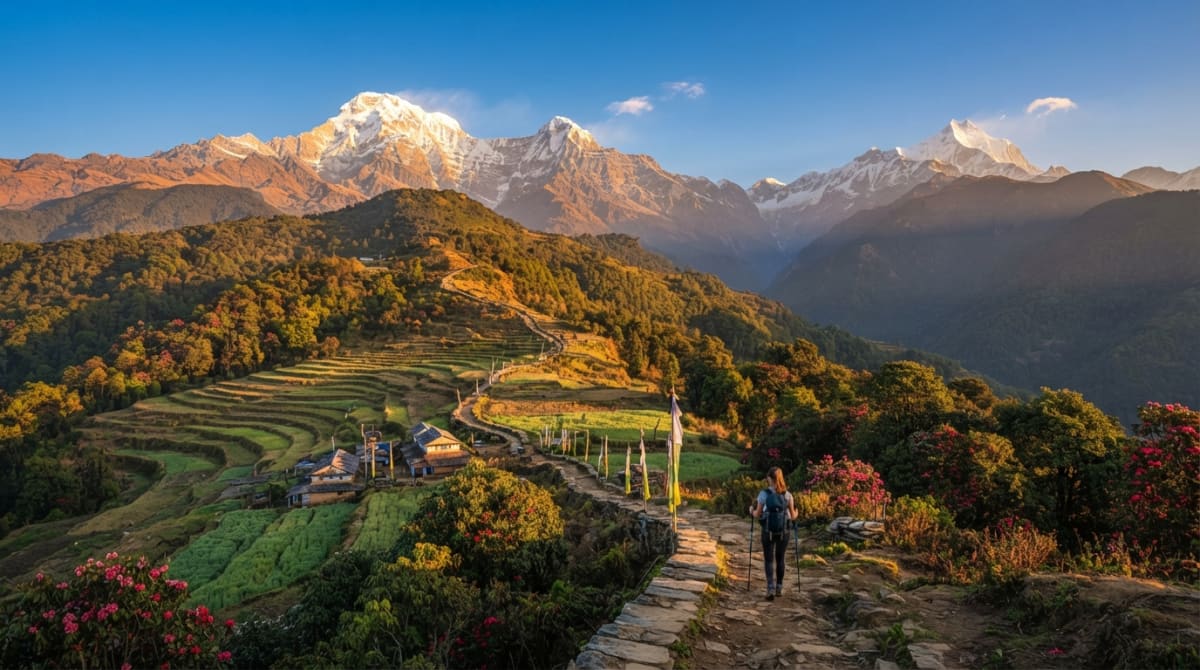
The Village of Dhampus
Dhampus stretches along a ridge, with houses, lodges and small shops strung out along a stone-paved path and terraces falling away on both sides. It is home to a mix of communities, including Gurung and Brahmin families, and it has been welcoming trekkers for decades, since the days when this was a popular start for walks toward Ghandruk and the Annapurna Sanctuary. Today, it combines farming and tourism, with fields of rice, millet and vegetables alongside comfortable lodges and homestays.
What sets Dhampus apart is the view. On clear mornings, the Annapurna range fills the northern horizon, with Machapuchare's pointed summit, Annapurna South and Hiunchuli prominent, and more distant peaks visible on the clearest days. Sunrise and sunset from the village are spectacular, and many trekkers who stay here say it is one of the best-value views in the whole region. See the mountains you see on the trek and villages around Mardi Himal.
Staying the Night in Dhampus
A night in Dhampus before the trek is an excellent idea if your schedule allows. You can drive from Pokhara in the afternoon, walk up from Phedi or be dropped in the village, check into a lodge or homestay, and watch the sunset over the mountains. The next morning, after a sunrise view, you set off on the trail with a head start on the day. Lodges range from simple family guesthouses to more comfortable places with attached bathrooms and hot showers, and homestays offer a more personal experience of village life. See homestays near Mardi Himal.
Dhampus to Pothana
From Dhampus, the trail heads northwest along the ridge and then climbs gradually through forest toward Pothana. The path passes through oak and rhododendron woods, with occasional clearings offering views back over the Phedi valley and ahead to the mountains. It is a pleasant, mostly steady ascent, with some steeper sections, and it is quieter than the trail from Kande. Allow about two and a half to three hours. At Pothana, a small settlement of lodges and a checkpoint at around 1,990 meters, the Dhampus trail joins the main route coming from Kande and Australian Camp. See Pothana village and permit checkpoints on the trek.
Pothana to Pitam Deurali
From Pothana, the combined trail continues through forest to Pitam Deurali, a small cluster of lodges on a saddle at around 2,100 meters, where the Mardi Himal trail branches off from the route to Landruk and the Annapurna Base Camp trail. This section takes about an hour to an hour and a half, with gentle ups and downs. Pitam Deurali is the usual overnight stop on the first day of the trek, and it offers fine views of Machapuchare and Annapurna South on clear evenings. See Pitam Deurali.
A Sample First Day from Dhampus
| Section | Time | Altitude |
|---|---|---|
| Pokhara to Phedi by road | 45–60 min | 822 m → about 1,130 m |
| Phedi to Dhampus on foot | 1–1.5 hours | About 1,130 m → about 1,650 m |
| Dhampus to Pothana | 2.5–3 hours | About 1,650 m → about 1,990 m |
| Pothana to Pitam Deurali | 1–1.5 hours | About 1,990 m → about 2,100 m |
Walking from Phedi to Pitam Deurali via Dhampus in one day makes for a full day of five to six hours on foot. If you drive to Dhampus or stay there overnight, the day to Pitam Deurali is shorter and more relaxed.
Dhampus vs Kande
| Dhampus | Kande | |
|---|---|---|
| Drive from Pokhara | To Phedi 45–60 min, or to the village | About 1 hour to 1.5 hours |
| First climb | Phedi to Dhampus, 1–1.5 hours (or drive) | Kande to Australian Camp, 1–1.5 hours |
| Time to Pitam Deurali | About 4–5 hours from Dhampus | About 3–4 hours from Kande |
| Village character | Strong; a large established village | Limited; a roadside stop |
| Views on day one | Excellent from the village | Excellent from Australian Camp |
| Crowds | Quieter trail | Busier in peak season |
| Best for | Culture, a gentle start, an overnight before the trek | Speed and simplicity |
Kande is the most efficient start and suits tight schedules. Dhampus is better if you want village atmosphere, a quieter trail, or the option of a night in the village with mountain views. On a longer or custom itinerary, Dhampus is often our preferred start. See the Kande trailhead guide and Australian Camp.
Which Itineraries Can Start from Dhampus?
Any of our Mardi Himal treks can begin from Dhampus instead of Kande. On the 5-day trek from Pokhara, starting at Dhampus makes the first day slightly longer but more varied. On the 9-day trek from Kathmandu or the 7-day trek for direct flights to Pokhara, you can add a night in Dhampus before the trek, a lovely way to settle in. The 3-day Short Mardi Himal Trek is usually too compressed for the Dhampus start, since it uses the quickest routes onto the ridge. See the custom itinerary guide.
Permits and Checkpoints
The Dhampus route enters the Annapurna Conservation Area, so you need the same permits as on any Mardi Himal start: the ACAP entry permit and, where required, a TIMS card, both arranged in Pokhara or Kathmandu before the trek. Permits are checked at a checkpoint on the trail, often at Pothana, so keep them handy. Since 2023, foreign trekkers have also needed to trek with a licensed guide. See Mardi Himal permits and is a guide mandatory?
What to Expect on the Trail
The trail from Dhampus is well trodden and easy to follow, with a mix of stone steps, earth paths and forest trail. The forest between Dhampus and Pothana is rich in birdlife, and in spring the rhododendrons bloom in red and pink. Monkeys are sometimes seen in the trees. In the monsoon, the forest can be muddy and leeches are common, so gaiters and salt or repellent help. In winter, mornings are cool but the trail is usually dry and clear. See flora and fauna on the trail and birdwatching on Mardi Himal.
Photography in Dhampus
Dhampus is a photographer's delight. The best light for mountain photography is at sunrise and sunset, when the snow peaks glow pink and gold above the terraced foothills. From the village, you can frame the mountains with prayer flags, farmhouses or rice terraces in the foreground, and in the early morning, the valleys below are often filled with mist. Village life offers endless subjects too: farmers at work, children playing, women weaving or carrying loads. Always ask before photographing people, and respect a refusal. See the photography guide and golden hour on Mardi Himal.
Food and Lodges
Dhampus lodges and homestays serve a familiar trekking menu of dal bhat, noodles, fried rice, momos and pancakes, along with local dishes, often using vegetables grown in the village. Prices are lower than on the upper ridge, since supplies arrive by road. Hot showers, Wi-Fi and charging are generally available, making Dhampus one of the more comfortable nights of the trek. Enjoy it, because facilities become simpler as you climb. See the food and accommodation guide and the tea house menu guide.
Dhampus Through the Seasons
Autumn (September–November) is the classic time to visit, with crisp, clear mornings, the best mountain views of the year, and golden rice terraces around the village in September and October. Festivals such as Dashain and Tihar bring swings, kites and family gatherings. Winter (December–February) is cool and very clear, and Dhampus is far warmer than the upper ridge, making it a comfortable base with superb sunrise views. Spring (March–May) brings warmer days, blooming rhododendrons in the forest above the village and a greener landscape, though afternoon haze can hide the peaks. Monsoon (June–August) transforms the terraces into bright green paddies, and the village is quiet and lush, but clouds often hide the mountains and the forest trail to Pothana becomes muddy and leech-prone. See the monthly weather guide.
Ending the Trek via Dhampus
Dhampus also works as an end point. Some trekkers prefer to descend the way they came, from Low Camp back through Forest Camp, Pitam Deurali and Pothana, and then down to Dhampus and Phedi, rather than taking the steep trail to Siding. This route is longer but gentler on the knees in places, and it finishes on the paved Baglung highway, avoiding the rough jeep road from Siding. It is also a sensible fallback when the Siding trail is very muddy or the road is blocked after heavy rain. If you finish in Dhampus with time to spare, a final night in the village gives you one last mountain sunset before returning to Pokhara. See coming down from Base Camp.
Tips for the Dhampus Start
- If you can, spend a night in Dhampus for the sunset and sunrise views.
- Take the Phedi staircase slowly; it is steep and a good test of your pace.
- Carry water and snacks for the forest section to Pothana.
- Keep permits accessible for the checkpoint.
- Buy snacks or tea in the village to support local businesses.
- Carry rain gear, as afternoon cloud is common in the foothills.
- Carry enough cash from Pokhara; there are no ATMs on the trail.
See how much cash to carry and essential tips for first-time trekkers.
Is the Dhampus Start Right for You?
If you have a little more time, value village life, prefer a quieter trail and would enjoy an evening watching the sun set over the Annapurnas, the Dhampus start is well worth it. If you are on a tight schedule or doing the 3-day short trek, Kande is the more practical choice. Either way, both starts lead to the same spectacular ridge and the same sunrise at the top. See which Mardi Himal trek is right for you.
Start Your Mardi Himal Trek in Dhampus with Us
Tell us when you book if you would like to start from Dhampus, with or without a night in the village. We can arrange it on the 5-day Mardi Himal Trek from Pokhara, the 9-day trek from Kathmandu or any custom itinerary. Contact us to plan your trip.