

Whether you are just starting to research Nepal or you have already booked your flights, you probably have questions about the Mardi Himal Trek. We hear the same ones from trekkers every season, so we have collected them here with clear, honest answers. Each answer links to a more detailed guide if you want to go deeper.
The questions are grouped by topic: the basics, route and itinerary, difficulty and altitude, permits and guides, accommodation and food, weather and seasons, money and costs, gear, and safety.
The Basics
What is the Mardi Himal Trek?
It is a short trek in Nepal's Annapurna region that follows a forested ridge north of Pokhara up to the base of Mardi Himal, a 5,587-meter peak beneath Machapuchare. It combines rhododendron forest, an open alpine ridge and close-up views of Machapuchare, Annapurna South and Hiunchuli. It opened to tea house trekking relatively recently, so it is quieter than neighbouring routes. Read our complete guide to the Mardi Himal Trek for an overview.
Where is Mardi Himal?
Mardi Himal is in Kaski District in central Nepal, inside the Annapurna Conservation Area, directly north of Pokhara. The trek follows the ridge on the eastern side of the Modi Khola valley, which carries the Annapurna Base Camp trail. See where is Mardi Himal?
Why is it called Mardi Himal?
The trek is named after Mardi Himal, the peak at its northern end. "Himal" means a snow mountain in Nepali. The trek's highest point is the base camp beneath this peak, not its summit, which requires a separate climbing expedition. Read Mardi Himal's history and name.
Route and Itinerary
How many days does the Mardi Himal Trek take?
The trekking section takes three to five days from Pokhara. A full trip starting and ending in Kathmandu usually takes eight or nine days, and a trip starting with a direct flight to Pokhara about seven. See how many days you need for Mardi Himal.
Where does the trek start and finish?
Most itineraries start at Kande, about an hour's drive from Pokhara, and finish at Siding village, from where a jeep returns you to Pokhara. Alternatives include starting at Phedi or Dhampus and finishing at Lwang. See our map and route guide.
How far do you walk?
Roughly 40 to 45 kilometers in total, including the Base Camp hike and descent. Daily distances are modest, but the gradients are steep. See distance, duration and elevation explained.
What does a typical itinerary look like?
Day one: drive to Kande and walk to Pitam Deurali. Day two: through the forest to Low Camp or Forest Camp. Day three: up the ridge to High Camp. Day four: pre-dawn hike to Base Camp and descend to Low Camp or Badal Danda. Day five: descend to Siding and drive to Pokhara. Read the day-by-day itinerary guide.
What is the difference between High Camp, the Upper View Point and Base Camp?
High Camp, at 3,580 meters, is the highest place with lodges, where you sleep before the summit hike. The Upper View Point, at roughly 4,200 meters, is a popular sunrise spot about two hours above High Camp. Mardi Himal Base Camp, at around 4,500 meters, is the end of the trekking route, another hour or so beyond the viewpoint. Many trekkers visit all three on the same morning; some turn around at the viewpoint if time, weather or energy runs short. See Upper View Point vs Base Camp.
Can I fly directly to Pokhara?
Pokhara International Airport opened in 2023, but scheduled international routes are limited and change over time. If a direct route works for you, our 7-day itinerary starts and ends at Pokhara airport. Otherwise, fly into Kathmandu and travel to Pokhara by bus, car or domestic flight. See flying directly to Pokhara.
Can I combine Mardi Himal with other treks?
Yes. Popular combinations include Poon Hill, Annapurna Base Camp and Khopra Danda, as well as non-trekking extensions such as Chitwan National Park. See our Mardi Himal and Poon Hill itinerary.
Difficulty and Altitude
How difficult is the Mardi Himal Trek?
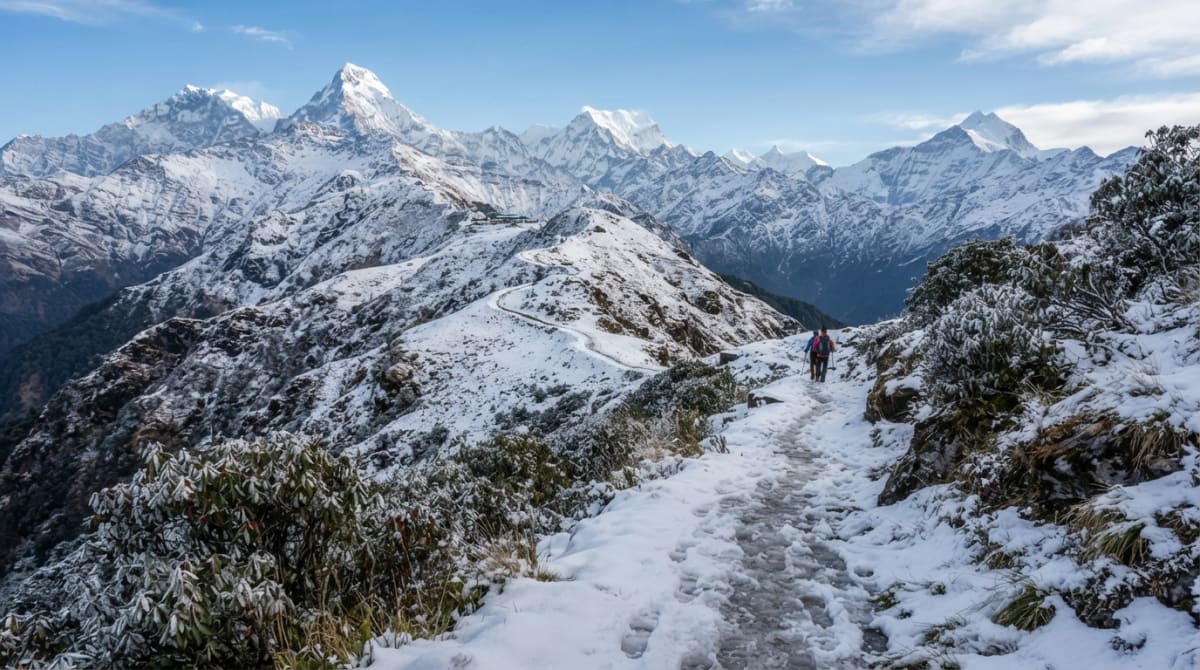
It is graded moderate. The trail is non-technical, but steep in places, and the Base Camp day and the descent to Siding are demanding. Anyone who can walk five to six hours a day on hilly terrain can do it with preparation. Read our difficulty guide.
How high does the trek go?
The highest point is Mardi Himal Base Camp at around 4,500 meters. You sleep no higher than High Camp at 3,580 meters. See how high Mardi Himal Base Camp is.
Will I get altitude sickness?
Many trekkers feel mild symptoms such as a headache at High Camp; serious altitude illness is rare. Walking slowly, drinking plenty and choosing a sensible itinerary reduce the risk. Read our altitude sickness guide.
Do I need previous trekking experience?
No, but you do need reasonable fitness. Beginners should choose a 5-day or longer itinerary. See is the trek suitable for beginners?
Can children and older trekkers do Mardi Himal?
Yes, with the right itinerary and preparation. Children who enjoy hiking, usually from around ten years old, can manage a slow-paced version, though parents need to watch closely for altitude symptoms. Many trekkers in their sixties and seventies complete the trek; the key is good training and a gradual itinerary. See Mardi Himal with kids and Mardi Himal for seniors.
Do I need oxygen?
No. Supplemental oxygen is not needed or used on the Mardi Himal Trek. The altitudes involved are well within what healthy trekkers can manage with sensible acclimatization. Guides and rescue services carry oxygen for emergencies only. See do you need oxygen on Mardi Himal?
How should I train?
Six to eight weeks of regular cardio, leg-strength work, stair climbing and weekend hikes with a daypack prepares most people well. See our fitness guide.
Permits and Guides
What permits do I need?
An ACAP permit for the Annapurna Conservation Area and a TIMS card. Both are usually arranged by your trekking agency. Read our permits guide.
Can I trek Mardi Himal without a guide?
Since April 2023, foreign trekkers must trek with a licensed guide in Nepal's protected areas. Beyond the rules, a guide adds real safety value on the exposed upper ridge. See is a guide mandatory?
Should I hire a porter?
It is optional but makes the trek easier, especially on the steep climbs. One porter usually carries for two trekkers. See porter cost and how porter service works.
Accommodation and Food
Where do you sleep on the trek?
In family-run tea houses with simple twin rooms, shared toilets and a warm dining room. Facilities become more basic above Low Camp. Read the food and accommodation guide.
What food is available?
Dal bhat, noodles, fried rice, momos, pasta, potatoes, soups, porridge, eggs and bread, plus tea, coffee and hot chocolate. Vegetarian food is easy to find. See the menu guide.
Are there hot showers and Wi-Fi?
Hot showers are available at most lower and middle lodges for a fee. Wi-Fi and mobile signal are available at many points but are patchy on the upper ridge. See Wi-Fi, signal and charging.
Do I need to book tea houses in advance?
For most of the year, no. In October, November and April, High Camp and Low Camp can fill up, so guides usually reserve rooms ahead for their groups. If you arrive late at a full lodge in peak season, you may end up sleeping in the dining room. See booking tea houses in peak season.
Is drinking water available?
Yes. Lodges sell boiled or filtered water for refilling your bottle, and you can treat tap water with tablets, a filter or a UV pen. Buying plastic bottles is possible but expensive and creates waste. See safe drinking water on the trek.
Can I charge my phone?
Yes, at most lodges for a small fee, though power at High Camp depends on solar and can be limited. Bring a power bank.
Weather and Seasons
When is the best time to trek?
Autumn (late September to November) for the clearest views, and spring (March to May) for rhododendrons. See the best time for the Mardi Himal Trek.
Can I trek in winter?
Yes, with care. Skies are often clear, but the upper trail can be icy and nights are very cold. Microspikes are often needed. Read winter on Mardi Himal.
Can I trek in the monsoon?
Yes, but expect rain, leeches, muddy trails and limited views. See is the monsoon worth it?
Is the trail crowded?
Mardi Himal is quieter than the Annapurna Base Camp and Poon Hill treks, but it is growing in popularity. In October you will share High Camp with plenty of other trekkers; in the shoulder months and winter you may have long stretches of trail to yourself. See is Mardi Himal crowded?
Can you see Everest from Mardi Himal?
No. Everest is far to the east, and the trek's views are dominated by the Annapurna region's peaks: Machapuchare, Mardi Himal, Annapurna South and Hiunchuli. These are among the most striking mountains in Nepal. See which peaks you actually see.
How cold does it get?
At High Camp, nights are usually below freezing from October to April, and can fall well below minus 10 degrees Celsius in mid-winter. Daytime in the lower forest can be warm. See temperature by month and camp.
Money and Costs
How much does the Mardi Himal Trek cost?
It depends on the itinerary, group size and whether you book a package. See our cost guide, and for current package prices visit the trek pages.
Are there ATMs on the trail?
No. Withdraw Nepali rupees in Pokhara before you start. See how much cash to carry.
How much should I tip?
Tipping guides and porters at the end of the trek is customary. See our tipping guide for suggested amounts.
Gear and Packing
What should I pack?
Layers, a warm down jacket, a waterproof shell, broken-in boots, a sleeping bag, headlamp, trekking poles, sun protection and a first aid kit. See our complete packing list.
Do I need crampons or microspikes?
Not usually in autumn or spring. From December to February, and after late snow, microspikes are often needed on the trail above High Camp. Full crampons are not required for the trekking route. Your guide will advise based on current conditions. See when you need microspikes.
What footwear is best?
Broken-in, waterproof trekking boots with good grip suit most people and most seasons. Experienced hikers sometimes use sturdy trail shoes in dry autumn and spring conditions, but boots give more support on the long descent. See trail shoes vs boots.
Can I rent gear in Pokhara?
Yes. Down jackets, sleeping bags and trekking poles are easy to rent in Pokhara's Lakeside area. See renting trekking gear in Pokhara.
Safety
Is the Mardi Himal Trek safe?
Yes, for prepared trekkers in the right season with a licensed guide. The main risks are altitude, weather on the ridge, winter ice and road travel. Read our safety guide.
Do I need travel insurance?
Yes. It should cover trekking to at least 4,500 meters and helicopter evacuation. See our insurance guide.
What happens in an emergency?
Your guide gives first aid and organises descent, and in serious cases a helicopter can fly in from Pokhara in suitable weather. See helicopter rescue on Mardi Himal.
Booking
Which Mardi Himal trek should I book?
If you are arriving in Kathmandu, the 9-day Mardi Himal Trek includes everything. If you are already in Pokhara, the 5-day trek from Pokhara is the most popular choice. Fit, experienced trekkers with little time can choose the 3-day Short Mardi Himal Trek. See which trek is right for you.
How far in advance should I book?
For October and November, book two to three months ahead if possible. For other months, a few weeks is usually enough. See when to book the Mardi Himal Trek.
Still have a question we have not answered? Send us a message and one of our team will reply.