

Popular treks attract stories, and the Mardi Himal Trek is no exception. Some of what you read online is outdated, some is exaggerated, and some is simply wrong. Misconceptions can lead trekkers to underprepare, pack the wrong gear, choose the wrong itinerary, or arrive with expectations the trek cannot meet. This article tackles the most common myths about Mardi Himal and explains the reality behind each one, so you can plan with confidence. For the essential facts, see key facts and figures and the trek FAQs.
Myth 1: "It's Easy Because It's Short"
This is the most common and most important misconception. Because Mardi Himal can be done in three to five days, many people assume it is a gentle walk. In reality, it is a genuine mountain trek. The forest sections involve long, steep climbs on roots and stone steps. The ridge is exposed to wind and weather. And summit day combines a pre-dawn start, freezing temperatures, a steep climb of around 900 meters at altitude, and a long descent afterward, often seven to nine hours in total. Short itineraries make it harder, not easier, because they pack the same climbing into fewer days.
The trek is achievable for reasonably fit people who prepare, but it is not a stroll. See how difficult the trek is and the hardest day.
Myth 2: "You Can See Everest"
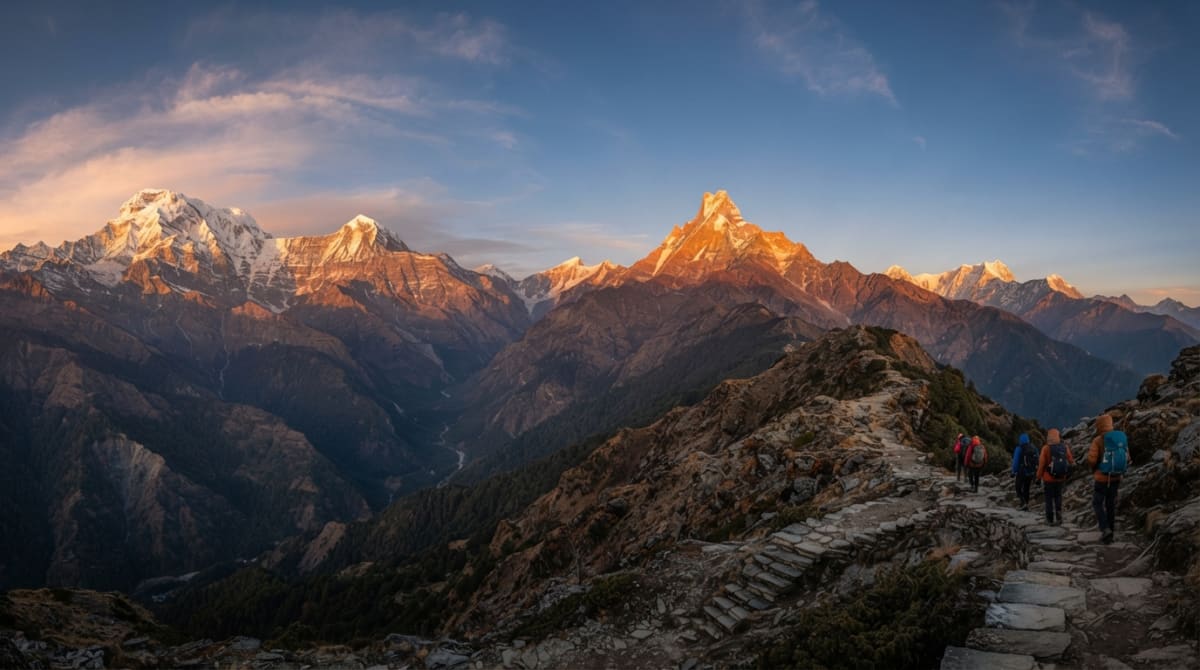
Everest lies roughly 250 kilometers east of Mardi Himal, hidden behind several major mountain ranges, and it is not visible from anywhere on the trek. What you do see is arguably just as spectacular: Machapuchare, Annapurna South, Hiunchuli and Mardi Himal, close and dramatic from the ridge. See can you see Everest from Mardi Himal?
Myth 3: "You Can Trek Independently"
Many older blogs and guidebooks describe Mardi Himal as a great trek to do independently. That was true until 2023. Since April 2023, foreign trekkers in Nepal's national parks and conservation areas, including the Annapurna Conservation Area, have been required to trek with a licensed guide. Nepali citizens are not bound by this rule. Always check current regulations before your trip. See is a guide mandatory for Mardi Himal?
Myth 4: "Altitude Isn't an Issue Below 5,000 Meters"
Some trekkers assume altitude sickness only affects people on very high treks like Everest Base Camp. In fact, acute mountain sickness can begin above about 2,500 meters, and Mardi Himal takes you to around 4,500 meters at Base Camp, with a night at around 3,580 meters at High Camp. Headaches, poor sleep and breathlessness are common at High Camp, and serious altitude illness, though rare on this trek, is possible, especially with rapid ascent. See our altitude sickness guide and how high Base Camp is.
Myth 5: "There Are Lodges at Base Camp"
The name "Base Camp" leads some trekkers to expect lodges, food and shelter at the top. Mardi Himal Base Camp is actually an open area of grass and rock with prayer flags, around 4,500 meters, with no buildings. The highest lodges are at High Camp. You visit Base Camp on a day hike, carrying everything you need for the morning: warm layers, water, snacks and sun protection. See the Base Camp visitor's guide.
Myth 6: "If You Don't Reach Base Camp, You've Failed"
Many trekkers feel pressure to reach Base Camp at all costs. But the Upper View Point, around 4,200 meters, offers one of the finest sunrise panoramas in the Annapurna region, and for many people it is the highlight of the trek. Turning around there, whether because of fatigue, altitude symptoms, cold or poor weather, is a sensible decision, not a failure. See Upper View Point vs Base Camp and turnaround decisions.
Myth 7: "You Need to Be an Athlete"
At the other extreme, some people assume they are not fit enough for a Himalayan trek. You do not need to be an athlete. Reasonably fit people who can walk for five to seven hours a day, including uphill, can complete the trek, especially on a five-day or longer itinerary. A few weeks of preparation, such as regular walks, stair climbing and some hill hiking with a pack, makes a big difference. See the fitness guide and is Mardi Himal suitable for beginners?
Myth 8: "It's Never Crowded"
Mardi Himal's reputation as a quiet alternative to the classic routes is partly outdated. It is still quieter than Annapurna Base Camp or Poon Hill for most of the year, but in October and November, High Camp can be crowded, and the viewpoint at sunrise busy. Nepali holidays and weekends also bring many domestic trekkers. See is Mardi Himal crowded?
Myth 9: "The Lodges Are Heated"
Tea house rooms on the Mardi Himal Trek are not heated. Only the dining room is warmed, usually by a stove in the evening. At High Camp, nights drop below freezing for much of the year, and rooms can be very cold. A warm sleeping bag rated to around minus ten degrees Celsius, or a lighter bag with a liner, is essential. See staying warm in tea houses and choosing a sleeping bag.
Myth 10: "Mountain Water Is Safe to Drink"
Streams and taps on the trek may look clean, but they can be contaminated by livestock, wildlife and human activity upstream. Drinking untreated water is a common cause of stomach illness on treks. Always treat water with tablets, drops, a filter, a UV purifier or by boiling, or buy boiled or filtered water from lodges. See safe drinking water.
Myth 11: "You Need Technical Gear"
The Mardi Himal Trek is non-technical. You do not need ropes, harnesses, ice axes or crampons in normal conditions. What you need is good trekking gear: sturdy boots, layered clothing, a warm down jacket, a sleeping bag and trekking poles. In winter or after snow, simple microspikes are often needed for the steep section above High Camp. Climbing Mardi Himal peak itself is a different matter, requiring technical equipment and skills. See the packing list and trek vs peak climb.
Myth 12: "You Can't Trek in the Monsoon or Winter"
Autumn and spring are the best seasons, but the trek is open year-round. In the monsoon, from June to August, you face rain, mud, leeches and cloudy views, but the forest is lush and the trail quiet. In winter, from December to February, skies are often clear but nights are very cold and snow can affect the upper ridge. Both seasons are possible with the right preparation and expectations. See Mardi Himal in the monsoon and Mardi Himal in winter.
Myth 13: "Diamox Means You Can Go Up Fast"
Acetazolamide, often sold as Diamox, can help prevent and treat mild altitude sickness, and some trekkers take it after consulting a doctor. But it is not a license to ascend quickly or ignore symptoms. The best protection against altitude sickness is a sensible itinerary, gradual ascent, good hydration and paying attention to how you feel. See Diamox and Mardi Himal and acclimatization on Mardi Himal.
Myth 14: "The 3-Day Trek Is the Same Experience"
The three-day trek covers the same ridge and summit, but it is a different experience from the five-day or longer versions. Days are much longer, altitude gain is rapid, and there is little time to rest, enjoy sunsets, explore the forest or wait for better weather. It suits fit trekkers short on time, but most people find the five-day trek more enjoyable and rewarding. See the 3-day itinerary and the 5-day itinerary.
Myth 15: "You Can Pay by Card on the Trail"
There are no ATMs on the trek, and cards are rarely accepted in lodges. Some lodges may accept digital payments through Nepali apps, but you should not rely on it. Carry enough Nepali rupees from Pokhara for lodge extras, snacks, drinks and tips. See how much cash to carry.
Myth 16: "The Views Last All Day"
On the Mardi Himal ridge, the clearest views usually come in the early morning. By late morning, clouds often build from the valleys, and afternoons can be cloudy or misty, even in good seasons. That is why the summit hike starts before dawn, and why it pays to walk early each day. See fog and clouds on Mardi Himal.
Myth 17: "Pokhara's Weather Tells You What the Ridge Will Be Like"
It is easy to look out of your Pokhara hotel window at a warm, sunny day and assume the trek will be similar. But Pokhara sits at around 822 meters, and High Camp is nearly 2,800 meters higher, which means temperatures there are typically more than fifteen degrees colder, often far more with wind chill. The ridge can be wrapped in cloud while Pokhara bakes in sunshine, or clear above a sea of cloud while the city lies under grey skies. Pack for the conditions at High Camp and Base Camp, not for Pokhara. See Pokhara weather vs Mardi Himal weather and temperature by month.
Myth 18: "Hiring a Porter Is Unnecessary or Unethical"
Some trekkers feel they should carry everything themselves, either to prove something or because they worry that hiring a porter is exploitative. In reality, portering is an important source of income for many families in the hills, and employing a porter through a responsible agency, with fair pay, proper clothing, insurance and reasonable loads, is a positive contribution to the local economy. Carrying a light daypack also lets you enjoy the trek more and reduces strain on your knees and back. The ethical question is not whether to hire a porter, but whether they are treated well. See porter welfare in Nepal and carry your own pack or hire a porter?
Myth 19: "It's Only for Young People"
Mardi Himal is popular with young trekkers, but it is by no means limited to them. Fit trekkers in their fifties, sixties and beyond regularly complete it, often with a slightly slower itinerary and an extra acclimatization night. Families with teenagers do it together. What matters most is general fitness, health and preparation, not age. Anyone with medical conditions should consult a doctor first, and older trekkers may appreciate a porter and more rest time. See Mardi Himal in your 50s and Mardi Himal for seniors.
Myth 20: "Solo Women Shouldn't Trek in Nepal"
Nepal is generally a safe and welcoming country for women travelers, and many women trek Mardi Himal alone or in small groups every year. The mandatory guide rule adds a layer of support. As anywhere, sensible precautions apply: choose a reputable agency, ask about female guides if you would feel more comfortable, dress modestly in villages, and trust your instincts. See solo female trekkers on Mardi Himal.
Myth 21: "Travel Insurance Is Optional"
Some trekkers skip insurance on a short trek, assuming nothing will go wrong in a few days. But accidents, altitude sickness and illness can happen on any trek, and helicopter evacuation from the ridge to Pokhara is expensive. Many standard travel policies exclude trekking above a certain altitude, often below 4,500 meters, so check that yours covers trekking to at least that height and includes helicopter rescue. Most reputable agencies require proof of suitable insurance. See the travel insurance guide.
Why These Myths Persist
Most of these misconceptions have understandable origins. The trek changed quickly after it opened, so early accounts of empty trails and independent trekking no longer reflect reality. Marketing language sometimes oversells views or undersells difficulty. And short trips invite assumptions that they must be easy. The best defense is up-to-date information from people who walk the trail every season, and an honest conversation with your agency about your fitness and expectations. See questions to ask your trekking agency.
Trek Mardi Himal with the Facts
Knowing what is true about the trek helps you prepare well and enjoy it fully. Our guides are happy to answer any questions before you go. See the 5-day Mardi Himal Trek from Pokhara, the 9-day trek from Kathmandu or the 3-day Short Mardi Himal Trek, and contact us to book.