

The Mardi Himal Trek is compact. In as little as three to five days, it takes you from the foothills near Pokhara through deep forest to a high ridge beneath Machapuchare and back down to the road. That efficiency is part of its appeal, but it also means that many trekkers walk straight through without realizing how much there is to explore around the trail. A short detour to a sunset viewpoint, an extra night in a village, a link to the hot springs of Jhinu Danda or a morning at Sarangkot can turn a good trek into a richer, more varied journey.
This guide gathers the side trips we recommend most often, from quick walks near the lodges that need no extra time to longer extensions that add a day or two. For the main route, see the map and route guide and the day-by-day itinerary.
Side Trips at a Glance
| Side trip | Where | Extra time | Best for |
|---|---|---|---|
| Sunrise at Australian Camp | Day one, near Kande | Overnight instead of Pitam Deurali, or a few minutes | Views, photography |
| A night in Dhampus | Start of the trek | Half a day to one day | Village life, views |
| Forest birding walks | Forest Camp and Rest Camp | An hour or two | Nature, birds |
| Sunset hill above Low Camp | Low Camp | 30–60 minutes | Sunset, sea of clouds |
| Spare day at High Camp | High Camp | One day | Acclimatization, a second chance at clear views |
| Upper View Point to Base Camp | Summit day | 2–3 hours | Close-up mountain views |
| Lwang and Ghalel | End of the trek, near Siding | One day | Tea gardens, homestays |
| Landruk and Jhinu Danda | West of the ridge | 1–2 days | Villages, hot springs |
| Pokhara day trips | Before or after the trek | Half a day to one day | Recovery, sightseeing |
Sunrise at Australian Camp
Australian Camp, a grassy ridge about an hour above Kande at around 2,060 meters, has one of the finest views of the lower trek, looking straight at Machapuchare, Annapurna South and Hiunchuli. Most trekkers pass through in the late morning of day one, when clouds may already be building. If your schedule allows, spending the first night here instead of at Pitam Deurali gives you both sunset and sunrise over the range. It shifts about an hour and a half of walking to the next day, which is easily absorbed. See Australian Camp.
A Night in Dhampus
Dhampus is a long-established village on a ridge above Phedi, with farmhouses, lodges, homestays and wide views of the Annapurna range. Starting the trek here, or spending the night before the trek in the village, adds a strong dose of village life and a beautiful sunset and sunrise. From Dhampus, the trail joins the main route at Pothana after two and a half to three hours of pleasant forest walking. See starting Mardi Himal from Dhampus and Phedi vs Kande.
Forest Walks at Forest Camp and Rest Camp
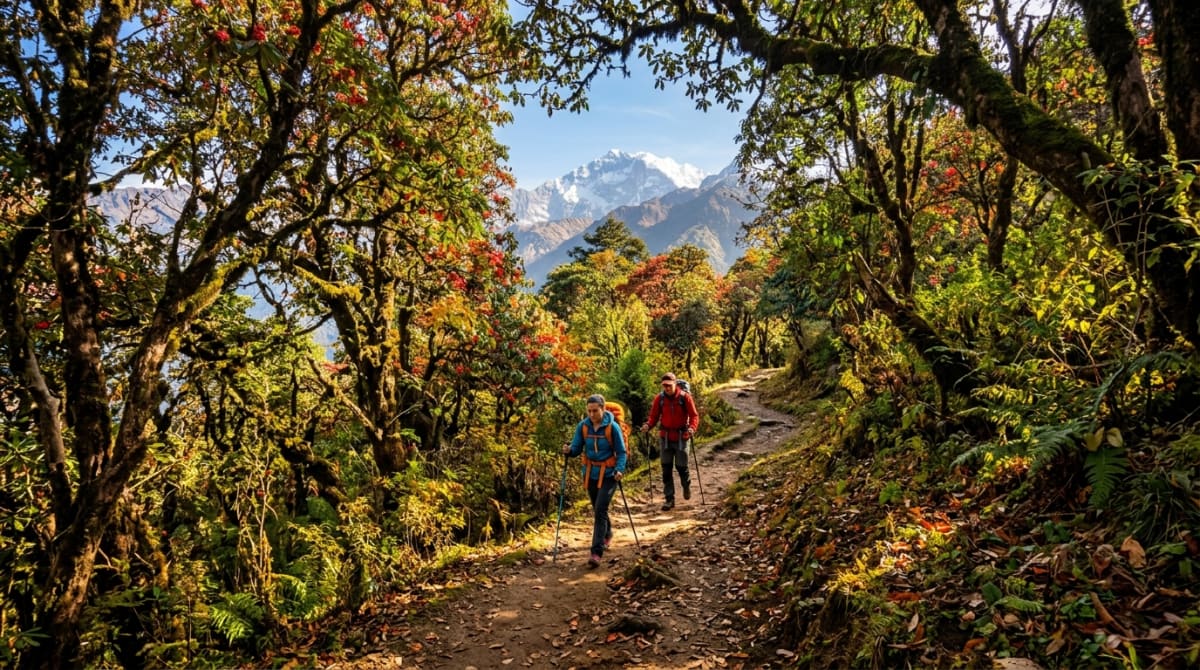
The forest between Pitam Deurali and Low Camp is one of the richest habitats on the trek, with old rhododendron, oak and magnolia trees draped in moss and ferns. If you arrive at Forest Camp or Rest Camp in the early afternoon, take a slow, quiet walk along the trail in either direction, ideally with binoculars. This is a good place to see and hear laughing thrushes, sunbirds, barbets and woodpeckers, and, with luck, langur monkeys. Early morning is even better. See Forest Camp, Rest Camp and birdwatching on Mardi Himal.
Sunset Above Low Camp and Badal Danda
Low Camp sits at the edge of the forest, with Machapuchare directly ahead. A short walk up the trail above the lodges, 30 to 60 minutes round trip, brings you to open ground with a wider view of the peaks and, on many evenings, a sea of clouds filling the valleys below. Sunset here can be magical, with the Fishtail turning pink and gold. The same applies at Badal Danda, where a short walk along the ridge opens up the view. Take a warm layer and a headlamp for the walk back. See sunset at Low Camp and Badal Danda and Low Camp.
A Spare Day at High Camp
One of the most valuable additions to any Mardi Himal itinerary is a spare day at High Camp. It serves two purposes. First, it improves acclimatization, giving your body another night at 3,580 meters before the summit hike to around 4,500 meters. Second, it gives you a second chance at clear views if the first summit morning is cloudy, which is common in spring and the monsoon. On the spare day, you can rest, take a short walk up the ridge above the lodges, photograph the peaks, and watch the sunset. See the High Camp guide and the itinerary with a rest day.
Going All the Way to Base Camp
Strictly speaking, reaching Base Camp is the goal of the trek, not a side trip. But many trekkers stop at the Upper View Point, around 4,200 meters, which offers a spectacular sunrise panorama. Continuing another hour to an hour and a half to Base Camp at roughly 4,500 meters brings you much closer to the mountains, with glaciers and the sheer faces of Machapuchare and Mardi Himal directly ahead. If you feel strong and the weather is good, it is well worth the extra effort. See Upper View Point vs Base Camp and the Base Camp visitor's guide.
Lwang Tea Gardens and Ghalel Homestays
On the eastern side of the ridge, near Siding, the villages of Lwang and Ghalel offer a cultural finale to the trek. Lwang is known for its hillside tea gardens, and Ghalel for its community homestays run by Gurung families. After descending to Siding, you can continue to Lwang or Ghalel on foot or by road, spend a night with a local family, walk in the tea gardens in the morning, and drive back to Pokhara. It adds one day and is especially popular with families and culture lovers. See Mardi Himal via Lwang and homestays near Mardi Himal.
Siding Village Walk
If you finish the trek in Siding, take half an hour before or after lunch to walk through the village. It is a traditional farming community of terraced fields, stone farmhouses and livestock, and it gives a glimpse of rural life that is easy to miss if you jump straight into the jeep. Spending the night in Siding rather than rushing back to Pokhara is a relaxed alternative. See the Siding village guide.
Linking to Landruk and the Jhinu Danda Hot Springs
From Pitam Deurali or the Forest Camp area, trails lead west toward Landruk, a large Gurung village on the slopes above the Modi Khola, opposite Ghandruk. From there, you can continue down to the river and up to Jhinu Danda, where natural hot springs by the river are a wonderful reward for tired legs. This extension adds one to two days and makes a lovely way to finish the trek, with a drive back to Pokhara from Nayapul or a nearby road head. See linking Mardi Himal with Landruk and ending at the Jhinu Danda hot springs.
Combining with Other Treks
If you have more time, Mardi Himal combines well with other treks in the Annapurna region. The Annapurna Base Camp trek, Poon Hill and Khopra Danda are the most popular combinations, each adding several days and a very different experience. See Mardi Himal and Annapurna Base Camp, Mardi Himal and Poon Hill and Mardi Himal and Khopra Danda.
Pokhara Side Trips Before or After the Trek
Pokhara itself offers plenty of short excursions that make ideal warm-ups before the trek or recovery days afterward:
- Sarangkot sunrise: A hilltop above Phewa Lake with a classic view of the Annapurna range at dawn, reached by a short drive or a steep walk.
- World Peace Pagoda: A white Buddhist stupa on a ridge across the lake, reached by boat and a short hike, with fine views of the lake and mountains.
- Phewa Lake boating: A relaxing paddle or rowing boat on the lake, with a visit to the Tal Barahi temple on its island.
- Paragliding: Pokhara is one of the world's best paragliding sites, with tandem flights from Sarangkot over the lake.
- Begnas and Rupa lakes: Quieter lakes east of the city, ideal for a peaceful half day.
- International Mountain Museum: Exhibits on the Himalaya, its peoples and the history of mountaineering.
See things to do in Pokhara after the trek, paragliding in Pokhara and the International Mountain Museum.
Longer Trips Around Nepal
For trekkers with a week or more, Mardi Himal fits neatly into a wider Nepal journey. Chitwan National Park for a jungle safari, Bandipur for a well-preserved hill town, Lumbini for the birthplace of the Buddha, and Kathmandu's heritage sites all combine easily with the trek. See Mardi Himal and Chitwan, Mardi Himal and Bandipur and a one-week Nepal itinerary.
Side Trips by Season
Some side trips are better at certain times of year. In autumn, when skies are clearest, the viewpoint detours, including sunrise at Australian Camp, the sunset hill above Low Camp and the full walk to Base Camp, are at their best, and harvest scenes make village stays especially rewarding. In spring, the rhododendron forests around Forest Camp and Rest Camp are in bloom, making forest walks the highlight, while a spare day at High Camp helps if afternoon cloud hides the peaks. In winter, the Jhinu Danda hot springs are a welcome treat after cold nights on the ridge, and Pokhara's lakes and viewpoints are crisp and clear. In the monsoon, village stays in Lwang, Ghalel or Dhampus are a good way to enjoy the lush green terraces when mountain views are uncertain, and Pokhara's museums and lakes make good rainy-day options. See the best time for the Mardi Himal Trek.
Side Trips for Families and Mixed Groups
Side trips are particularly useful for families and groups with a range of fitness levels. Children often love village homestays, animals and farm life, so a night in Dhampus or Lwang can be a highlight of the trip for them. A spare day at Low Camp or High Camp gives everyone time to rest and acclimatize without pressure. In mixed groups, those who want to go further can continue to Base Camp while others enjoy the sunrise from the Upper View Point and walk back to High Camp with an assistant guide. After the trek, Pokhara's boat rides, museums and lakeside cafes offer easy activities for everyone. See the family trek itinerary and Mardi Himal with kids.
How to Fit Side Trips In
Short walks near the lodges, such as a sunset hill above Low Camp or a birding walk at Forest Camp, need no extra days and can be added to any itinerary. Larger additions, like a night in Dhampus, a spare day at High Camp, a village stay in Lwang or a link to Landruk, each add a day or two. They work best on the 9-day trek from Kathmandu or on a private, custom itinerary. The 5-day trek from Pokhara can take one extra day comfortably, while the 3-day Short Mardi Himal Trek is too tight for anything but short walks. See the custom itinerary guide.
Our Recommendations
- For views: Sunrise at Australian Camp, a spare day at High Camp, and Base Camp on summit day.
- For culture: A night in Dhampus and a homestay in Lwang or Ghalel.
- For nature: Forest walks at Forest Camp and Rest Camp in the early morning.
- For relaxation: The Jhinu Danda hot springs and a lazy day in Pokhara.
- For adventure: Paragliding in Pokhara or linking to the Annapurna Base Camp trail.
Plan Your Side Trips with Us
Tell us what interests you most, and we will build side trips into your Mardi Himal Trek. See the 5-day Mardi Himal Trek from Pokhara and the 9-day trek from Kathmandu, and contact us to plan a trip that fits your time and interests.